e99 Online Shopping Mall

Geometry.Net - the online learning center Help  
Home  - Composers - Korngold Erich Wolfgang (Books)

  1-20 of 29 | Next 20
A  B  C  D  E  F  G  H  I  J  K  L  M  N  O  P  Q  R  S  T  U  V  W  X  Y  Z  

click price to see details     click image to enlarge     click link to go to the store

$17.35
1. Erich Wolfgang Korngold (20th-Century
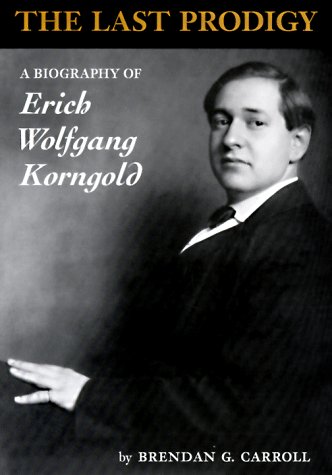
2. The Last Prodigy: A Biography
$30.99
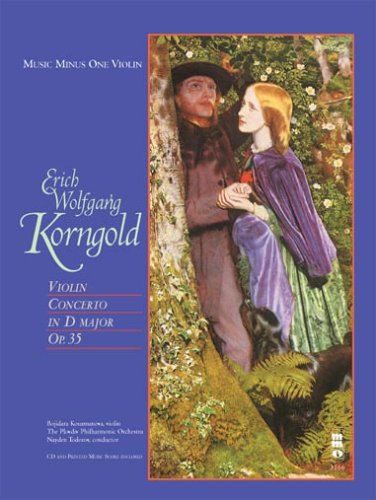
3. Music Minus One Violin: Korngold
$26.55
4. Erich Wolfgang Korngold's The
 
$13.99
5. Die tote Stadt: German Libretto
$23.09
6. Symphony in F-Sharp, Op. 40
 
7. Die Tote StadtOp. 12 Piano -vocal
 
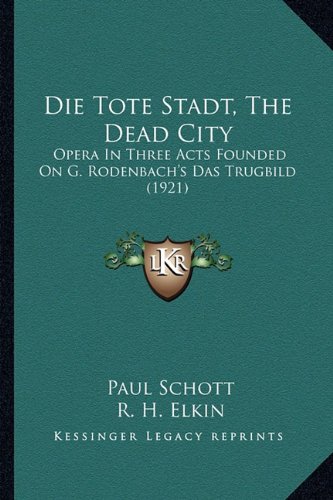
8. Die tote Stadt =: The dead city
$58.41
9. Erich Wolfgang Korngold: Aspekte
10. Erich Wolfgang Korngold : Lieder
 
$5.95
11. The Last Prodigy: A Biography
 
$9.95
12. Erich Wolfgang Korngold: The Adventures
 
$5.95
13. The Last Prodigy: A Biography
 
14. Last Prodigy: A Biography of Erich
 
$84.52
15. Diegetic Music in Opera and Film:
 
$5.95
16. Last prodigy: a biography of Erich
17. Classic Film Scores Presents The
 
18. The Constant Nymph
 
19. Classic Film Scores: The Adventures
 
20. Violanta (Metropolitan Opera House

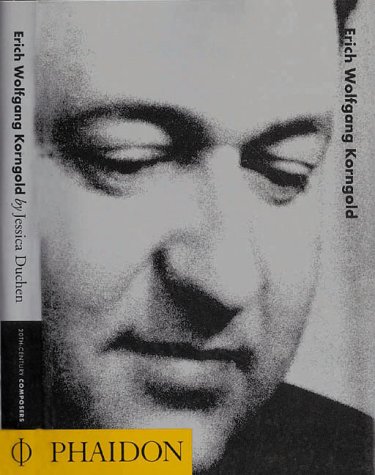
1. Erich Wolfgang Korngold (20th-Century Composers)
by Jessica Duchen
Paperback: 239 Pages (1996-05-30)
list price: US$24.95 -- used & new: US$17.35
(price subject to change: see help)
Asin: 0714831557
Average Customer Review: 3.5 out of 5 stars
Canada | United Kingdom | Germany | France | Japan
Editorial Review

Amazon.com
The 20th century has seen the triumphal progression of an avant-garde aesthetic in virtually every field of art: theater, painting, and even music. But what of those artists who don't toe the fashionable line? Erich Wolfgang Korngold, like Wolfgang Amadeus Mozart, was a child prodigy. Also like Mozart, he had a domineering father. Julius Korngold was a musical archconservative and he carefully guided the genius of his second son into respectable forms of musical expression, even while others began experimenting with serialism and jazz.

When their native Austria was incorporated into the Third Reich, the Korngolds wisely took up residence in America, where Erich earned a comfortable living scoring music for Hollywood blockbusters. Korngold was a perfectionist with an almost operatic approach to his film work, but his tonal proclivities and work in popular music ruined his status as a serious musician--at least in the eyes of the musical establishment. The last few years have seen a rise in Korngold's popularity among America's musical movers and shakers, and a new appreciation for his work, cinematic and otherwise, has developed. Jessica Duchen's well-considered discussion of the life and work of this intriguing man should continue the much-needed rehabilitation of the long-embattled tonal composers of this century.Book Description
The 20th century has seen the triumphal progression of an avant-garde aesthetic in virtually every field of art: theater, painting, and even music. But what of those artists who don't toe the fashionable line? Erich Wolfgang Korngold, like Wolfgang Amadeus Mozart, was a child prodigy. Also like Mozart, he had a domineering father. Julius Korngold was a musical archconservative and he carefully guided the genius of his second son into respectable forms of musical expression, even while others began experimenting with serialism and jazz. When their native Austria was incorporated into the Third Reich, the Korngolds wisely took up residence in America, where Erich earned a comfortable living scoring music for Hollywood blockbusters. Korngold was a perfectionist with an almost operatic approach to his film work, but his tonal proclivities and work in popular music ruined his status as a serious musician--at least in the eyes of the musical establishment. The last few years have seen a rise in Korngold's popularity among America's musical movers and shakers, and a new appreciation for his work, cinematic and otherwise, has developed. Jessica Duchen's well-considered discussion of the life and work of this intriguing man should continue the much-needed rehabilitation of the long-embattled tonal composers of this century. ... Read more

Customer Reviews (3)

5-0 out of 5 stars A superb, readable introduction to a wonderful composer
Erich Wolfgang Korngold is a composer who for far too long was known only to film buffs and a few aficionados here and there. His centenary in 1996 brought with it a tremendous rush of reappraisal, recordings andperformances, all of which have helped to re-establish Korngold as a forceto be reckoned with. I certainly found this book inspired me to exploreworks that I did not already know and much enriched my view of those I didknow, especially the intensely powerful opera 'Die tote Stadt'. My opinionis that this writer has a tremendous empathy for Korngold, his music andthe eras through which he lived - fin-de-siecle Vienna, 1940s Hollywood andthe devastated, artistically rigid post-war Europe of the 1950s.Furthermore, she is able to bring him to life with a delightfully lighttouch, looking at not only his complicated and crucially influentialrelationship with his father but also his famously sharp wit and his loveof good food - especially chocolate! While the book is evidently shorterand less detailed than Brendan Carroll's tour de force 'The Last Prodigy',it provides a superb introduction to this endearing composer and his warm,open-hearted music. What's more, it kept me reading, from cover to cover -on the beach!

1-0 out of 5 stars Enthusiastically eulogistic but shallow
The author is clearly a fan of Korngold but this book does little justice to its subject. The problem is that the book is a simple linear account of the composer's life. Korngold did indeed have a truely remarkable life, agenuine child prodigy, forced out of Austria by the Nazis threat, settlingin Hollywood and winning Oscars are but a few highlights. However, even thesense of wonderment that his youthful achievements must have engenederedare not communicated.

A good acid test for any biography of an artist isthat it should encourage the reader to further investigate the artist'swork further. The author's lack of empathy for the composer's music and theremarkable time through which he lived is such that the book fails toenthuse. A great disapointment.

4-0 out of 5 stars A good well written stopgap
Jessica's bio of EWK (as we affectionately abbreviate him) was for me a wonderful glint into a life which was heretofore hidden. Those in the know were anticipating Brendan Carroll's "definitive" biography. Jessica's book gave us an overdue insight into the life of this genius in the absence of anything else. Now, it seems that we have an embarassement of riches, with Carroll's exhaustive bio and the ongoing recording revival. All of this should not obscure Duchen's acheivement in bringing to life a man who was for most an elusive character. Duchen's prose is mellifluous, and has a touch of humour(see when she writes of Korngold's love of sweets). The timing of this book's appearance may have been a bit off, but it will still hold its place. There is some inevitable repetition between the Duchen and Carroll books, no doubt having consulted the same sources. Yet each book has an individual character.There can never be too much written about one of the most misunderstood composers of our world. Duchen deserves kudos for bringing out the first ever English language book on Korngold. Her acheivement serves as an economical and invaluable alternative to Carroll's lengthier, more in-depth, and required opus. ... Read more


2. The Last Prodigy: A Biography of Erich Wolfgang Korngold
by Brendan G. Carroll
Hardcover: 464 Pages (1997-09)
list price: US$34.95
Isbn: 1574670298
Average Customer Review: 5.0 out of 5 stars
Canada | United Kingdom | Germany | France | Japan
Editorial Review

Amazon.com
The dawn of the 20th century heralded an age of continuing progress. In terms of technology, many of the advances were for machines of war; scarcely anyone would have foreseen the grim future of conflict that was to run until near the end of the century. The first decade of the new century also saw the emergence of child prodigy Erich Wolfgang Korngold, whose advanced tonal technique seemed destined to win him a place as a major composer. But just as prosperity and peace were absent during much of this troubled time period, Korngold's music went into eclipse in the 1930s and only recently emerged from the tomb to which it was consigned by the main current of 20th-century musical thought.

Brendan Carroll's excellent biography of this composer who was so shabbily ignored by postwar intellectuals is long overdue. From the outset, Carroll focuses on the phenomenal musical ability shown by Korngold. Not only did he produce complex musical compositions from an early age, but these early compositions are adult in style and show the distinct idiom of the composer. Like Mozart, Korngold's distinguishing talent was an inexhaustible supply of melodic inspiration that he skillfully assembled.

The major success in the 1920s of his opera Die Tote Stadt marked Korngold as a peer to Richard Strauss. But by the '30s the dissonant tide was running against him. Unable to renounce melody and harmony, he was branded a reactionary by the haute monde, and scorned as a Jew by the Nazis. Fortunately, his flair for romanticism earned him Hollywood commissions for a series of memorable films--and, incidentally, saved his life by getting him out of Europe during a critical period. But when the smoke of World War II cleared, one of the casualties was interest in his serious musical oeuvre.

Carroll pinpoints three factors that contributed to Korngold's fall into obscurity: controversies generated by his father, the critic Julius Korngold; suppression of performances by the Nazis; and the hostility of the serious musical establishment. However, he seems to weight them equally, and perhaps in this he errs. Korngold's father's influence on the Viennese music world waned by the end of the '20s, and the Third Reich lasted just 12 devastating years. Clearly the dominant factor in the suppression of Korngold's music was the disdain of the art crowd for a composer who wrote movie (gawd!) music, and who wouldn't kiss the book and declare serialism as his personal savior. Luckily for Korngold and his fans, as the century nears its end, composition has finally broken the dogmatic bonds of the "music of the future." No better sign exists of this than the renaissance in Korngold recordings in the 1990s, and the respectful if belated rehabilitation of his reputation betokened by a book like Carroll's. This is a balanced volume well worth reading for anyone who is interested in this seriously underrated composer. --Sarah Bryan Miller ... Read more

Customer Reviews (4)

5-0 out of 5 stars Highly Recommended
Brendan G. Carroll spent over 25 years working on this definitive biography of the Viennese-American composer (1897-1957). This unabashed encomium for the music of Korngold is supported by carefully craftedarguments responding to critics, real and imagined. Carroll is especiallyexercised about those critics whose prejudicial assessments of the Korngoldoeuvre are based solely on a superficial knowledge of Korngold's scores forthe motion pictures. Korngold himself was super-sensitive about hisreputation when it was based upon his Hollywood fame, though he neverdisavowed the work he did there for the films, such as The Adventures ofRobin Hood, Captain Blood, Anthony Adverse, The Sea Hawk, Kings Row, OfHuman Bondage, and much more. He mainly feared, and rightly so, that thefilm scores would over-shadow his earlier career in Europe when his seriousmusic might become lost. He worried, too, that even his film scores wouldbe lost along with the films as they faded from public view. Korngold's complete oeuvre are Carroll's strongest defense.  From the ageof 10 (Yes, 10!), Korngold's works began to receive private notice. By 11and 12, his prodigious first compositions dumbfounded and awed musicianssuch as Gustav Mahler, Alexander von Zemlinsky (his composition teacher),Richard Strauss, Bruno Walter, Puccini, and a host of other admirers andperformers. In 1910, he completed (age 13) his Piano Trio in D Major, Opus1. In 1911, he met Max Reinhardt (his future collaborator), who brought himto Hollywood, saving Korngold and his family from the concentration campsin 1938. Carroll is convincing that Korngold's greatest achievementsare his five operas, especially his Das Wunder der Heliane and Die toteStadt, for which he is best known in Europe. In 1999, his separate CDs areapproaching one hundred, making his music available as neverbefore. Following my own prolonged and extensive study, I predict thatKorngold's next career, based upon his recordings, will elevate him intothe empyrean of twentieth century composers. Two commemorative postagestamps have been issued about Korngold: In Austria, a stamp recalls hisoperas (properly); in America, he is included among 5 other Hollywoodcomposers, as he anticipated. Carroll's work is a great deal more thana festschrift: It is a searching, well-written, objective account of thelife of his subject: Korngold. (Reviewed by Allan Shields in BallastQuarterly Review, Vol 15 No 2, Winter 1999-2000. Copyright © by AllanShields.)

5-0 out of 5 stars Meet the man who invented film scores (among other things).
If you are fascinated by film music (or just plain enjoy it), meet the man who is responsible for much (possibly all) of this art form as we know and enjoy it today--Erich Wolfgang Korngold (EWK)!Though some wags havesuggested that operatic composer Richard Wagner "wrote" the firstfilm score, it was EWK (himself a renown operatic composer while still ateenager!) who took opera's use of distinct themes and musical IDs forcharacters and environments, and composed film symphonies aroundthem--"opera without singing,"as he is quoted as often saying. This was a radical departure for music on the sound tracks of films (thatonly five years previously had had none).Such a revolutionary techniquewas immediately adopted by all other composers of "classic filmscores," and this process is prevalent today, especially in the workof our most accomplished composers of film music (you've probably heardseveral already this Summer).Mr. Carroll's book ("twenty-five yearsin the making") is not only the definitive biography of EWK to date,but also loaded with fascinating historical information and antidotes fromthe author's personal encounters and correspondences (it's one of the fewbooks I've read where I immensely enjoyed even the footnotes!).ReadingtheIntroduction was down right eerie, since I discovered EWK the same wayas Mr. Carroll--from watching late-night movies on TV!I've read manyhundreds of books about films, but Mr. Carroll's took the longest to getthrough. I read it very slowly, since I just didn't want it to end.Thebook also includes the most extensive discography of EWK music I have evercome across. Many of the CDs (but, alas, not all) are still availabletoday--and new ones (thankfully) keep being released.A final note aboutfootnotes.They really belong at the bottom of the page--as engrossingextensions of the text--rather than being squirreled away at the back ofthe book.My sole complaint.

5-0 out of 5 stars Melody back in fashion
Brendan Carroll's "The Last Prodigy" is an overdue tribute to Erich Wolfgang Korngold and to the musical culture from which he sprang.Just as it took modern listeners, orchestras, and performers many years torecognize Gustav Mahler's genius, so too has Korngold awaited the same kindof rediscovery.

Korngold, like his much-admired mentor Mahler and hisfriend Giacomo Puccini, felt no shame in crafting melodies that anylistener could recognize, hum, and ultimately grow to love.Like his oldercontemporaries, Korngold never forgot that the cerebral element in musiccould never take the place of the emotional.For example, his friendly butdeadly serious battles over atonality and serial compositions withArnoldSchoenberg are key to understanding Korngold's philosophy of compositionand are well treated in Carroll's book.I came away from the text withrenewed interest in music that can be grasped by non-musicians andmusicians alike.

Even though Korngold's scores are endlessly fascinatingfor musicians and scholars, the real sign of the composer's greatness is inhow many "general" listeners can surrender to the beauties of the"Lautenlied" from "Die tote Stadt.""The LastProdigy" is therefore a welcome exploration of the problemsexperienced by the classical music establishment, which, through itsunfortunate abandonment of melody and tonal consonance, has failed toreach, or to try even to cultivate, an enthusiastic, self-renewingaudience.A better understanding of Korngold's career and of hismistreatment by his contemporaries would help reassert a missing link in20th century musical culture.Carroll's book helps enormously to restablish the centrality of this musical genius to our own confused times.

5-0 out of 5 stars Type-casting also works against composers as well as actors
Mention the name of Korngold to most people, even musicians, and the response will usually mention his film scores, especially his Errol Flynn scores. "The Last Prodigy" is a well-written, smoothly flowing (and long overdue) biography of a very fine composer whose operas, sonatas, symphonies, and so forth are finally gaining a concert stage foothold after years of neglect. Not only does this book give us an excellent biography of an almost forgotten composer but shows how the two world wars changed the social structure that previously nutured prodigies. Korngold was one of the fortunate few who were able to leave Europe, find both employment and artistic nuturing in the US during the war, and return to pick up the threads of his artistic life. Highly recommended. ... Read more


3. Music Minus One Violin: Korngold Violin Concerto in D major, op. 35 (Book & 2 CDs)
by Erich Wolfgang Korngold
Paperback: 32 Pages (2000-01)
list price: US$34.98 -- used & new: US$30.99
(price subject to change: see help)
Asin: 1596151951
Canada | United Kingdom | Germany | France | Japan
Editorial Review

Book Description
Perform timeless Violin works with Plovdiv Philharmonic Orchestra! Perfect for practice, rehearsal, auditions, contest solos, performances, and more!This work has been a classic from the moment Jascha Heifitz premiered it in 1947, and is as revered today as virtually any other concerted work for the violin. Korngold was such a child prodigy that he was hailed as the "Mozart of the 20th Century." And while he was known for many years primarily for his great film compositions, his operas and concert works are also recognized, especially in recent years, for their genius. This concerto uses themes from four of Korngold's great films and it is German Late Romanticism at its most splendid. For advanced players or those who love a challenge! This 2CD set includes a special slow-tempo practice version of the accompaniments for your use as you learn the concerto.

Includes a newly-engraved edition of the concerto on high-quality ivory paper, edited and with performance notes by Ms. Kouzmanova; and a digital stereo compact disc featuring a complete performance of the concerto with orchestra and soloist, followed by a second performance minus you, the soloist; plus a second compact disc containing a full-speed version of the complete concerto followed by a special -20% slow-tempo version of the accompaniment for practice purposes. The recording is thoroughly indexed for your practice and performance convenience.

MMO CD 3166
Performed by Bojidara Kouzmanova, violin
Accompaniment: Plovdiv Philharmonic Orchestra
Conductor: Nayden Todorov

ALBUM CONTENTS
COMPOSERCOMPOSITION TITLE
Korngold, Erich WolfgangViolin Concerto in D major, op. 35 ... Read more


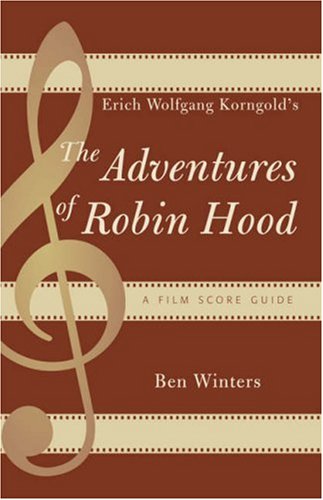
4. Erich Wolfgang Korngold's The Adventures of Robin Hood: A Film Score Guide (Scarecrow Film Score Guides)
by Ben Winters
Paperback: 208 Pages (2007-02-28)
list price: US$27.95 -- used & new: US$26.55
(price subject to change: see help)
Asin: 0810858886
Canada | United Kingdom | Germany | France | Japan
Editorial Review

Book Description
Winner of the Academy Award for best dramatic score in 1938, the score for The Adventures of Robin Hood is seen by many as the archetypal accompaniment to a Warner Brothers swashbuckler, and it established the score's composer, Erich Wolfgang Korngo ... Read more


5. Die tote Stadt: German Libretto
 Paperback: 52 Pages (1990-03-01)
list price: US$7.95 -- used & new: US$13.99
(price subject to change: see help)
Asin: 3795734800
Canada | United Kingdom | Germany | France | Japan

6. Symphony in F-Sharp, Op. 40
by Helmut Pollman
Paperback: 266 Pages (2000-03-01)
list price: US$48.95 -- used & new: US$23.09
(price subject to change: see help)
Asin: 3795762146
Canada | United Kingdom | Germany | France | Japan

7. Die Tote StadtOp. 12 Piano -vocal scoreGerman
by Erich Wolfgang KORNGOLD
 Hardcover: Pages (1920)

Asin: B000WWQDCU
Canada | United Kingdom | Germany | France | Japan

8. Die tote Stadt =: The dead city : opera in three acts founded on G. Rodenbach's "Das Trugbild" (Metropolitan Opera House grand opera libretto)
by Erich Wolfgang Korngold
 Unknown Binding: 95 Pages (1921)

Asin: B00086LEK6
Canada | United Kingdom | Germany | France | Japan

9. Erich Wolfgang Korngold: Aspekte seines Schaffens
by Helmut Pollmann
Hardcover: 168 Pages (1998)
-- used & new: US$58.41
(price subject to change: see help)
Asin: 3795702828
Canada | United Kingdom | Germany | France | Japan

10. Erich Wolfgang Korngold : Lieder Steven Kimbrough / Dalton Baldwin
by Erich Wolfgang Korngold
Audio CD: Pages (1984)

Asin: B000K04U2E
Canada | United Kingdom | Germany | France | Japan

11. The Last Prodigy: A Biography of Erich Wolfgang Korngold.(Review): An article from: Cineaste
by Royal S. Brown
 Digital: 3 Pages (1998-06-22)
list price: US$5.95 -- used & new: US$5.95
(price subject to change: see help)
Asin: B00098OA72
Canada | United Kingdom | Germany | France | Japan
Editorial Review

Book Description
This digital document is an article from Cineaste, published by Cineaste Publishers, Inc. on June 22, 1998. The length of the article is 867 words. The page length shown above is based on a typical 300-word page. The article is delivered in HTML format and is available in your Amazon.com Digital Locker immediately after purchase. You can view it with any web browser.

Citation Details
Title: The Last Prodigy: A Biography of Erich Wolfgang Korngold.(Review)
Author: Royal S. Brown
Publication: Cineaste (Magazine/Journal)
Date: June 22, 1998
Publisher: Cineaste Publishers, Inc.
Volume: 23Issue: 3Page: 50(1)

Article Type: Book Review

Distributed by Thomson Gale ... Read more


12. Erich Wolfgang Korngold: The Adventures of A Wunderkind.: An article from: Opera Canada
by Neil Crory
 Digital: 2 Pages (2007-11-01)
list price: US$9.95 -- used & new: US$9.95
(price subject to change: see help)
Asin: B0012SY32U
Canada | United Kingdom | Germany | France | Japan
Editorial Review

Book Description
This digital document is an article from Opera Canada, published by Thomson Gale on November 1, 2007. The length of the article is 484 words. The page length shown above is based on a typical 300-word page. The article is delivered in HTML format and is available in your Amazon.com Digital Locker immediately after purchase. You can view it with any web browser.

Citation Details
Title: Erich Wolfgang Korngold: The Adventures of A Wunderkind.
Author: Neil Crory
Publication: Opera Canada (Magazine/Journal)
Date: November 1, 2007
Publisher: Thomson Gale
Volume: 48Issue: 5Page: 53(1)

Distributed by Thomson Gale ... Read more


13. The Last Prodigy: A Biography of Erich Wolfgang Korngold.(Review) (book reviews): An article from: Notes
by Caroline Cepin Benser
 Digital: 8 Pages (1998-12-01)
list price: US$5.95 -- used & new: US$5.95
(price subject to change: see help)
Asin: B00098K6DE
Canada | United Kingdom | Germany | France | Japan
Editorial Review

Book Description
This digital document is an article from Notes, published by Music Library Association, Inc. on December 1, 1998. The length of the article is 2170 words. The page length shown above is based on a typical 300-word page. The article is delivered in HTML format and is available in your Amazon.com Digital Locker immediately after purchase. You can view it with any web browser.

Citation Details
Title: The Last Prodigy: A Biography of Erich Wolfgang Korngold.(Review) (book reviews)
Author: Caroline Cepin Benser
Publication: Notes (Refereed)
Date: December 1, 1998
Publisher: Music Library Association, Inc.
Volume: 55Issue: 2Page: 366(4)

Article Type: Book Review

Distributed by Thomson Gale ... Read more


14. Last Prodigy: A Biography of Erich Wolfgang Korngold 1st Edition Inscribed
by Brendan G. Carroll
 Hardcover: Pages (1997)

Asin: B000TXJFNQ
Canada | United Kingdom | Germany | France | Japan

15. Diegetic Music in Opera and Film: A Similarity Between Two Genres of Drama Analysed in Works by Erich Wolfgang Korngold (1897-1957)
by Robert Van Der Lek
 Paperback: Pages (1991-01)
list price: US$84.52 -- used & new: US$84.52
(price subject to change: see help)
Asin: 9051832613
Canada | United Kingdom | Germany | France | Japan

16. Last prodigy: a biography of Erich Wolfgang Korngold.: An article from: Opera Canada
 Digital: 3 Pages (1998-06-22)
list price: US$5.95 -- used & new: US$5.95
(price subject to change: see help)
Asin: B00098DXG6
Canada | United Kingdom | Germany | France | Japan
Editorial Review

Book Description
This digital document is an article from Opera Canada, published by Opera Canada Publications on June 22, 1998. The length of the article is 674 words. The page length shown above is based on a typical 300-word page. The article is delivered in HTML format and is available in your Amazon.com Digital Locker immediately after purchase. You can view it with any web browser.

Citation Details
Title: Last prodigy: a biography of Erich Wolfgang Korngold.
Publication: Opera Canada (Magazine/Journal)
Date: June 22, 1998
Publisher: Opera Canada Publications
Volume: 39Issue: 2Page: 44-5

Article Type: Book Review

Distributed by Thomson Gale ... Read more


17. Classic Film Scores Presents The Sea Hawk / Captain Blood - Suites for Piano by Erich Wolfgang Korngold
by Erich Wolfgang Korngold
Paperback: 24 Pages (1987)

Asin: B000KZL4WS
Canada | United Kingdom | Germany | France | Japan

18. The Constant Nymph
by Erich Wolfgang Korngold
 Hardcover: Pages (1942)

Asin: B000KUW4MC
Canada | United Kingdom | Germany | France | Japan

19. Classic Film Scores: The Adventures Of Robin Hood Suite For Piano [Songobook]
by Erich Wolfgang Korngold
 Paperback: Pages (1957)

Asin: B0013GKGW2
Canada | United Kingdom | Germany | France | Japan

20. Violanta (Metropolitan Opera House grand opera libretto)
by Erich Wolfgang Korngold
 Unknown Binding: 61 Pages (1927)

Asin: B00087BNR4
Canada | United Kingdom | Germany | France | Japan

  1-20 of 29 | Next 20
A  B  C  D  E  F  G  H  I  J  K  L  M  N  O  P  Q  R  S  T  U  V  W  X  Y  Z  

Prices listed on this site are subject to change without notice.
Questions on ordering or shipping? click here for help.

site stats