e99 Online Shopping Mall

Geometry.Net - the online learning center Help  
Home  - Composers - Coates Eric (Books)

  1-16 of 16
A  B  C  D  E  F  G  H  I  J  K  L  M  N  O  P  Q  R  S  T  U  V  W  X  Y  Z  

click price to see details     click image to enlarge     click link to go to the store

$5.46
1. Scale Aircraft for Free Flight
 
2. Star of God Song(Words and Music)
 
3. Masterpiece Music Part 4
 
4. Masterpiece Music Part 6
 
5. Masterpiece Music Part 10
 
6. Sleepy Lagoon
 
7. SLEEPY LAGOON
8. Sleepy Lagoon
 
9. Sleepy Logoon (SHEET MUSIC)
 
10. Eric Coates: A biographical discography
 
11. London Suite: Knightsbridge /
 
12. The BSO manual: The development,
 
13. Bird Songs at Eventide
 
14. Masterpiece Music Part 1
 
15. Suite in Four Movements : An Autobiography
 
$12.46
16. Future, Inc.: How Businesses Can

1. Scale Aircraft for Free Flight
by Eric Coates
Paperback: 192 Pages (2002-01)
list price: US$24.50 -- used & new: US$5.46
(price subject to change: see help)
Asin: 1854861670
Canada | United Kingdom | Germany | France | Japan

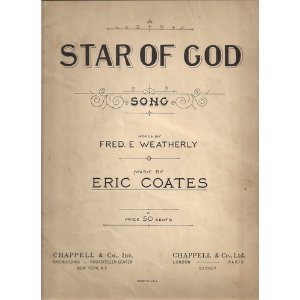
2. Star of God Song(Words and Music)
by Fred E. And Coates, Eric Weatherly
 Paperback: Pages (1922)

Asin: B0012PZDL8
Canada | United Kingdom | Germany | France | Japan

3. Masterpiece Music Part 4
by Eric (Editor) Coates
 Paperback: Pages (1937)

Asin: B000J6YQWS
Canada | United Kingdom | Germany | France | Japan

4. Masterpiece Music Part 6
by ERIC (editor) COATES
 Paperback: Pages (1937)

Asin: B000J6YQVY
Canada | United Kingdom | Germany | France | Japan

5. Masterpiece Music Part 10
by Eric (Editor) Coates
 Paperback: Pages (1937)

Asin: B000J6YQXC
Canada | United Kingdom | Germany | France | Japan

6. Sleepy Lagoon
by Jack Lawrence, Eric Coates
 Sheet music: Pages (1940-01-01)

Asin: B000G7EIOQ
Canada | United Kingdom | Germany | France | Japan

7. SLEEPY LAGOON
by Jack (words) and Eric Coates (music) Lawrence
 Paperback: Pages (1940)

Asin: B00112XJJK
Canada | United Kingdom | Germany | France | Japan

8. Sleepy Lagoon
by Eric Coates, Jack Lawrence
Sheet music: Pages (1936)

Asin: B000QFQ70G
Canada | United Kingdom | Germany | France | Japan
Editorial Review

Product Description
Nice vintage sheet music. ... Read more


9. Sleepy Logoon (SHEET MUSIC)
by Eric Coates (music), Jack Lawrence (words)
 Sheet music: Pages (1936)

Asin: B000Y6241S
Canada | United Kingdom | Germany | France | Japan

10. Eric Coates: A biographical discography covering all known 78 recordings, plus a listing of all important LP releases, reissues, etc
by Stuart Upton
 Unknown Binding: 22 Pages (1986)

Asin: B0007BXGM6
Canada | United Kingdom | Germany | France | Japan

11. London Suite: Knightsbridge / Covent Garden / Westminster
by Eric Coates
 Hardcover: Pages (1954)

Asin: B000XZZ4OY
Canada | United Kingdom | Germany | France | Japan

12. The BSO manual: The development, rationale, and use of the Broad System of Ordering (FID publication)
by Eric Coates
 Paperback: 157 Pages (1979)

Isbn: 9266005800
Average Customer Review: 5.0 out of 5 stars
Canada | United Kingdom | Germany | France | Japan

Customer Reviews (1)

5-0 out of 5 stars Best book ever written!!
From Motley Crue to Britney Spears there is no book written by any band that comes even close to comparison with this one. The BSO manual has changed my life forever and each day when I am faced with a problem I simply think: what would the BSO do? And if I can't come up with an answer, I simply consult the manual. This book not only changes lives, it creates them for those who lack a life! ... Read more


13. Bird Songs at Eventide
by Royden & Coates, Eric Barrie
 Paperback: Pages (1930)

Asin: B000W5VY1W
Canada | United Kingdom | Germany | France | Japan

14. Masterpiece Music Part 1
by Eric (Editor) Coates
 Paperback: Pages (1937)

Asin: B000J9XIQ0
Canada | United Kingdom | Germany | France | Japan

15. Suite in Four Movements : An Autobiography
by Eric Coates
 Hardcover: 271 Pages (1953)

Asin: B0000CINAH
Canada | United Kingdom | Germany | France | Japan

16. Future, Inc.: How Businesses Can Anticipate and Profit from What's Next
by Eric Garland
 Hardcover: 264 Pages (2007-01)
-- used & new: US$12.46
(price subject to change: see help)
Asin: 0814497861
Average Customer Review: 5.0 out of 5 stars
Canada | United Kingdom | Germany | France | Japan
Editorial Review

Book Description
Foreword by Joseph Coates

In the next 50 years, new technologies, shifting global economics, and many other factorswill present innumerable changes for business and society to navigate. Starting now,leaders need to be more flexible, responsive, and decisive than ever before.Unfortunately, most people are not trained in the type of critical thinking required toanticipate what lies ahead. This groundbreaking book will change that.

Futuring is not a matter of tea leaves and crystal balls -- it is a rigorous science based ontime-tested analytical methods. Future, Inc. translates the proven techniques ofprofessional futurists into accessible language and shows how to:

* identify what is and what isn't changing at a given time, and how even small changeswill affect whole businesses
* use forecasting -- not "predictions" -- to pinpoint tomorrow's realities by looking attoday's trends
* employ scenarios to test the validity of potential strategies

The author illustrates his advice with examples of companies whose foresight has giventhem an unparalleled advantage and identifies significant trends that will impactbusinesses in the future. Companies can't afford to be caught unaware. In order to surviveand succeed, they need to look ahead. Future, Inc. provides the tools to bring the futureinto focus. ... Read more

Customer Reviews (8)

5-0 out of 5 stars Future Inc
After hearing the author speak on a panel about the future, I decided to buy his book.And what a fabulous book it is!Displaying in-depth knowledge, and conveying it in an entertaining and clear manner usually don't go together.That is what makes this book a great read.
If you like ideas, thinking about them, exploring them, etc., then you will love this book.

5-0 out of 5 stars What is the Secret Sauce to Being a "Visionary" Thinker
Highly recommended reading for anyone.It contains important ideas.I think about its relevance, particularly in light of the news [daily] about an upcoming Recession.While this may tend to put us in knee-jerk reaction-mode, thinking about what we have to do presently in reaction to the possible conditions of the next 12-18 months; it is actually now more than ever that we need a framework for thinking about what is on the 10-20 year horizon.If you could effectively do that [i.e., build the scenario for 10-20 years out, and alter your current plans accordingly], imagine how far ahead of your competition you would be -- in business and in life.

5-0 out of 5 stars Strategic Use of the Future
I think knowing about trends and anticipating the future is an invaluable skill for consultants and senior HR people. This is especially true for the latter if they want to be a strategic player. If you truly want to make your "place at the table" being a "business futurist" is one way to do it. I just finished reading Eric Garland's Future Inc.: How Businesses Can Anticipate and Profit from What's Next and I think it is excellent. Garland steps you through the process of viewing the world as a system, recognizing trends, developing scenarios, drawing pictures to make those scenarios easier to communicate and then actually communicating the future to your target audience. One tool that I found to be very helpful, in fact I have already applied it to one consulting situation, is what he called the STEEP model. It is a model that you can use to think about all the potential impacts on your situation, as an example, your current recruiting method. STEEP stands for:


Society
Technology
Economics
Ecology
Politics
Thus, if you were trying to determine what future recruitment for you company might look like you would consider these areas and what their impact might be on recruiting. For example, society might include, Gen Y considerations, talent shortages, demographics, migration patterns, and educational shortages. Technology might include the impact of Internet recruiting and video resumes. Economics might include inflation, cost-of-living, and relocation expense. Ecology might include "green" considerations and your company's reputation. Politics might include federal and state legislative changes that would change discrimination definitions. If you get nothing else out of this book other than the use of this tool it will be well worth the price of the book.

Garland then finishes the book with his take on what he calls the "Drivers of the Future." He discusses: Aging, Information Technology, Health Care (versus what we do today which is 'sick care'), Biotechnology, Energy, Nanotechnology, Media and Communications, and Ecology and Sustainability. All of them are important, but for the HR professional the first three are of particular importance.

The key point of his book is to view the world as a system and to realize that there are multiple impacts on whatever you are working on and to be effective in anticipating the future you must consider this system. That is why the STEEP tool is so effective. This can be put to use today in ALL HR departments and it will have an immediate impact on how you view the strategic aspect of your job and how you are viewed as a contributor to strategy.


5-0 out of 5 stars Business Storytelling in the Future
I was attending a social event and bumped into Eric Garland. His ideas of the future intrigued me enough to buy my own copy of Future Inc. After reading his book, I have come to learn that the study of the future is its own discipline. Studying the future can help organizations "profit from what's next." Truly, the future is something all of us should be thinking about more.

I travel the country speaking and consulting on topics that help organizations build stronger and more profitable relationships. Meeting thousands of individuals and hearing their stories, many folks are singly focused on the short-term gains. This focus makes them miss many important direct and indirect trends and forces. Garland suggests and I agree, that we should use a model to capture the trends and forces. He recommends using the STEEP model (society, technology, economics, ecology, and politics) along with scenarios. Scenarios portray various futures to help decision makers understand the direct and indirect trends and forces that shape their own organizational stories.

Page 27 sums this concept nicely, "When you think about a problem or anything else, no matter how complex, take it apart. If it's a product, find out where its supplies or components came from, who participated in its creation, and where it all began. If you can see all parts of the system, then you have a much better chance of seeing where the next change will come from."

I appreciate the thorough approach to the study of the future along with the practical tools you can use today. I especially enjoyed chapters 5 (Strategic Implications: What the Future Means to You), 6 (Scenario Generation: Drawing a Picture of the Future), and 7 (Communicating the Future--Even to the Skeptical).

4-0 out of 5 stars Garland provides a timeless method for strategic IT moves
As a newcomer to the field of information technology, I was hopeful that this book would provide insights on how to manage change from a technological viewpoint.Although the purpose of the book was not technology alone, the theme was intertwined throughout the book and explored in creative ways.The technology topics were not discussed in depth which left room to explore analysis techniques.These tools will be applicable even when current technologies are obsolete.Therefore, this book will be a reference for years to come.

The book is divided into two sections: Tools and Techniques and Drivers of the Future.In the first section, each chapter discusses one important stage of the futurism process.The second half devotes a chapter each to eight different broad categories of trends. Each chapter contains real world examples that demonstrate companies succeeding or failing at strategically planning for the future.The last page of each chapter contains a handy checklist of the important points from the chapter and a section explaining activities or implications of the topic.This provides a quick reference guide and easy access to information from the chapter.

The basic premise of the book is to introduce futurism and provide the tools necessary to develop scenarios of the future that may not be obvious to the analyst.The step by step process is easy to follow and uses graphics to illustrate key points.In fact, Garland stresses that graphical representations lead to the successful implementation of the futurist techniques.Wagner in "Partners for Progress" supports this when she explains how road maps help leaders focus on ways of conceptualizing the future.Garland uses many real business examples that illustrate his points in dramatic ways.He even manages to show how chocolate bars and bottles of beer are affected by technology trends.

In the second section of the book, Drivers of the Future, the author begins by stating that new capabilities in information technology are leading most changes.Then, he scratches the surface of other topics and devotes a chapter to each:aging, information technology, heath care, biotechnology, energy, nanotechnologies, media and communications, and ecology and sustainability trends.To my surprise, the theme of technology was present in each of the topics.From the notion of smart homes that support the changing needs of the aging population to the nanotechnologies that are changing healthcare, technology is either responsible or reactive to the evolving society.To remain competitive, businesses must stay informed on all of these topics and prepare for the future.

Of these broad topics, the aging trend was particularly interesting to me.Charles Lanigan in "Preparing a Capable Workforce for the Knowledge Economy" underscores the importance of the aging trend as he discusses the effects of the changing demographics.As the shift from physical labor to intellectual labor continues, businesses must face the fact that capturing the knowledge from retiring employees is not an easy task.Businesses must create tools to enable the proliferation of knowledge.In addition, he states that "many problems in our modern world are caused or exacerbated by human beings who fail to think and communicate, relate to others or respond mindfully to changing circumstances".This is one of many reasons why Garland's tools and techniques are valuable for the success of a company.

One other item of note is the chapter dedicated to information technology trends.Although technology plays a major role throughout the book, the ideas presented in this chapter support Nicholas Carr's controversial IT ideas in "IT Doesn't Matter."Garland acknowledges that information technology is becoming more powerful, less expensive, and available to all. Both Carr and Garland treat IT as a commodity that does not provide a strategic advantage from competitors.

After reading this book, I was left with two questions.First, how do companies assign a value to each scenario?The book successfully demonstrates the tools that are required to list possible outcomes, but it is lacking in the valuation department.Secondly, how do companies successfully implement the scenario?Andy Hines, a leading futurist by his own right, provides a complimentary process to Garland's but in six phases.He starts with understanding the present with what he calls "Framing" and "Scanning" steps. Then, he explores the future in the "Forecasting" stage.After his "Visioning" and "Planning" stages he explains the "Acting" stage where he describes how to implement the plan.Garland stops short of this final implementation phase.

In conclusion, anyone involved with strategic planning should definitely have the tools that Garland describes in this book.His step-by-step process engages the organization in seeing the value of looking at a broad range of areas and has brought many companies successfully into the future.

References
Carr, N.G. (2003), "IT Doesn't Matter." Harvard Business Review, (81:5), May 2003.
Hines, A. (2006) "Strategic Foresight." The Futurist, Sept/Oct 2006.
Lanigan, C. (2007), "Preparing a Capable Workforce for the Knowledge Economy." CIO Magazine, March 14, 2007.
Wagner, C. (2006), "Partners for Progress: Creating Global Strategies for Humanity's Future", The Futurist, Nov/Dec 2006.
... Read more


  1-16 of 16
A  B  C  D  E  F  G  H  I  J  K  L  M  N  O  P  Q  R  S  T  U  V  W  X  Y  Z  

Prices listed on this site are subject to change without notice.
Questions on ordering or shipping? click here for help.

site stats