e99 Online Shopping Mall

Geometry.Net - the online learning center Help  
Home  - Basic W - Washington Libraries (Books)

  1-20 of 100 | Next 20
A  B  C  D  E  F  G  H  I  J  K  L  M  N  O  P  Q  R  S  T  U  V  W  X  Y  Z  

click price to see details     click image to enlarge     click link to go to the store

$19.93
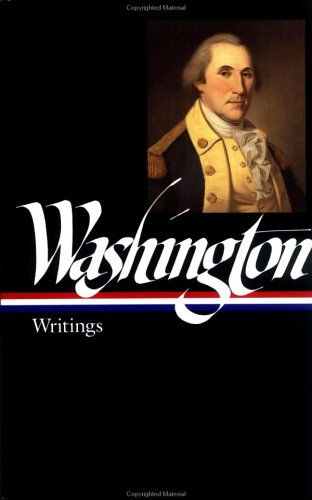
1. George Washington : Writings (Library
$21.23
2. Washington Irving : History, Tales,
$19.39
3. Washington Irving : Bracebridge
$22.41
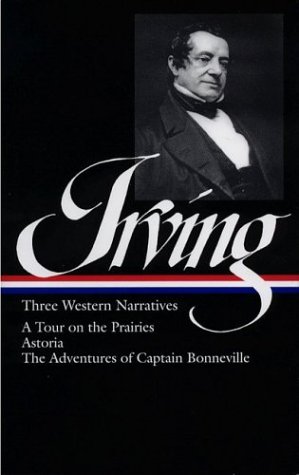
4. Washington Irving: Three Western
$1.21
5. Washington Square (Modern Library
 
$21.65
6. Kid's Guide To Washington, D.c.
$14.65
7. If You Grew Up With George Washington
 
8. The Presidency of George Washington
 
$12.35
9. George Washington's Mother (All
 
10. Little Leather Library-Red-Miniature-Speeches
$3.88
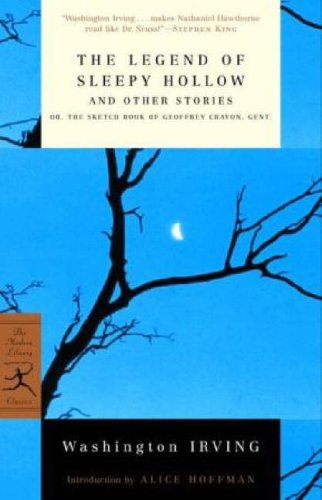
11. The Legend of Sleepy Hollow and
$2.75
12. Love Poems (Everyman's Library
 
13. Reveille in Washington, 1860-1865
$3.50
14. The Meaning of Independence: John
 
15. The Life and Letters of Washington
 
16. Life of George Washington, (A
$48.00
17. Coming of Age in Reference Services:
$14.99
18. Henry James : Novels 1881-1886:
$14.94
19. Process: Seattle Central Library
 
$14.65
20. Martha Washington: America's First

1. George Washington : Writings (Library of America)
by George Washington
Hardcover: 1184 Pages (1997-02-22)
list price: US$40.00 -- used & new: US$19.93
(price subject to change: see help)
Asin: 188301123X
Average Customer Review: 5.0 out of 5 stars
Canada | United Kingdom | Germany | France | Japan

Customer Reviews (3)

5-0 out of 5 stars Great measure of the man
All too often, George Washington comes across as a monument rather than a person.As the victorious general of the American Revolution and as our nation's first president, he is often depicted as the indispensable figure in the struggle to establish America as a nation, with his decisions and actions almost providential in nature.Yet Washington the man is lost amidst the adulation, leaving the reader with an incomplete picture of who he really was.

This collection of Washington's writings is an indispensable aid in the process of understanding the man behind the legend.The editor, John Rhodehamel, has selected 446 key documents from Washington's life, including letters, addresses, and general orders issued to his men.Written in the strictly formal style of the Virginia planter seeking to maintain the dignity of his position in society, his prose often cloaks the anxiety he felt about his status, the revolutionary cause, and the survival of the new republic.Together they convey a distinctly human figure, one whose stature only grows with a better understanding of the difficulties he surmounted.This is the book for anyone seeking to supplement other works on Washington with the original sources, or for those who simply want to read about Washington's life in his own words.

5-0 out of 5 stars 'Marble Man' of Revolutionary War speaks his mind
Like Robert E. Lee, George Washington might be considered the marble manof his time, a revolutionary whose passion doesn't burn as bright on thepages of history as, say, Thomas Paine, or as clear as Thomas Jefferson. Hemay be admired and revered, but not necessarily loved, certainly not in theway as old Marse Lee.

Whether Washington the man can be reclaimed fromWashington the statue is a task left up to biographers and fiction writers,because after thumbing through this collection of his writings, it is withsome certainty that the man from Mount Vernon can't do it himself.

Oncegets the impression that Washington was a man who believed in duty, tohimself as an eighteenth-century man of means, and to his country, whetherit be England (for whom he participated on several expeditions against theFrench in Pennsylvania), or his newly created United States. The man who,in 1755, volunteered to join the British commander in chief, General EdwardBraddock, on what became a disasterous expedition into westernPennsylvania, became by 1775 the man who would write to his wife announcinghis appointment to head the rebel army, that, "I have used everyendeavour in my power to avoid it [command]."

Even his ascentionto the presidency was performed in very reluctant steps. In a letter toHenry Knox, he wrote, "I can assure you . . . that my movements to thechair of Government will be accompanied with feelings not unlike those of aculprit who is going to the place of his execution."

So why serve?"It was utterly out of my power to refuse this appointment withoutexposing my Character to such censures as would have reflected dishonourupon myself, and given pain to my friends," he wrote MarthaWashington.

Perhaps an early clue to his character can be found in thefirst entry, a collection of 100 maxims he composed when he was 15, rulesfor living which range from the practical ("Put not your meat to yourMouth with your Knife in your hand neither Spit forth the Stones of anyfruit Pye upon a Dish nor Cast anything under the table"), to theinspirational ("Let your Recreations be Manfull not Sinfull"),and even a bit of the poetic ("Labour to keep alive in your Breastthat Little Spark of Celestial fire Called Conscience").

Sober,practical, firm-minded, George Washington was not a man to inspire devotionthrough force of personality, only through a far-sighted competence whichdoes not make for glorious history, but to those who cherish the ideals andpromise of America, one can be thankful that he was in the right place atthe right time.

5-0 out of 5 stars In this splendid book, Washington finally speaks for himself
George Washington is far more revered than known; but, as this splendid book proves, when you come to know him you feel even more admiration for him.This installment in the indispensable LIBRARY OF AMERICA series gathers hundreds of Washington's letters, as well as his more formal public statements as Virginia legislator and revolutionary leader, Commander-in-Chief of the Continental Army, advocate of federal constitutional reform, and First President of the United States.The formal public statements display the heavy style that Washington fell into when consciously speaking to posterity.It is in his letters that Washington's vigorous mind, strong emotions, and sound judgment emerge most cleary -- and that portray his humanity and his nobility most clearly and accessibly.Readers of this volume would be well-advised to read John Rhodehamel's superb chronology (appearing at the back of the book) first, and then turning to the text.If they do this, they will have!a sound chronological and historical basis for setting Washington's writings, public and private, in context and for seeing the critical founding decades of the American republic as he saw and experienced them.

-- Richard B. Bernstein, Adjunct Professor of Law, New York Law School; Daniel M. Lyons Visiting Professor in American History, Brooklyn College/CUNY; Book Review Editor for Constitutional Books, H-LAW; and Senior Research Fellow, Council on Citizenship Education, Russell Sage College ... Read more


2. Washington Irving : History, Tales, and Sketches: The Sketch Book / A History of New York / Salmagundi / Letters of Jonathan Oldstyle, Gent. (Library of America)
by Washington Irving
Hardcover: 1144 Pages (1983-11-15)
list price: US$45.00 -- used & new: US$21.23
(price subject to change: see help)
Asin: 0940450143
Average Customer Review: 4.5 out of 5 stars
Canada | United Kingdom | Germany | France | Japan
Editorial Review

Book Description
A writer of great urbanity and poise, Washington Irving was America's first internationally acclaimed man of letters. Here in one volume are the writings that established his reputation and earned him the admiration of Hawthorne, Poe, Coleridge, Byron, Scott, and Dickens. Written in the character of an elderly gentleman of the old school, "Letters of Jonathan Oldstyle, Gent." is a series of comic reports on the theater, theater-goers, fashions, balls, courtships, duels, and marriages of his contemporary New York. "Salmagundi" continues this roguish style of satire and burlesque, and its freshness, energy, and accomplishment took the Anglo-American literary scene by storm. "A History of New York," a wild and hilarious spoof combining real New York history with political satire, is presented here in its original, unexpurgated version. "The Sketch Book" is a brilliant, captivating story collection that draws on vanishing folkways, depictions of Hudson Valley life, and fable; it contains Irving's best-loved stories, "Rip Van Winkle" and "The Legend of Sleepy Hollow." ... Read more

Customer Reviews (2)

4-0 out of 5 stars At first I found him pompous
with his Jonathan Oldstyle stories.And I skipped most of the Salmagundi stories, they were boring me. But now the history of New York is very funny and very amusing. It's very long and takes most of the book. There is a total change of style from pompous to light which is very refreshing.

5-0 out of 5 stars Knickerbocker's History of New York is an overlooked classic
[I recommend this anthology specifically for "Diedrich Knickerbocker's History of New York," which was not listed by amazon.com as a separate title.]

Irving is best-known for his shortstories, which are excellent examples of folk literature (and not likelythe sole product of Irving's imagination)."History of NewYork," however, is what established his reputation in his ownlifetime.It was the first real American bestseller and the first Americannovel to garner critical respect overseas.Irving's ingenious marketingscheme for the novel (placing a series of letters in New York newspapersconcerning the disappearance of the book's supposed author, DiedrichKnickerbocker) was the first instance of off-the-book page publicity inAmerica and its success (it created a veritable frenzy upon the novel'spublication) would not be duplicated for many, many years.

The novelitself is funny, acerbic, charming and illuminating.Working in thetradition of European satire, Knickerbocker's History is nonethelessdistinctly American.Some knowledge of early American history will enhanceyour understanding of the novel (by helping you recognize which Americanpublic figures the Dutch governors are standing in for), but it is notnecessary to an appreciation of the novel on its own terms.The book waspublished in several (revised) editions.I recommend seeking out the 1809or 1812 edition, as Irving toned down his political arguments in laterversions (though the comparison between early versions and the 1848 editionis also worth noting).This anthology contains the 1809 edition of thenovel. ... Read more


3. Washington Irving : Bracebridge Hall, Tales of a Traveller, The Alhambra (Library of America)
by Washington Irving
Hardcover: 1104 Pages (1991-03-01)
list price: US$35.00 -- used & new: US$19.39
(price subject to change: see help)
Asin: 0940450593
Average Customer Review: 5.0 out of 5 stars
Canada | United Kingdom | Germany | France | Japan
Editorial Review

Book Description
Three story collections of great urbanity and poise from the first American author to burst onto the international literary scene. "The Alhambra," Irving's "Spanish Sketchbook," was inspired by his 1829 residence at the ancient Moorish palace at Granada; weaving history, legend, and description, it remains the best guidebook to this haunting place. Over 120 tales in all. ... Read more

Customer Reviews (5)

5-0 out of 5 stars To hear is to forget,, to see is to remember, to experience is to understand
Once you have visited the Allhambra in Grenada, Washington Irvines book comes to life. The tales come to life. The experience is so magical that you believe the fables may have actually happened. Who knows? I had to purchase the book immediately after my visit and it is the best book purchase I have ever made

5-0 out of 5 stars Wait until you get back
I think this book is much more enjoyable if you read it after you have visited the Alhambra;two Moorish palaces that sit on top of a mountain in the beautiful Sierra Nevada mountain range of Spain, palaces of incredible architecture and setting, the last outpost of the Moors in Spain.Christopher Columbus waited for 6 years before Queen Isabell would give him ships, she made him wait until theMoors were driven out of Spain.When the Alhambra finally falls, Coloumbus is given permission and ships for his quest a few days later, and the next year the Spanish Inquisition starts.
All of this comes to you if you visit the very romantic/historic city of Granada and the Alhambra, and after seeing the Alhambra restored, having walked its rooms and grounds, having listened to the fountains, letting your immagination run, then read this book, after you return home.Washington Irving's stunt of taking up residence in the rundown, forgotten Alhambra of his time seems even more fantastic.In fact, if you are going to Spain, buy a copy of this book in Granada; they are sold everywhere in different languages, and have pictures of paintings done in the period around Irving's stay.If you haven't been to the Alhambra, you should go.

5-0 out of 5 stars Don't go to Spain without packing this book!
"Tales of the Alhambra" is must-reading for the traveler in Spain.Irving is best remembered in this country for his collections of American folklore, like the stories of Rip Van Winkle and the Headless Horseman, but in Spain they remember him for the Alhambra stories -- in fact, there's a hotel named in his honor in Granada.Irving lived in that beautiful old Moorish palace at a time when it was a neglected ruin, and his wonderful descriptions, interspersed with the folk-tales that he collected from the people of Granada, helped to spark interest in repairing and restoring the monument.The folk tales, told in Irving's inimitable, witty style, usually deal with romantic elopements, or buried treasure, or both.My personal favorite is the story of the young prince living in the Generalife (the beautiful summer palace) who learned the language of the birds. That one is fantasy, but it's true that there was hidden treasure in the Alhambra: the palace itself, its architecture and decoration, and we have Irving to thank for rediscovering it.

5-0 out of 5 stars Travel companion
A great book to read while traveling in spain.If you are going to Alhambra, read this book!It will bring the palace alive for you.The writing is very accessable, and easy to follow for having been written so long ago.

5-0 out of 5 stars forgotten classic
When we were kids, we had a card game called Authors.I think the object was to be able to name the works of famous authors.At any rate, there were three titles that always seemed especially enticing: Idylls of the King, The Heart of Midlothian and Tales of the Alhambra.

Thirty years later, I picked this one up with some trepidation; we've all struggled through classics oftwo hundred years ago, baffled by arcane language & outdated usages.However, to my very pleasantsurprise, the book is terrific, combining an Iberian travelogue with delightful tales and legends ofMoorish Spain.Irving's travels are interesting enough in themselves, but it is the tales, which haveeverything from flying carpets to hidden treasure, that really make the book.

GRADE: A ... Read more


4. Washington Irving: Three Western Narratives: A Tour on the Prairie / Astoria / The Adventures of Captain Bonneville (Library of America)
by Washington Irving
Hardcover: 1024 Pages (2004-01-26)
list price: US$40.00 -- used & new: US$22.41
(price subject to change: see help)
Asin: 1931082537
Canada | United Kingdom | Germany | France | Japan
Editorial Review

Book Description
America’s first internationally acclaimed author, Washington Irving, was also one of the first to write about its then far-western frontier. After seventeen years in Europe, the famous author of “The Legend of Sleepy Hollow” returned to America and undertook an extensive three-month journey through present-day Missouri, Kansas, Oklahoma, and Arkansas. Describing scenery and inhabitants with an eye to romantic sublimity and celebrating the frontiersman’s “secret of personal freedom,” Irving published his account of that journey in 1835 as A Tour on the Prairies, an early and distinctly American depiction of the young nation’s borderland and its native inhabitants.

Irving followed up this eyewitness account with two works that chart the dramatic and tumultuous history of the early American fur trade, very much in the spirit of James Fenimore Cooper’s Leatherstocking Tales. Astoria (1836) recounts John Jacob Astor’s attempt to establish a commercial empire in the Pacific Northwest. The Adventures of Captain Bonneville (1837) is a lively saga of exploration among the mountains, rivers, and deserts of the Far West. While working closely from original documents, Irving wrote also as a mythologist of the vast spaces traversed by “Sindbads of the wilderness.” In these three compelling narratives he opened up a crucial region of the American literary imagination influencing such authors as Poe, Hawthorne, and Melville. ... Read more


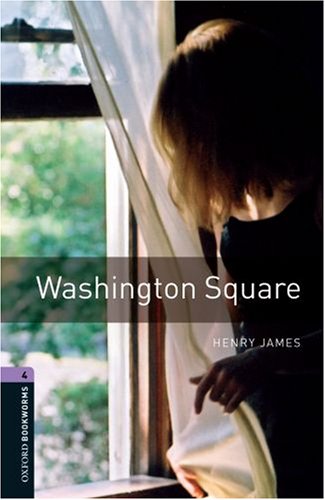
5. Washington Square (Modern Library Classics)
by Henry James
Paperback: 288 Pages (2002-10-08)
list price: US$7.95 -- used & new: US$1.21
(price subject to change: see help)
Asin: 0375761225
Average Customer Review: 4.0 out of 5 stars
Canada | United Kingdom | Germany | France | Japan
Editorial Review

Book Description
Washington Square follows the coming-of-age of its plain-faced, kindhearted heroine, Catherine Sloper. Much to her father’s vexation, a handsome opportunist named Morris Townsend woos the long-suffering heiress, intent on claiming her fortune. When Catherine stubbornly refuses to call off her engagement, Dr. Sloper forces Catherine to choose between her inheritance and the only man she will ever truly love. Cynthia Ozick, in her Introduction to what she calls Henry James’s “most American fiction,” writes that “every line, every paragraph, every chapter [of Washington Square] is a fleet-footed light brigade, an engine of irony.” Precise and understated, this charming novel endures as a matchless study of New York in the mid-nineteenth century.Download Description
Inspired by a story Henry James heard at a dinner party, Washington Square tells how the rakish but idle Morris Townsend tries to win the heart of heiress Catherine Sloper against the objections of her father. Precise and understated, the book endures as a matchless social study of New York in the mid-nineteenth century. ... Read more

Customer Reviews (49)

4-0 out of 5 stars Both the Novella and the Film Adaptation are Quite Good
Nominally a story of young romance, Washington Square's plot actually pivots around two sharply defined characters: the young Catherine Sloper, honest and sweet, but embarrassingly average and plain, and her father, Dr. Austin Sloper, articulate and brilliant, but disturbingly cold-hearted and domineering. Henry James professed little liking for his early novel; through the years most readers have ignored his opinion.

The writings of Henry James, especially his later novels, are notable (some might say, infamous) for using lengthy, digressive sentence structures for exploring complex emotional and psychological motivations. Slow paced plots play a subordinate role to nuanced, subtle, ambiguous characterizations. Contrastingly, Washington Square's popularity most likely stems from its straight-forward plot, some suspense, and sharply defined characters.

Catherine was an only child; her mother and baby brother died of complications during childbirth. Years later Dr. Sloper is still grieved and angered by the loss of his beautiful, vivacious, and witty wife. Despite Catherine's love and admiration for him, Dr. Sloper remains distant and cold, viewing Catherine's social ineptness as an ironic parody of his deceased wife.

When the young, handsome, articulate Morris Townsend shows interest in Catherine, Dr. Sloper immediately concludes that his only interest is her wealth, and moves quickly to break them apart. Matters are complicated by Catherine's silly, meddlesome, and manipulative aunt (Mrs. Penniman, the widowed sister of Dr. Sloper) who functions as an uninvited go-between for the two young lovers. Dr. Sloper remains quite confident in his own judgment, but in the early stages of their romance we readers remain uncertain ofTownsend's motivation.

My fascination with Washington Square centered not on whether Townsend was genuinely in love with Catherine, but with the way in which Catherine revealed her inner strength in managing her increasingly strained relationship with her insensitive father and in how she ultimately comes to terms with the duplicity of her lover. Washington Square may not have achieved the full psychological subtlety and complexity desired by Henry James, but it is far from a simple, superficial tale of bitter sweet romance.

Washington Square on film: I highly recommend Washington Square, a 1997 production that features Jennifer Jason Leigh as Catherine, Albert Finney as Dr. Sloper, Ben Chaplin as Morris Townsend, and Maggie Smith as Catherine's aunt. This casting is superb, with all four characterizations faithful to the novel.

There are a few unnecessary scenes, however, that portray Catherine as overly clumsy and inept. Also, Morris Townsend on occasion is unrealistically effusive in his praise and admiration. A little more of Henry James's subtlety and nuance would have been better. Washington Square was directed by Agnieszka Holland.

Washington Square in print: This novella is widely available in various anthologies, or published alone, in inexpensive paperbacks from Signet Classics, Penguin Classics, and others. I particularly like a Simon and Schuster, hard cover edition (ISBN 0-684-81911-2) with 16 pages of high quality, black and white historical photographs, many belonging to the Museum of the City of New York historical collection.

4-0 out of 5 stars Washington Square
Washington Square is a compact, tightly constructed story that focuses with almost unwavering gaze upon the Sloper family, or more particularly, on Catherine Sloper, a sweet, ordinary, rather dull young lady who falls in love with a man her father is convinced loves her purely for the inheritance she stands to gain upon his death.This early novel of Henry James' alternates between biting, witty exchanges amongst the characters and introspective, sensitive exploration of the feelings and thoughts of Catherine and her father.The narrator - never named, though at times he is quite chatty towards the reader - chooses not to take sides, instead displaying the different facets of each character as they are, leaving questions of personality and intent up to the reader.

It is usual in a novel involving a young lady and a potentially disastrous suitor that the female in question be beautiful, intelligent, resourceful, kind - even if she doesn't know it.These stories tend to follow her development from innocent to experienced, which is one of the many reasons why Washington Square plays out so differently.Catherine is, we are told, 'not ugly; she had simply a plain, dull, gentle countenance.The most that had ever been said for her was that she had a "nice" face'.Later, her father compares Catherine's intelligence to that of a bundle of shawls.He often laments Catherine's lack of qualities, and so does Catherine, and so does everyone else.She is a submissive, almost subservient in her attitudes, willing to submerge her ideas - if she has any - and bend with the will of her father.Enter love, however, and slowly a change begins to take place.

Morris Townsend is the man Catherine falls for.She had never experienced the interest of a male before, indeed, her life seems to have been somewhat sheltered.When Morris enters her life Catherine's father, Dr Sloper, who never had much hope for his daughter, becomes determined to prevent them from marrying.Sloper is the type of father who wishes a specific future for his child, so they will 'be happy', and yet when their happiness chooses a different direction, they become stubborn, obstinate, and, in this case, quite hurtful and damaging.

Neither Morris nor Dr Sloper are particularly admirable characters.Granted, both are intelligent and even charming, with the novel's most enjoyable moments coming from the interaction between the two.They snipe at one another during their very clever exchanges where epigrams fly and bon mots are thrown about with abandon.However, Morris is shown - rather bluntly - to be interested in Catherine's money and not herself, which he finds tiresome, and Dr Sloper is concerned with breaking the tiny backbone that has emerged from he knows not where within Catherine's heart.

Do we love Catherine?Is that the intent of this novel?The answer is - no.Catherine truly is plain, in the sense that there isn't much to her.She is confused by the larger forces in her life which seem to determine the direction of her future without any real input from herself.She believes that both Morris and her father have her best interests at heart, even when it is clear to the reader they do not.Whenever poor Catherine dares to speak her mind, Morris or her father are ready and willing to stamp it down.Her father can be quite manipulative.After asking Catherine to give Morris away, he says, 'Have you no faith in my wisdom, in my tenderness, in my solicitude for your future?', and later, when she stands by her man, he asks, 'You make nothing of my judgment, then?'Poor Catherine is left to wonder what to think, when all she knows is she loves her father and wants to marry Morris.

During the course of the novel, Catherine develops attitudes which distinctly reject her father's plans, but she also, to the surprise of Morris, refuses to go along with everything he says, either.There is a clear impression throughout the work that, should she choose Morris, she will be exchanging one master for another - the names may change, but the overall life of Catherine will not.

Henry James is known for his dense - some call it impenetrable - prose, and for his fondness for deeply exploring the inner workings of his characters.Washington Square is slightly different to his others works in this regard, perhaps because it is an earlier novel.The prose can be quite circumlocutory, with multiple clauses embedded within a single sentence, long rambling comma filled descriptions and niceties of expression that seem to exist purely to avoid stating the blunt truth of the matter.But it is these techniques which serve also to highlight the confusing world around Catherine, and the difficulty she finds in untangling the intention of the two very strong men who wish to control her life.James, at his best, is a phenomenal writer, and happily for the reader of Washington Square he is completely in charge of the material.The narrator is confident in expressing the feelings and thoughts of the major and minor characters, using tact, grace, eloquence and insight to create his little portraits.

Whether or not Catherine will marry Morris and defy her novel, though an important part of the novel, is not the primary thrust of James' work.It seems clear from the outset the direction the story will take, and this initial belief becomes true.Where the strengths of the story lie is in the growing independence of Catherine, her understanding of herself as a person capable of expressing intent and determining the direction of her life by herself.Catherine is an innocent in a world which is, invariably, destructive towards such people.She learns this the hard way, but there is something undeniably 'Catherine' that remains, even to the bitter end.Washington Square, while not a masterpiece on the level of The Portrait of a Lady, nevertheless explores its theme well, and does so with an assured hand.Catherine's life, though somber and small by today's standards, does evoke sympathy within the reader.The final line is very sad, because it was inevitable, and because, deep down, the reader knows that it is the best life Catherine could have had.

4-0 out of 5 stars "You Can't Please Your Father and Me Both; You Must Choose Between Us..."
Although Henry James is best known for The Portrait of a Lady (Penguin Classics), this slender volume of a young woman's lifetime is one that resonates for the oddest reasons. With a protagonist who is entirely passive, a plot that is somewhat uneventful and a cast of supporting characters that are entirely unsympathetic, "Washington Square" is a novel that encapsulates a life hardly worth reading about. Paradoxically, that is precisely why it should be read, and why it's so surprisingly memorable.

Catherine Sloper is shy, plain, dull and a little slow in her studies. Her mother was none of these things, leaving her somewhat of a disappointment to her father, an accomplished and well-respected doctor, a man who Catherine adores and longs to please. Well aware of her spiritless nature, Catherine is astonished when she receives the attention of the handsome and charming Morris Townsend, and is soon devotedly in love with her new suitor. Encouraged by her romantic and foolish Aunt Lavinia Penniman, Catherine accepts Morris's proposal of marriage. Unfortunately, her father is not at all impressed by the match, (believing Morris to be a mercenary after her dowry) and forbids Catherine from seeing him on the threat of disinheritance. Torn between the two most important people in her life, the listless and confused Catherine decides to wait. But will her beloved wait for her, or is she deceived by his true intentions?

Catherine's complete ordinariness is what makes her special within the context of the novel, as I am hard-pressed to think up another heroine who is so uncommonly common. Though she is a pleasant enough person, there is nothing remotely interesting to her, save the predicament she finds herself in. Her situation is frustrating to behold, as the poor girl is torn between her intelligent, infallible father and her charming, loving fiancée. Although her father has his daughter's best interests at heart, he handles the affair with such practicality and stubbornness that his crusade against Townsend eventually dwindles into a battle of will between himself and his daughter, and then petty revenge and one-upmanship. Likewise, though Morris Townsend seems faithful and loving, declaring that he has no interest in Catherine's inheritance whatsoever, we cannot shake a sense of untrustworthiness in him. Despite Catherine's plainness, you can't help but feel that neither man deserves her.

To be privy to Catherine's inner struggles is to witness a tiny and insignificant life within literature, with none of the romance, passion or tragedy of Lizzie Bennett, Tess Durbeyfield, Cathy Earnslaw, Jane Eyre, or any other literary heroine that comes to mind. Although Mrs Penniman alleviates some of the gloom with her far-flung intrigues and romances, her presence ultimately brings more harm that good to her young charge. Catherine is a woman who suffers in silence, without witness or companionship, a testimony to how passive-aggressiveness, lost opportunities and selfishness can destroy the life of one who has no means of fighting back. Every single individual on earth would like to believe that they are special, unique and important in some way, and the mediocrity of a life ill-spent becomes quite terrifying by the close of the novel. Catherine's attempts to assert some control over her father and her suitor are pitiful to behold, though they are victories, they are tiny ones within the context of her life. It's almost as if James uses Catherine as a vessel for every individual who has simply "misplaced" their life, and the emptiness that follows those who don't have the means, strength or fortitude to fight against those that hold them in sway. Make sure it never happens to you.

5-0 out of 5 stars a classic American tale of parents and children
Eloquently composed by a master of the World and American novel, Henry James, WASHINGTON SQUARE is a revelatory , painful study of wealth, prestige, and social discrimination in mid nineteenth century New York.Quite possibly James' masterpiece, it poignantly depicts with sympathy and intellectual blindnessthe a father's oppressing memory of his dead wife upon his innocent, frail and oblivious daughter.The daughter, Catherine Sloper, has become an iconic chatacter in American dramatic literature and film due to James' superficial description of her awkwardness coupled with the arrival of her wit, ruthlessness, spirit and clever sensibility after she is jilted by her fiancee.A remarkable study of how parents unknowingly deprive children of love and nurturing though their grief and personal disappointment.

4-0 out of 5 stars A pleasure
Washington Square is a pleasure to read.Best of all is Henry James' lush prose; his ethereal descriptions of characters and their emotional states and feelings towards others is peerless - and beautiful, and often funny in a stylistic sense.The novel itself functions as an expostition of human greed and the need for control, physically and emotionally.The four focal characters are all well drawn, and because of that their more despicable natures come forward.The naive Catherine; her father, the overbearing Dr. Sloper; his sister, the officious Mrs. Penniman; and the greedy, and lazy, Morris Townsend, ostensibly interested in Catherine only for her, and her father's, money.There is plenty of scheming and posturing by all four of them, and any more words from me will spoil the novel.Also amusing, is the dated sensibilities of the characters; but it all adds up to an enjoyable novel by an American master. ... Read more


6. Kid's Guide To Washington, D.c. (Gulliver Travels)
by T. Gulliver
 School & Library Binding: Pages (1989-03)
list price: US$21.65 -- used & new: US$21.65
(price subject to change: see help)
Asin: 0613970454
Average Customer Review: 4.0 out of 5 stars
Canada | United Kingdom | Germany | France | Japan

Customer Reviews (5)

5-0 out of 5 stars I wish we had one for every travel destination!
We bought this book for my 6 year old before a trip to D.C.He had just started reading over the previous year, and he read it during the entire drive and during our stay.He was able to look up all of the sites we planned to visit, and was so proud to share facts he learned with us.It was perfectly targeted to a young child, and he has picked it up to read many times since.He did not actually complete many of the activities (he is much more of a reader than a writer at this point).I only wish there was a book like this for every one of our trips!I would highly recommend!

5-0 out of 5 stars Great for the Whole Family
We took this book along on our trip to DC and the whole family had fun and learned a lot from it. It is geared to kids of course, but was interesting and informative for adults to read also. It says for ages 4-8, but that means the activities, not the reading level. With our 8 yr old, she read some and we read some to her; it is probably too advanced for younger readers to read on their own. We learned a lot of things that were not found in any of our other (grown up) guide books. A great book.

4-0 out of 5 stars My kids loved this
I bought a copy of this book for my three daughters to use while we were in DC. And it proved to be a hit. The book gives good information in an easy-to-understand format. The graphics and games were fun, and it kept them entertained on the plane ride there. They are telling me to give it a thumbs-up, so anything educational portrayed in a fun format gets my thumbs-up as well. The only criticism I have is that some of the information was outdated (the book was written 17 years ago, with no apparent updates) and is badly in need of a revision. Since 9-11, things have changed with some of the sites. Perhaps a short section explaining this to the kids, including why there has to be a security check in pretty much every building, would be in order. The Pentagon and FBI are not accessible at this time, and great limiations have been made at other buildings. Other than this shortcoming, though, the book is highly recommended.

2-0 out of 5 stars A Kid's Guide to Washington, DC
I am horrified that this book did not address the vast history of Afican American's in Washington, DC.No mention was made of U-Street, Howard University or Frederick Douglas' home in SE section of the city as places to explore.

Parents, Washington is a great place to visit with your children come off of the Mall and find out.

5-0 out of 5 stars Great for travel with Kids
This book is exactly the kind of book that will help your child realize the educational value of their vacation.We used it for three kids-- ages 12, 10 and 7.They liked it because it helped them remember specialmoments of the trip, and in the case of the 12 year old, "It was fillin the blanks!"

It was a lot easier getting them to complete thisbook rather than writing in a journal.There were also tips and hints thatI had not found in any of the other books I used for planning the trip.Ihighly recommend it! ... Read more


7. If You Grew Up With George Washington
by Ruth Belov Gross
School & Library Binding: Pages (1999-10)
list price: US$14.65 -- used & new: US$14.65
(price subject to change: see help)
Asin: 0808579185
Average Customer Review: 5.0 out of 5 stars
Canada | United Kingdom | Germany | France | Japan
Editorial Review

Book Description
This book tells you what it was like to live in Virginia during the colonial times of the 1730's and 1740's. ... Read more

Customer Reviews (4)

5-0 out of 5 stars If you are curious....
Life in the colony of Virginia in the 1730's and 1740's -- the time that George Washington was growing up -- is described in lively detail with wonderful watercolor illustrations!Food, clothing, work, games, education, news, fashion, medicine and more are all brought to life for young readers.

How wonderful for children to get an idea of what kind of childhood formed the mind of our first American President.

5-0 out of 5 stars My students loved it!
I have several of the "If You Grew Up...." titles in my free-reading area of my sixth grade classroom.The George Washington title is one of the most-often chosen titles--probably because they are curious about our first president.This title also gives a good description of what life was like for the gentry class of Virginia in the 1740s-1760s.Students have been able to use the information to write comparison pieces about GW's life and their own.I highly recommend this title and the others in the series for both the literature and social studies classroom.Weak readers have a high interest in the subject matter; strong readers enjoy a quick read.

5-0 out of 5 stars If you...bought all of these books
Although I don't have all the books in this series("if you..."), the six that I have are so fun and interesting, that I intend to get them all asap.My three children (3-8), my husband and I LOVE them.

5-0 out of 5 stars superb!
Outstanding look backwards in time to discover what it would have been like to grow up with George Washington. The book answers lots of questions; What kind of clothes would you wear?, What about the bathroom?, What did children do to have fun?, What would you learn in school? How did peoplecarry their tabacco around?, Who made the laws for the colony? and manymore... Loads of cheery illustrations cover the pages. ... Read more


8. The Presidency of George Washington (The Norton library)
by Forrest McDonald
 Unknown Binding: 210 Pages (1975)
list price: US$3.95
Isbn: 0393007731
Average Customer Review: 4.5 out of 5 stars
Canada | United Kingdom | Germany | France | Japan
Editorial Review

Book Description
In this volume, Forrest McDonald admits that George Washington was no executive genius, and notes that a number of his advisers and cabinet members were considerably more important in formulating programs and policies than he was. Nevertheless, he maintains that, but for Washington, the office of president might not exist today. McDonald asserts that Washington's reputation as a man of integrity, dignity, candor, and republican virtue was well-deserved, and that he contributed best by serving as a symbol.

The book covers the central concerns of Washington's administration: a complex tangle of war debts; the organization of the Bank of the United States; geographical and social factionalism; the emergence of strong national partisan politics; adjustments in federal-state relations; the effort to remain neutral in the face of European tumult; the opening of the Mississippi River; and the removal of the threat of Indians and British in the Northwest Territory. McDonald also describes the rivalry between Washington's two most important department heads, Thomas Jefferson and Alexander Hamilton. ... Read more

Customer Reviews (3)

4-0 out of 5 stars Our First Administration
"The Presidency of George Washington" is exactly what its title implies.It is the story of the Washington Administration.It is not a biography of George Washington, nor is it even a book which revolves totally around George Washington.It is the story of the people, issues and events which made up the administration of George Washington.

The book starts out with an introduction into the United States of 1789. The regions and interests, as well as the political alignments, which supported and opposed the adoption of the Constitution are explained in some detail.The economy, trade, finance and the neighboring powers of Spain and England all laid the background for America's experiment with its new Constitution.

The first task facing Washington was the establishment of the National Government.While reading this book we come to understand just how little guidance he had from the Constitution.Many of the practices which we take for granted derive, not from the Constitution, but from precedents established by Washington and his successors.The title of address for the President and the role of the heads of the executive departments, which were to become the cabinet, were among the first issues to be addressed.The role of the Senate in granting "advice and consent" on foreign policy matters had to be defined.An early trial occurred when President Washington appeared in the Senate to present his proposals and ask for advise and consent.After this awkward exercise, the practice was established that the executive would formulate policies and negotiate treaties, which would then presented for advice and consent.

The power of removal of executive officers also had to be refined.It was presumed by some that any officer who required Senate confirmation for appointment, also required Senate consent for removal. It wasthe Washington Administration which established the principle that executive officers could be removed by the President without Congressional approval.This was an issue which was to be resurrected during the impeachment of Andrew Johnson.

Beyond organizational problems, the towering challenge facing the administration was that of finance.The debts of the Continental Congress and the states raised a myriad of issues.Should debts be paid?Should the debts be paid at par?Should payment be made to the bearer, who had often bought the bonds at a discount, or should some or all of the payment be made to the original lender?Should the national government assume the debts of the states?All of these issues had important consequences to the credit worthiness of the government.The assumption of state war debts had unequal impacts, depending on whether the individual state had serviced its debt or let it accumulate.Ultimately the Hamiltonian proposal to assume the war debt of the states and to pay the holders of the bonds was adopted, with the concession of the location of the national capitol in the South to win necessary support.

An issue which would remain controversial until the Administration of Andrew Jackson was the establishment of the Bank of the United States.One of the main reasons for the establishment of the bank was the dearth of banks in the country capable of handling federal deposits.

The domestic issues confronted by the administration introduced the spirit of party into the Administration.The differing views and personalties of Alexander Hamilton and Thomas Jefferson brought contention into the administration.It was their personalties, particularly that of Hamilton, which came to be the heart of the Administration, even more than that of Washington himself.

The second term was to be dominated by foreign entanglements and a domestic insurrection.The advancement of the French Revolution and its wars with the powers of Europe brought European problems to America.The continuance or renunciation of America's treaty, made with Royalist France, was a hotly debated issue, as was the ratification of a later treaty with Britain.Acceptance of the Jay Treaty with Britain was, ultimately, decided in a reaction to alleged official corruption.In America's first encounter with Islamic Terrorism, raids against American shipping in the Mediterranean by Barbery Pirates, resulted in, again after heated debate, the establishment of the U.S. Navy.

1794 saw resistance to federal taxation on whiskey erupt into the Whiskey Rebellion.The assertion of Federal authority lead to the raising of the militia for the suppression of the rebellion.The declaration of the Rebellion and its suppression may have had more to do with Hamilton's desire to crush his political opponents and brand them as traitors than it did with any actual insurrection.

Washington's ultimate gift to the nation was his retirement and transfer of power to an elected successor at the conclusion of his second term.

This book is recommended to anyone desiring an understanding of the personalities who made up our first national administration, the challenges which confronted them, their responses to those challenges and their legacies to our country.

5-0 out of 5 stars Excellent history of the most critical US presidency
The general consensus is that the two greatest US presidents were George Washington and Abraham Lincoln. I firmly believe that and in my opinion, Washington was the greatest. Before he became president he did something very rare in the history of the human race. After the victory in the war of independence, his stature was such that he could have been "elected" king. However, his honor was such that he had to be persuaded to run for president and then re-persuaded to run for a second term. He then thoroughly rejected any thought of a third term.
The nation that he led was still very fragile and every action by Washington or congress that was not explicit in the constitution would establish a precedent.Furthermore, the world was still a dangerous place, with the French revolution and subsequent European war creating a dangerous environment for the new nation. His actions in building the new government and keeping it out of foreign entanglements fully justify the admiration that he receives.
This book kept my attention from the first page as the early years of the new government are described. For this is a book about the Washington administration rather than Washington the man. So many legends in the annals of history were there and setting the tone for over 200 years of continuous government. You also learn of the emergence of political parties, as Hamilton, Madison, Jefferson and Adams among others vie for power and influence. Alexander Hamilton is the most interesting of these giants, as he successfully creates the financial institutions that made the country fiscally sound.
The more I read about Washington and that period of history, the more I am impressed by him. I have no idea what would have happened if he had been different, but it is a sure bet that it would have been worse. It is unfortunate that we teach our children nonsensical myths like the one about the cherry tree. The truth is so much more inspiring, and he truly deserves the accolade of"the father of his country."

5-0 out of 5 stars Excellent and Concise Bio of Washington's Presidency
Forrest McDonald is an excellent writer.He produced a wonderful full length bio of Alexander Hamilton that I recommend to anyone interested learning about our government's start and the role played by the man second only to Washington in ensuring that these United States succeeded in laying a firm foundation for self government.

This book is one of McDonald's two contributions to the Univ. of KA's "Presidency Series."It is splendid.

McDonald concisely explores the challenges presenting themselves and issues demanding attention from our new and untested government.In just under two hundred pages, the author does an excellent job of boiling down the topics to their essentials and describing how the nascent government struggled to define its role, the meaning of it's constitutional structure, the balance of factions and America's relation to warring European giants.

His book accomplishes this with brevity, clear and concise writing and in an interesting manner.Along the way are fascinating tidbits. For example, neither Washington nor the Senate knew what "advise and consent" meant regarding treaties.About to send negotiators to several indian tribes, Washington walked down to the Senate to seek their advice on instructions for his agents.As the Senate sat dumbfounded, and then finally began to debate the seven points Washington sought advice on, it became clear how impractical legislative micro management of treaty making would be.Washington turned on his heels and left in disgust when it became obvious the Senate could not give him clear and definative advice.Thereafter, it was mutually agreed that the Senate's role would revolve mainly around "consent" and come when the President presented negotiatied treaties to that body for consideration and not before the treaty making in the form of advice.And thus has it been, evermore.

This is a very good book that will inform those interested in learning how our government got up and running and how important Washington and the players around him were in charting the course for our young government. ... Read more


9. George Washington's Mother (All Aboard Reading)
by Jean Fritz
 School & Library Binding: Pages (1999-10)
list price: US$12.35 -- used & new: US$12.35
(price subject to change: see help)
Asin: 0785746404
Average Customer Review: 2.5 out of 5 stars
Canada | United Kingdom | Germany | France | Japan

Customer Reviews (5)

1-0 out of 5 stars Inappropriate book for children
Not only is this book's central theme the negativity of Mary Washington, but it includes a graphic illustration of George Washington being hanged, which is over the top for a children's book (a daydream from Mary, who is constantly worried about George being hurt on the battlefield or by the British). Toward the end of the book you get the impression that Mary Washington was mentally unstable.The book had zero value and, as other reviewers have mentioned, has some grammatical problems to boot.This is a terrible book. It's inappropriate for children and has no value at any age level.

5-0 out of 5 stars A Friendly Droll Little Book!
I really appreciated this book.It shows that we are all human and even George Washington had a clingy dependent mother.Whatever flaws he had in his own personality and flaws in his relations, he still found himself being able to cope and acheive.That's a great message to send to readers.It also highlights the dependency women had on men.George Washington's mother was not able to support herself and believed she could not cope.

1-0 out of 5 stars Disappointed
As a teacher, I was very disappointed that a noted author would have such poor writing skills.There are so many sentence fragments in this story, I lost count. I do not know how many times I have to tell students to not start sentences with the word "and".This story has sentences that start with the word "and", and sentences that are just prepositional phrases. It is hard to teach students to write, when authors write poorly.

2-0 out of 5 stars Disappointing...not Jean Fritz's usual quality
I am a fan of Jean Fritz, but I was disappointed with this book.It portrays Mrs. Washington in a very bad light, selfish, and greedy.While this may be true, I don't feel it is appropriate for this age level.Children this age should be taught to respect adults.If what Jean Fritz wrote about Mrs. Washington is true then I don't mind my children learning about it...when they are a bit older.Although this book was a disappointment, I do recommend other Fritz books such as George Wahington's Breakfast, and Shh! We're writing the Constitution.

3-0 out of 5 stars POOR LITTLE FIRST- MOTHER
Poor George !This book really surprised me. Is this based on facts? Good lesson on contentment. We should all count our blessings, daily. Mrs. Washington had many, yet she was blind to them.I WOULD STILL BUY THIS AS A GOOD EXAMPLE OF CHARACTER TRAITS. ... Read more


10. Little Leather Library-Red-Miniature-Speeches & Letters of George Washington
by George Washington
 Paperback: Pages (1925)

Asin: B000ZEGK8W
Canada | United Kingdom | Germany | France | Japan

11. The Legend of Sleepy Hollow and Other Stories: Or, The Sketch Book of Geoffrey Crayon, Gent. (Modern Library Classics)
by Washington Irving
Paperback: 384 Pages (2001-08-14)
list price: US$8.95 -- used & new: US$3.88
(price subject to change: see help)
Asin: 037575721X
Average Customer Review: 4.5 out of 5 stars
Canada | United Kingdom | Germany | France | Japan
Editorial Review

Book Description
With his beloved Gothic tales, Washington Irving is said to have created the genre of the short story in America. Though Irving crafted many of the most memorable characters in fiction, from Rip Van Winkle to Ichabod Crane, his gifts were not confined to the short story alone. He was also a master of satire, essay, travelogue, and folktale, as evidenced in this classic collection.

Henry Wadsworth Longfellow said, "Every reader has a first book....which, in early youth, first fascinates his imagination, and at once excites and satisfies the desires of his mind. To me, this first book was The Sketch Book of Washington Irving... The charm of The Sketch Book remains unbroken; the old fascination still lingers about it."Download Description
The Legend of Sleepy Hollow. Featured is the terrifying headless horseman, the gawky Ichabod Crane and the peerless Katerina. ... Read more

Customer Reviews (51)

3-0 out of 5 stars At least Amazon filled this order, unlike last year.
I give my neices and nephews storybooks each year for Christmas.
Last year, I ordered all the books in September and Amazon filled most of the order, but kept delaying several of the books.Christmas came and went, and I had to give some of the kids candy and promises that their books would come later.It took 12 months, until September of this year, when Amazon admitted they could never fill the order.So, this year, I tried hard to find the books in other places, but unfortunately, I had to order a few from Amazon.Despite my low expectations, the books showed up on time.

1-0 out of 5 stars Mr. Rogers meets Saw 3
I will keep this quick because it was already a waste of time to read this book. They used these horrible drawing for the book that look like my little brother did them. Basically they messed up the story and made it for kids. They made it a childrens book, if that is what your looking for then it is good.

5-0 out of 5 stars The Legend of Sleepy Hollow
The Legend of Sleepy Hollow
By: Washington Irving
Review by Tristan
Did you ever hear of the headless horseman?If you didn't, now you will.
Ichabod Crane is a thin, odd-looking school teacher of Sleepy Hollow. He likes Katrina Van Tassel and also her father's farm. Katrina Van Tassel is a pretty, young flitter of sleepy hollow. Her father, Baltus Van Tassel, is a wealthy man who has a harvest feast. Ichabod borrows Gun Powder ,a horse, to get to the feast. Ichabod is competing for Katrina. His nemeses Brom Bones, the town's dare devil.
So, one day when he just borrowed Gun Powder and he fell asleep in Sleepy Hollow's little valley. Some people say it was curse by a German doctor or by an Indian Chief the wizard of his tribe who held his Pow-Wows there. So he falls asleep and wakes up face to face with the HEADLESS HORSEMAN. Some people say he's a ghost of a cavalry revolutionary war officer and he got his head shot off. Does Ichabod live or die?
If you like to read scary books this is for you, but if you like Elmo it's

5-0 out of 5 stars Reflections of the Old World Through Washington Irving's Tales
Indeed, "The Legend of Sleepy Hollow" and "Rip Van Winkle" are the capstone stories to THE LEGEND OF SLEEPY HOLLOW AND OTHER STORIES, OR THE SKETCH BOOK OF GEOFFREY CRAYON, GENT.However, it is the other 32 essays and short stories that are the jewel to the Modern Library Classics'edition of Washington Irving's most widely read literary tales.Through the psyeudonyms of Diedrich Knickenbacker and Geoffrey Crayon, Gent, Irving produced his most revered works, HISTORY OF NEW YORK AND SKETCH BOOK, which both reflect on the state of early nineteenth century America -- 40 or more years after the American Revolution and soon after the War of 1812, and later the dawn of the Industrial Age.Irving's stories have the same flair of Charles Dickens's, but with a nostalgic quality.

The best part of the book is the humor and observations that Irving wrote from both sides of the Atlantic.His flowing and quite descriptive prose livens his stories, especially the haunting Halloween classic "The Legend of Sleepy Hollow.""Rip Van Winkle" has a bit of Jeffersonian thought about idleness.But addition to these tales, Irvings invites all to share a little holiday fair as he takes readers into the fun and folly of an Old English Christmas with five delightful stories:"Christmas," "The Stage Coach," "Christmas Eve," "Christmas Day," and "Christmas Dinner," which all echoes Dickens in mind.However, these were written years before "A Christmas Carol."

Beyond the folklore tales that resonate the Old World, Irving also writes about Native Americans.He tells the story of the Indian in "Traits of Indian Character" and "Philip of Pokanoket"; the latter is the tale of the legendary figure King Philip.The last passage of "Philip" definitely strikes an ironic chord, "...he lived a wanderer and a fugitive in his native land, and went down, like a lonely bark foundering amid darkness and tempest - without pity eye to weep his fall, or a friendly hand to record his struggle" (266).

Washington Irving's THE LEGEND OF SLEEPY HOLLOW AND OTHER STORIES are filled with a treasure trove of American literature.All the stories are suitable reading for any season, or merely for the pleasure of reading a collection of stories that reflect on a historical past.


3-0 out of 5 stars headless horseman
Ichabod meets a lovely girl named Katrina but she used him to make Brom Bones mad and then Ichabod leaves in sorrow and then the Headless Horse Man throws a pumpkin at Ichabod's head and then Ichabod is never seen again.
People who shouldn't read this are the people who can get scared very easily.
... Read more


12. Love Poems (Everyman's Library Pocket Poets)
by Peter Washington
Hardcover: 256 Pages (1993-11-02)
list price: US$12.50 -- used & new: US$2.75
(price subject to change: see help)
Asin: 0679429069
Average Customer Review: 4.5 out of 5 stars
Canada | United Kingdom | Germany | France | Japan
Editorial Review

Book Description
It has often been said that love, both sacred and profane, is the only true subject of the lyric poem. Nothing better justifies this claim than the splendid poems in this volume, which range from the writings of ancient China to those of modern-day America and represent, at its most piercing, a universal experience of the human soul.

Includes poems by John Donne, Christina Rossetti, W. H. Auden, Edna St. Vincent Millay, Robert Graves, e. e. cummings, Dorothy Parker, William Shakespeare, Sappho, Bhartrhari, Anna Akhmatova, and W. B. Yeats, among many others. ... Read more

Customer Reviews (7)

3-0 out of 5 stars I did not LOVE this book of LOVE POETRY...
Though this book was filled with a grand assortment of poems, it did not strike my fancy as I thought it would. When I first ran across the book, I was enthusiastic about reading it for the very reason that love poems are appealing to me, as I am a high school girl.

Before I began to scroll through the pages of poems, I had high expectations for this book. I envisioned myself basking in the sun in a hammock, reading endless love poems, all of which were appealing to my romantic nature. However, I found that the majority of these poems were dull and repetitive. They did not remind me of the romantic fantasy that can be found in fairy tales, or the type of romantic poem that lovers write to one another.

This book consisted of a variety of different authors as well, many who were either from a different origin or not well known. Not only were many of their poems repetitive, but also difficult to understand and envision in one's own mind.

While the majority of this book was not appealing to me, there were some poems in this book that I found I enjoyed. An example is, "When You Are Old," by WB Yeats. I enjoyed this poem because I was able to envision myself, years down the road, with the love of my life. I connected with this poem because I consistently imagine myself growing old with someone and loving him unconditionally, just as the poem insinuated.

5-0 out of 5 stars An Understanding of Love
But true Love is a durable fire
In the mind ever burning;
Never sick, never old, never dead,
From itself never turning. ~Walter Ralegh

I am naturally drawn to tiny books and this book was no exception. I saw it and instantly fell in love with the red library binding and gold embossing on the fabric cover. This is one of those books you want to carry around with you in your pocket to read on a sunny day while sitting on a park bench.

While most of the poems were new to me, I did find lines to make any poet drown in the pure beauty of words. "In My Sky at Twilight" is a paraphrase of the 30th poem in Raindranath Tagore's The Gardener. The images are lush and mingle emotion with nature. "In Former Days" by Bhartrhari (5th Century) is witty and beautiful in its simplicity. Two lovers are so in love they forget their separateness and then drift back to being "you" and "me." The poem is a mere four lines and yet it provides a intimate look at how lovers feel when in love and when they drift apart. I loved a few lines in "The Palanquin" where a butterfly lands on delicate skin and transfers colors onto the lover's skin.

The poems are divided into 7 sections:

Definitions and Persuasions
Love and Poetry
Praising the Loved One
Pleasures and Pains
Fidelity and Inconstancy
Absence, Estrangement and Parting
Love Past

You may recognize poems by Lord Byron, Edgar Allan Poe, William Shakespeare, Walt Whitman and Dorothy Parker. I was pleasantly surprised by poems by Leconte De Lisle, Pablo Neruda and Dioskorides.

You will find a wide range of love poems. This book contains selections from ancient China to modern America. These poems present the universal experience of the human heart.

~The Rebecca Review
Author of Seasoned with Love: A collection of
best-loved recipes inspired by over 40 cultures

5-0 out of 5 stars "...said my Muse to me, look in thy heart and write..."
This is both an excellent and beautiful collection of
love poetry collected from many different poets, male
and female, and from many different eras, and from
many different lands...but the focus is Love...and the
responses to Love...
The poems are grouped in sections.The titles of
the sections are: Definitions and Persuasions; Love
and Poetry; Praising the Loved One; Pleasures and
Pains; Fidelity and Inconstancy; Absence, Estrangement,
and Parting; Love Past.
The "selecter" and editor, Peter Washington, says
the best words about the nature, scope, and purpose
of this book in his "Foreword":"My selection of poems
for the anthology which follows has been guided by
simple principles.Each piece had to be first-rate
in its own way, and each had to contribute something
distinctive to our understanding of love.Where there
is similarity of mood, there is difference of emphasis;
where there is repetition of an idea, there is variety
in music.The juxtaposition of apparently comparable
lyrics brings out their differences, and although the
poems are arranged in broad categories which follow
an obvious sequence, it is the echoes they set up in
one another which enrich them all."
-- Peter Washington.
There are so many fine poems that it is very difficult
to pick a sample--but this is very fine indeed:
* * * * * * * * *
In the moonlit chamber, always she thinks of him
Soft wisps of silken willows, languor in the air
of spring.
Verdant were the grasses beyond the gates;
At their parting, she heard the horses neigh.

Draperies patterned of gold kingfishers;
Within, fragrant candle melts in tears.
Falling petals, the morning plaint of the cuckoo,
Green-gauze windows -- fragments of an illusive
dream.

-- Wen T'ing-Yun (?813-870)
[Trans. William R. Schultz]

5-0 out of 5 stars Lovely, In Every Respect
I love this little book.It's chock full of poetic gems, yet each one is so different.The differences in variety are surprising...there are different moods, cadences, emphases.

The poems are arranged in broad categories and follow a rather natural progression from the joys of meeting to the pleasures and pains of being "in love," to an absence of one's beloved and past loves.

Some poets are represented more extensively than are others.These include John Donne, Boris Pasternak, Anna Akhmatova and Christina Rossetti, among others.I don't think anyone who loves good poetry will complain about his disproportionate representation, however.The poets named above are so good, and their ideas so universal, that not repeating them would have been the mistake.

Although all of these poems concentrate on a universally recognized aspect of love, the perspectives vary sharply.There are poems from ancient India, classical Greece, medieval Japan, renaissance England, 19th century France and modern-day America.

The one quality all of these poems share is first-rate writing.You will no doubt find some poems you prefer over others, but you won't find poems that are "better" than others.They are all of the highest quality.

Another thing I like about this series of books is their size.They're small enough to carry in a purse or even a laptop case.I read mine on the train, on the bus, while waiting for the bus, anywhere, really.I couldn't think of a way to improve them.

5-0 out of 5 stars Beautiful
This is probably the finest collection of love poems that I have ever seen. Peter Washington, the editor, picked some of the most beautiful poems that I have heard. I was happy to see that many of my favorites like "To His Mistress Going to Bed" by Donne,"Tonight I Can Write" by Neruda, and "She Tells Her Love While Half Asleep" by Graves made it into this book. This collection had all of those poems that just have to be any any love collection. The great thing about this collection, though, is the many poems included that are not so well known. There are quite a few poems translated into English for this anthology which are gorgeous. Some of my favorites that I did not know before this collection are "Love is Not" by Marcus Argentarius, "The Lord is Not Merciful" by Anna Akhmatova, and Pushkin's "I Loved You." No poems outside of this collection capture love any better. Any lover of good poetry should buy this wonderful collection. It is the definative anthology of love poetry. ... Read more


13. Reveille in Washington, 1860-1865 (Universal library)
by Margaret Leech
 Unknown Binding: 483 Pages (1956)

Asin: B0007FHKO2
Average Customer Review: 4.5 out of 5 stars
Canada | United Kingdom | Germany | France | Japan
Editorial Review

Book Description
Winner of the 1942 Pulitzer Prize in History, it is an authentic, scholarly description of life in Washington during the Civil War, written in a highly readable style. In 2001 a Reader's Catalog Selection, "one of the 40,000+ best books in print." ... Read more

Customer Reviews (6)

5-0 out of 5 stars A Book to Cherish
FULL DISCLOSURE:I am a native Washingtonian and a Civil War enthusiast.(I would have said "buff," but like that sage, George Costanza, I'm not sure what a buff is.)So having said this, I love this book.Leech is a wonderful writer and this Pulitzer Prize winner is a discovered gem.(Original copyright 1941)

You're hooked from the start -

"That winter, the old General [Winfield Scott] moved from the rooms he had rented from the free mulatto, Wormley, in I Street to Cruchet's at Sixth and D Streets.His new quarters, situated on the ground floor - a spacious bed-room, with a private dining-room adjoining - were convenient for a man who walked slowly and with pain; and Cruchet, a French caterer, was one of the best cooks in Washington."

The "star" of the book is, indeed, the city of Washington, D.C.Many players walk across the D.C. stage and Leech's research paints vivid portraits not seen before about the Lincolns, Walt Whitman, Andrew Carnegie, Winfield Scott, John Wilkes Booth, and many, many others.It's a D.C. you have never really seen or heard that much about.It's a scrappy, dusty/muddy, unfinished city, begging for respect.A city that found itself a lynchpin between Union soldiers heading to battle and the many battlefields of Virginia.We see the soldiers come, go and return.Some are dead, many are wounded.But the focus is always on the District of Columbia.

Past and present D.C. residents will get a kick out of reading things like "Tennallytown" for today's Tenleytown; the importance then of today's Bladensburg; the importance then of what today are mere Metro stops - e.g., Fort Totten, the Navy Yard and Silver Spring.Even Rockville, Maryland, puts in a guest appearance.

Leech covers the key years - 1860 to 1865 - with painstaking research.Just take a glance at the Appendix."Bills for President Lincoln's Funeral," "Other Incidental Bills" -- to include Mrs. Lincoln's funeral outfit.Look at the chronology of main events from Fort Sumter's surrender (April 13, 1861), to the Grand Review of the Union armies (May 23 & 24, 1865).You'll find biographical notes on major players from Henry Adams to John Ellis Wool.(I hadn't heard of him either until this great book.)

Leech's bibliography covers hundreds of general reference works, D.C and New York newspapers and manuscripts.It's a breathtaking list and helped assure me that I could draw a good deal of confidence in the events as reported by Ms. Leech.No wonder this book won a Pulitzer!

Listen to D.C., 1864 -

"The capital, in 1864, was too sophisticated for panic.No city ever heard the noise of cannon in its suburbs with a greater appearance of sang-froid.People were eager to learn the facts.They bought and devoured every newspaper extra."

This touching scene from 1865 -

"Gray uniforms, rather than blue, now predominated in the capital.There were increasing numbers of Confederate deserters.Twilight was settling over Richmond.Lee's losses of starving and disheartened men could be counted by brigades."

Ms. Leech would be surprised to learn that Ford's Theater did, indeed, reopen.("Never again would the orchestra play, or the footlights flare as the curtain rose.")She also does something unique.While she sets the stage for Lincoln's assassination and death, she spends more time and detail with the attempted assassination of William Seward.It is a vivid account.

Remember, a 1941 copyright, and read this genteel description of Walt Whitman -

"Even in the heterogeneous company of the capital, Walt Whitman had no counterpart.His scarlet face, bushy beard and wide-brimmed sombrero gave him a delusively robust and rural aspect which caused one politician to tell him he looked like an old Southern planter . . . In his youth, Walt had been a dandy.His rough garments were carefully selected.He never wore a tie; but his spotless shirt, with its open collar was Byronic rather than proletarian.There was a queer daintiness about this big, bluff man . . . His flesh was soft and rosy, like a woman's."

What a brilliant description of what, in 1941, must have been handled with kid gloves.

This book delivers on all fronts.It is spellbinding history with up-close touches that dazzle you.You read of a Washington full of serenading, balls, levees, secessionists, abolitionists, Democrats, Republicans, soldiers, the great and the horrid.Those were the days.Long remember.

4-0 out of 5 stars Washington during the Civil War
This is an interesting look at what was going on in the nation's capital during the war with a look at the hospitals, nursing care, saloons, and man on the street of 19th century DC.

4-0 out of 5 stars History that reads like a novel,
or one of those long running soap operas from the golden age of radio. Characters coming & going then reappearing later in the story. There are villians, heroes, heroines, conspiracy & even murder.
This excellent, informative work evokes two eras. First its subject matter giving us a history of Washington during the Civil War. This subject has not been covered as heavily as the various battles & endless biographies of the notable figures of that war.The book was written 76 years after the war. Here we are 62 years after that listening to Ms. Leech words, also of a different era than our own. The language in which it was written is quaint, colloquil & even offensive to some in our time. That is part of it significance as an important work. It is also an entertaining history book. Imagine that.

4-0 out of 5 stars Florid and Fact Filled.
Margaret Leech's "Reveille in Washington" is a fact filled book that betray's her origins as a novelist.

For the Civil War afficianodo, there are many tidbits that add to one's understanding of the Civil War asviewed from Washington, D.C.These involve fascinating interactions amongthe players (Lincoln, members of the Senate, Stanton, Seward and Chase),and also reminders that even in the midst of war, Washington still mindedthe habits and customs of society in our nation's capital.Lincoln stillhad (as the first host) parties, endured the countless details ofadministration and grinding demands of petitioners, and found time forlevity and respit.

Like its counterpoint "Ashes of Glory," anexcellent account of wartime Richmond, Reveille in Washington will broadenthe understanding of those of us who have waded through countless militaryoriented books of the Civil War. Ms. Leech also includes a helpful timelineand an excellent appendix on scores of the characters in her book.Forthose who often wonder "what happened after..." to historicalpersonages, the appendix will satisfy by tying up a lot of loose ends. More history books should follow this habit.

My only slight criticism isMs. Leech's overuse of adjectives.She describes every person and propernoun, sometimes to the point of distraction like a florid romance novel. This both helps and hinders the tale.While it makes the events andpersons more imaginable to the mind's eye, she undoubtedly takes someliterary license in describing thoughts, feelings and descriptions that canonly be surmised.All in all it is not a major distraction, but doessometimes become tiresome.

That having been said, this portrait ofWashington fills the gaps to a great story. Not only are the principalscovered, but ordinary people, nurses, city jailers, prostitutes, huckstersand regular folk are given their due in this fascinating book that at timesthrobs with the pulse of a City that struggles to accomodate a war often atits borders and its need to reflect it's own normalcy and image as a firstcity in the midst of the great distraction outside it's gates.

Anenjoyable read.

5-0 out of 5 stars Introduction to Civil War
This was the first book I ever read on the Civil War and it turned me on to a host of other CW books. This tells the story of Washington and Lincoln during the War Years and weaves a narration of the war itself. Explains thetransition of DC from a sleepy capitol to a major city. Brings to lifethrough wonderful writing the hustle and bustle of a great city.Loved it. ... Read more


14. The Meaning of Independence: John Adams, Thomas Jefferson, George Washington (Norton Library)
by Edmund Sears Morgan
Paperback: 85 Pages (1978-09)
list price: US$9.95 -- used & new: US$3.50
(price subject to change: see help)
Asin: 0393008967
Average Customer Review: 4.5 out of 5 stars
Canada | United Kingdom | Germany | France | Japan

Customer Reviews (3)

5-0 out of 5 stars A marvelous little collection of lectures
Edmund Morgan is perhaps the most readable American colonial historian. Best known for his books on the Puritans and colonial slavery, Morgan herepresents three lectures on what three founding fathers thought aboutindependence.George Washington, John Adams, and Thomas Jefferson arethree very complicated individuals, and no short lecture is going tocompletely explicate their ideas.But Morgan brings his typical verve andclarity to the subject, and speaking as a AP history teacher, I found themto be well worth my time.

4-0 out of 5 stars Wonderful
This is a truly fascinating and engaging work.The meaning of indepence from Great Britain is much more profound that one would think on first thought.With this idea in mind, Morgan penetrates to the fundamentalideas and characters of each three men.For both Washington and Adams, Imust say that he is right on target.His account of Jefferson is alsogood, although I cannot help but wonder why Morgan spends some much timeand space castigating the man for what he views to be his short-comings. Regardless of the actual merit of his criticisms, he clearly strays ratherfar from the subject of the work.Nevertheless, the piece as a whole isgem.

5-0 out of 5 stars Fascinating for both serious and casual readers
I first encountered Morgan's wonderful book in a college history class (thanks, Dr. Bourdon!), but this is no dry academic tome (personally, I think that there is no reason an academic book has to be dry, anyway).Thebook's three essays--one each on the named presidents and their points ofview on the struggle that produced this nation--are both insightful andpleasurable reading.For the casual reader, there is Morgan's gift foranecdote. His description of the personality conflict between Adams andBenjamin Franklin is hilarious, as is Adams' timeless description of thetedium of legislatures (some things really do never change!).That said,there is also serious analysis of these three men, and what eachcontributed, thought, and said, written with a critcal but respectful tone. It's hard to say which essay is the best, but those who despise ThomasJefferson for hypocrisy should certainly read his section, and learn abouthis genuine, if tempered, idealism--a trait we could use more of in the1990's. This is an excellent choice for anyone who wants to broaden anddeepen his or her knowledge of the origins of this country. ... Read more


15. The Life and Letters of Washington Allston (Library of American Art)
by Washington; Flagg, Jared B. Allston
 Paperback: Pages (1969)

Asin: B000WW8MGU
Canada | United Kingdom | Germany | France | Japan

16. Life of George Washington, (A Library of Universal Literature)
by Washington Irving
 Unknown Binding: Pages (1900)

Asin: B00086J5MK
Canada | United Kingdom | Germany | France | Japan

17. Coming of Age in Reference Services: A Case History of the Washington State University Libraries
Hardcover: 190 Pages (1999-06-24)
list price: US$48.00 -- used & new: US$48.00
(price subject to change: see help)
Asin: 0789006669
Canada | United Kingdom | Germany | France | Japan
Editorial Review

Book Description
Coming of Age in Reference Services: A Case History of the Washington State University Libraries focuses on the triumphs, trials, ideas, and difficulties of the Holland Library and how these experiences can help other professionals enhance services for patrons. The articles, written by reference librarians at the library, discuss topics such as departmental history and culture, training reference professionals, and user education programs to give you insight into how other solve problems or implement changes. From Coming of Age in Reference librarians Services, you'll receive advice from experienced professionals that can help you create change in your library and help you adapt to the many technological advances related to librarianship.

Coming of Age in Reference Services allows you to gain first-hand experience that will guide you through problems or issues that may occur in your library. Addressing the uses and intricacies of electronic information, this