
|
Help |
| Home - Basic O - Objectivism Philosophy (Books) | |
e99 Online Shopping Mall
|
|
Help |
| Home - Basic O - Objectivism Philosophy (Books) | |
| Back | 41-60 of 99 | Next 20 |
click price to see details click image to enlarge click link to go to the store
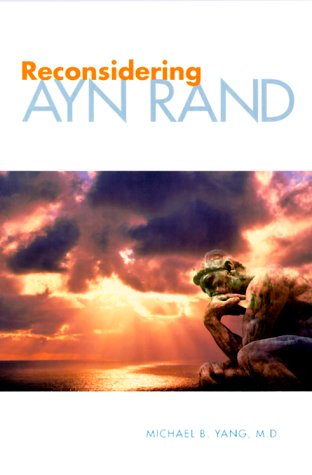
| 41. Reconsidering Ayn Rand by Michael B., M.D. Yang | |
 | Paperback: 400
Pages
(2000-03-06)
list price: US$16.95 -- used & new: US$16.43 (price subject to change: see help) Asin: 1579212182 Average Customer Review: 
Canada | United Kingdom | Germany | France | Japan |
|
Editorial Review Product Description Like many of Rand's admirers, Michael B. Yang was influencedby Rand's writings as a teenager and adopted her philosophy ofObjectivism. However, as Yang completed his undergraduate work at TheJohns Hopkins University and embarked upon his studies at HarvardMedical School, he discovered a number of inconsistencies in Rand'swritings. These problems prompted him to reexamine her philosophy andultimately led him to discover a different source of truth. Reconsidering Ayn Rand tells the story of how an ordinaryperson who once believed in the philosophy of Ayn Rand ultimately cameto understand differently. It considers Rand's fiction from a criticalpoint of view exploring the themes of self-esteem, human worth,productive work, and romantic love that permeate much of herwritings. Finally, Reconsidering Ayn Rand is a comprehensive analysisof Objectivism. It covers the entire spectrum of Rand's philosophyfrom reason and reality to morality, government, science, andtheology. Reconsidering Ayn Rand is self-contained. It includes avaluable synopsis of Rand's two major novels and a brief survey of herphilosophy. The book accommodates the beginning as well as theseasoned reader of Rand. With the recent resurgence of interest in her ideas, itbecomes clear that Reconsidering Ayn Rand is a vitally importantcontribution to the growing body of works on the fiction andphilosophy of Ayn Rand. Customer Reviews (13)
For starters, Yang has understood Objectivism very well indeed. In this book, he gives quotation after quotation from Rand and her followers. He spells out the Objectivist position before he criticizes her and demonstrates her flawed thinking. Over 700 footnote citations and about 100 works cited in the bibliography are evidence of his meticulous effort. Furthermore, Yang consistently begins by presenting an empathetic view of Objectivism, especially in the early chapters, with respect to its beliefs about self-esteem, romantic love, and productive work. Gradually, he reveals the internal contradictions in Rand's views and then shows that Rand could not justify her ideals on the basis of her premises. And it was Rand who challenged readers: "Check your premises." As for taking an uncritical view of the Bible and failing to account for the manuscript evidence, that accusation fails considering Yang's gargantuan effort to critically discuss Christianity and Objectivism in 367 pages. Furthermore, Yang's primary objective in his book was not the question of manuscript evidence for the Bible. One of his objectives seems to have been to point out the failure of the philosophical empiricism and materialism of Rand and contrast it with Christian revelation. Nevertheless, Yang gives a page-long footnote discussion on page 348 on the subject of manuscript evidence and offers some suggestions for further reading. As to the subject of science, such as the question of an empirical proof for the existence of God, one would do well to read Yang's chapter on epistemology (Reason and Reality) or his chapter on Science and Christianity; (this last chapter of 55 some pages could easily have stood alone as a monograph on the subject). These chapters marshal the writings of scientists as well as non-Christian philosophers of science like Stephen Hawking, Karl Popper, Thomas Kuhn, Imre Lakotos and others, to demonstrate the logical fallacies that are at the heart of the scientific method and reveal the utter skepticism that results from adopting an empirical philosophy. This leads to the intriguing conclusion: if science can't prove anything at all, it is begging the question to require Christianity to prove its veracity by the method of science. As to the issue of Creation and the question of the speed of light slowing down leading to the illusion of a older universe, a previous reader also seems to have misread Yang. Yang had already demonstrated that one problem with the scientific method was that an infinite number of hypotheses can "fit" the finite number of empirical, observed "facts".Although the belief in divine creation does not require that one knows for certain that the speed of light is slowing down; nevertheless, the slowing of the speed of light, as documented in a standard college physics textbook, supports one hypothesis, namely that the universe is much younger than we have been told it is. By the same token, it contradicts the theory of evolution and the idea of an ancient universe. Yang is merely taking one empirical finding of physics and using it against those who would utilize science to argue against the Christian belief in creation. He did not assert that the slowing of the speed of light is a certainty or that it was the basis of his belief in creation. How could he? He denies, along with reputable philosophers of science, that science can produce truth. Rand's literary abilities were considerable, but her philosophy had numerous flaws, which unfortunately, many of her admirers have ignored. This excellent book by a former Rand admirer has shown us where the problems lie and discussed them honestly and thoughtfully. Moreover, this work takes readers beyond Rand's writings and challenges them to consider some broader philosophical issues. It is well worth the time and the money.
After providing a fine criticism of Rand's fiction in part one of the book, Yang then tackles Rand's philosophy in the second half of the book. He discusses Rand's epistemology, metaphysics, ethics and politics with ample quotations from Rand and a number of critical works in philosophy. Yang does a remarkable job of sharing those aspects of Rand's philosophy that appealed to him as a teenager and collegian. (He accomplishes this partly by walking the reader through his mode of thinking when he first encountered Rand's writings.) He also effectively communicates the ideas that concerned him in his search for truth, and he describes where that search finally led him. He does not leave the reader in doubt, but offers the outlines of an alternative, rational, Christian philosophy to the reader for consideration. (By the way, it is bibilical Christianity that Yang contends for, not the Roman Catholicism that Rand confuses with Christianity.) In two additional chapters, he discusses the philosophy of science and the atheism of Rand, George Smith and others. Finally, Yang concludes with a beautifully written chapter that umasks the utter hopelessness of Rand's philosophy and points to a different way. By way of comparison, Reconsidering_Ayn_Rand is superior to Ronald Merrill's Ideas_of_Ayn_Rand (which was scattered and superficial in its coverage). The book is devoid of the sarcasm of Jeff Walker's Ayn_Rand_Cult. Its coverage is broader, more unified, more easily readable, and less technical than Douglas Den Uyl and Douglas Rasmussen's Philosophical_Thought_of Ayn_Rand. All in all, Reconsidering_Ayn_Rand is an engaging and solid piece of literary and philosophical criticism. ... Read more | |
| 42. Introduction to Objectivist Epistemology: Expanded Second Edition by Ayn Rand | |
 | Paperback: 320
Pages
(1990-04-26)
list price: US$20.00 -- used & new: US$10.84 (price subject to change: see help) Asin: 0452010306 Average Customer Review: 
Canada | United Kingdom | Germany | France | Japan |
|
Editorial Review Product Description Customer Reviews (51)
| |
| 43. Ayn Rand by Tibor R. Machan | |
 | Paperback: 163
Pages
(2000-03)
list price: US$24.95 -- used & new: US$60.24 (price subject to change: see help) Asin: 0820441449 Average Customer Review: 
Canada | United Kingdom | Germany | France | Japan |
|
Editorial Review Product Description Customer Reviews (3)
Unlike most independent Ayn Rand scholars, who tend to consider themselves as superiorprofessionals correcting the childish blunders of an incompetent amateur,Tibor Machan, as the above quote suggests, is a respectful commentator whocorrectly recognizes that Ayn Rand was a major philosopher and that most ofwhat Randian scholars today can hope to accomplish is to polish up someaspects of her philosophical system, develop new applications of it andconfront the latest batch of criticisms from academia. As far as hispersonal philosophy is concerned, he seems to have accepted most of thefundamentals of Objectivism, and in most contemporary philosophicalbattles, he is generally on the right side, defending free-will againstdeterminism, ethical cognitivism vs. non-cognitivism, the free society vs.welfare statism and marxism, and the morality of business against leftistand conservative smears. I would therefore consider him an estranged friendof Objectivism, to be distinguished from the self-styled "sympatheticobservers" of the philosophy who in the next breath call Rand apseudo-philosopher. Unfortunately, Machan tends to suffer from a lack ofsystem and hierarchy in his writings, and nowhere is this clearer than inthe present book. Compared to Peikoff's *Objectivism: The Philosophy of AynRand* or even Gotthelf's *On Ayn Rand*, which are beautifully structuredand clearly distinguish fundamentals from derivatives, Machan's *Ayn Rand*is much less integrated and systematic. This lack of system of courseneed not be a reflection of Machan's own mental functioning, even though hedoes have a penchant for pluralism and eclecticism, but is probably due tothe way the book was put together: *Ayn Rand* is essentially a disjointedcollection of articles previously published in various reviews, newslettersand books. Chapter 4, "Rand's Rational Individualism", forinstance, is a slightly edited copy of chapter 10 of *The PhilosophicalThought of Ayn Rand*. Machan's lack of enthusiasm for philosophicalhierarchy does sometimes affect his conclusions, though. For instance, whenhe states that "in some parts of his moral philosophy and in politics,Kant was closer to [Rand's] own ideas than are most otherphilosophers" (p117), he clearly shows his rejection of theObjectivist tenet that one cannot understand a statement out of the wholehierarchy of a man's philosophical ideas. This may also explain why hefeels sympathetic to the libertarians and leans to the "moraltolerationist" wing of Objectivism. Anyway, I do recommend this bookas a good overview of Objectivism, and perhaps as a better *introduction*to this philosophy than Gotthelf's very compact volume (though the latteris a more reliable statement of the content of the philosophy). Machan makes interesting comments on the distinction between derivation anddeduction and he identifies a few contemporary philosophers whose views arevery similar to Objectivism. His more haphazard reflections on"Problems Left for Objectivism" however suffer from a lack offamiliarity with the more recent taped material and simplemisinterpretations of Objectivist tenets. (For instance, though he has read*We The Living*, he asks: "Cannot a work of art be quite excellent,yet... sad? Tragic?", perpetuating a common caricature of theObjectivist esthetics.) Finally, I must say I found some of the statementsin the book cryptic or highly dubious: "Rand's foundationalism can becharacterized as post-epistemological" or "Rand's approach isalso consistent with... an (almost) anything-goes, (almost) Feyerabendianlaissez-faire attitude towards the methods of factual investigation".
There are a number of merits to this book: (1) Prof.Machan provides a clear overview of Rand's position on most philosophicalquestions, placing prominence on Rand's axiomatic concepts; (2) the bookcontains a solid discussion of Rand's works; and (3) chapter 7 - on variousquestions that Rand failed to consider - is excellent. There are someweaknesses to the work as well. First, Prof. Machan doesn't spend enoughtime on Rand's theory of concept formation, which her followers consider hegreatest contribution to philosophy.Second, he is too kind to Rand whenit comes to her often unfair and inaccurate attacks on other philosophers. While he says that Rand caricatures other thinkers, the fact is that Randhad little knowledge of the history of philosophy and her discussion ofother philosophers is simply pathetic.Anyone who doubts this should readher essay, "For the New Intellectual." Third, like many of Rand'sadmirers, Prof. Machan overestimates Rand's originality.The fact is thatmost of Rand's ideas can be found in other writers. In spite of itsflaws, this is generally an outstanding book.I recommend it highly. ... Read more | |
| 44. The Ideas of Ayn Rand by Ronald Merrill | |
 | Paperback: 191
Pages
(1998-12-31)
list price: US$17.95 -- used & new: US$4.69 (price subject to change: see help) Asin: 081269158X Average Customer Review:
Canada | United Kingdom | Germany | France | Japan |
|
Editorial Review Product Description Customer Reviews (6)
| |
| 45. Ayn Rand and Alienation: The Platonic Idealism of the Objective Ethics and a Rational Alternative by Sid Greenberg | |
| Paperback: 131
Pages
(1977-06)
list price: US$9.95 Isbn: 0915358255 Canada | United Kingdom | Germany | France | Japan | |
| 46. The Emotionalists by Sky Gilbert | |
| Paperback: 64
Pages
(2001-03)
list price: US$12.95 -- used & new: US$10.47 (price subject to change: see help) Asin: 1553310012 Canada | United Kingdom | Germany | France | Japan | |
| 47. Reason and Value: Aristotle versus Rand by Roderick T. Long | |
 | Paperback: 123
Pages
(2000-10-01)
list price: US$18.95 -- used & new: US$14.78 (price subject to change: see help) Asin: 1577240456 Average Customer Review:
Canada | United Kingdom | Germany | France | Japan |
|
Editorial Review Product Description Customer Reviews (5)
"In particular, I maintain that Rand's rejection of Aristotle's coherentist, testimony-based epistemology in favor of her own version of foundationalist empiricism both opens the door to a corrosive skepticism that she rightly wishes to avoid, and forces her into defending an instrumental survival-oriented conception of the relation of morality to self-interest, even though a constitutive, flourishing-oriented relation along Aristotelian lines would more closely match her basic ethical insights." But seriously, folks. Doesn't this quote make you laugh out loud? Can you believe there are people who actually spout this nonsense without blushing? Somebody tell this guy that the emperor does not, in fact, have any clothes! ... Read more | |
| 48. Ayn Rand (Twayne's United States Authors Series) by James T. Baker | |
| Hardcover: 168
Pages
(1987-06)
list price: US$28.95 -- used & new: US$2.99 (price subject to change: see help) Asin: 0805774971 Average Customer Review:
Canada | United Kingdom | Germany | France | Japan | |
Customer Reviews (3)
| |
| 49. Depression Glass: Documentary Photography and the Medium of the Camera-Eye in Charles Reznikoff, George Oppen, and William Carlos Williams (Literary Criticism and Cultural Theory) by Monique Vescia | |
 | Hardcover: 174
Pages
(2005-12-05)
list price: US$103.00 -- used & new: US$102.15 (price subject to change: see help) Asin: 0415975476 Canada | United Kingdom | Germany | France | Japan |
|
Editorial Review Product Description | |
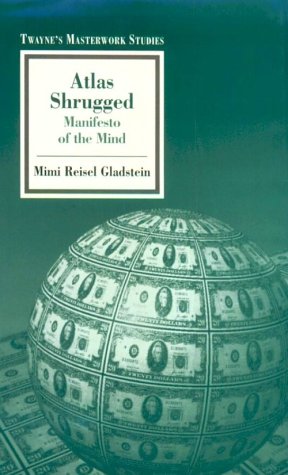
| 50. Atlas Shrugged: Manifesto of the Mind by Mimi Reisel Gladstein | |
 | Hardcover: 160
Pages
(2000-06-08)
list price: US$45.00 -- used & new: US$31.94 (price subject to change: see help) Asin: 0805716386 Average Customer Review:
Canada | United Kingdom | Germany | France | Japan |
Customer Reviews (2)
Go to http://www.aynrandbookstore.com for books and tapes by authors and teacher who really understand the precise literary and philosophic integrations contained in her novels.You will find that Rand wasn't 100% accurate, but she formulated a philosophy that answers some of the most profoundly perplexing problems of our time.Her philosophy was formed by induction-that is, from the facts of reality, not wishful thinking or faith. Rand is decidedly anti-cult.If some of her followers have lapsed into cultism, then they, too, miss the entire point.The cultishness of some devotees does not detract from the fundamental soundness of her philosophy.
Gladstein is on target when she discusses the genre-crossing aspects of _Atlas Shrugged_. Is it dystopian fiction, science fiction, a detective novel, a feminist-flavored romance? All of the above, it seems, though Gladstein doesn't persuade me that Rand consciously borrowed from Arthurian romance as well. The feminist and female-romantic elements of the novel were never emphasized all that much by Rand's "orthodox" followers, but Gladstein does make the case that Rand pioneered a new kind of strong, independent female character -- Dagny Taggart -- who holds her own in a man's world and doesn't need a man to make her life complete, though finding her ideal lover in John Galt certainly helps. In the 1950's such an idea was radical, but because many fictional female characters these days are "Xenafied," Dagny Taggart's prototypical role has been obscured. Perhaps the miniseries version of _Atlas Shrugged_ due out sometime next year will give Rand the credit in this one area she deserves. Still, I found some flaws in Gladstein's exposition of Rand's make-believe world. Gladstein fails to explore _Atlas Shrugged's_ unsubtle family-hating subtext: All of the major characters are alienated from immediate relatives as if that were a good thing. Even after Dagny makes an emotional connection with her hapless sister-in-law Cherryl, she displays no emotional response to Cherryl's suicide. The question of Hank Rearden's paternity never comes up, nor whether he and his wastrel brother Philip even share the same father. (If not, that could in itself explain the hostility between the two!) At the end of the novel, the strikers plan to leave their Rocky Mountain stronghold and rebuild an America where young people can look towards the future with hope -- but because the heroes don't have children, and apparently don't plan to, given the shortage of worthy females for them, you have to wonder where these youngsters are going to come from. (Because Dagny never seems to need contraception, despite having sex with three of the novel's heroes, she must be infertile.) Perhaps the creepiest aspect of all in the novel, which Gladstein seems oblivious to despite her feminist sensibilities, is how John Galt's behavior towards Dagny throughout most of the story resembles love-obsessional stalking. In the real world, a guy in his late 30's who is still a virgin, abandons a well-paying technological career so he can hold a menial job on a railroad, and obsesses over and surveils the railroad's attractive female Vice President (even going so far as to sabotage her business deals), would be considered potentially threatening. (Call Gavin de Becker!) I don't know if many women fantasize about falling in love with their stalkers, but this is an aspect of _Atlas Shrugged_ I don't quite understand. Nonetheless, Gladstein has written yet another contribution to Rand studies that I found worth the money, despite its limitations and brevity. ... Read more | |
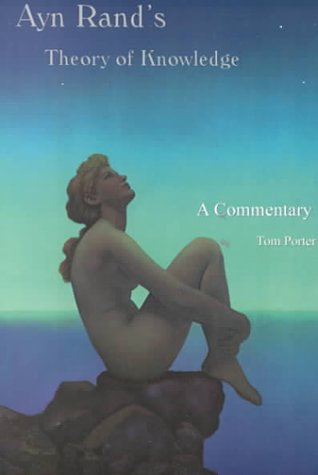
| 51. Ayn Rand's Theory of Knowledge by Tom Porter | |
 | Paperback: 376
Pages
(1999-06)
list price: US$23.95 -- used & new: US$23.95 (price subject to change: see help) Asin: 0967041104 Average Customer Review: 
Canada | United Kingdom | Germany | France | Japan |
|
Editorial Review Product Description Customer Reviews (4)
In this book Porter demonstrates that Rand has developed a theory of concepts which is extremely powerful and which resolves both a multitude of philosophical mistakes and philosophical problems. Careful reading of this book gives you a superb grip on her theory, but it is hard, detailed work. This work is well worth doing as it will give you deeper insight into philosophy in general and concepts and conceptual thought in particular. I wonder if any of the reviewers above who gave it one star could substantiate their judgement in detail. It appears to be the usual sneering, devoid of reflection.
Well,call me philosophically unsophisticated, but I couldn't find a singlecommment in Mr. Porter's book that helped me better understand ITOE.(Infairness to Mr. Porter, I didn't read the entire book, but I did read afair amount of it.) There may be some gems of wisdom in Mr. Porter'ssmarmy, know-it-all commentary, but I didn't find any.
If you're looking for a book written bysomeone who possesses less than a college-freshman-level understanding ofphilosophy, who thinks that historically important philosophers have beenpretty much one and all dishonest or stupid or both, and who grinds hisantiphilosophical axe under the name of Ayn Rand while providing even fewerreferences and explanations than Rand herself bothered to provide, thenthis is the book for you. But if you're looking for a book that actuallyevinces a faint glimmer of hope that something in Rand's hodgepodge of anepistemology _might_, on one or two points, be modified into somethingbarely salvageable at the hands of someone with some philosophicalcompetence, try David Kelley's _The Evidence of the Senses_ instead. Thisbook ain't it. Of course, this book will be of tremendous interest topeople who want to see a fairly typical example (which Kelley is not) ofthe "philosophical" pretensions of Rand's die-hard followers. Soperhaps its publication isn't a _total_ loss. Space won't permit me todetail everything that's wrong with this book (I tried once, but Amazondidn't post the review, presumably for reasons of length). But I reviewedit some time ago for the Daily Objectivist at the request of editor DavidBrown, and I've made the review available on my own website. If you'dlike to read it, go to my "About You Page" and click on thepersonal-info section; I give the URL of my site there. Then go to the siteand scroll down to the "Contents" link; click there and you'llfind, among the list of essays, an item entitled "Tom Porter on AynRand's Epistemology." That's my review. By the way, you'll also findon my site a series of essays (still in progress) providing a systematicdissection of Rand's own epistemology. ... Read more | |
| 52. Loving Life: The Morality of Self-Interest and the Facts that Support It by Craig Biddle | |
 | Kindle Edition:
Pages
(2002-01-01)
list price: US$9.95 Asin: B00347A5QK Average Customer Review: 
Canada | United Kingdom | Germany | France | Japan |
|
Editorial Review Product Description Customer Reviews (28)
| |
| 53. Then Athena Said: Unilateral Transfers and the Transformation of Objectivist Ethics by Kathleen Touchstone | |
 | Paperback: 448
Pages
(2006-06-23)
list price: US$54.95 -- used & new: US$24.95 (price subject to change: see help) Asin: 0761835199 Canada | United Kingdom | Germany | France | Japan |
|
Editorial Review Product Description | |
| 54. What Art Is: The Esthetic Theory of Ayn Rand by Louis Torres, Michelle Marder Kamhi | |
 | Paperback: 523
Pages
(2000-06)
list price: US$21.95 -- used & new: US$14.15 (price subject to change: see help) Asin: 0812693736 Average Customer Review:
Canada | United Kingdom | Germany | France | Japan |
|
Editorial Review Product Description Customer Reviews (14)
Nevertheless, despite these criticisms, I urge all those who are interested in art to read the book, regardless of what they think of Rand.The book is written on a much higher level than most pro-Rand books that are published nowadays.Torres and Kamhi, unlike Rand's orthodox disciples, at least are sound scholars with an appreciation for empirical evidence and close logical analysis.They are fair to opposing viewpoints (unlike Rand herself, who treated opponents as if they were sub-human), and they provide an excellent overview of the excesses of modern and post-modern art.Merely as a phillipic against bad art (or, as the authors would insist, "non-art"), I would give this book a five star rating.But because of the methodological essentialism, I have to drop it down to four.The emphasis on definitions really can get annoying. ... Read more | |
| 55. Judgment Day by Nathaniel Branden | |
 | Hardcover: 436
Pages
(1989-01)
list price: US$21.95 -- used & new: US$1.85 (price subject to change: see help) Asin: 0395461073 Average Customer Review:
Canada | United Kingdom | Germany | France | Japan |
Customer Reviews (7)
Some who read the book may say that it is the age difference between Rand and Branden that exacerbated their problems. This no doubt played a factor, and the author acknowledges this also, but as the book reveals, there were other things that aggravated such a relationship between two intellectual powerhouses as these are (were). Rand would like to say that it is the rational intellect that serves as the glue for a lasting and true relationship. Her limited definition of rationality though results in a narrow bandwidth that limits any alternative notions of love and friendship from getting through to her. The aesthetic quality of two people can play a large role in their attraction, and this should cause no surprise if one thinks of it in the context of human evolution. In addition, two people can be quite at odds philosophically and still have a satisfying relationship, a notion though that Rand would not be able to entertain. One can only imagine the pain that the spouses of these two individuals felt during their affair, which, interestingly, was known and revealed to them beforehand. The 'rational' decision that all four of them agreed to, namely that such an affair was 'meaningful' given the context, and to be shouldered lightly by their spouses. But such adventures, no matter how sophisticated the morality that brings them about, can be a heavy burden to those that decide to engage in them. Rand herself spoke of the proper identification of the facts of reality in order to live a successful life, but she had no prior experience in the affair she decided to participate in. Its consequences, and the feelings brought about therein, were not, and perhaps could not, be predicted by the moral system that all parties believed in at the time. It is easy to engage in the thinking about such systems; it is quite another to give them empirical content, and to show that they indeed are the ultimate guide to human conduct. In the beginning of the book, the author, in spite of their break, still expresses deep feelings for Rand, and deep regret at the announcement of her death. One can only wonder if Rand herself, after their break, ever, in the privacy of her thoughts, missed the author and the times they spent together. Anger takes much concentration to sustain itself, and is contrary to the natural human state of optimism, the latter both Rand and the author arguing well for. But these two individuals, through their personal interactions with each other, and via their writings, have had an enormous influence on many individuals, both positive and negative, but mostly positive...indeed overwhelmingly positive. In spite of the pain brought to others and themselves because of their affair, this influence is something both of them should be proud of. ... Read more | |
| 56. My Years with Ayn Rand by Nathaniel Branden | |
 | Paperback: 432
Pages
(1999-02-26)
list price: US$32.50 -- used & new: US$19.49 (price subject to change: see help) Asin: 0787945137 Average Customer Review:
Canada | United Kingdom | Germany | France | Japan |
|
Editorial Review Product Description Ayn Rand's Atlas Shrugged is one of the most influential books of the twentieth century-its popular impact ranked second only to the Bible in a major poll. Millions know Rand as one of this century's great thinkers, writers, and philosophers, yet much about the private Ayn Rand remains shrouded in mystery. Who was Ayn Rand? My Years with Ayn Rand charts the course of the clandestine, tempestuous relationship between the enigmatic author of Atlas Shrugged and The Fountainhead and Nathaniel Branden-her young disciple and future pioneer of the self-esteem movement. In this book, discover the real Ayn Rand through the eyes of the man who became her soul mate and shared her passions and philosophical ideals. Their tragic and tumultuous love story began with a letter written by Branden as an admiring teenage fan and Anded, more than twenty years later, with accusations of betrayal and bitter recriminations. My Years with Ayn Rand paints an unforgettable portrait of Ayn Rand-whose ideas, even today, can generate a maelstrom of controversy. Customer Reviews (38)
| |
| 57. Objectivism and Homosexuality | |
 | Paperback: 176
Pages
(2010-07-13)
list price: US$68.00 -- used & new: US$68.00 (price subject to change: see help) Asin: 6130998716 Canada | United Kingdom | Germany | France | Japan |
|
Editorial Review Product Description | |
| 58. On Ayn Rand (Wadsworth Philosophers Series) by Allan Gotthelf | |
 | Paperback: 104
Pages
(1999-12-29)
list price: US$15.95 -- used & new: US$9.78 (price subject to change: see help) Asin: 0534576257 Average Customer Review:
Canada | United Kingdom | Germany | France | Japan |
|
Editorial Review Product Description Customer Reviews (19)
Those liking this book will also like "Objectivism: The Philosophy of Ayn Rand" by Leonard Piekoff
The presentation is orderly, if occasionally skimpy. Gotthelf devotes a couple of short, fawning chapters (well, all the chapters are short -- and fawning, too, come to think of it) to Rand's sinless life and then proceeds to take the reader on a guided tour through the main features of her thought in metaphysics, epistemology, and ethics. Political theory gets short shrift, but that's okay; while it was undoubtedly the strongest (or at any rate the least vulnerable) portion of Rand's philosophy, it was also by far the least original (which, actually, is _why_ it was the least vulnerable). Aesthetics doesn't get much attention either, which is sort of too bad, but maybe Gotthelf doesn't want to give away too many of Rand's propaganda techniques. I especially enjoyed the tour; it's always a pleasure to encounter a book that one has completely refuted before it was even published. The reviewer from Austin is right: Rand _wasn't_ really a very good philosopher. And Gotthelf's accurate-but-uncritical summary of Rand has been a tremendous help to me in rewriting, for publication, my critique of Rand's epistemology (still available in an earlier draft form on my website); he confirms and recommits every error I pick on her for, and may even introduce one or two new ones of his own. (For example, at one point he seems to imply that the "primacy of existence" premise commits him to materialism.) You may well imagine that critics of Objectivism (of whom I am obviously one) receive lots of silly e-mails telling them they've gotten this or that point entirely wrong (usually from people who don't seem to be able to read all that well themselves). So I'm happy to say that at numerous points I have been able to use Gotthelf's handy little text to confirm (yet again) that I was reading Rand correctly after all, and that she was just as wrong as I said she was. Now that I've taken account of his work in rewriting my own, the result is a much clearer critique. (Which just goes to show, I suppose, that Objectivists and libertarians _can_ cooperate in a good cause.) And I'm not kidding about the quality of Gotthelf's work; this _is_ a fairly well-executed introduction, although it will probably be a bit hard to read for anyone completely unfamiliar with Rand's work. For the most part (but not entirely!) this little book reads like a precis of Leonard Peikoff's _Objectivism: The Philosophy of Ayn Rand_ (which is, by the way, one of the few items of "secondary Objectivist literature" about which Gotthelf has anything good to say). As such it will make a helpful companion to that volume, whether Peikoff likes it or not. (And as I hinted, if you read carefully you'll find a few points at which Gotthelf disagrees with Peikoff and the ARI mainstream. For example, did Rand think her ethic was founded on an "axiom"? Compare Gotthelf's remarks with David Harriman's in the _Journals of Ayn Rand_.) It will also be helpful to anyone -- Randie or otherwise -- who wants a quick and dirty summary of what Objectivism is all about. Love it or hate it, here it is.
The book is clear to a reader only if that reader is already highly familiar with the idiosyncratic semi-technical vocabulary of Objectivism. Indeed, not only does Gotthelf express Rand's thoughts in Rand's rather obscure way of speaking, he typically lets her speak for herself - literally. Most of the main ideas are introduced by way of quoting Rand, at length. This might be okay were Gotthelf to then elucidate Rand's strange formulations, but he takes it for granted that the quotations are clear.But, when cut from context, the quotations lose most of their original flavor. This means that Gotthelf has managed to replicate all of the problems with Rand's unclear and inconsistent language without replicating any of her energy and lively style. Gotthelf has a skewed approach to the question of how much of the book to use on a given subject. He devotes quite a bit of it to deeply a adoring account of Rand's biography, without citing the unauthorized memoir and biography by Rand's closest companions or even the authorized biography written by Barbara Branden in the early 1960's. He does cite Leonard Peikoff's biographical essay on Rand. It is appropriate that Gotthelf, who fails to display much concern with the truth about Rand's life, should cite Peikoff: Peikoff concludes that essay by explaining that our wishes determine what kind of a person Rand was. One could tolerate hagiography if it at least included some relevant information about the development of Rand's philosophy. But this one does not. The well-articulated and strongly defended theory that Rand's philosophical development was much influenced by her immersion, in the Russia of her youth and education, in the dialectical methodology characteristic to the approach of virtually all academics in virtually all subjects on virtually all sides of virtually all questions. That is, Gotthelf manages to spend about a third of the book celebrating Rand, without mentioning the one and only fact about her personal history that is at all interesting from a philosophical point of view: that she may have taken elements of her philosophical methodology from the educational system in which she studied. Gotthelf's skewed sense for what is worth including is displayed elsewhere, in his decision to spend about 40% of the book on Rand's metaphysics; primarily her theory of concepts. This leads him to shortchange Rand's politics, dealing with Rand's most well-known theory on a single page. But, since Gotthelf spends so much of the book on Rand's metaphysics, and uses quotations from Rand to do most of his explaining, we must ask whether this book is a more efficient introduction to Rand's metaphysics than just reading Rand. Rand's work on metaphysics is about 100 pages long; more if you count the appendices, which help to elucidate but add little that's really essential. So now we're wading through 35 pages of hagiography and 40 pages of metaphysics to get not just the same old explanations but quotations that one could have found in Rand in a book that's only about 25 pages longer. The discussion of ethics is similarly problematic. Rand's meta-ethical argument is deeply obscure. One cannot, by reading her essay on the subject, discover what are its premises, what are its conclusions, and how one infers the conclusions from the premises. All of the various interpretations of this argument that have been offered have been subjected to serious criticism. Gotthelf neither explains the argument (more quotations) nor even tries to show how it can deal with the criticisms that have been offered. Rand was not a really very good philosopher; her programmatic, mostly methodological, insights require a total reworking from the bottom up. One wonders whether she'll ever acquire a scholarly following capable of doing this, or if the poor woman will be forever cursed with unconstructive, admiring sycophants on the scale of Gotthelf. ... Read more | |
| 59. Ayn Rand's Marginalia : Her Critical Comments on the Writings of over Twenty Authors by Ayn Rand | |
| Paperback: 231
Pages
(1998-03)
list price: US$14.75 -- used & new: US$14.75 (price subject to change: see help) Asin: 1561142506 Average Customer Review: 
Canada | United Kingdom | Germany | France | Japan | |
Customer Reviews (16)
Every time I come out of the closet about my affection for Rand, it turns out bad, because I have to defend or at least explain the silly bunch of humorless crackpots that the Peikoff Factory keeps churning out. It's like being a Christian trying to explain away the Inquisitors. Rand was frequently ridiculous, often pathetic, and permanently out-of-touch with her own internal emotional realities. (Come on, after the Branden affair, can even her most ardent followers deny that she was a little screwed up in the bedroom?). She reminds us all just how hard it is to not be full of it when your emotions are involved, especially if you pride yourself more than anything else on not being full of it. Rand was still a great human being, and I wish I'd known her personally. She might not have liked me, but I like her. She remains a great litmus test. I've observed that people who react to her like vampires to garlic are usually about as judgmental and arrogant as she was, just not as bright. Still, it would help me a lot if you true believers would stop trying to mimic her pejorative style. Your constant overuse in ordinary conversation of words like cowardice, evasion, appall(ing/ed) immoral, depraved, etc. is like 4 year olds trying to swear. When Ayn smote the wicked, it was magnificant, but you guys couldn't smite your way out of a wet paper bag. Oh, and please, nobody come back at me with any form of the archetype of Randian smite-speech: "there (is/can be) no greater (depravity/crime/abdication/evasion/immorality) than to...." I swear I've heard you people use that phrasing for every thoughtcrime from putting up with your born-again sister-in-law's preaching without humiliating her at Thanksgiving dinner, to liking Elvis (it doesn't matter which Elvis, they're all depraved, you know). And while I'm at it, you all can quit recoiling in horror every time you read something you don't agree with. I just re-read Atlas Shrugged again for the first time in 20 years. Pretty cool book, and it helped me come up with a new drinking game. Start reading the book, and every time you find the word "torture" in a love scene, you get to take a shot. You can stay drunk for a week!
As for this volume itself,it's a collection of rather embarrassing marginal notes from some booksthat Rand attempted to read. Unfortunately she read them as though theirauthors were using terms with the meanings _she_ assigned them, andtherefore often misunderstood them. (As I and other reviewers have noted,her misreading of Ludwig von Mises' "subjectivism" is a very goodexample.) It _is_ possible to support this contention by argument andexample. But this review board isn't a discussion list; reviewers here postfairly brief opinions, not lengthy, thoroughly argued essays. Objectivistswho expect otherwise, and then criticize only the _negative_ reviewers fornot giving all their reasons, are simply revealing their ownbiases. Intellectual cowardice, indeed. I think that charge appliesrather to Objectivists who respond only with insults when their guru iscriticized. But please, keep those insults coming; sooner or later,_everyone_ will know just how centrally important reason and rationalityare to Rand's devoted followers.
| |
| 60. Ayn Rand: First Descriptive Bibliography by Vincent L. Perinn | |
| Hardcover: 92
Pages
(1990-12)
list price: US$39.95 -- used & new: US$39.95 (price subject to change: see help) Asin: 0961049480 Canada | United Kingdom | Germany | France | Japan | |
| Back | 41-60 of 99 | Next 20 |
 Refusing to consider Ayn Rand
 A feast for the mind