e99 Online Shopping Mall

Geometry.Net - the online learning center Help  
Home  - Basic C - Composers Jazz (Books)

  Back | 21-40 of 100 | Next 20
A  B  C  D  E  F  G  H  I  J  K  L  M  N  O  P  Q  R  S  T  U  V  W  X  Y  Z  

click price to see details     click image to enlarge     click link to go to the store

$22.70
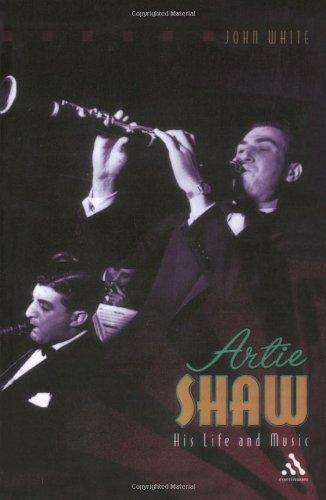
21. Artie Shaw: His Life and Music
$20.40
22. Head Hunters: The Making of Jazz's
$16.86
23. The Biographical Encyclopedia
 
$109.42
24. Stan Getz: A Life in Jazz
$20.95
25. I Remember Jazz: Six Decades Among
$28.60
26. Dizzy Gillespie: The Bebop Years
$142.00
27. Benny Carter : A Life in American
$39.32
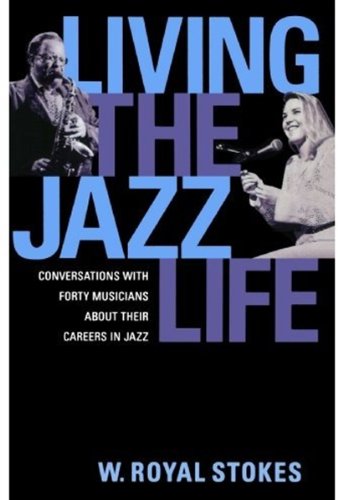
28. Living the Jazz Life: Conversations
$24.95
29. The Glass Enclosure: The Life
$75.01
30. Artie Shaw: A Musical Biography
$32.50
31. Good Vibes: A Life in Jazz (Studies
 
$28.00
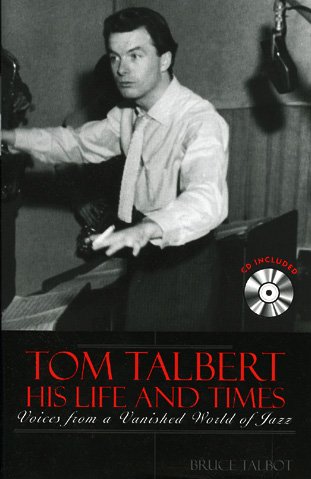
32. Tom Talbert His Life and Times:
$11.52
33. Visions of Jazz: The First Century
$3.24
34. Duke Ellington (Getting to Know
$12.46
35. Friends Along the Way: A Journey
$50.96
36. Paul Whiteman: Pioneer in American
 
$8.88
37. The New Grove Gospel Blues and
$1.68
38. The Song That Never Ended: A Jazz
$7.99
39. Marshal Royal: Jazz Survivor (Bayou
40. A Jazz Odyssey: The Life of Oscar

21. Artie Shaw: His Life and Music (Bayou Jazz Lives Series)
by John White
Paperback: 223 Pages (2004-04)
list price: US$26.95 -- used & new: US$22.70
(price subject to change: see help)
Asin: 0826469159
Canada | United Kingdom | Germany | France | Japan
Editorial Review

Book Description
Artie Shaw led one of America's most accomplished big bands during the 1930s and 1940s, and has sold over 100 million records. An enigmatic figure, Shaw frequently tired of the music business, often forsaking it for extended periods. This study offers a narrative account and analytical assessment of the achievements and concerns of this hugely important musician. ... Read more


22. Head Hunters: The Making of Jazz's First Platinum Album (Jazz Perspectives)
by Steven F. Pond
Hardcover: 288 Pages (2005-10-05)
list price: US$27.95 -- used & new: US$20.40
(price subject to change: see help)
Asin: 0472114174
Average Customer Review: 2.0 out of 5 stars
Canada | United Kingdom | Germany | France | Japan
Editorial Review

Book Description

". . . as gripping and readable as the album is unapologetically popular and danceable, this book will be gobbled up like a musicological mystery novel that incites and invites readers to listen again and rethink 'who-done-it' and how in the jazz history we thought we knew."
---Sherrie Tucker, author of Swing Shift: "All-Girl" Bands of the 1940s

"Steven Pond produces his own 'fusion' with a seamless blend of ethnographic and historical research.This book will fascinate scholars and fans of jazz and popular music, as well as those interested in the emerging interdisciplinary field of sound studies, and in the broader relationship between genre and identity in contemporary music."
---David Brackett, author of Interpreting Popular Music, and The Pop, Rock, and Soul Reader: Histories and Debates

"An important and timely book. Pond's work reflects the insight an informed researcher and skilled performer can bring to the study of music. In exploring varied dimensions-sonic, cultural, technological, economic-he renders the tale in all its complexity, without sacrificing clarity of expression. This is the kind of book jazz scholarship has long needed."
---Travis Jackson, Associate Professor of American Music, University of Chicago

Steven Pond's Head Hunters captures a transitional moment in modern music history, a time when jazz and rock intermingled to create a new, often controversial, genre. At the forefront of that style was Head Hunters, Herbie Hancock's foray into the fusion jazz market. It was also the first jazz album to go platinum, and the best-selling jazz record of all time to that point.

The album became a turning point for a radical shift in both the production and reception of jazz. The sales numbers were unprecedented, and the music industry quickly responded to the expanded market, with production and promotion budgets rising tenfold. Such a shift helped musicians pry open the control-booth door, permanently enlarging their role in production. But it was all at a cost. Critics, believing that rock and funk might be appropriating jazz to new musical ends-or more ominously, for commercial reasons-grew increasingly alarmed at what they saw as the beginning of the end of jazz.
... Read more

Customer Reviews (1)

2-0 out of 5 stars The correct title should be: The Labelling of Jazz's First Platinum Album!
Being a big Herbie Hancock fan for some time and dissapointed by the fact there is very little written on Hancock considering his importance in music (in fact, this is the first book devoted entirely to Hancock), I couldn't wait to get my hands on a copy.
Now that I've read the book, I'm rather dissapointed. I wouldn't even consider it being a book on Herbie Hancock in the first place. The subtitle, "The Making of Jazz's First Platinum Album", is quite misleading. I was expecting something similar to the great and insightful books of Ashley Khan on Miles Davis' recording of "Kind of Blue" and John Coltrane's recording of "A Love Supreme". Instead, this book essentially is yet another rather clumsy and crude addition to the debate on how to label the sort of music that emerged with "Bitches Brew", the Head Hunters record serving as an example. It is helpful to know that Pond's work was originally published as his Ph.D. thesis. From this angle, it is understandable why Pond abundantly quotes various musicologists and researchers (and also includes a couple of transcription excerpts from the songs played on the record - no Herbie solos, though). But none of these comments are directly linked to the making of the record.
Of the overall 193 pages text, the passages that are directly linked to the recording of the album boil down to about 10-20 pages! There are interviews with Hancock, Bennie Maupin, Bill Summers, Pat Gleeson (who introduced Hancock to synthesizers) and producer David Rubinson. However, Paul Jackson and Harvey Mason are neither interviewed nor hardly mentioned at all (as well as interesting questions such as why Mason left the band, why Mike Clark didn't play on the record already etc). Apart from mentioning that the bass ostinato of "Chameleon" consists of two different tracks recorded in different studios, the recording process is not described in detail. Even the record date remains unclear: it is only said that it was recorded in late August or early September 1973 within a week.
Nevertheless the book has a few interesting things to offer. The chapter on African aesthetics and identity prevalent in HeadHunters is quite revealing, and there is a photo section (although no photos from the actual recording date, not even a single photo from the release year 1973). Most interesting are some of the anecdotes told by Summers, Maupin, Gleeson and Rubinson, but again, they only make up about 10 pages altogether.
If you've listened to the record and your problem is that you can't make up your mind what to call this music - then this book is for you. If you're a Herbie Hancock or a Headhunters fan expecting to gain insights into the actual recording of a landmark album, this book sadly has very little to offer. ... Read more


23. The Biographical Encyclopedia of Jazz
Paperback: 744 Pages (2007-04-01)
list price: US$29.95 -- used & new: US$16.86
(price subject to change: see help)
Asin: 019532000X
Average Customer Review: 4.5 out of 5 stars
Canada | United Kingdom | Germany | France | Japan
Editorial Review

Amazon.com Reviews
The Biographical Encyclopedia of Jazz series was Leonard Feather's franchise for decades, providing fans with large-format books that featured photos of jazzers and short bios detailing their background and recordings. When Feather passed away in 1994, though, his editorial partner Ira Gitler was left with the task of completing this new edition, then four years in development. It's much different from Feather's earlier volumes--The Encyclopedia of Jazz in the 60s, for example--opting for an all-text coverage and a standard-size hardcover, emphasizing perhaps the book's inarguable value as a reference. For historical purposes, the book is vastly important, giving extremely concise rundowns of musicians' lives--so concise, in fact, that most multisyllabic words are abbreviated. For contemporary players, though, especially Europeans, the volume is spotty. Trumpeter Joe Morris, who wrote "Punch & Judy" and played throughout the 1940s and '50s with Johnny Griffin, Elmo Hope, and others is certainly important. But what of the living Joe Morris, who's not a mainstream player but who nonetheless possesses amazing skills that reach at least as far as his predecessor? And while trumpet virtuoso Michael Philip Mossman is here, where is John Zorn? This isn't nitpicking on the mainstream so much as it is recognizing that books like Jazz: The Rough Guide have stepped up to address the skimpy coverage of living, thriving musicians.

Having said all that, it's vital to note Gitler and Feather's strengths: they've canvassed the past thoroughly, reaching to Italy to include reed dynamo Gianluigi Trovesi and pianist Giorgio Gaslini (but not trumpeter Pino Minafra or saxophonist Carlo Actis Dato). They've also caught key players from the early 20th century and from the peak bebop and hard bop eras, as well as the 1970s, when the avant-garde and fusion reigned in an oddly shaped jazz world. But these biographies were always Feather's and Gitler's strengths, making earlier by-decade editions of the Encyclopedia so important. --Andrew BartlettBook Description
Do you want to know when Duke Ellington was king of The Cotton Club? Have you ever wondered how old Miles Davis was when he got his first trumpet? From birth dates to gig dates and from recordings to television specials, Leonard Feather and Ira Gitler have left no stone unturned in their quest for accurate, detailed information on the careers of 3.300 jazz musicians from around the world. We learn that Duke Ellington worked his magic at The Cotton Club from 1927 to 1931, and that on Miles Davis's thirteenth birthday, his father gave him his first trumpet. Jazz is fast moving, and this edition clearly and concisely maps out an often dizzying web of professional associations. We find, for instance, that when Miles Davis was a St. Louis teenager he encountered Charlie Parker and Dizzy Gillespie for the first time. This meeting proved fateful, and by 1945 a nineteen-year-old Davis had left Juilliard to play with Parker on 52nd Street. Knowledge of these professional alliances, along with the countless others chronicled in this book, are central to tracing the development of significant jazz movements, such as the "cool jazz" that became one of Miles Davis's hallmarks. Arranged alphabetically according to last name, each entry of this book chronologically lists the highlights of every jazz musician's career. Highly accessible and vigorously researched, The Biographical Encyclopedia of Jazz is, quite simply, the most comprehensive jazz encyclopedia available. ... Read more

Customer Reviews (2)

5-0 out of 5 stars Essential jazz reference book
Back in the mid-1960s, as a high schooler just discovering jazz, I found a copy of Feather's "Encyclopedia of Jazz (1960)"; it was a revelation and fostered my enthusiasm and knowledge of the music and musicians. I still have it. But this completely new book is just as good, if not better. It contains brief biographical entries on 3,300 musicians covering all eras, styles, and genres under the wide umbrella of jazz. The entries, though concise, are thorough and trace each musician's career and recorded output. It should be on every jazz fan's shelf. Highly recommended.

4-0 out of 5 stars Jazz Reference
As a librarian, I can't begin to explain the value of this volume for use by students and other patrons wanting concise but informative biographical information on jazz musicians -- a very popular topic for schoolreports.

The entries may be short, but they are complete, and can serveas a starting point for further research. ... Read more


24. Stan Getz: A Life in Jazz
by Donald L. Maggin
 Paperback: 432 Pages (1997-09-03)
list price: US$15.00 -- used & new: US$109.42
(price subject to change: see help)
Asin: 0688155553
Average Customer Review: 4.0 out of 5 stars
Canada | United Kingdom | Germany | France | Japan
Editorial Review

Amazon.com
When he was 16, Stan Getz was touring with Jack Teagarden. He won his first Down Beat reader's poll when he was 23. In the early 1960s, he helped inaugurate the bossa nova craze with his recordings of "Desafinado" and &quotThe Girl from Ipanema." But there were times when he was nearly as well known for his messy personal life as his beautiful musicianship. A long-time abuser of drugs and alcohol, he was a notorious philanderer who beat his wife. Somehow, he managed to age gracefully. "The thing I will always be proud of is this," he told the New York Times not long before he died of cancer in 1991, "toward the end of my life, I became what I always should have been--a decent gentleman."Book Description
Stan Getz's prodigiously prolific musical career encompassed the tumultuous eras of big band, swing, be-bop, and free jazz. Though he is most famous for "The Girl from Ipanema," Getz's extraordinary talent established him in the pantheon of jazz greats. His legendary career is all the more impressive given the excesses of his personal life: He was a heroin addict until age twenty-seven; later, a violent alcoholic. Furiously self-destructive, Getz wasn't expected to outlive the 1950s, yet he continued to create beautiful music for forty more years, achieving sobriety five years before succumbing to cancer in 1991. With rich portraits of both the master and those he influenced--such giants as Benny Goodman, Woody Herman, Lester Young, Charlie Parker, John Coltrane, and Miles Davis--Stan Getz: A Life in Jazz masterfully captures a dynamic era in music, with the artistic genius, triumphs, and tragedies of Stan Getz at its center. ... Read more

Customer Reviews (8)

3-0 out of 5 stars Love the Music, Not So Crazy about the Man
I bought this book because I'm a bossa nova fan, and perhaps no one did more to bring that music to an American audience than Stan Getz. Getz had a career that spanned about fifty years, encompassing the big band, swing, hard bop, bossa nova, and jazz-fusion eras. In those years, Getz played some of the best jazz music ever recorded. Maggin has done his research and the book is well-written. But I have several problems with his biography.

First, is Maggin's inclusion of lots of extraneous detail. The book does not skimp on describing who Getz was playing with at any given time or where and when (to the hour, in some cases) he was playing. Getz was constantly on the road, and the author is admirable in not ignoring any facet of Getz's work. However, I often felt Maggin gave us far too much detail. The text often reads like liner notes of a CD box set. At times, paragraphs are nothing more than the musician line-up for a particular Getz gig. If you are an avid jazz fan, you might want to know such details, but sometimes it makes for reading about as enjoyable as the end credits of a movie. Another problem, related to this one, is Maggin's use of indented quotations. A lot of them. About every page has a block quotation. Maggin could have boiled down this material for us to make for faster reading. In short, the book is long on description, short on analysis.

Second, is the lack of focus in the first third of the biography. Until Getz is arrested for heroin use, the book felt more like a "life and times" than it should have. We don't need, for example, pages of information about who Benny Goodman was, especially when Getz's name disappears for pages at a time. Context is good, but a writer can easily give us too much. A biographer should never diverge from his subject for very long. When the author drifts, the reader drifts.

Third, is Getz the man. For Maggin, this is a larger problem than the excessive detail he includes. Maggin has no constraints when it comes to analyzing Getz's music: his subject clearly was a genius with the sax, and his output was prolific. There's lots of music to talk about. Getz the man is less impressive. He comes across as very two-dimensional person focused only on music and drugs. Getz could play regardless of how messed up he was, but the drugs turned him into a monster. He was a verbally and physically abusive man when drunk or stoned. And his abuse seemed reserved for his family more than his fellow musicians. I have a lot of respect for Getz the artist, but I came away not liking Getz personally and not having much respect for his intellect.

Fourth, is Getz the artist. Composing was not part of Getz's legacy, a fact which perhaps relegates him to the second tier of jazz greats. Unlike, say another subject of music biography, John Lennon, Getz did not write the greatest songs he played on. It was Carlos Jobim who wrote the hits on "Getz/Gilberto," and it was Chick Corea who wrote the greats songs on "Captain Marvel." Getz also didn't have much of a sense of irony. John Lennon always had some good lines for the press, and he had a wicked sense of humor. Getz, in contrast, seemed a rather humorless workaholic. Unlike Lennon--or say, Ian Anderson or Pete Townshend--Getz probably wouldn't be much fun to talk with at a dinner party. It's his lack of intellectual depth (as say, Miles Davis) or spiritual depth (John Coltrane) that makes 380 pages about him too much. Getz was like a Hall of Fame baseball player who was boring when not on the field.

Getz certainly deserves serious work done on his mastery of the sax, but as a personality, he's a disappointment.

3-0 out of 5 stars warts and all


Am two thirds into this heavy tome... Why am I reading it? Because Getz was some kind of sax playing genius, in my opinion...and we always wonder what our favorite artists were like away from the stage. Well, sadly (& maybe not so sadly, depends how you look at it), you get it here.

The trick is, once you have put the book away, to forget the negative and return to the music, appreciate the artist's art. Not always easy to do--but we do it. His art endures. You just wish he and his first wife (both junkies at one time) had been better parents to their kids, etc.

So then, was Getz a total lost cause? Of course not. He had his decent side--although when messed up on booze and/or drugs he was not pleasant to be around, to put it mildly.

Guy had demons, to be sure. Am talking about suicide attempts anddepression. But then, how many of us haven't gone through a thing or two? It happens.

Don't know if this can be called the definitive bio on Stan the Man, but it is certainly worth reading.

Be warned, though, the last third is a heartbreaker. Just finished reading the entire thing. I'd like to give this tome 4 stars, instead of the three shown above, but (for some reason) amazon doesn't make it possible to change the rating.

I'm glad this biography was written.

3-0 out of 5 stars read it for getz's life, not his art.
I read this a few years back, and it was brutal to get through, black clouds of depression lurking on every page. This is actually by way of saying that Maggin did his job well, although it couldn't have been much fun. There is account after account of a phenonenomally gifted yet self-absorbed monster who lived in a world of rationalization and evidently felt his talent justified doing unspeakable things to people (which, of course only means doing the same to oneself). You find yourself, as reader, torn: On one hand, one feels sympathy for one of the great musicians of our time who literally grew up on the road with no parental discipline (he started out, for example, at 15 with Jack Teagarden, a great player and undoubtedly a father figure to Getz, but also a notorious lush)who had to grow up fast and couldn't quite handle it. On the other, there's the aforementioned devil that the substances either created or, more likely, merely brought out. By the time Getz sincerely tried to mend his ways (a terminal illness will do it every time)the train had long left the station leaving much emotional wreckage in its wake.

But as with Charlie Parker, also widely reported to be a less-than-admirable person, we care about the art, and want to remember that. Sadly, this is where Maggin fails. He really means well, but his musical insights and prose style on the subject are, frankly, clumsy and less than helpful. He gropes for, but does not find Getz the musician or why he is so beloved. It's really simple: Getz was a fountain of melodic beauty, even as he swung his tail off. Improvising melodically sounds easy, but is one of the hardest things to do. Plus, his sound was a miracle--a force of nature. This is what puts Getz in the rarified category of accessible musical genius that includes very few others, Parker, Armstrong, Baker, Farmer and Davis among them. Maggin also even gets musicians' names wrong, a definite no-no.

Fortunately, Getz's music speaks for itself loud and clear. Perhaps someone will write the critical work Getz's enormous corpus of work deserves. Hopefully it will be a musician (we have a bad rap for being inarticulate and illiterate for some weird reason) However, Maggin deserves credit for his unflinching portrait of a complicated, at times loathsome man who nonetheless was chosen to be a conduit for some of the most rapturous and beautiful music this world has known.

5-0 out of 5 stars I would like to translate it to Swedish
Being a recognized translator and a Stan Getz fan, I would like to translate the book to Swedish. At the same time I am aware of the fact that certain aspects concerns an important family in Sweden, i.e. Silfverskiold.Anyway, Maggins book is of too great importance to be ignored and Stan Getzis a legend...

5-0 out of 5 stars Lester gave him the banner and he ran with it
As far back as I can recall, Stan Getz had always been my personal favorite jazz musician of all time. Blessed with an incredible musical memory - you just have to listen to the amount of quotes he would use during the course of a solo - he was able to render some of the most obscure lines from popular music to jazz lines to Jewish anthems. His personal sound was readily identifiable, pure,wholesome and wondrously beautiful and never filtered with sentimentality. When you heard a Getz solo there was never any mistake who was playing. Lester Young flowed through him and initially set the mold to this master jazz musician. Stan Getz carried the banner from Lester and ran with it.This book covers much of Stan Getz and his musical as well as personal life. Behind his playing was a torturous life hampered by drugs, alcohol, severe depression and anger. You would never have known this about the man after spending years of following and listening to the progressions of his performing art. Unlike the Chet Baker book this book chronologically follows his music as well as the events in his personal life. I found it inspiring to read about various recording sessions and all that was happening in his life at the time. All this while following it, by listening to the particular recording mentioned. He was a perfectionist and achieved it most of the time. If he felt his playing not to be at par this depressed him and would sadly result in dissonance for him and his family. He thought he needed to be stoned to play better. The irony is that he was throughout much of his life. Maggin mentions the many times when Stan would be inspired, either by another musician or a piece of music, that his playing would suddenly ignite and reach incredible levels of Art. I, for one, have on many occasions,witnessed such performances by him.This again brings up the question that has bothered me as a very devoted jazz follower: In order for the music to become a pure art, must it have flowed through the artist through suffering and artificially altering his senses with drugs and alcohol? Further, are the jazz musicians of today too antiseptic to ever achieve pure estheticism? These are troubling thoughts and often lends me to think that it may be impossible to truly create in a totally sober environment. True, the music can be technically brilliant, intricate and interesting, but would it be Getz,Parker, Monk, Baker, Davis or Coltrane?The book is very well written by Maggin and covers the career of Stan Getz thoroughly. Maggin has struck a delicate balance between the music, life and times of Getz. The nurturing, friendships and relationships of the musicians who began playing, developing and expanding with his various musical groups are clarified throughout the book. This book is an indispensable guide for anyone that has followed any of the aspects of Stan Getz the musician and the man. ... Read more


25. I Remember Jazz: Six Decades Among the Great Jazzmen
by Al Rose
Paperback: 272 Pages (1987-12-01)
list price: US$20.95 -- used & new: US$20.95
(price subject to change: see help)
Asin: 0807125717
Average Customer Review: 5.0 out of 5 stars
Canada | United Kingdom | Germany | France | Japan

Customer Reviews (1)

5-0 out of 5 stars Al Rose offers a rare glimpse into jazz history
Al Rose has provided a unique and important look into the lives and times of many of the most influential jazz men and women of the 20th century.His book, "I Remember Jazz" is a valuable historical glimpse atnot only the musical influence these wonderful musicans had on the arts,but also a fascinating look at the social and economic conditions theyendured.

This book should be required reading in every music program atthe high school and college level.Some of the language is not appropriatefor younger ages.

If an effort is not made to educate our young peopleabout the history of jazz and its pioneers like Buddy Bolden, LouisArmstrong, Bix Beiderbecke, James P. Johnson, and the rest, this importantpart of our American history will be lost.

The book also includes manyrare and fascinating photographs of the author with many of the musiciansfeatured in his book.

Jazz is America's original artform and Al Rose haswritten a book that is required reading. ... Read more


26. Dizzy Gillespie: The Bebop Years 1937-1952 (Ken Vail's Jazz Itineraries 1)
by Ken Vail
Paperback: 96 Pages (2003-01-28)
list price: US$34.95 -- used & new: US$28.60
(price subject to change: see help)
Asin: 0810848805
Canada | United Kingdom | Germany | France | Japan

27. Benny Carter : A Life in American Music (Studies in Jazz, 2 Volume Set)
by Morroe Berger, Edward Berger, James Patrick
Hardcover: 1360 Pages (2002-09)
list price: US$159.50 -- used & new: US$142.00
(price subject to change: see help)
Asin: 0810841118
Canada | United Kingdom | Germany | France | Japan
Editorial Review

Book Description
For this new edition, Edward Berger has brought the unparalleled Carter saga into the new millennium, adding insider accounts of tours, major concerts, recordings, and other special events.The accompanying annotated discography, one of the most comprehensive ever devoted to the work of a single musician, has been thoroughly revised and updated. ... Read more


28. Living the Jazz Life: Conversations with Forty Musicians about Their Careers in Jazz
by W. Royal Stokes
Paperback: 304 Pages (2002-05-16)
list price: US$15.95 -- used & new: US$39.32
(price subject to change: see help)
Asin: 0195152492
Average Customer Review: 5.0 out of 5 stars
Canada | United Kingdom | Germany | France | Japan
Editorial Review

Book Description
No music is as individual as jazz. And no writer is as deft at bringing out what is individual in each jazz artist as W. Royal Stokes. As a reviewer, feature writer, public radio host, and author, Stokes has spent three decades covering the jazz scene. Now he draws on that rich store of knowledge and friendship to introduce us to the jazz life. In some forty interviews with saxophonists, pianists, singers, composers, and string, brass, and rhythm players, Stokes illuminates the lives of the artists and the sheer pleasure of the sounds they create. Stokes paints a vivid portrait of jazz musicians--bringing to life their influences, their careers, and their art. We hear firsthand how they became interested in jazz and how they emerged onto the jazz scene. Stokes ranges across the globe in his interviews, introducing us to vaudeville stars, blues musicians, and a dozen women instrumentalists--like the acclaimed violinist Regina Carter--from the many who now shine on a stage where they were once limited to vocals alone. From legendary veterans Jackie McLean and Louie Bellson to such rising stars as Diana Krall, Cyrus Chestnut, and Ingrid Jensen, Stokes gathers together the brightest lights in the jazz firmament, capturing not only the life of the musician, but how the musician gives life to jazz. ... Read more

Customer Reviews (1)

5-0 out of 5 stars A Must For Researchers
As Continental forces and Virginia militia units were engaged in winning independence, American quartermasters and provisioners struggled to provide these units with all the necessities of life, from meals and guns to meat, fodder for horses, the horses themselves, firewood, and every other type of material. Much of this was requisitioned from the civilian population and certificates were issued payable in either continental or state funds, depending on the units supplied, upon presentation to court authorities. Thousands of these certificates issued to Virginians were duly entered by the courts, and they provide a fascinating insight into the period of the Revolution. These "Publick" Claims booklets contain interesting and useful information about the contributions of ordinary people to the Revolutionary War. They provide some details of people's service in the militia or as guards for prisoners of war; they indicate where some bodies of troops were at particular times; and they identify providers of horses, wagons, cattle, grain, or other supplies. Much of the information in these booklets cannot be found anywhere else, which makes the surviving records particularly valuable. Also remarkable is the fact that records survived from virtually every county in the state at that time with the exception of the newly formed Kentucky counties. This makes the collection even more valuable in covering areas which heretofore in this time period have suffered from a lack of personal data. The "Virginia Publick Claims" are published by counties. In addition to a faithful transcription by Janice Luck Abercrombie and the late Richard Slatten, a complete index is provided for each county booklet. This series is an extremely important genealogical tool for searchers in Revolutionary-era materials.
... Read more


29. The Glass Enclosure: The Life of Bud Powell (Bayou Jazz Lives)
by Alan Groves, Alyn Shipton
Paperback: 144 Pages (2001-03-15)
list price: US$49.95 -- used & new: US$24.95
(price subject to change: see help)
Asin: 0826447465
Average Customer Review: 4.0 out of 5 stars
Canada | United Kingdom | Germany | France | Japan

Customer Reviews (2)

3-0 out of 5 stars Interesting but Incomplete
The Glass Enclosure offers a brief biographical sketch of Bud Powell as it traces the artistic triumphs of his early career that turned to tragedy as mental illness, alcoholism, and mistreatment by his handlers all diminished his musical gifts.The book balances some of the claims made by Francis Paudras in Dance of the Infidels and fills in some of the details of Powell's pre-Paris years that Paudras omits.Still, The Glass Enclosure reads like an extended encyclopedia entry and provides little information beyond that found in other histories of the era or biographies of the principal players.The definitive Bud Powell biography is probably still to be written.

The most useful part of the book is the discography.This is presented first as a critical analysis and then as a detailed chronology of Powell's recordings.Together, these two chapters provide a brief but comprehensive survey of Powell's career and are useful to anyone building a collection of his important recordings.The book also pulls together a number of photos of both Powell and the musicians who influenced him; unfortunately, many of these are so dark as printed in the book, that many details are hard to make out.

5-0 out of 5 stars Essential Reading For all Bud Powell Fans
This short work should be read in conjunction or shortly after reading "Dance of the Infidels : A Portrait of Bud Powell -- by Francis Paudras"."The Glass Enclosure" frequently refers to Francis Paudras, as any biography of Bud Powell must.It contains many pictures of Bud that help to understand him better, including several pictures of his common law wife "Buttercup".The book assumes the reader is familiar with the general history of bebop and figures such as Miles Davis, Diz, Monk, Mingus, Clifford Brown, etc.It was originally published in 1993, so this is a reprint.The book can be read in a couple of days.The research done for the book is good in terms of people who were interviewed.Bud was a genius but a very troubled on.This books explains, sometimes to the point of being painful to read, the details of Bud's mental troubles.It leaves one feeling sad but full of wonder at Bud's extraordinary musical powers and the recorded legacy he leaves for current and future generations.These two books are probably the sum total of all that will ever be known about Bud Powell.Combined with his recordings, especially from the period 1947 to 1953, it is hopefully enough to satisfy the generations as yet unborn who will certainly revere Bud as a great master. ... Read more


30. Artie Shaw: A Musical Biography and Discography (Studies in Jazz Series)
by Shaw Artie
Hardcover: 336 Pages (2000-01-28)
list price: US$79.00 -- used & new: US$75.01
(price subject to change: see help)
Asin: 0810833972
Average Customer Review: 5.0 out of 5 stars
Canada | United Kingdom | Germany | France | Japan
Editorial Review

Book Description
Artie Shaw, the world famous clarinet-playing bandleader who became popular during the Swing Era, was immersed in the music business as a performer for 30 years, from the summer of 1924 when he began to study saxophone until the summer of 1954 when he stopped performing. This period of activity is the focus of this musical biography and discography, a detailed account of Shaw's musical career and recorded output. The book begins with a summary of Shaw's career in the contexts of jazz history and social setting, then moves into more detail. The chronologically arranged sections, mirroring each phase of his career, incorporate contemporary reviews and interview quotes to create an insightful narrative. The discography lists all known recordings and preferred issues of them, and is separate from the text to facilitate easy reference. Includes appendixes and index ... Read more

Customer Reviews (3)

5-0 out of 5 stars It's A Shaw Thing!
Wow!What can I say.I have to agree with the previous reviewers this is an excellent book on an artiste who was undoubtedly among the last of his era to be living and who,sadly,passed away in 2004 at the age of 93.

Thank goodness he was able to collaberate with the author on this definitive work!

If you want a well rounded picture of Artie Shaw, the man and his music, read this book for factual content and Shaw's own autobiography 'The Trouble With Cinderella,' for an inside view of the big band era and also of a fascinating and complex personality who was also a modernist in music in a number of regards.

Back to this book though.As a presenter and would be author myself I have found this book to be an invaluable reference guide.it is one of several that I constantly pull down from my book shelves when I am in the middle of researching something.

This is Mr. Simosko's life work and it shows. Alongside Ed Polic's work on the Glenn Miller Army Air Force Band and Russ Connor's two volumes on Benny Goodman, it stands as one of the definitive reference works of the period.Oh, the price?Shop around on your friendly on line store, discounts can be found!!

Drew.Drew Savage is an author and music enthusiast of forty years standing.He is thrilled to have been a guest presenter with the BBC

Also recommended:

The Trouble With Cinderella: An Outline of Identity

Listen to Shaw! A good selection of his music is still available.I like the 1940-42 bands with strings and also the 'last recordings.'Seek out the Musicraft sessions too, where Shaw introduced Mel Torme

King of the Clarinet 1938-39
1941-1942
Frenesi
What Is This Thing Called Love
Last Recordings: Rare and Unreleased

5-0 out of 5 stars Everthing you wanted to know about Arite Shaw and then some!
As an avid Artie Shaw fan, it's a rare treat to have a book so complete and thoroughly researched as this one is. I must state at the outset that this book is best intended for the Jazz Collector, Jazz Enthusiast or Artie Shaw collector. If you do not have an absolute love for jazz and a strong interest in Artie, or if you are just a casual Shaw listener, this book will be too much for you. You can always turn to other areas to get information about Shaw. However, if you are a collector of this man's music, or a teacher of jazz, then this book is a must. It has the most complete and accurate discography of Artie Shaw ever put together. Complete with a biography about Artie and given the fact that the man himself wrote the foreward, this book is definitive. I thought the book was wonderfully put together and endlessly fascinating. You will have so much greater appreciation about his music and the kind of things that musicians suffer through to make great music. Logically separated Chronilogically by era and by record label, it becomes very easy to research key era's of Shaw's life. There is even a section that breaksdown EVERY recording that vocalists have made with Shaw. If only other jazz books were writen like this! The one draw back is the price. It is VERY expensive. This is without question the most expensive book about a jazz artist I've ever purchased. Fortunately for me, a friend of mine bought me a $50 gift card and I used it towards the purchase of this book. At a whopping $80, you really better love the man and his music! Fortunately, I do and I have turned to this book often as more of Shaw's unreleased recordings continue to surface. The book also has rare photos and stories. It is truly a wonderful biography and an even better referrence book. I can not recommend this book enough to lovers of classic jazz. If you have a library of great music, compliment it with this great book of Shaw's musical career. You won't be sorry.

5-0 out of 5 stars Artie Shaw: A Musical Biography and Discography bySimosko
Vladimir Simosko has written the book I have been trying to write since I became an Artie Shaw fan and collector in 1938 when I was 13.Mr. Simosko has assembled all the information I have collected over the years regarding recording dates, musicians involved, and covers many of the questions I have asked as well. Of most interest will be the years before Shaw recorded Begin the Beguine when he was a sideman with many large radio orchestras. Simosko uses conversations he had with Artie Shaw to backup much of the information. As Shaw wrote the introduction, the book becomes "authorized" and must be regarded as the ultimate record of one of the most complex jazz musicians in the jazz world, and at the age of 90 one of the last living members of the Big Band Era. ... Read more


31. Good Vibes: A Life in Jazz (Studies in Jazz Series)
by Terry Gibbs, Cary Ginell
Hardcover: 368 Pages (2003-03)
list price: US$39.95 -- used & new: US$32.50
(price subject to change: see help)
Asin: 0810845865
Average Customer Review: 5.0 out of 5 stars
Canada | United Kingdom | Germany | France | Japan
Editorial Review

Book Description
Good Vibes is a rollicking autobiography that tracks jazz from the turbulent post-war years through the rise of bebop, traversing its changes through the eyes of one of its greatest practitioners. Gibbs's hilarious, poignant, and always fascinating anecdotes reveal little-known attributes and quirks about legendary personalities such as Benny Goodman, Buddy Rich, Steve Allen, Frank Sinatra, Don Rickles, Billie Holiday, and many more. A foreword by Chubby Jackson, a discography, and an index round out this work. ... Read more

Customer Reviews (2)

5-0 out of 5 stars A supreme master of jazz, and a national treasure
Some people see the world as a minefield, and some see it as a merry go round. Terry Gibbs sees life as a fun filled playland, doing what he was born to do almost from birth. Son of a Brooklyn band leader who performed at weddings and bar mitzvahs, Terry learned his craft with his dad, and went on to perform with Benny Goodman, and every major jazz artist from 1940 on. He was stopped in his tracks by only one man. A man many of us see as not only the inventor of modern jazz (1943 on) but as an almost religious figure, Charlie Parker. Hearing Parker's playing, for the first time, was such a major event, that I heard Terry say in an interview, he literally was knocked for a loop by the Parker, Gillespie bebop revolution,and had to re-think his position as a player of jazz. For some strange reason, while almost every one around him was addicted, or fooling around with heroin in the fifties, Terry never succumbed to drugs. It can't be because he was a "nice Jewish boy", because other "nice Jewish boys" got wasted, like Serge Chaloff, Red Rodney, Stan Getz, and Stan Levey, among others. I guess Terry was high on life. This book tells it "like it was". What it meant to be a jazz star on planet earth, cica 1940 to the present, with wit, humanity, and a love of life. The cat is still swingin'. Don't deny yourself the treat of this opus.

5-0 out of 5 stars Good Vibes from a Great Guy and a Great Musician!
I really liked this book!Aside from being a jazz player myself, I got a kick out of the stories Terry tells about the people he's worked with, the adventures he's had, his particularly touching story about Buddy Rich giving his drums to Terry's son, Gerry.I mean, we've all heard the stories about Buddy Rich's meanness, but here's the other side of one of the greatest drummers of all time.The same with Benny Goodman--we've heard about "the ray," but Terry gives another perspective on Benny--a brilliant musician who was so out of it he couldn't remember the name of a white pianist in his group on a tv broadcast (though they'd been rehearsing together all week) and refered to him as "Teddy Wilson," whom everyone knew was African American.

The book has all kinds of anecdotes that give the reader an insight into what it's like to be on the road, trying to play the best, most swinging jazz you can with the best musicians you can hire, despite the racial prejudices that relegated great African American players like Terry Pollard to near invisibility off the stand.Also, great passing anecdotes about Bird, Dizzie Gillespie, Woody Herman and his band, and others.

A great read--hard for me to put down.Terry Gibbs is as funny and engaging a narrator as he is in person.If you're at all interested in the history of jazz told from the perspective of the people who played it, this book should be on your shelves. ... Read more


32. Tom Talbert His Life and Times: Voices From a Vanished World of Jazz (Studies in Jazz Series)
by Bruce Talbot
 Hardcover: 228 Pages (2004-01-28)
list price: US$39.95 -- used & new: US$28.00
(price subject to change: see help)
Asin: 0810848120
Canada | United Kingdom | Germany | France | Japan
Editorial Review

Book Description
In Tom Talbert--His Life and Times Talbert--in his own words--describes his progress, his influences, his skirmishes with fate, and his sometimes surprising detours. His account, and the anecdotes and memories of many musicians who played with him conjure up a lost world of music and music-making that has disappeared as completely as last winter's snow. ... Read more


33. Visions of Jazz: The First Century
by Gary Giddins
Hardcover: 690 Pages (1998-09)
list price: US$35.00 -- used & new: US$11.52
(price subject to change: see help)
Asin: 0195076753
Average Customer Review: 5.0 out of 5 stars
Canada | United Kingdom | Germany | France | Japan
Editorial Review

Amazon.com
As Gary Giddins makes clear in his introduction to Visions of Jazz, he's not attempting to draw a canonical line in the sand: "Everyone has his or her vision of jazz, and this is mine." Modesty aside, though, it's hard to imagine a critic with a more encyclopedic grasp of detail, or a more lucid, funny, and appropriately musical style. Weighing in at almost 700 pages, the magnificent Visions of Jazz consists of 70 profiles, beginning with a dual portrait of blackface pioneers Bert Williams and Al Jolson and concluding with the klezmer-infatuated clarinetist Don Byron.These sketches mingle musical, biographical, and cultural insights--indeed, one of Giddins's great gifts is to break down the very distinction between such categories. Yet Giddins is hardly an unhinged generalizer, and he loves to zero in on a particular chorus and disclose its charms on a bar-by-bar basis. The pinnacle of this musical microscopy occurs in his Dizzy Gillespie essay, with an almost biblical exegesis of 64 measures from the 1989 version of "Salt Peanuts." But even in these nuts-and-bolts passages, Giddins is always accessible, combining precisely the right proportions of edification and old-fashioned entertainment. The only problem with Visions of Jazz, in fact, is that it makes you so itchy and impatient to hear the music. Fortunately, Giddins has taken care of the problem by curating a companion disc called (you guessed it) Visions of Jazz. This isn't, it should be said, a predictable journey from one jazz milestone to the next. Instead he's assembled a delightfully idiosyncratic anthology, which testifies to the music's irresistible pulse and all-American parentage. --James Marcus Book Description
Poised to become a jazz classic, Gary Giddins' Visions of Jazz: The First Century contains no less than 78 chapters illuminating the lives of virtually all major figures in jazz history. From Louis Armstrong's renegade style trumpet playing to Frank Sinatra's intimate crooning, jazz critic Gary Giddins continually astonishes us with his unparalleled insight.In just a few lines, he captures the essence of Louis Armstrong, "He could telegraph with a growl or a rolling of his eyes his independence, confidence, and security. As the embodiment of jazz, he made jazz the embodiment of the individual." Giddins maintains, contrary to the opinion of most jazz enthusiasts, that Armstrongs voice was as much an integral part of creating jazz singing as his trumpet was to creating jazz. Perhaps the most remarkable chapters in the book are those that do pay tribute to the great jazz singers. Billie Holiday profoundly impacted music history, and Giddins eloquently honors her "gutted voice, drawled phrasing, and wayworn features."Many artists, such as Irving Berlin and Rosemary Clooney, have been traditionally dismissed by fans and critics as merely popular derivatives of true jazz.Giddins finally opens the doors of jazz to include these musicians.In addition to this, he devotes an entire quarter of this volume to young, active jazz artists.No other book has so boldly expanded the horizon of jazz and its influences.Visions of Jazz is an evocative journey through the first one hundred years of jazz that will captivate--and challenge--musicians, music critics, and music lovers. ... Read more

Customer Reviews (17)

5-0 out of 5 stars A JOURNEY THROUGH THE PAST
Au unforgettable journey through the century written by one of the most open-minded and talented jazz journalist of our time! A MUST and HIGHLY RECOMMENDED READING!!!

5-0 out of 5 stars Extremely Thorough History of Jazz!!
The main reason I read this book is because I have become a Billie Holiday fan in the last 2 years and up till now not a true lover of jazz.This book caught my attention when I did a search for books on Billie.There was about 6 to 7 pages on her but I never imagined how long this book would be!Not a bad thing though.I know it took me a long time to read as it is SO detailed and thorough.It was truly an education for me and I have a much greater apprecation for jazz!Gary Giddens is an exceptional author and is obviously a veteran writer and really knows his stuff!A truly well written book.Highly recommended for lovers of jazz and those of us who are just beginning to have a love for it!

4-0 out of 5 stars Pure pleasure
Gary Giddins was only a name to me until Ken Burns's JAZZ series aired on PBS in early 2001. While I appreciated all the commentators in that remarkable series, it was the observations of Giddins that I began to eagerly anticipate night after night. He made me SEE music that I knew and loved but whose structure and complexity I had often been unable to grasp. Despite some jazz appreciation classes in college and haphazard collecting of old jazz records over the years, I had not gotten much past the "I know what I like" phase. His passion for music I was less familiar with led me on some rewarding treasure hunts.

I bought "Visions of Jazz" shortly after the conclusion of the Burns miniseries. I devoured it. I have turned to it time and again in the intervening years. Many critics overanalyze their subjects to the point where they suck the life out of the very thing they're attempting to illuminate. Giddins does not have that problem. His prose sings and swings with the elan of his beloved Sarah Vaughan.

Giddins's re-examination of the music of Ellington and Armstrong may seem at first blush to be superfluous; you may think you know all there is to know on that subject. But he proves that even the most accessible jazz figures and their music evolve from and operate within a such a complex idiom that periodic re-evaluation is necessary, and, if approached with respect for both the subject and the reader -- which Giddins has above all else -- it is most welcome indeed.

There are chapters in "Visions of Jazz" about musicians with whom I was completely unfamiliar. But I took a chance and read them, and wound up buying some Matthew Shipp recordings. It's that kind of book. You can take out as much as you put in.

As much as I appreciate Giddins's bone-deep love of jazz, his scholarship and wry humor, I also respect him for his fearlessness in making a case for, say, the inscrutable Cecil Taylor. But I am probably a big fan of someone who leaves Gary Giddins cold, and that's OK. The jazz tent is big enough for us all.

Why not 5 stars? The only "perfect" thing in jazz is Ellington's "Just a-Sittin' and a-Rockin."

5-0 out of 5 stars Correction
To the previous reviewer: Mr Giddens was RIGHT. Coltrane's Impressions was based on BOTH pieces of music.

4-0 out of 5 stars Sloppy, Gary, Very Sloppy
The source of Coltrane's 'Impressions' was (Morton) Gould's "Pavanne" and not Ravel's "Pavane Pour Une Infante Defunte"Giddins, however, confuses them on page 484. (After all, what's a pavane among friends?)

As someone who has spent a career reviewing documents and spreadsheets, I have a simple philosophy: if there is one error, I assume that there are others.This cost Gary a star. ... Read more


34. Duke Ellington (Getting to Know the World's Greatest Composers)
by Mike Venezia
Paperback: 32 Pages (1996-03)
list price: US$6.95 -- used & new: US$3.24
(price subject to change: see help)
Asin: 0516445405
Average Customer Review: 5.0 out of 5 stars
Canada | United Kingdom | Germany | France | Japan
Editorial Review

Book Description
Presents a biography of Duke Ellington ... Read more

Customer Reviews (1)

5-0 out of 5 stars Duke Ellington by Mike Venezia
The book is only 32 pages and with only 11 pages devoted to actual text, he did an excellent job in projecting DE musical career. A wonderful gift to a child in the 4-8 age bracket. ... Read more


35. Friends Along the Way: A Journey Through Jazz
by Gene Lees
Hardcover: 384 Pages (2003-11-01)
list price: US$37.00 -- used & new: US$12.46
(price subject to change: see help)
Asin: 0300099673
Canada | United Kingdom | Germany | France | Japan
Editorial Review

Book Description
For more than half a century, jazz writer and lyricist Gene Lees has been the friend of many in the world of jazz music. In this delightful book he offers minibiographies of fifteen of these friends-some of them jazz greats, some lesser-known figures, and some up-and-comers. Combining conversations and memoirs with critical commentary, Lees's insightful and intimate profiles will captivate jazz fans, performers, and historians alike.The subjects of the book range from the versatile orchestrator and arranger Claus Ogerman to legendary jazz broadcaster Willis Conover, from the gifted young Chinese violinist Yue Deng to undersung pianist Junior Mance. Lees writes about these figures both as musicians and as human beings, and he writes out of a conviction that jazz as an art form represents the highest values of American culture. Inviting us into the lives of these unique individuals, Lees offers an affectionate view of the jazz community that only an insider could provide. ... Read more


36. Paul Whiteman: Pioneer in American Music, Volume I: 1890-1930 (Studies in Jazz Series)
by Rayno Don
Hardcover: 840 Pages (2003-10)
list price: US$54.95 -- used & new: US$50.96
(price subject to change: see help)
Asin: 0810845792
Average Customer Review: 4.0 out of 5 stars
Canada | United Kingdom | Germany | France | Japan
Editorial Review

Book Description
This is the first of a two-volume set that will serve as the definitive work on the life and music of this legendary jazz leader. Covering the early years from 1890 to 1930, the text will entertain and inform the reader about the exciting life of one of the major influencers of jazz music and also provide a nostalgic glimpse of what life was like during the Roaring Twenties. ... Read more

Customer Reviews (1)

4-0 out of 5 stars King of Jazz?
It's an oft quoted title bestowed on a man who was far more of a showman than a jazz musician.Nevertheless, through his large symphonic style showbands Whiteman was able to present a number of top jazz artistes, although purists will always debate those settings long and hard!

What is not in debate is the cavalcade of stars that passed through Whiteman's ranks at one time or another and especially during the peak years of the nineteen twenties.From the unstable genious of cornetist Bix Beiderbecke to the Dorsey Brothers (Tommy and Jimmy both) to saxist Frankie Trumbauer, the list goes on.

Then of course there was that singing fellow by the name of Bing Crosby...

Oh yes, and the arranging talents of Johnny Mercer...

What of Whiteman the man?In his heyday he was a trailblazer, inventing 'symphonic jazz'and staging the debut performance of George Gershwin's 'Rhapsody in Blue' with the composer himself at the piano.

Happy days from long ago!

This book is volume 1 of the Whiteman story from Scarecrow Press and is typical of those in the genre, being a combination of both entetaining biography and learned reference work.If you want 'everything Whiteman' look no further.

Drew

[...] ... Read more


37. The New Grove Gospel Blues and Jazz: With Spirituals and Ragtime ([The New Grove composer biography series])
by Paul Oliver, William Bolcom
 Paperback: 312 Pages (1988-03)
list price: US$16.95 -- used & new: US$8.88
(price subject to change: see help)
Asin: 0393301001
Canada | United Kingdom | Germany | France | Japan

38. The Song That Never Ended: A Jazz Musician's Journey to a Love Beyond Life
by John Novello
Paperback: 276 Pages (2003-04)
list price: US$16.95 -- used & new: US$1.68
(price subject to change: see help)
Asin: 1892138093
Average Customer Review: 5.0 out of 5 stars
Canada | United Kingdom | Germany | France | Japan
Editorial Review

Book Description
When his jazz singer wife Gloria Rusch died of cancer in January, 2000, acclaimed keyboardist/author John Novello found he was not alone.Gloria was still there, shining resplendently from a higher reality, to guide him through his own spiritual awakening.

One of the great love stories of our time, The Song That Never Ended unfolds against the glittering backdrop of the Los Angeles music world of the 1980's and 1990's.Through its pages pass a dazzling array of celebrity performers:Stevie Wonder, Billy Sheehan, Donna Summer, Chick Corea, Ritchie Cole, Manhattan Transfer, A Taste of Honey, and many more.Master of the Hammond B3 organ John Novello and virtuoso jazz singer Gloria Rusch are a part of this glowing tapestry of gifted artists.During this period they meet, fall in love, marry and pursue their careers both individually and together—until, in 1999, Gloria falls ill with a virulent form of breast cancer.For over a year, Gloria battles the disease with every spiritual weapon at her disposal.Never far from her side, her husband John seeks out a wide range of alternative and conventional treatments that take the couple as far afield as Mexico and Germany.Finally, Gloria succumbs.But the vast celebration of life that is The Song That Never Ended has only just begun.In the long and mesmerizing final section, John Novello describes for us his post-death 'interdimensional' communications with Gloria.He details his astonishing "contact sessions" with five celebrated mediums—encounters that convinced the musician/author that Gloria was still beside him. The Song That Never Ended ends on a note of high serenity and aching beauty: the realization by John Novello that death has not denied the love of Gloria and himself, and that it need not deny the love of any of us. ... Read more

Customer Reviews (8)

5-0 out of 5 stars Uplifting account of a Love that spans lifetimes
John Novello shares his most intimate thoughts, feelings and experiences as he recounts his love story with his beautiful and talented wife Gloria Rusch.Their love transcends time as they help each other to accomplish their life lessons, including sharing their fight against cancer and their continued communication with each other after Gloria makes the transition from this world to the next stage of life.This book will confirm the Spiritual significance of life for all people.

5-0 out of 5 stars A profoundly spiritual accounting
Keyboardist and author John Novello's The Song That Never Ended: A Jazz Musician's Journey To A Love Beyond Life is both a personal love story and a recounting of a love that lasts beyond death. John Novello lost his wife, jazz singer Gloria Rusch, to breast cancer in January 2000, yet through mediums and the eternal connection of the human spirit, experienced a kind of "interdimensional" communication with her from beyond the grave. A profoundly spiritual accounting, The Song That Never Ended is a highly recommended addition to New Age Spirituality and Metaphysical Studies reading lists, as well as of immense interest to John Novello fans who appreciate his contributions in the field of progressive jazz rock fusion with the musical group Niacin.

5-0 out of 5 stars the song that never ended
This book inspires all of us regarding what true love and admiration are really about. It also gives and honest fact filled journey into what actually awaits us on the other side. John Novello gives us a view often seen of the unique life musicians lead. He blends this with an intense spiritual awaking that mirrors the growing groundswell of people interested in ourspiritual nature. A must read for anyone who believes there is life after death.

5-0 out of 5 stars Coda for Love
Two Passions.Music...and Love.The music? Jazz. Love? The love between a man and a woman.Husband and Wife, Soul mates.

This true story intertwines between both worlds and how each passion feeds the creativity of the other.What if you did find your true soul mate, what would it be like?It would be something like this.Love transcends all.

For any music lover, the theme of love transcending all is not a new one.But beyond the phrases of contemporary pop songs, here is an in-depth story of how one musician first found love in his music, and then the true love of his life in another artist.It's inspiring to know that if one follows the true desires that one holds close; through hard work, perseverance, and a little slyness, you can achieve your dreams.It worked for John Novello (Novello-Rusch, Niacin). The same goes for love.Look for love, allow yourself to fall in love, don't take it for granted, and once you find it, honor it. That's what unfolds as this story begins.

It's a very touching story, and not without it's heartaches.Reading about how two people meet and feel as if they've met before is quite romantic.Their love ensues and so do their musical careers (fans will enjoy reading this).But John (and Gloria), through the trauma of his wife's battle with cancer shows just what true love, and the blues, are all about.And more than anything, how to never take one another for granted and always be there for each other.Always.This is when you get to the coda of this "Song".

In music, a coda is "a concluding musical section that is formally distinct from the main structure".That's exactly what this book has here.Beyond the physical, that is, metaphysically speaking, what is it that drives us?What is it that makes a musician so soulful?What is it that drives our creative processes?What is "in" us in life that disappears when the body dies?The most interesting part of this book was how the spiritual part of their love has truly transcended art and life.The power of love.And if you've felt that in your life, you will feel it again reading these pages.People you know and love will come to mind and you will be inspired!Inspired to create and inspired to love.If you haven't felt it, after reading this, you'll want to feel it.

If you love music, especially jazz, know anything about the music biz or maybe are a fan of John and Gloria, or are just a regular romantic looking for clues on finding your soul mate, I highly recommend this book.You'll laugh, cry, and smile reading it as I did.So keep a box of tissues handy.But, when you're done, you'll know there is more to love than greeting cards, roses, and silly love songs.

5-0 out of 5 stars The Song That Never Ended
Beautiful book, beautiful story.I highly recommend this book for anyone that has loved and lost...no to any man period (and the women they love). ... Read more


39. Marshal Royal: Jazz Survivor (Bayou Jazz Lives)
by Marshall Royal, Claire P. Gordon
Paperback: 180 Pages (2001-09)
list price: US$29.95 -- used & new: US$7.99
(price subject to change: see help)
Asin: 0826458041
Canada | United Kingdom | Germany | France | Japan
Editorial Review

Book Description
A vivid document of life during the big band era.

Marshal Royal was a core member of the Count Basie Orchestra for twenty years during its resurgence in the 1950's and 1960's. Before that, he was a pioneer of jazz on the West Coast, playing with many bands in and around Los Angeles. A child prodigy of both the violin and saxaphone, Royal was literally born on the road as his musician parents made their way West.

Royal shares his experiences with Les Hite's Band at Sebastian's New Cotton Club, where he worked with jazz legends such as Louis Armstrong and Fats Waller. He became a founding member and "straw boss" of Lionel Hampton's Orchestra after a wartime career in U.S. Navy bands. After leaving Hampton, Royal made countless recordings as a freelancer before joining Basie, where he was responsible for rehearsing the Orchestra. Later, he became internationally known as a soloist while continuing his prolific recording career. His brother, Ernie, who was a star trumpeter in the bands ofWoody Herman and Stan Kenton, is also profiled. ... Read more


40. A Jazz Odyssey: The Life of Oscar Peterson
by Oscar Peterson
Hardcover: 400 Pages (2002-07-01)
list price: US$62.50
Isbn: 0826458076
Average Customer Review: 5.0 out of 5 stars
Canada | United Kingdom | Germany | France | Japan
Editorial Review

Book Description
'I can't truthfully recall my first meeting with the piano,' begins Oscar Peterson's 'Jazz Odyssey', his long-awaited autobiography, which tells the full story of the world's most famous jazz pianist. Edited by Richard Palmer, it covers Peterson's childhood in Montreal, his meetings with giants such as Art Tatum, and his rapid rise to international stardom after appearing on 'Jazz at the Philharmonic'. As might be expected from such a great communicator, this is a beautifully written, candid account of a stellar career, with Peterson's down-to-earth attitude providing insights into his colleagues, his many recordings, his philosophy, and his long love affair with the piano. ... Read more

Customer Reviews (4)

5-0 out of 5 stars A heavy gold bracelet
Almost 25 years ago when Oscar Peterson last performed here in Winnipeg, my wife and I enjoyed prime seats at our concert hall for what would be the most remarkable musical performance by ANYONE, that either of us has ever had the pleasure to witness.

It was Oscar Peterson at the peak of his powers, `alone together' with Joe Pass (the guitar genius, who was born Joseph Anthony Passalaqua in New Jersey, and who died in L.A. 13 years ago). I remember we could see a heavy gold bracelet, glinting in the spotlight, dancing on Oscar's right wrist as he made music at the speed of light!

In the years since, whenever we'd see that glint of gold on Oscar's wrist -- during rare television appearances - we'd say to ourselves, What's the story on that bracelet?

Tonight I picked up a copy of this "Jazz Odyssey" autobiography, and went straight for the index, looking up "Sinatra, Frank" (my favorite male singer - Oscar's too) and . . . sure enough, there was the answer to my question! (on page 206).

"At the end of the final (recording) session with Fred Astaire, Fred presented each member of the group with a beautiful gold identification bracelet -- which he had autographed.

"I have worn mine ever since; years later, when I met Fred Astaire at a party Frank Sinatra was giving for me, he told me he'd seen me on television a few nights before and had been `thrilled' to see I was wearing his bracelet!

-----

Oscar's "report" on those marvelous recordings with Astaire - his acute observations of little things he noticed and vividly recalls fifty years later-- is what makes this musical autobiography truly unique. How many musicians have we heard interviewed, who think and express themselves at the following level?

"As I waited for Fred (to arrive) I started toying with a few phrases I thought unusual in the songs likely to be used - Top Hat, for example (and) As I sat there engrossed, I became aware of a presence nearby, and looked up into the smiling face of Astaire himself. He wore a tweed sports jacket a soft pair of brown slacks (engagingly held up by a man's tie) and a hat set at an almost rakish angle.

"He was at once immensely likeable, and awe-inspiring: sensing my diffidence, he said kindly, `Sounds awfully good to me, Oscar!'"

"After the initial rehearsal went very well - although Fred voiced some doubts about his competence as a vocalist - he was very clear on the feel and treatment he wanted on most of the songs; on others he was less sure, and wondered aloud, `I've never understood why he wrote that kind of lyric for this particular tune," or "I've never felt comfortable with this passage.

"It would be idle to pretend that the sessions passed without a hitch. For all his rhythmic feel, Fred was not naturally attuned to jazz phrasing, and it was at times perilously easy to throw him, via the wrong intro or a misplaced fill.

"We learned to gauge our ad lib lines around and behind him very carefully, giving him enough time to hear his place of re-entry coming up. We also stuck firmly to the normal harmonic clusters, as any kind of `modern' dissonance could faze him, or make him worried about his own intonation.

"I found it fascinating to discover how different were Fred's senses of time as a vocalist and as dancer: Dancing, his time was so strict that he could make an accompaniment sound early or late; his vocal time however, was VERY loose, uninhibited, and unmeasured.

"I found the best way to accompany Fred was to give him a long harmonic chord cushion and let him take his natural liberties with metronomic time.

"It was also riveting to watch Fred on some of the slow ballads. His normal posture was to hold one hand cupped over his ear as he sang, but on some tunes he would lower the hand and instinctively fall into a semi-swirl, so familiar from his gliding ballroom performances.

"And we were all touched by his nervous, boyish anxiety: he'd rush to the piano after every take asking, `How was that?' or `Did I stay in tune?'

"One or two surprises remained. We found out that he LOVED playing drums (he had a full set in his living room) and we cajoled him into sitting-in during a rehearsal! It was a riot! To hear his time, in conjunction with Ray Brown's vast sound was quite an event - and the look of rapt attention on his face was a joy to behold!

-----

In a sort of `afterward' titled "THE WILL TO PERFECTION," Oscar writes,

"Creating an uninhibited, off-the-cuff musical composition in front of a large audience is a dare-devil enterprise, one that draws on everything about you, not just your musical talent. It requires you to collect all your senses, emotions, physical strength, and mental power and focus them totally onto the performance - utter dedication every time you play."

The pay-off, Oscar says, is "scary (but) also uniquely exciting. Once it's bitten you, you never get rid of it. Nor do you want to: for you come to believe that if you get it ALL right, you will be capable of virtually anything.That is what drives me, and I know it will always do so."


5-0 out of 5 stars Delightful reading!
Oscar's "autobiography" is delightful reading! It's written in a very conversational style. It covers various aspects of his youth, family, teachers and training, career, musical influences, and his fellow musicians. I have also read "The Will To Swing" by Gene Lees. Oscar's book is a great compliment to that book. It's nicer, in a way, since it's written by Oscar. The reader feels that we're meeting Oscar Peterson in person. In order to know Oscar beyond this, listen to the music. That was his life, after all!

5-0 out of 5 stars The Title Says It All
A wonderful book!about a life well lived and enjoyed, and thankfully Mr. P is still on the planet. I must take issue with the Publishers Weekly review; it does not follow a predictable format, and why would it? Anyone who has heard this musical giant in live performance or on recordings realizes that the superlative, wonderful music that pours from his soul and through his fingers is truly a Jazz Odyssey. OP may have some idea of where he wants it to go, but in the end his musical journey of surprise and discovery is ours too. This is a book to read and re-read - just like his recordings, you will discover something new that you missed the last time around. Kudos!

4-0 out of 5 stars Warm and endearing
Aside from having one of the most beautiful cover jackets I've seen on a book in a long time, this is an engaging, lovely book to read. I have to take issue with the reviewer from Publishers Weekly above - once you know that Oscar has suffered a stroke, I don't think it's fair to expect a perfectly written or perfectly structured book. What we get, instead, is a collection of reminiscences - nearly all of which shine with Oscar's warmth and intelligence and extraordinary feel for his subject: the life of a jazz man. Here's a good example, where he discovers a new piano, as a child:

'Early on I imagined that all the pianos I would play would be uprights. Not so! One day I was sent to the auditorium of my High School on an errand, and there stood a beautiful baby grand piano. I couldn't resist it: the errand vanished from my mind as I sat down to play this exquisite discovery. It was fantastic! The sound from its horizontal strings was a revelation after the vertical, harp-like strings I was used to: it seemed to reach inside me and grab at the pit of my stomach. The bell-like treble end particularly intrigued me, as I tried out numerous harmonic clusters in my left hand against moving phrases in the upper register, and I came away determined that one day one of these musical marvels would be mine. My own grand piano.' (page 297)

I can truly recommend this book if you're a fan of jazz piano. According to the book, there is a CD available of some of Oscar's best work to tie in with this, but I have not seen it anywhere yet. ... Read more


  Back | 21-40 of 100 | Next 20
A  B  C  D  E  F  G  H  I  J  K  L  M  N  O  P  Q  R  S  T  U  V  W  X  Y  Z  

Prices listed on this site are subject to change without notice.
Questions on ordering or shipping? click here for help.

site stats