e99 Online Shopping Mall

Geometry.Net - the online learning center Help  
Home  - Authors - Waugh Evelyn (Books)

  1-20 of 100 | Next 20
A  B  C  D  E  F  G  H  I  J  K  L  M  N  O  P  Q  R  S  T  U  V  W  X  Y  Z  

click price to see details     click image to enlarge     click link to go to the store

$15.64
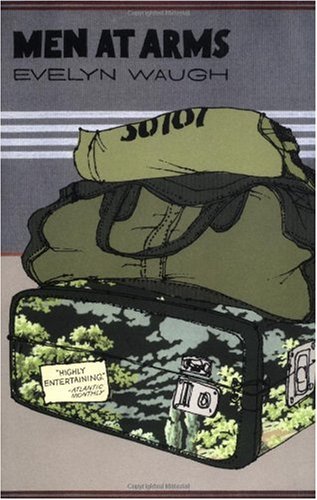
1. The Sword of Honour Trilogy (Everyman's
$14.49
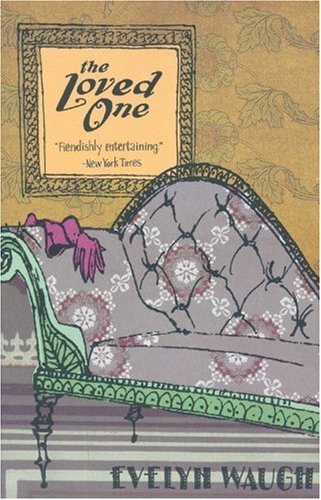
2. Black Mischief, Scoop, The Loved
$21.95
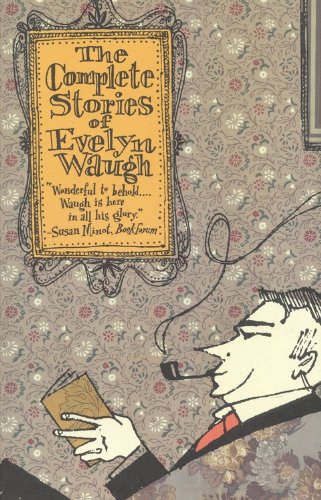
3. The Complete Stories of Evelyn
$16.00
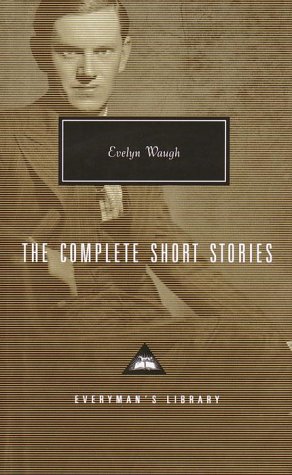
4. The Complete Short Stories (Everyman's
$4.22
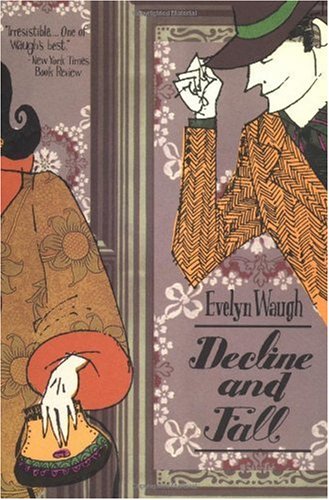
5. Decline and Fall
$5.25
6. Brideshead Revisited
$7.42
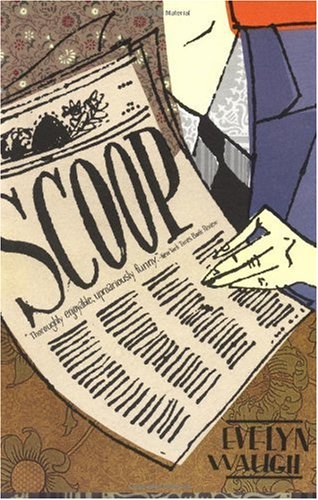
7. Scoop
$11.79
8. The Life of Evelyn Waugh: A Critical
$4.94
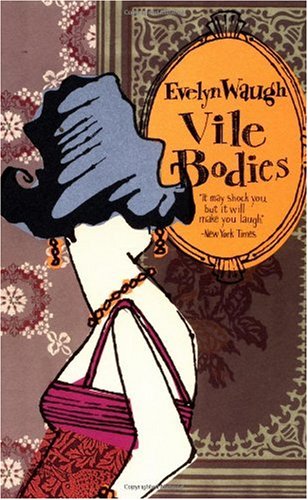
9. Vile Bodies
 
10. The Essays, Articles and Reviews
$7.32
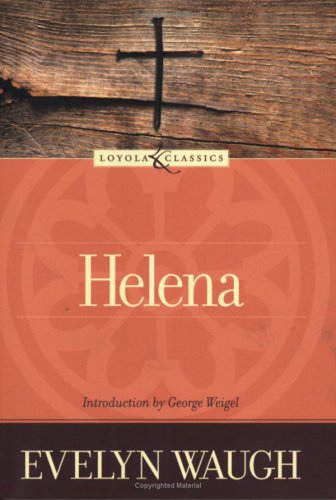
11. Helena (Loyola Classics)
$3.99
12. Put Out More Flags
$15.07
13. Fathers and Sons: The Autobiography
$15.36
14. Waugh Abroad: The Collected Travel
$18.41
15. Evelyn Waugh: The Later Years,
$10.15
16. Brideshead Revisited (Everyman's
$5.99
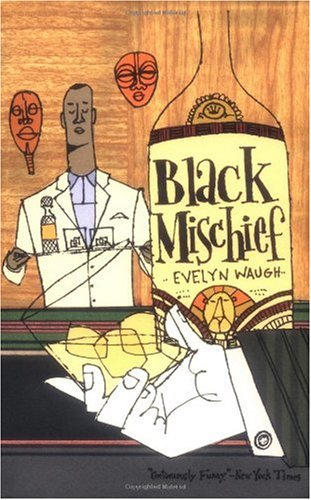
17. Black Mischief
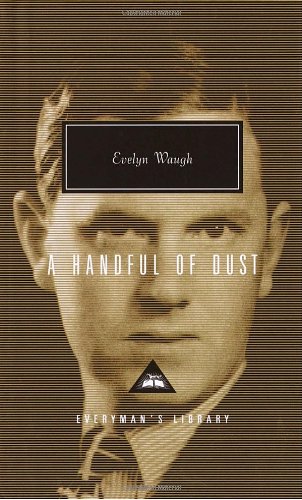
18. A Handful of Dust
$65.00
19. The Letters of Nancy Mitford and
$11.52
20. Edmund Campion

1. The Sword of Honour Trilogy (Everyman's Library)
by Evelyn Waugh
Hardcover: 768 Pages (1994-05-10)
list price: US$23.00 -- used & new: US$15.64
(price subject to change: see help)
Asin: 0679431365
Average Customer Review: 5.0 out of 5 stars
Canada | United Kingdom | Germany | France | Japan
Editorial Review

Book Description
(Book Jacket Status: Jacketed)

This trilogy of novels about World War II, largely based on his own experiences as an army officer, is the crowning achievement of Evelyn Waugh’s career. Its central character is Guy Crouchback, head of an ancient but decayed Catholic family, who at first discovers new purpose in the challenge to defend Christian values against Nazi barbarism, but then gradually finds the complexities and cruelties of war too much for him. Yet, though often somber, the Sword of Honour trilogy is also a brilliant comedy, peopled by the fantastic figures so familiar from Waugh’s early satires. The deepest pleasures these novels afford come from observing a great satiric writer employ his gifts with extraordinary subtlety, delicacy, and human feeling, for purposes that are ultimately anything but satiric. ... Read more

Customer Reviews (5)

5-0 out of 5 stars the best novels of world war 2
The best of Evelyn Waugh works, this trilogy is the perfect combination of story and history. Waugh's actual experience during the war leaves its mark all over the place, as well as his particular brand of humor - and his distaste for communism. Great read for anyone who wants to be entertained by a touching story, and see how the war was fought by the British, and why they turned against Churchill when it was won. Even if you don't care about any of that, the jokes are still fantastic, and most of the characters are brilliantly developed. They don't make novels like these ones anymore.

5-0 out of 5 stars A Good Man in World War II
Guy Crouchback is almost saintly.He is Catholic, patriotic, and selfless.When World War II comes along he is eager to serve his country and to be thrown into the caldron of war. But, by his own admission, he is not "simpatico" and he always seems to be the square peg trying to fit into a round hole. Perhaps his military career parallels that of the author, Evelyn Waugh.

There is of course no place for Guy in the British Army where his hard work and dedication are little rewarded and his war experiences are spotted with malfortune, little of which is of his own making. Guy "blots his copy book" early on and ends up being suspected of spying for the Italians.Waugh dots this novel with a cast of clownish characters and comic adventures in which Guy sadly participates.

Waugh's irreverent attitude toward World War II has probably made this novel less popular than it should have been.For example, at the opening of the war, Crouchback wonders why England, in the face of simultaneous invasions of Poland by Germany and the Soviet Union, chose to go to war with one and not the other. At another point, Guy muses that "he was engaged in a war in which courage and a just cause were quite irrelevant to the issue."In the best Waughian tradition, he does a hatchet job on the much-celebrated Yugoslav resistance movement of Marshall Tito.

Waugh, oddly enough, has also made the interesting comment that he wrote the "obituary" of the Roman Catholic Church in England with this novel.I take him at his word although perhaps I can't fully appreciate the Catholic subtleties of the novel.

Waugh originally published this novel in three volumes between 1952 and 1962. He then published the three volumes in one, omitting "tedious" passages.One of the tedious passages he omitted was, to me, the most memorable of the book -- the tale of children evacuated from London at the beginning of the war and thrust, with hilarious consequences, upon the country gentry for caretaking.So, you might read the novels -- Men at Arms, Officers and Gentlemen, and The End of the Battle -- separately as well as together.

Beyond thrillers, World War II doesn't seem to have inspired a lot of good novels. Waugh's comic, sad, and cynical novel is one of the best.

Smallchief

4-0 out of 5 stars Plummy fun
Great fun. The sort of thing that you read in the study with an open fire, a glass of 10 year old port and a cigar smouldering in the ashtray, the Great Dane snoring in the corner next to the mahogany sideboard.

Or that's the image that the book throws up.

I really enjoyed the book, wit in bucketfuls with an irony and a poignancy that had me chuckling away in time to the Great Danes' snoring.

Waugh takes you to the world of officers and gentlemen that he obviously experienced during his own wartime service- the injustice, the inept leadership and the crazed bravado of some of those around him. The waiting, the rumour, the boredom, the politics and luck, both good and bad are all major players in this book. The class system of officers and privates- all of the ingredients that make a Waugh book are here.

Oh yeah: and he fully describes and realises the insignificance of one soldier in the great scheme of things in an army, no matter how hard that one man wants to make a real difference.

Watch out for the exploits of the great Richie Hook- comic relief and so incredibly un-PC it will make you winch and laugh at the same time

5-0 out of 5 stars Five stars for Waugh, 0 stars for Everyman's Library
Though "Brideshead Revisited" may be his best known work, nothing conveys Waugh's sense of the world better than "The Sword of Honour" trilogy.

His sacramental view of earthly reality is best expressed in a memorable exchange between Guy Crouchback, the book's protagonist, and an obviously overwhelmed Anglican minister.

"... Do you agree," [Guy] asked earnestly, "that the Supernatural Order is not something added to the Natural Order, like music or painting, to make everday life more tolerable? It is everyday life.The supernatural is real; what we call 'real' is a mere shadow, a passing fancy.Don't you agree, Padre?"

"Up to a point." [said the Padre]

Sadly, Alfred A. Knopf's Everyman's Library, a collection of books intended to preserve and popularize the classics of modern literature, isn't up to the task.The binding is stiff and cheap, and the gold embossed lettering on the cover literally disintegrates in your hands.I bought this book hoping it would last a lifetime, but I'll be lucky if it survives the coming year.

Read Waugh for the tonic that he is, but avoid the Everyman's Library like the publishing plague that it is.

5-0 out of 5 stars Worthy of the Victoria Cross
When these books came out a number of reviewers thought that Waugh had lost his touch.Perhaps the atmosphere of the swinging sixties did not lend to itself a real understanding of the greatness of this work. In my opinion this work represents one of Waugh's major works.While it does not cover every aspect of World War Two (Proust did not feel the need to fight out every battle of World War One either), it does provide a kind of summing up of the state of Britain and what happened to former ruling class, a body that provoked feelings of great affinity from Waugh, even though he was a product of the upper middle class.

The key to understanding Waugh, not just this book, but also all of the others is his distrust of the 20th century.He came of age during the 1920s and biographers have noted an early fascination with the pre-Raphaelites.Although this artistic brotherhood focused on life in the pre-industrial age Waugh the satirist brought his powers to bear on the post World War I modern world its mores and hypocrasies.World War Two brought high taxes and democracy to this admired world of the British gentry and Waugh correctly chronicles this in his summary of the war in the trilogy.
The book is also a wonderful social satire drawing portraits of many of Waugh's own circle including Diana Mosley (With the fascist sympathies air brushed out here) Cyril Connolly and others.He marks the fall of the aristocratic officer and the rise of the "Trimmers" of the world whose heroism is more a result of luck and press puffing than genuine achievement.
The turning point in the book is the Crete campaign.Here British high born leadership collapses finally.Waugh sees this military failure coupled with the subsequent alliance with Bolshevik Russia to be one of the failures of the war.The so-called "Stalingrad sword" which appears as a character in its own right is symbollic of the passing away of the former way of life.It is not surprising that Waugh kills off the saintly Mr. Couchback (the hero's father) at this point in the book to provide a last hurrah for the old Catholic landed gentry.

The book is replete with a full gallary of comic characters.My favorite Apthorpe is unfortunately killed off in the first novel.To detail the reasons would be to deprive future of readers of the genuine pleasure in encountering him in the novels. However despite this absence in the two subsequent volumes, there are plenty to keep one amused.My second favorite of Virginia Troy, who is the ex-wife of our hero, Guy Crouchback.It is entertaining to watch this very worldly woman make her way through war-time Britain.There is Ludovic, the aspirant writer, enlisted man and probably the personification of the future post-war world with his trite novel "The Death Wish."Finally there is Trimmer, a former barber who becomes a hero because Britain needed one who was working class (at least in the opinion of HO HQ).

This is a major work by Waugh and probably his best book after "A Handful of Dust."In many ways it is superior to the earlier masterpiece in that provides Waugh with a wider canvas to express himself. This is a must for all readers of Waugh. ... Read more


2. Black Mischief, Scoop, The Loved One, The Ordeal of Gilbert Pinfold (Everyman's Library Classics & Contemporary Classics)
by Evelyn Waugh
Hardcover: 688 Pages (2003-08-05)
list price: US$25.00 -- used & new: US$14.49
(price subject to change: see help)
Asin: 1400040779
Canada | United Kingdom | Germany | France | Japan
Editorial Review

Book Description
(Book Jacket Status: Jacketed)

In honor of the hundredth anniversary of Evelyn Waugh’s birth, four of the master’s most wickedly scathing comedies are here brought together in one volume.

Black Mischief is Waugh at his most mischievous–inventing a politically loopy African state as a means of pulverizing politics at home. In Scoop, it is journalism’s turn to be drawn and quartered. The Loved One (which became a famously hilarious film) sends up the California mortuary business. And The Ordeal of Gilbert Pinfold is a burst of fictionalized autobiography in which Pinfold goes mad, more or less, on board an ocean liner.

Here in four short–very different–novels are the mordant wit, inspired farce, snapping dialogue, and amazing characters that are the essence of everything Waugh ever wrote. ... Read more


3. The Complete Stories of Evelyn Waugh
by Evelyn Waugh
Paperback: 611 Pages (2000-09-20)
list price: US$26.99 -- used & new: US$21.95
(price subject to change: see help)
Asin: 0316926604
Average Customer Review: 4.5 out of 5 stars
Canada | United Kingdom | Germany | France | Japan
Editorial Review

Amazon.com
Mordant, mirthful, and unrelenting in their lampoon of aristocraticmischief, Evelyn Waugh's novels have earned him a permanent place in theliterary pantheon. But this cantankerous master--the scion, by the way, of adecidedly middle-class family of publishers and writers--was no less adeptwhenit came to the short form. Indeed, Waugh first broke into print in 1926 with"The Balance: A Yarn of the Good Old Days of Broad Trousers and High NeckedJumpers," an early story that suggests a modernized and misanthropic P.G.Wodehouse. And he continued to write short fiction throughout the rest of hiscareer, all of which has now been collected in the delectable CompleteStories of Evelyn Waugh.

The first few entries in the collection capture a kinder, gentler author, notyet red at the verbal tooth and claw. But by 1932, when he wrote "Love in theSlump," Waugh's eye for the black-comic detail was firmly in place:

It rained heavily on the day of the wedding, and only the last-ditchers amongthe St. Margaret's crowd turned out to watch the melancholy succession ofguestspopping out of their dripping cars and plunging up the covered way into thechurch.... A doctor was summoned to attend the bridegroom's small nephew, who,after attracting considerable attention as a page at the ceremony by hisoutspoken comments, developed a high temperature and numerous disquietingsymptoms of food poisoning.
Waugh's wit only sharpened throughout the succeeding decades, and the verytexture of his prose thickened (although it never took on much in the way ofmodernist adipose tissue). In "Compassion," a 1949 tale that belies theauthor'svaunted anti-Semitism, a mere glimpse of some Yugoslavian partisans leads tothis superabundant sentence: "He passed ragged, swaggering partisans, allyoung,some scarcely more than children; girls in battle dress, bandaged, bemedalled,girdled with grenades, squat, chaste, cheerful, sexless, barely human, who hadgrown up in mountain bivouacs, singing patriotic songs, arm-in-arm along thepavements where a few years earlier rheumatics had crept with parasols andlight, romantic novels." Nobody can accuse Waugh of squishysentimentality--remember, romantic prose is strictly for convalescents.Still, The CompleteStories offers an accurate and stupendously entertaining vision of humanfolly, no less effective for being administered in smaller doses.Book Description
"As a writer of satiric and comic stories, Evelyn Waugh remains unmatched among modern writers." -New York Times Book Review

For the first time, all of Evelyn Waugh's stories-thirty-nine marvelous works of short fiction spanning his entire career-are brought together in a single volume. The result: a book of brilliant entertainments.

The stories range from delightfully barbed portraits of the British upper classes to a one in which Waugh suggests an alternative ending to his novel A Handful of Dust; from a "missing chapter" in the life of Charles Ryder, the nostalgic hero of Brideshead Revisited, to two long, linked stories, remnants of an abandoned novel that Waugh himself considered "my best writing"; from a plot-packed morality tale that Waugh composed at a very tender age to an epistolary lark in the voice of "a young lady of leisure"; from a hilarious fantasy about newlyweds to a darkly comic tale of scandal in a remote (and imaginary) African outpost.

The Complete Stories of Evelyn Waugh is a dazzling distillation of Waugh's genius-abundant evidence that one of the twentieth century's most admired and enjoyed English novelists was also a master of the short form.Download Description
Collected for the first time in a single volume: all of the short fiction by one of the 20th century's wittiest and most trenchant observers of the human comedy. ... Read more

Customer Reviews (7)

4-0 out of 5 stars An odd but interesting assortment
To lump together the contents of this book as "stories" is a bit misleading. It includes unused or uncompleted fragments from novels, some clever but forgettable quick sketches published in magazines, one or two genuine short stories, and some very unfortunate juvenilia and senilia. Waugh's stories are mostly inferior to his novels, but there are one or two gems here.

The most rewarding discovery for me was two chapters from Work Suspended, a novel Waugh started during the war but never finished. In it he puts aside the broadly satirical point of view of his early novels in favor of the more realistic and subjective style that would find its culmination in Brideshead Revisited and the Sword of Honour trilogy. I can only guess why he didn't finish it -- certainly the difficult circumstances of the war were a primary reason, but the bits included here suggest that he was just on the verge of painting himself into a corner, plotwise. Read it and decide for yourself.

The other delightful surprise is the last story, Basil Seal Rides Again, in which we rejoin the memorably cynical antihero of the early novels for one last escapade on the threshold of old age. If only Waugh had returned to that vein a little earlier, but alas, the rest of the postwar stories seem to reflect only his undisguised bitterness at the (for him) dystopia of the British welfare state.

Those who like A Handful of Dust (which I consider his masterpiece) might want to read the two alternative endings Waugh wrote, The Man Who Liked Dickens (published separately as a short story), and By Special Request, a decidedly inferior version.

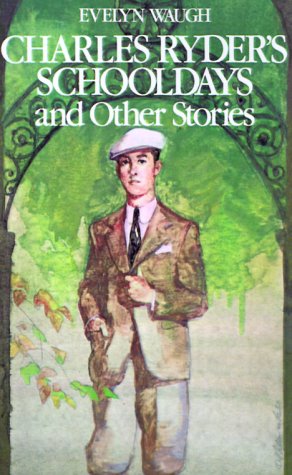
There's also Charles Ryder's Schooldays, a sort of prequel to Brideshead Revisited, which seems not to have been published at all until the success of the TV series caused it to be unearthed.

But if you're new to Waugh, don't start with this book. Read one of the early novels first -- I especially recommend Decline and Fall, but Vile Bodies or Black Mischief would also be a good choice.

4-0 out of 5 stars Mockery and Company
Besides the fact that many think he's a woman, Evelyn Waugh is one of those greatly misunderstood writers. With the slapstick humor of P.G. Woodhouse, the subtlety and irony of E.M. Forster, the sarcasm and mockery of Oscar Wilde, the eloquence of English of Henry James, and the social criticism of Swift, Waugh's stories are delightfully filled with attributes all of.

His stories are prevalently snapshots into a marriage or some aristocratic relationship between two either ignorant or vile parties. His characters are not likable, but somehow it's so seductive to go on reading about these awful people. My personal favorite story is about a husband who, worried about his wife's fidelity, buys her a dog named after him to remind him of her while he travels to Africa on business. She, however, begins an affair with another man, only to end it not because of her husband, but because of the dog. This relationship mirrors her marriage, and in turn, she `dumps' the dog for another one. The rejected dog goes on to bite the nose of his former owner. In another story, a newly married couple is accidentally separated on the night of their honeymoon. The husband, somewhat not in the throws of love, decides to visit on old college buddy. This instigates a trail of incidents, all unfortunate, that prevents the couple from uniting for a week. The wife, realizing that she doesn't particularly miss her new husband, decides it might be better not for them to ever meet again.

Sit down for 10 minutes at a time with these unabashed comedies. If you like to smirk, you will love these.

4-0 out of 5 stars Like Bathing In Bubbles And Acid
Meanness to your fellow man is no virtue unless you write fiction, especially the kind perfected by the 20th century's most celebrated malcontent, Evelyn Waugh. Then it can be quite fun, especially when offered small but pungent doses like you get here.

A collection of Waugh's shorter fiction, including several novellas and some pieces written while a child and college student, "The Complete Stories Of Evelyn Waugh" is an entertaining, satisfying demonstration of both the breadth and wit of one of English fiction's finest stylists, not to mention a place to get to know Waugh better after reading his better-known novels like "Handful Of Dust" and "The Loved One."

You don't think of Waugh as a punchy writer, at least I didn't from reading the above novels and especially his "Sword Of Honor" trilogy. When your most successful film adaptation runs 11 hours, a writer isn't expected to shine in short sprints. But all his novels have their sharp dramatic moments, sudden reversals and even shock endings. Waugh was best known for his dialogue and descriptive prose, but "Complete Stories" drives home the point that Waugh could spin a yarn and cap it off with the best of them.

Take perhaps the two best-known stories here, "Bella Fleace Gave A Party" and "Mr. Loveday's Little Outing," both of which showcase Waugh's celebrated misanthropy with stories that are not only keenly realized but carry you along at a brisk pace before dropping you on a dime. You feel for sad Bella, especially, yet Waugh's satirical send-up of social mores leaves a delicious aftertaste, however cruelly presented, because of the cleverness of his invention.

Other stories work that way, too. "Incident In Azania," with its story of a young woman kidnapped in Africa, could be an O. Henry story, namely "The Ransom Of Red Chief." "The Sympathetic Passenger" reminds one of Stephen King, a story of picking up the wrong hitchhiker that is frightening, funny, and gallops along to a quick jolting conclusion.

As a dog lover, my favorite story has to be "On Guard," a gentler tale about a suitor who buys his ladylove a dog named Hector and instructs it to keep any other likely Romeos away until his return from sea, a "commission" the pup takes very seriously. "He understands everything," the woman coos, not realizing how right she is as he barks at and pees on every male who walks through her door.

There's also a couple of forays into science fiction, not to mention a prequel to "Brideshead Revisited," and an alternate ending to "Handful Of Dust" worth reading for those who liked those books at least. Even the less successful works, of which there are a few, are entertaining most of the way through, not to mention illuminating of Waugh's singular mindset, which could look compassionately one moment upon the plight of Jewish refugees in the Balkans and serve up a farcical matrimonial murder the next.

The biggest drawback to this volume is the lack of any secondary material. No introduction, no footnotes, not even headers above each of the stories telling you when they were written or why. It's a sizeable omission, especially for the juvenilia, where spelling mistakes are about the only clue you get as to the author's age.

But there's no better place to get Waugh in his most concentrated form, a perfect companion for a trip to idle away an hour under the sun, pondering life's arbitrary cruelties from multiple vantage points in the company of a cheerful, fascinating cynic.

5-0 out of 5 stars For Wauvian Worshippers
Evelyn Waugh is the author of my favorite book, "Decline and Fall" and I am also extremely positive about most of his other novels. This volume would have been better named the Complete Short Fiction as it is more a study of starts, new endings, periods, etc. and some short stories. This must be part of a Waugh-obsessed person's library, and I consider myself one of that distinction. ... This collection is like a lost treasure map for his familiars.It includes a story which can only be an attempt to subvert a considerable anti-semetic theme in his work.It provides a time and place coincidental with the failure of his marriage that his fictional marriages carry sinister, if comedic overtones.He even wrote self-parody, in the characters that were bloated boors, alchohol reddened old men, undeniably like himself.

Frankly, I can't imagine a world without the old impossibly wicked, toad. ... He was gallingly honest when it came to intolerance for silly, selfish theater of human beings. He skewered irresistably, an African royal celebration desperately trying to seem European. And the book adds to his best known cruelty toward the champagne swilling beautiful young things, lacking in the most basic human instincts, especially towards children, passion for others or ideals.(He was not considered a loving parent, by any means.)
These are great boons to those of us who want more, having been through everything else so often. Waugh's work is shocking and hilarious. I only wish he could return briefly and leave us something on the politically correct.But as that will surely not come to pass, I must say, that this volume is a great footnote, to the god of caustic disdain, to be read in bits and pieces- forever.

5-0 out of 5 stars An assault on England's class structure?
I enjoyed this collection of Waugh's short stories and unfinished work.Cutting, indeed cruel at times, but always interesting, he zeroes in on the upper and upper middle classes of the interwar years.Cruelty can, in fact, be rather fun!I would say that if you haven't read any Waugh, this is a good starting point. ... Read more


4. The Complete Short Stories (Everyman's Library)
by Evelyn Waugh
Hardcover: 595 Pages (2000-09)
list price: US$25.00 -- used & new: US$16.00
(price subject to change: see help)
Asin: 0375404309
Average Customer Review: 4.0 out of 5 stars
Canada | United Kingdom | Germany | France | Japan
Editorial Review

Book Description
(Book Jacket Status: Jacketed)

Evelyn Waugh's short stories are the marvelous, concentrated riffs of his comic genius, revealing in miniaturized perfection all the elements that made him the greatest comic writer of our century. We find in them Waugh's almost superhuman technical skill as a writer and his quicksilver attentiveness to the minutiae of human absurdity, as well as his worldly knowledge, his tenderness, his perceptive compassion, and his sophisticated, disabused, but nevertheless forceful idealism.

The thirty-nine stories collected here include such small masterpieces as "Mr. Loveday's Little Outing" and "Scott-King's Modern Europe"; an alternative ending to Waugh's novel A Handful of Dust; a "missing chapter" in the life of Charles Ryder, the hero of Brideshead Revisited; and two linked stories, remnants of an abandoned novel that Waugh considered his best writing.

This edition contains the original illustrations to "Love Among the Ruins," as well as more than thirty graphics produced by the author as an Oxford undergraduate in the 1920s. ... Read more

Customer Reviews (1)

4-0 out of 5 stars Some Golden Oldies Here
"The Complete Short Stories of Evelyn Waugh," major, British writer of the twentieth century, who tended to comedy, is certainly the product of thorough editing, including, as it does, several of his short short juvenile, and Oxford, pieces.It also includes several fragments of novels excised from the final, or never completed, and, of course, the many stories Waugh published in magazines during his lifetime.

The earliest work, dating from the 1920's, shows Waugh as the skillful, amusing and witty social commentator we see in the novels then published, such as, "A Handful of Dust," and "Decline and Fall." "Bella Fleace Gave A Party," published in "Harpers' Bazaar," U.K., and U.S, is an amazingly brief masterpiece of social detail, as an Irish landowner sets about giving her last ball.If you've never given a ball, you could follow the instructions Waugh gives -- though, thankfully, we don't have to lick stamps anymore -- and give one successfully.Mind you, though, success will require mailing the invites. "The Man Who Liked Dickens," substantially expanded, became the ending of "Handful;" that novel's alternate ending is also published here.Two chapters of an unfinished novel give us an entertaining closeup of the wealthy bohemian social life of the period.

From somewhat later in his career, World War II and afterwards, we find"Charles Ryder'sSchooldays," excised from Waugh's masterwork, "Brideshead Revisited."The level of detail and dialogue in this is such as to lead a reader to think the young Waugh must have been keeping voluminous diaries before he could spell properly."Compassion" is a bitter World War II story about the wartime treatment of Jews: his characters did not always seem that fond of the race."Love Among The Ruins," set in the post-war period, is apparently Waugh's only stab at science fiction, and not too successful."Scott-King's Modern Europe" is hilarious, and witty too.Consider his resonant description of air travel:

"He had left his hotel at seven o'clock that morning; it was now past noon and he was still on English soil.He had not been ignored.He had been shepherded in and out of charabancs and offices like an idiot child; he had been weighed and measured like a load of merchandise; he had been searched like a criminal; he had been cross-questioned about his past and his future, the state of his health and of his finances, as though he were applying for permanent employment of a confidential nature.Scott-King had not been nurtured in luxury and privilege, but this was not how he used to travel.And he had eaten nothing except a piece of flaccid toast and margarine in his bedroom.... voice said: 'Passengers for Bellacita will now proceed to Exit D,' .... while, simultaneously, the conductress appeared in the doorway and said: 'Follow me, please.Have your embarkation papers, medical cards, customs clearance slips, currency control vouchers, passports, tickets, identity dockets, travel orders, emigration certificates, baggage checks and security sheets ready for inspection at the barrier, please.'"

After all that, the man's got to sneak back into the country.If this sort of thing is your cup of tea, then it'll be your cup of tea. ...
Read more


5. Decline and Fall
by Evelyn Waugh
Paperback: 304 Pages (1999-09)
list price: US$14.99 -- used & new: US$4.22
(price subject to change: see help)
Asin: 0316926078
Average Customer Review: 4.5 out of 5 stars
Canada | United Kingdom | Germany | France | Japan
Editorial Review

Book Description
(Book Jacket Status: Jacketed)

Decline and Fall (1928) was Evelyn Waugh's immensely successful first novel, and it displays not only all of its author's customary satiric genius and flair for unearthing the ridiculous in human nature, but also a youthful willingness to train those weapons on any and every thing in his path. In this fractured picaresque comedy of the hapless Paul Pennyfeather stumbling from one disaster to another, Waugh manages the delicious task of skewering every aspect of the society in which he lived.

With an Introduction by Frank Kermode

Sir Frank Kermode, formerly Lord Northcliffe Professor at London University, is now Professor at Cambridge and Columbia Universities. His books include The Uses of and Continuities. ... Read more

Customer Reviews (37)

3-0 out of 5 stars Glimpses of the future master
This is the novel that made a young Evelyn Waugh's reputation in 1928. "Decline and Fall" is dripping with early glimpses of the comic satire that Waugh would come to produce. The story follows the improbable events of Paul Pennyfeather's life after he is sent down from Scone College, Oxford.

Pennyfeather, a meek and polite divinity student, runs afoul of a group of drunken students after a raucous old boy dinner of the Bollinger Club. After a misunderstanding about a school tie, the students take Pennyfeather's pants there on the school quad. Pennyfeather is expelled for indecency.

What makes the hapless Pennyfeather so, for lack of a better word, huggable, is that events happen to him, not the other way around. He meets a bizarre cast of repeating characters, in this funny if somewhat moody book. If you read "Decline and Fall" as the satire that it is, even the casualness with which a grizzly murder is handled is funny.

"Decline and Fall" is well worth reading, but it isn't Waugh's best work. His rather scattershot lampooning of every aspect of upper-middle class British life will be honed to perfection in later works like "Scoop."

It's a great read and a zany adventure for Paul Pennyfeather, and while it appears that the story ends where it starts, it doesn't. That is the key the satisfying conclusion that Waugh gives his tale that at times seems little more than a Monty Python skit.Penny feather is a changed man, even if England is the same. Evelyn Waugh was a great novelist, even in 1928.


4-0 out of 5 stars The sad story of Paul Pennyfeather
This bitter farce tells the story of one Paul Pennyfeather, a young man who is expelled from an Oxford-like university due to a misunderstanding. Ever since this first scene the reader understands that he's reading a novel of the absurd. The point is never to tell a credible story with a tight plot, but to develop a savage satire on the British society, especially the educational system. After being expelled, Paul finds himself with no money and so is forced to get a job at a school of the worst level. His colleagues are pathetic and their small misadventures are hilarious. Of course, Waugh's humor is very British: caustic, understated, and at the same time some passages, like the athletic event, are excessive to the point of ridicule. At some point, Paul makes the acquaintance of the mother of one of his pupils, a rich and beautiful widow who proposes to him in marriage. This seems to be Paul's lucky break of a lifetime, and he eagerly accepts. But the woman runs a strange business which will produce the decline and fall of the title.

What develops as a hilarious farce ends up being a sad story. Waugh aims his mockery at every person and system included in the novel. Education, prostitution, jail, politics and business are all the target of this first novel which promises much about the future work of Waugh. Recommended.

5-0 out of 5 stars "Monty Python" for People Who Think

Waugh's notorious first novel, "Decline and Fall" brutally satirizes British society of the 1920s with his characteristic black humor. Based in part, upon his own experiences at Oxford and teaching at a private school in Wales in 1925, it lays waste British notions of honor, educational excellence, sportsmanship, the Church, and the upper class generally. In an age when most "humor" is visual slapstick, it is refreshing to read a writer who could be screamingly funny using words alone.

Readers with Politically Correct views, will probably be offended by this book (or any of Waugh's other novels for that matter), but those who believe that the only test of humor is whether or not it is funny will find it an enjoyable read.

Note: The movie version of another great satire by Waugh, "The Loved One," has only recently been released on DVD. With a screenplay by Terry Southern (who also wrote the screenplay for "Dr. Strangelove"), it is definitely worth buying, although you will enjoy it more if you read the book first. It is one of those rare films that does the book justice.

5-0 out of 5 stars The Decline of an Empire & The Fall of Morality
When the First World War ended in 1918, Evelyn Waugh was fifteen years old. Over the next decade, he saw a continuation of the wrenching that England had suffered first on a material level, then on a moral and social one. In DECLINE AND FALL, Waugh expresses his dismay that the psychic underpinning that had bolstered England for the fighting proved incapable to lead it in the years that led to the Great Depression. Everywhere Waugh looked, he saw a gradual disintegration of the English social fabric, and for him, this fraying of that fabric allowed him to use his new found sense of biting satire that could lash out in all directions.

DECLINE AND FALL (1926) was Waugh's first novel. His protagonist Paul Pennyfeather is the contemporary English Everyman, a basically decent sort of chap who seeks to do the right thing, but finds out that all too often that he is the only one interested in doing that. Pennyfeather's approach to life is a passive one. When dire events happen, he tries harder to deflect their severity than to eradicate them altogether. The opening chapter sets the tone for his inability to confront dire evil with purposeful resolve. He is a student at Scone University who is subject to a mean trick by a group of consciousless upperclass cads, the result of which is that he is expelled for moral turpitude. Rather than fight to stay in school he meekly accepts his fate. From this point on, the novel descends into a series of events whose reverberations and ripples drag him ever more deeply into the muck and slime of existential disarray. He finds a job teaching vicious urchins at a tenth rate school, where he predictably encounters both students and teachers whose only purpose is to bedevil him. Eventually, he meets a woman who promises to be the Great Love of his life.She unwittingly involves him a white slavery deal that results in his imprisonment. By the time the novel ends, Pennyfeather has gone in a big circle. He returns to Scone University in a disguise (he needs one since he escaped from prison), but this disguise is external only. Inwardly, he is the same passive but good hearted naive youth that he was in the beginning.

DECLINE AND FALL proved to be the first in a series of novels that allowed Waugh to explore the bitter angst that bubbled beneath the surface in an English middle class society that increasingly came to see itself as having lost its moral compass in an age that prized breaking the rules over following them. As with all good writers, Waugh depicts a society that draws the reader inwardly, all the while urging that reader to judge the worth of that society as viewed through the bitterly satiric lens of a man who wants his reading public to feel the same sense of outrage that he does. In DECLINE AND FALL, Waugh succeeds admirably.

5-0 out of 5 stars Deliciously scathing
In this his first novel, Evelyn Waugh lampoons the English education system, sporting events, theological study, the landed gentry, and prison reform, to name just some of the targets of his razor-sharp satirical barbs. Paul Pennyfeather, a third-year divinity student at Scone College, is kicked out after a prank is pulled on him leaving him indecently exposed; he then gets a job as a teacher in a prep school where his past is ignored ("I have been in the scholastic profession long enough," says the school's head Dr. Fagan, "to know that nobody enters it unless he has some very good reason which he is anxious to conceal."). From there the craziness only multiplies: a student is accidentally shot in the foot with a starter's gun at a track meet (and dies); Pennyfeather gets involved with the debauched Margot Beste-Chetwynde and goes to prison in her place as a white slave-trader (the truly insane practices of the prison seem right out of a Marx Brothers movie); he is somehow legally declared dead on an operating table in prison where he was to have his already-removed appendix taken out; and then miraculously finds himself back at Scone none the worse for wear.

As I read the book I was reminded often of ALICE IN WONDERLAND: the Caucus race and the track meet, the nonsense poems in both, the "reforms" that are worse than the problems they are addressing, the return to "normalcy" at the end as if nothing of consequence ever happened. Waugh's satire is biting and very, very funny, but never excessively cruel or mean. One begins laughing while reading this novel right on the first page (the party scene is hilarious in its destructive foolishness, "a lovely evening") and continues to do so with few interruptions to the end. It's scathing, brilliant comedy - something Waugh was a master at.
... Read more


6. Brideshead Revisited
by Evelyn Waugh
Paperback: 351 Pages (1999-09)
list price: US$14.99 -- used & new: US$5.25
(price subject to change: see help)
Asin: 0316926345
Average Customer Review: 4.5 out of 5 stars
Canada | United Kingdom | Germany | France | Japan
Editorial Review

Amazon.com
One of Waugh's most famous books, Brideshead Revisited tells the story of the difficult loves of insular Englishman Charles Ryder, and his peculiarly intense relationship with the wealthy but dysfunctional family that inhabited Brideshead. Taking place in the years after World War II, Brideshead Revisited shows us a part of upper-class English culture that has been disappearing steadily. ... Read more

Customer Reviews (65)

3-0 out of 5 stars ho hum
Waugh's prose is a joy to read but the story itself is dissatisfying. The book begins with an intensely close relationship between the narrator and Sebastian Flyte, and for starters, Sebastian is neither interesting nor likeable. And as much as we are told of the intensity of the friendship and love between these two, it's really something the reader has to accept at face value. It's not "powerful," despite several gushing reviews to that effect. Sebastian later becomes an alcoholic, exits the stage for points east, and there never is much of a sense of closure with him. Instead, his sister Julia, a minor character in the early chapters, becomes the love interest, while the most (only?) interesting, intelligent, independent and funny character, Anthony Blanche, flits in and out of the plot at odd intervals. In all, Brideshead Revisited is a stuffy soap opera about a pious upperclass British family, and as such it epitomizes Mark Twain's description of classic literature: a book everyone wants to have read but nobody wants to read.

5-0 out of 5 stars Always Worth Revisiting
The purchase of Brideshead Revisited is one of sure investments in your library. You will revisit it very often because it is one of the books that keep you in their thrall forever. Actually, I have a copy in my desk in the office and pick it up to read a few pages when my students are late for meeting.
This is a book which can be read in many ways - most of which open up a new perspective on its contents and some of which may help you understand yourself and those you choose to share it with. It may be read as a Christian treatise (Waugh took this quite seriously) and a memoir of studies at Oxford in the 1920s. A story of a misplaced homosexual affection and story of decline of British aristocracy. Whichever way you choose you will not be disappointed.

5-0 out of 5 stars Brideshead Reread
I don't think I'm a typical Waugh reader, if there is one. A friend, devouring his ouvre voraciously, gave me this book in high school or college, and at the time I thought it very good. I recently reread it, however, spurred on by Thomas Howard's lively essay on it in The Night is Far Spent, a collection of Howardiana, mainly essays on literature.

The second time around I was more aware of the construction, which seems to me somewhat different than the sort of savage satire Waugh was known for or the occasional dark comedy like The Loved One. I say that having read only a few novels and knowing little of the author's background. Waugh was early on the great champion of P.G. Wodehouse, whose light comedies of manners seem so different from his own novels, that I perhaps search for something of PGW in EW in my reading.

This novel illustrates some of the pitfalls and challenges of writing in the first person, in that Captain Ryder talks somewhat differently than he thinks, with his part of a dialogue sometimes amounting to a mere sentence or even a word. Driving (reading)along that smooth road, as it were, one encounters a speed bump in the shift to the second sort of writing, which consists of descriptive passages, and to a third sort consisting of longer ruminations and reflection by Ryder on the present and past. As one reviewer put it, the story is told by indirection.

This is Waugh's best known novel, largely due to the popular British mini-series made from it a few years back. It's also often said to be his only Catholic novel, but that means the main characters are Catholics (not Ryder) not that Waugh has some didactic purpose or hidden agenda in the writing. Those well read in Waugh may want to check out Howard's essay. For those new to him, Brideshead may well be the place to start.

5-0 out of 5 stars A Great Novel And Not Conventional
This is written by Arthur Evelyn St. John Waugh(1903 to 1966) a British writer best known for this present work and the following novels: Decline and Fall, A Handful of Dust, and The Sword of Honour trilogy. I read A Handful of Dust a few months ago and thought that the present book had more in it, i.e.: longer and a more interesting read, and it had a more realistic plot. According to what we know, Waugh had a few second thoughts about the present book.

The story is really three stories that are separated in time which have been pieced together. It is set in post WWI England and it is about the protagonist and narrator Charles Ryder, a student at Oxford University college and his encounter with members of the Flyte family at Brideshead. The novel contains descriptions of his life as a student and then folllows through ten years or so into his adult life and his marriage.

I will try and not give away the plot but give a quick sketch. The three pieces or sub-plots are his relationship with Sebastian Flyte, then Julia Flyte his sister, and then finally Lord Marchmain, an Anglican, converted to his wife's religion which is Roman Catholicism.

Each of the three sub-plots has a different slant to the story. The relation with Sebastian is similar to an Oscar Wilde situation, and the reader is left in doubt to the extent of the relationship. Is it physical or platonic? Also, the author brings in the subject of alcoholism. Finally, that first section gives us a glimpse of life at Oxford post WWI.

The central to last part of the novel with Julia is a more conventional love story, and then at the end we have the theme of divine grace and reconciliation of the father.

Most people focus on the theme of Catholicism, and I thought that theme was rather weak until the last ten pages or so. One can suspect that the author has taken this approach so as not to isolate the audience early in the novel. We can assume the audience for the novel is not Catholic.

Does it work? As a simple novel or as an entertaining work of art it works and the novel is interesting; it is ingenious and is a compelling read after the first 40 pages or so.

As an advertisement for the Catholic faith I am less sure that the book works but the reader can judge.

Recommend: 5 stars.

5-0 out of 5 stars Brideshead in America
Evelyn Waugh himself said that he there were only six people in America who would understand Brideshead Revisited and looking at these customer reviews I find myself forced to agree. ... Read more


7. Scoop
by Evelyn Waugh
Paperback: 336 Pages (1999-09)
list price: US$14.99 -- used & new: US$7.42
(price subject to change: see help)
Asin: 0316926108
Average Customer Review: 4.5 out of 5 stars
Canada | United Kingdom | Germany | France | Japan
Editorial Review

Amazon.com
Evelyn Waugh was one of literature's great curmudgeons and a scathingly funny satirist. Scoop is a comedy of England's newspaper business of the 1930s and the story of William Boot, a innocent hick from the country who writes careful essays about the habits of the badger. Through a series of accidents and mistaken identity, Boot is hired as a war correspondent for a Fleet Street newspaper. The uncomprehending Boot is sent to the fictional African country of Ishmaelia to cover an expected revolution. Although he has no idea what he is doing and he can't understand the incomprehensible telegrams from his London editors, Boot eventually gets the big story.Book Description
Evelyn Waugh was one of literature's great curmudgeons and a scathingly funny satirist. Scoop is a comedy of England's newspaper business of the 1930s and the story of William Boot, a innocent hick from the country who writes careful essays about the habits of the badger. Through a series of accidents and mistaken identity, Boot is hired as a war correspondent for a Fleet Street newspaper. The uncomprehending Boot is sent to the fictional African country of Ishmaelia to cover an expected revolution. Although he has no idea what he is doing and he can't understand the incomprehensible telegrams from his London editors, Boot eventually gets the big story. ... Read more

Customer Reviews (43)

4-0 out of 5 stars A dry martini of a novel
Heady and incredibly fun, this 1930s' look at the curious animal known as "foreign correspondent" is one hilarious read.Much of the book is tongue and cheek and a bitch-slap to the world ofcompetitive newspapers (far more important then than now).

The story centers around a hapless rural-life columnist for a London newspaper, who is mistaken for someone else and sent to Africa to report on the bloody conflict in a fictional country (which predicts, a bit, the reality of the 1960s).He is bunked down with a gaggle of correspondents from competing papers, each determined to get the scoop and win appaluse back in England.The comraderie, back-stabbing, misinformation and one-upsmanship is all just a vodka swallow away from how journalism really works.

The reporters make up so much of their stories that when our hero actually gets a real hot one, he is told that -- even though it is true -- he can't file it because the fictional version was discredited the day before.If you can follow that sentence, you will love "Scoop."

5-0 out of 5 stars Waugh's farce about the newspaper trade and making a name for oneself
Evelyn Waugh's send-up of the newspaper business, and where in other novels he could be bitterly satirical, here he's wildly farcical and broadly comical. William Boot, a nature writer for the DAILY BEAST, ("Feather-footed through the plashy fen passes the questing vole" is given as an example of his "high-class style" of writing), is mistaken for the novelist John Boot and is sent to the African country of Ishmaelia. Here he encounters other journalists, many of them American, who are all looking for the scoop that will make them famous. Boot meets and falls in love with a woman named Kachen, and immediately the naïve Boot is in over his head romantically. But it's she who slips Boot the news about a planned coup d'etat, and the simple-minded journalist scoops everyone and eventually comes home a hero. Of course the wrong Boot (John) is given knighthood and the book ends, after additional mistaken identities are made, with everything being righted and Boot (William) going back to writing his innocuous nature articles, none the worse (or better) for wear. Waugh's humor is bright and airy, very reminiscent of P.G. Wodehouse, who is actually alluded to at one point in the story. Lots and lots of laughs from beginning to end.

3-0 out of 5 stars Is it a comedy if you don't laugh out loud?
Funny, but only in a clever way, not in a ha-ha way.

I laugh out loud while reading Mark Twain, Douglas Adams, Carl Hiaasen and Paul Theroux.

This just made me smile thinly and sardonically.

Not that there is anything wrong with that...

4-0 out of 5 stars Clever
Overall, a very satisfying read, but somewhat disjointed.The beginning and ending -- the two parts which take place at Boot Magna in the English countryside -- are laugh-out-loud funny.The middle section, which takes place with the protaganist, William Boot, in the mythical African nation of Ishmaelia, is more straightforward and serious.The portions of the book which chronicle Boot's relationship with Katchen felt like they were torn out of a Hemingway book, given the sparse dialog and direct emotions.I felt as if this book might have been started by a very young, impressionable Waugh during a time when he was experimenting with different styles, trying to find the one which best suited him... styles borrowed from Hemingway, Wodehouse, and Greene.Its slightly disjointed nature made me think that it was a book which he worked on in fits and starts... would write a little, put it back in the drawer, revisit it a couple of months later.Overall, it's a very good book by a writer a few years away from his peak.

5-0 out of 5 stars Brilliant Wit From the Inimitable Waugh
Yes, I'd be bold enough to name Evelyn Waugh as one of the world's greatest writers, a true genius when the word actually meant something (it's handed out too freely nowadays!); we shall likely never see his match again."Scoop" is not only hilarious (I laughed out loud quite often), but the satire is as timely as it ever was.He is a keen observer of human beings and his depiction of the disorderly East African government and the Fleet Street news agency so given to politically motivated perks that a trick cyclist had been engaged to edit the Sports Page on a five year contract is spot on.All of the absurdity is wonderful.An absolute delight. ... Read more


8. The Life of Evelyn Waugh: A Critical Biography (Blackwell Critical Biographies)
by Douglas Patey
Paperback: 456 Pages (2001-12-05)
list price: US$34.95 -- used & new: US$11.79
(price subject to change: see help)
Asin: 063123134X
Average Customer Review: 5.0 out of 5 stars
Canada | United Kingdom | Germany | France | Japan
Editorial Review

Book Description
He has written a masterful biography, rich in enlivened critical detail, which more than any other study of Waugh to date, works to redress the bias against its subject that is so representative of Stannard's major two-volume account. ... Read more

Customer Reviews (3)

5-0 out of 5 stars Patey serves up Waugh as an intellectual treat.
Critics have tended to split Evelyn Waugh into two authors: the hysterically funny satirist who wrote books like "Vile Bodies" and "The Loved One," and the very conservative Catholic writerwho gave us "Brideshead Revisited" and other works. Pateyshatters this shallow understanding, demonstrating convincingly thatWaugh's satire, like Swift's, is solidly based on a system of positivevalues -- in Waugh's case, pre-Vatican II Roman Catholic religion. Patey'streatment of this aspect of Waugh, so central to him as a writer and as aman, is simply masterful. I have always found this side of Waughdistasteful, but through Patey, I found myself pulled into an intense andexciting dialogue with Waugh and his beliefs. The treatment of Waugh's lifeis equally superb. Perhaps more than any other genre, satire requiresa knowledge of its historical context to be appreciated. Patey seems toknow everything about everyone Waugh ever met, and to have read andunderstood everything Waugh might ever have read. He has synthesized it alland delivered it in a prose style so clear and unobtrusive that you don'tappreciate it until you reflect on what he's accomplished with it. And helets Waugh make all the jokes. There's much about Waugh to dislike, butPatey provides an understanding of the man and his art that reconciles usto him. And besides, how can you hold a grudge against an author who namesa character Aimee Thanatogenous?

5-0 out of 5 stars we are nearer to perfection
If anyone who wishes to learn more about the life and the works of Evelyn Waugh, this may not be the biography for him. Currently, there are three major biographies of Waugh-Stannard, Sykes, and Patey. Stannard's work iscumbersome, and often his prose is awkward, but it is certainly well worthreading for its inclusiveness. Sykes is moreof a reminiscence offriendship, including anecdotes that he was privy to. Patey is the first author of apply high literary criticism to Waugh in the kind of form that aprofessor is apt to do.He responds specifically to continual problemsraised in Waugh scholarship and provides far more coherent and concreteanswers than Stannard or Sykes even attempt. He organizes the biographywith an eye on chronology, but also addresses issues thematically which isbrilliant, and simple, but what few literary biographies do. Bravo Mr.Patey! Thank you very much for your hard work on this matter. His biographyis also meticulously footnoted.

5-0 out of 5 stars May be the best "life" yet
Though half the length of the other standard biographies (Sykes, Stannard, and Hastings), Patey's book is more interesting and more insightful.He provides a context for Waugh's thoughts, so that some of EW's positions seem less strange.Patey also defends Waugh's books against the vicious criticism to which they have often been subjected.Another strength is Patey's explanation of what redeems even the non-Catholic characters.The surprising answer: the ability to love.Patey doesn't carry this point all the way through, and sometimes he seems too sympathetic to Waugh.Still, I'd rather re-read his biography than any of the others. ... Read more


9. Vile Bodies
by Evelyn Waugh
Paperback: 336 Pages (1999-09)
list price: US$14.95 -- used & new: US$4.94
(price subject to change: see help)
Asin: 0316926116
Average Customer Review: 4.5 out of 5 stars
Canada | United Kingdom | Germany | France | Japan
Editorial Review

Book Description
Evelyn Waugh's second novel, VILE BODIES, is his tribute to London's smart set. It introduces us to society as it used to be but that now is gone forever, and probably for good.

Improbably, this is a love story in which Adam Fenwick-Symes, a destitute young writer, hungers for Nina Blount, daughter of an eccentric aristocrat. But at the same time, it is a satire that plays against the social whirl of a class doomed to extinction as certainly as the dodo.

"The defiant hilarity of a dance on a sinking ship." --Alexander Woolcott. ... Read more

Customer Reviews (24)

5-0 out of 5 stars Funny And Sad
This is a tale of rich, popular young adults set in the first half of the 20th century. Waugh witnessed the birth of the world we inhabit today with a sense of horror, and it comes out here. The book is also very funny at times. Waugh could see the future coming and he saw it all.

5-0 out of 5 stars Scintillating sarcasm
This book is clever. Very clever. Life, sex and death are mixed up with the most audacious levity by Waugh, master of the biting, apposite quip. You think it's a story about Bright Young Things, about strange reverends, Tiller girls, men with heads in the oven or about to fall out of an aeroplane, but actually it's about the fragility of the human condition.This is one of Waugh's best.I think I've read it ten times over the years and I cannot recommend it highly enough.

5-0 out of 5 stars To Be "Vile" Is To Go Through Life Without Passion
After the success of DECLINE AND FALL (1926), Evelyn Waugh followed one year later with VILE BODIES, which, while containing a few of the same characters, was not a sequel. However, in the world of Waugh, life in post World War I England was one in which the middle and upper class could no longer rely on the same eternal set of Edwardian rules that promised a continuation of a comfortable post Victorian mode of life. Once the shooting had stopped, Waugh saw that his generation was not made of the same stern stuff as his fathers'. He increasingly came to see his peers as frivolous and irrelevant. In VILE BODIES, he excoriates an entire generation, labelling them as chatty Prufrocks, who see the waste around them but choose to wallow in it without making much of an effort to get out. In short, Waugh saw them as passionless automatons who assumed a sense of life only when they vicariously become someone else.

Adam Fenwick-Symes is a typical Waugh hero: young, seemingly bright enough to be one of the Bright Young People, and unable to generate much passion about anything except feeling power about directing the lives of others. Adam is in love with Nina Blount. He has high hopes of marrying her, but he unexpectedly discovers that the Dover authorities have burned the manuscript for his auto-biography,leaving him destitute. Each time that he is on the verge of raising enough money for a wedding, events dissipate his funds, almost as if the Fates were determined to block their connubial bliss. Nowhere does Adam doggedly plan a wedding regardless. Instead the majority of the novel is a series of sad links in a chain of dispassionate reactions to disaster. One wonders what drives Adam and Nina even to continue to make plans for a probably non-existent future. And that is what I see as precisely the point of the book. Waugh saw the post war generation as lacking the passion and gumption of their Victorian forebears.

VILE BODIES is a witty and bitingly satirical poke at an emotional wasteland that was led by those who saw themelves as Bright and Fearless. Bright they may have been, but their fearlessness lay in a sort of saving stupidity. Had these Bright Young Things had the passion that Waugh sought, then their "vileness" might have altered for the better, strengthening them for a true test of character that lay only a decade ahead.

3-0 out of 5 stars Twit Parade
On the one hand, "Vile Bodies" has much of what makes Evelyn Waugh so admired so many years after its 1930 publication: Whip-smart dialogue, characters hoisted on their own petards, brutal plot twists, and a sense of cosmic, comic disengagement.

On the other hand, well, let's just say this is one time Waugh doesn't employ his usual gimlet-eyed focus.

Adam and Nina prepare to tie the knot, only he keeps falling out financially while she is distracted by a suitor who she used to play with when she was a girl and "his hair was a very pretty colour then." Their friend Agatha hasn't enough sense not to smoke in a race-car pit, but her being strip-searched at customs becomes national news. Evangelist Mrs. Ape and her all-girl wing-wearing retinue plies their trade to the aristocratic circle, while prime ministers rise and fall and the jeunesse dorée Waugh dubs the Bright Young Things seek ever-more exotic locales for their parties and shallow, self-serving games.

Shallow selfishness is the theme of this, Waugh's satire of the class and culture he inhabited. Perhaps as an extension of this satire, Waugh is even more disengaged than usual in his characters and their goings-on, and as he jumps from one frothy distraction to another, it makes for a tough read. As Adam says at one point near the final stretch: "I've rather lost interest in this race."

Adam is a particular difficult character in the novel, being the protagonist, so feckless he's hard to root for, whether he's giving a thousand pounds to a stranger to make a bet for him or selling his fiancée off to his rival to square a hotel bill.

He does get one brief burst of energy when Waugh thrusts upon him the job of a gossip columnist, which Adam fills with unexpected verve and imagination, peopling his column with imaginary characters like a rare beauty, "very dark and slim, with large Laurencin eyes and the negligent grace of the trained athlete" of whom another celebrity of Adam's invention describes as "justifying the century."

For a time, Adam's column sends London aflutter, and Waugh's satire soars, but then Waugh quickly switches gears and moves on to the next thing. He does this in all his novels, but he's normally such an inventive scenarist you don't mind. Here, so much of the divertissement is paper-thin, it really disappoints someone weaned on far better Waugh books set in the same place, like "Brideshead Revisited" (as deep and real a vision of London in the 1920s and 1930s as this is not) and "A Handful Of Dust" (where protagonist Tony Last merits a rooting interest.) Here you have what amounts to a clever Waugh short story that just goes on a bit too long.

Even the humor feels forced at times. When Agatha finds herself in a strange house still dressed for a party from the night before, Waugh is compelled in parenthesis to tell us she's in a grass skirt, as if not trusting us to cotton onto the joke otherwise.

Most people seem to regard this novel as one of Waugh's better ones, capturing the spirit of the time and its frivolity. It's frivolous, I grant you that, and you may find it more engaging. Certainly it is a Rosetta stone for understanding Waugh's complicated relationship with his surroundings, and his embrace of Catholicism as apparent satiety for the "almost fatal hunger for permanence" articulated in this novel by a wandering Jesuit.

I just wish, for all the occasional moments of humor and Waugh's characteristically sharp pen, there was something of his more transcendent quality to be found here as well.

5-0 out of 5 stars a sharply funny exploration of youthful aimlessness
While Vile Bodies may be set in 1930s England, certain aspects of the story remain strikingly relevant.Directionless, young and (thanks to their parents) wealthy people hopping from event to party to event; forming casual bonds, but not quite friendships; occasionally involving themselves in some sort of scandal; providing incessant fodder for local gossip columnists ... certain contemporary "celebrities" (ahem - parishilton) came to my mind as I read this book.The difference, of course, between today's elitist youth and the "bright young people" in Waugh's novel is that Waugh's characters are extraordinarily entertaining and release a constant stream of (perhaps unintentionally) witty dialogue.I am slightly less amused by the faces that populate today's tabloids.

What is truly amazing about the frequently colorful personalities in Vile Bodies is that they can talk and talk - and yet - never really communicate.I especially enjoyed the conversations had between the protagonist (or at least the protagonist of sorts), Adam, and his possibly senile potential father-in-law, Colonel Blought.In addition to adequate communication skills, the characters in Vile Bodies also tend to lack passion.Even in the gravest of situations (financial debt, infidelity, death), they demonstrate a sort of disinterested nonchalance.Examine, for example, the book's primary plot-line: a young, engaged couple, Adam and Nina, are trying to find the money to marry.Your typical romance, right?Wrong. They are no Romeo and Juliet.Although they seem *mildly* determined to wed, there is no fire, no romance, no desperation.At one point, Adam, who has grown unsure of his fiance's feelings, asks Nina if she really does want to be his wife.She says something to the effect of, "Oh, yes.It's so boring not being married."

This is the first book I've read by Waugh, and I found him to be a truly brilliant satirist.Vile Bodies is sharp, extraordinarily funny, and certainly recommended.Worth noting, however, Waugh's humor - in a way - is quite dark.Not only is there a faint sense of nihilistic hopelessness pervading the novel, but there are also some very grim undercurrents. ... Read more


10. The Essays, Articles and Reviews of Evelyn Waugh
 Hardcover: 662 Pages (1984-08)
list price: US$40.00
Isbn: 0316926434
Canada | United Kingdom | Germany | France | Japan

11. Helena (Loyola Classics)
by Evelyn Waugh, George Weigel
Paperback: 239 Pages (2005-02)
list price: US$12.95 -- used & new: US$7.32
(price subject to change: see help)
Asin: 082942122X
Average Customer Review: 4.5 out of 5 stars
Canada | United Kingdom | Germany | France | Japan
Editorial Review

Book Description
Helena is the intelligent, horse-mad daughter of a British chieftan who is suddenly betrothed to the warrior who becomes the Roman emperor Constantius. She spends her life seeking truth in the religions, mythologies, and philosophies of the declining ancient world. This she eventually finds in Christianityóand literally in the Cross of Christ. ... Read more

Customer Reviews (6)

5-0 out of 5 stars Queen of Hearts
Prostitute, stable-hand, or British princess?The legends swirl around Helena, wife or mistress of Constantius Chlorus ("The Green"), a Roman officer who is eventually created co-Emperor.In this delicate, hilarious fantasy Waugh takes the advice of his friend and fellow convert to Catholicism, Ronald Knox; he goes "up the nursery stairs" to find Helena in rhymes of Old King Coel and tales of princesses in towers.Along the way he finds an ardent, imaginative, and entirely lovable girl who marries the dour and priggish Constantius, and is discarded by his ambitious divorce and re-marriage to become co-Emperor.In middle-age she sees her son Constantine become Emperor, extremely eccentric "Christian," and murderous tyrant.She retains her passion for life, and falls in love with the Church newly emerged from persecution.Waugh repeatedly refers to Heinrich Schliemann's similar attitude towards Homer and the legends of Troy.Stubbornly as any child, she searches for the solid objects of Christianity: A real, cheaply-constructed wooden cross; a smelly cave used as a stable in Bethlehem; stairs from a Roman governor's residence.Nothing is legendary or metaphorical to Helena, who identifies with the Magi, those royal astrologers journeying so far, compounding with the infanticidal Herod, presenting their curious gifts, and fading into legend.Her souvenirs are in the crypt of Santa Croce in Gerusalemme in Rome, once the household chapel of the palace her son gave to her, wistful as a child's toys and as moving.

4-0 out of 5 stars An Unusual Historical Novel
"Helena" is not a typical historical novel--it is too self-conscious in its purpose, and Waugh fills the dialogue with Britishisms ("What a lark!" and "dearest Mummy"). It does, however, contain a subtle and emotional portrayal of how Helena, mother of Constantine, finds Christianity and the true cross. This is not a novel that will make you feel as if you are experiencing the time period, but it may speak to your emotions, despite its rather contrived form.

4-0 out of 5 stars Coming To Grips With The Cross
Evelyn Waugh is known for biting caustic satire and misogyny. He thinks nothing of killing small boys or tiny animals while scoring points against the bounders of society. His fiction contains more heartless, designing women then the back catalogs of ELO and Hall & Oates combined.

"Helena" (1950) is one odd novel from such a man. Satiric quips come thick and fast, but there's a rare and deep sense of emotional investment, too. And the hero is the title character, a woman named Helena who finds herself the victim of a designing husband for a change but shakes off her disappointment in search of something true and eternal, a hunger that eventually leads her to Christianity and sainthood.

Catholicism is the other thing Waugh is known for, and his trumping concern as far as "Helena" is concerned, a spiritual novel from the least spiritual of religiously-inclined writers. "The church isn't a cult for a few heroes," Helena is told by Pope Sylvester, advising her on what becomes her quest, to uncover the fragments of the Cross of the Crucifixion and bring them to the European heart of the Empire. "It is the whole of fallen mankind redeemed."

While based on the real life of the mother of the first Roman emperor to reputedly embrace Christ, Waugh takes some liberties. Helena starts out here a British princess, horse-mad and lusty, who catches the eye of the Roman royal Constantius. Waugh's treatment of ancient customs isn't too far afield of how he serves up early 20th century London. When Constantius asks Helena's father for his daughter's hand, and mentions he has a chance of becoming emperor, the father isn't all that impressed.

"Some of the emperors we've had lately, you know, have been nothing to make a song about," Poppa replies. "It's one thing burning incense to them and quite another having them in the family."

Waugh employs this sort of anachronistic tension throughout his narrative, presenting Helena's contemporaries as social strivers not at all different from the people of Waugh's own day (and ours.) He also writes some of his most affecting prose this side of "Brideshead Revisited," beautiful visions of nature, the ancient world, and a boy who comes home from fishing "to lay his dripping creel before his mother, proud as a dog with a rat." Readers of Robert Graves' Claudius books will recognize a similar style to Waugh's depictions of court intrigue, romance, and life and death.

Like another of Waugh's books, "Handful Of Dust," this is slightly flawed in pace and tone but a riveting read throughout, very different from his other novels yet in tune with Waugh's overall sensibility. Waugh called "Helena" his most successful novel, a verdict few share; yet it certainly represents a worthwhile stretching of his talents and ably communicates the sense of grace and purpose he drew from his faith often lacking even from his more famous works.

5-0 out of 5 stars A different Waugh classic
Normally, an Evelyn Waugh novel is funny from beginning until the dark end, which is typically still funny but often with some in-your-face bit of reality that bites.

_Helena_ is far from a comic (or dark comic) novel, yet it still has all of things that make a Waugh novel so good:the realistic dialogue, solid character development and detailed description that helps give the novel depth.

It's more like _Brideshead Revisited_ because of its more serious, dramatic feel, but if you like Waugh, you'll like _Helena_ (especially if you hang in there for an awesome ending).

5-0 out of 5 stars Archly Funny but Still Respectful
This is a very different sort of historical fiction.Waugh does evoke the time and place of the fourth Century Roman Empire but he never leaves you to really imaginatively enter into that world. He's always at your side, nudging the careful reader in the ribs to share a laugh at the expense of self-important intellectuals or effete no-talent artists trying to pass off their lack of ability as refined aesthetic sensibility.Some laughs, he throws in just for the fun of it and because he can (look for the thinly veiled nursery rhyme allusion on page 32).

There are a handful of passages that are worth the price of the book all by themselves:the account of Fausta's demise, the conversation between Constantine and the architect and artist working on his triumphal arch, and the prayer of Helena to the three Magi at the grotto in Bethlehem on the feast of Epiphany, to name just a few.

This volume is highly recommended, though much different than Waugh's more traditional biography ofEdmund Campion, which has its own sort of excellence. ... Read more


12. Put Out More Flags
by Evelyn Waugh
Paperback: 304 Pages (2002-08-15)
list price: US$13.95 -- used & new: US$3.99
(price subject to change: see help)
Asin: 0316916056
Average Customer Review: 5.0 out of 5 stars
Canada | United Kingdom | Germany | France | Japan
Editorial Review

Book Description
Put Out More Flags is Waugh's superb send-up of "smart" England, the bohemian crowd, as World War II approaches. Making a return appearance, Basil Seal this time insinuates himself into an odd but profitable role in the country's mobilization. ... Read more

Customer Reviews (7)

5-0 out of 5 stars Lifting The Fog Of Peace
War is ugly, costly, and dangerous to one's health. What about when it's necessary? Does a just war ennoble those who face it, or debase them further? Perhaps both?

Evelyn Waugh's "Put Out More Flags", published in 1942, may be one of his least known novels but is probably his bravest. It is at once a light comic farce and an acid morality play, mocking Great Britain's leadership, its war effort, and its smug culture at a time when Hitler's guns were pointed just a few miles off England's coast.

Waugh pulls in nearly every major figure from his previous five novels from the 1930s, led by Basil Seal of "Black Mischief" fame. He's still the conniving rascal of that earlier novel, using a spy scare to take advantage of an innocent with a nice apartment and a trio of vicious child refugees from bomb-threatened London as the snare for a lucrative extortion racket.

"Faultless timing," crows Basil at the outset. "That's always been Hitler's strong point."

Will Basil find redemption from his squalid state? Well, he sort of has to, given the time in which the novel is written. But Waugh holds off on that until nearly the end, and uses the background of the so-called "Phony War" to ask a lot of worthy questions about patriotism and honor, sending up principals as a way of backhandedly touting their value.

A homosexual leftist rejects the pieties of both sides and notes in China, educated scholars didn't care "a tinker's hoot" if their lands were invaded. Nothing means anything in the long run, not even Hitler, who he sees as a figure for a comic lampoon. A fusty old aristocrat sees ridiculously silver linings in every cloud. Are the Soviets aligned with Hitler? Good! That'll bring the Italians on our side.

Urging her son to enlist, a mother hastens to add: "The Army is very full just at present. Things will be much easier when we have some casualties."

Does Waugh pull all this on its head and show how brave a fight, how noble a battle, World War II really was? Well, I can't see him selling any war bonds, but he's not Lord Haw-Haw either. His interest is less on winning and losing than what the newness of the war reveals in a society on the verge of being distracted to death. "The fog lifts, the world sees us as we are, and worse still we see ourselves as we are."

But in his cold and reckless satire of the society games, love matches, and assorted sordid escapades of Seal and others, one gets a hint of something else, that only a free society can blow away such a fog and discover not only its flaws but things worth fighting for.

There's only a taste of combat near the end, a battlefield in Norway abstractly rendered. For the most part the war being dealt with is more mental than physical, if not exactly phony, given the various ways we see it affecting the figures in this drama. Waugh plays up the comedy more than he would in his later treatment of the war, "Sword Of Honour", but he plumbs the same depths and leaves similarly uneasy questions. "Put Out All Flags" is a great introduction to serious Waugh.

5-0 out of 5 stars War's a funny thing ...
This is Waugh's satirical look at England at the beginning of WW II, with two characters in particular receiving his sharp and witty arrows of reproach: Basil Seal, a military big-shot wannabe who ends up relocating London slum children when the army rejects him; and Ambrose Silk, an aesthete, who gets a job with the religious division of the Ministry of Information representing Atheists. Silk becomes a dupe in an anti-fascist scheme of Seal's that is hilarious while at the same time being pathetic. This was the time of the so-called "phony war," when things were yet relatively quiet in England and some people (the Basils) were only "playing" at war. Waugh lampoons this attitude and these people mercilessly in this novel. In this book, as usual, Waugh is "the first-rate comic genius" critics declared him to be.

5-0 out of 5 stars Nothing Phoney about this 'Waugh'"
This is one the great comic novels of the history of the world. I would expect it would not be quite the work to start out with, but for people aware of what Britain was like during the first days of WWII, this is pure pleasure.
The book, like most of Waugh's satires, contains a number of secondary characters who are often quite amusing. In this Waugh is the equal of Dickens (a comparison Waugh might not have appreciated), in his celebration of the English eccentric. From a technical execution the novel is rather interesting in that its main character, its anti-hero, Basil Seal, is somewhat of a character himself.

Basil Seal originally appeared in the work "Black Mischief" is a trickster, eternally on the lookout for a way of earning a dishonest living. Basil's life is complicated by the outbreak of war and the insistance by the women in his life to play a hero's part in it (preferably dying while do so, in the case of his mother).

Possessed of considerable guile he hotfoots it off to the country where he runs a profitable extortion racket involving three very undesirable war refugee children.These obnoxious brats manage to destroy most of the stately cottages of, if not the upper classes, then the upper middle classes.

Another central character in the book is Ambrose Silk.Silk wishes the war would go away and at the same time wonders what his role should be. Eventually he settles on publishing an arts magazine, whose most notable work celebrates his love for a German soldier is twisted into Nazi propaganda by Basil working as a counterespionage agent.
Though filled with topical humor, "Put out More Flags" manages to transcend the time in which it was written. It contains a number of thinly disguised portraits of famous people. If anyone is curious as to the various identities, I would recommend Humphrey Carpenter's excellent work, "The Brideshead Generation."

The work is also interesting for fans of Waugh as
well. It is the second to last of his "funny" books.The next books would take on a more serious tone.Waugh's next book would be Brideshead Revisited. With the exception of "The Loved One" Waugh's later works would take on a seriousness which ultimately would set him apart from his contemporaries.I also recently read "The Sword of Honour" Trilogy and it is interesting to compare this work with "Put out More Flags."The themes are similar, but the approach is markedly different.This book shows Waugh as a writer who had already conquered many worlds, but at the same time was preparing to take on new challenges.

5-0 out of 5 stars Grimness beneath the humor
Not even the traumas of World War II could put Evelyn Waugh's delightfully satirical pen on hold; the horrors of war expose the grimness beneath his humor and invite a new kind of irreverence.Consider a scene in "Put Out More Flags" (1942) in which a woman's husband has just been killed in combat and the man with whom she's been having an affair wastes no time in proposing marriage.Her lackadaisical response to this most solemn of requests: "Yes, I think so.Neither of us could ever marry anyone else, you know."

Like Wodehouse, but with greater subtlety, Waugh finds an underlying silliness in all types of characters and sets them up to be knocked down like ducks in a shooting gallery.In "Put Out More Flags," he dredges up some characters from previous novels and introduces them into comic situations within the context of the incipient European war (1939-1940).Foremost among them is Basil Seal, a thirty-six-year-old who is as unemployable as a six-year-old.His mother tries to help him get a prestigious position in the Army, but he blows it when he unintentionally and unknowingly insults the Lieutenant-Colonel of the Bombardiers.Fortunately, he is able to get a job with the War Department where he discovers that the secret to success is to level charges of Communism and Nazism against his (mostly) innocent friends and inform on them.

Basil's friends and family also make the most of war time.Ambrose Silk, a Jewish atheist, takes advantage of his job at the Religious Department of the Ministry of Information to start a fustian periodical.Alastair Trumpington, a pampered aristocrat, dutifully enlists as a soldier because he believes that "he would make as good a target as anyone else for the King's enemies to shoot at," while his wife Sonia waits for him in the car outside the training camp like a mother picking up her kid at school.Meanwhile, Basil's sister Barbara is allowing the use of their country estate as a shelter for poor people evacuating London for fear of German bombing raids; among them are a trio of insufferable brats named the Connollys who provide Basil with the fodder for an irresistible extortion scheme.

Waugh's great insight was the immediate recognition of the potential humor of the war's impact on the British class conflict, and therein lies his brilliance.His books are funny, but more importantly, they're every bit as intelligent, perceptive, and well-written as any "serious" novel, whose level of social consciousness they rival.The twentieth century needed an Evelyn Waugh, and we certainly could use one now.

5-0 out of 5 stars Vintage Waugh
It's vintage Waugh, standing halway between the farcical funny ones and the serious ones. He's unique in being a satirist of the idiocy of war who can also deal with patriotism and courage.
This is set in that strange time when Britain had just gone to war but France had not fallen. You meet some characters from his other books. This added to the pleasure for me but I don't know if it's the one I would recommend to someone who'd never read any Waugh before. It also helps if you know something about the 1930's British literary scene and can recognize who is being satirized. Parsnip and Pimpernell are presumably Auden and Spender. I've heard of various candidates fir being Ambose Silk. ... Read more


13. Fathers and Sons: The Autobiography of a Family
by Alexander Waugh
Hardcover: 480 Pages (2007-05-29)
list price: US$27.50 -- used & new: US$15.07
(price subject to change: see help)
Asin: 0385521502
Average Customer Review: 5.0 out of 5 stars
Canada | United Kingdom | Germany | France | Japan
Editorial Review

Book Description

If there is a literary gene, then the Waugh family most certainly has it—and it clearly seems to be passed down from father to son. The first of the literary Waughs was Arthur, who, when he won the Newdigate Prize for poetry at Oxford in 1888, broke with the family tradition of medicine. He went on to become a distinguished publisher and an immensely influential book columnist. He fathered two sons, Alec and Evelyn, both of whom were to become novelists of note (and whom Arthur, somewhat uneasily, would himself publish); both of whom were to rebel in their own ways against his bedrock Victorianism; and one of whom, Evelyn, was to write a series of immortal novels that will be prized as long as elegance and lethal wit are admired. Evelyn begat, among seven others, Auberon Waugh, who would carry on in the family tradition of literary skill and eccentricity, becoming one of England’s most incorrigibly cantankerous and provocative newspaper columnists, loved and loathed in equal measure. And Auberon begat Alexander, yet another writer in the family, to whom it has fallen to tell this extraordinary tale of four generations of scribbling male Waughs.

The result of his labors is Fathers and Sons, one of the most unusual works of biographical memoir ever written. In this remarkable history of father-son relationships in his family, Alexander Waugh exposes the fraught dynamics of love and strife that has produced a succession of successful authors. Based on the recollections of his father and on a mine of hitherto unseen documents relating to his grandfather, Evelyn, the book skillfully traces the threads that have linked father to son across a century of war, conflict, turmoil and change. It is at once very, very funny, fearlessly candid and exceptionally moving—a supremely entertaining book that will speak to all fathers and sons, as well as the women who love them.

... Read more

Customer Reviews (5)

4-0 out of 5 stars An interesting read for Waugh fans
I have not finished this book yet, but so far it is an enjoyable and interesting read.

I am a Waugh fan, and have most of their books, which are very enjoyable.Generally all the reader knows of a writer or family of writers is what is written on the dust jacket.Fathers and Sons is a real eye-opener into the private lives of these gifted writers -rude, crude, funny, sentimental, intelligent, ironic, and sad. I highly recommend it.

5-0 out of 5 stars NOEL CAN RELATE TO THIS BOOK! EXCELLENT!
The result of his labors is Fathers and Sons, one of the most unusual works of biographical memoir ever written. In this remarkable history of father-son relationships in his family, Alexander Waugh exposes the fraught dynamics of love and strife that has produced a succession of successful authors. Based on the recollections of his father and on a mine of hitherto unseen documents relating to his grandfather, Evelyn, the book skillfully traces the threads that have linked father to son across a century of war, conflict, turmoil and change. It is at once very, very funny, fearlessly candid and exceptionally moving--a supremely entertaining book that will speak to all fathers and sons, as well as the women who love them.

There wasa similar story of a very Wealthy Step-mother that took care of her husband as ifHe were her only son. She also loved and cared deeply for his sons and daughters. she spoiled them so much, giving them money just to buy their love. she quickly noticed that the only way that she could get them to visit their father, was to write them a check. shenoticed that there was one son that was always there for them and she left Him in charge, to be the Guardian, the Keeper and the Sentinal that would prevent the others to come and take advantage of their father. When she passed away, The Son took charge of his father and quickly noticed that the other brothers and sisters stopped visiting their father. They began a Cold War with the Guardian and treated the Father as if He too had died. This is the darkest and most despicable treatment of a father. This is a true story and it is ongoing...Stay tuned!

Noel Serrano


5-0 out of 5 stars Waughderful Stuff
If you have ever wondered what is wrong with the American public schools, read this book. Here you will at least be exposed to what a real school system can produce: people who can use the English language with grace and wit and clarity. This is a first-class piece of writing, gorgeous and positively Tacitian in his brevity. The subject matter is the torment of family life, specifically as experience by one of England's great dynasties of "letters," the Waughs. Alexander, son of Auberon, and grandson of Evelyn Waugh, possesses that extraordinary ability to avoid sentimentality. Like his grandfather, he possesses an undertaker's aloofness. His description of his father's death reminded me of the best passages of "The Loved One," his grandfather's little masterpiece on death and dying. What is it about English boarding schools that produces generation after generation of prose masters?

5-0 out of 5 stars Waughs past and present, and maybe even Turgenev, would be satisfied with the job he has done.
It's no accident that the publication of this book coincides with Evelyn Waugh's centenary (and George Orwell's, too, by the way). British headline writers, over-stimulated by reading pieces about the various Waughs, have perpetrated a series of ghastly juvenile puns, including "In Waugh and Peace," "A Family at Waugh with Each Other," "My Life in the Waugh Zone," etc.

The title, FATHERS AND SONS, is perfect and evidently couldn't be resisted, even though that Russian fellow, Turgenev, had thought of it first. Mothers, and women in general, are of no consequence in this history of five generations of illustrious Waugh males. Of course, females played a role in bringing them into the world, but afterwards they receded quietly into the background and were heard from no more.

The progenitor of the most famous literary Waughs --- Evelyn and his son Auberon --- was Arthur Waugh, great-grandfather of Alexander, the author of this book. Arthur might have been the obvious starting point. But Alexander takes readers back one generation further --- to Dr. Alexander Waugh, FRCS, who is known to all of his descendants simply as "the Brute." He was a sadist "whose taste for flagellation never deserted him," who carried with him, wherever he went, an ivory-handled whip and an urge to use it. Stories of his brutish excesses continue to be passed down from generation to generation. A video made available on the Internet shows a Waugh toddler spitting on the Brute's headstone while an approving father or uncle stands in the background, beaming at his precocity.

The Brute's grandfather, Dr. [of Divinity] Alexander Waugh, known to the family as "The Great and Good," didn't make the cut for inclusion in this limited history. Nor did the Brute's father, another divine, the rector of Corsley. These omissions may only reflect an author's informed assessment of his prospective audience; no one ever read a Waugh for moral enlightenment or spiritual uplift.

Alexander's earlier books were TIME and GOD, their subjects calculated perhaps to put off the really challenging task of writing this "autobiography" of his family. If so, he needn't have worried. Although it's not true that you can't miss with good material, Alexander has fulfilled his obligations both to his family and his readers, and it seems likely that the Waughs past and present, and maybe even Turgenev, would be satisfied with the job he has done.

--- Reviewed by Harold Cordry

5-0 out of 5 stars Wavian
A well-written, dryly-humorous account of the male line of the famous English literary clan. Some bold accounts of womanizing and yet lower -- but still keen -- pleasures. Alexander Waugh is an apple that did not drop far from the family's vigorous tree.

(I rank the jacket's author photograph as one of my favorites.) ... Read more


14. Waugh Abroad: The Collected Travel Writing (Everyman's Library)
by Evelyn Waugh
Hardcover: 1152 Pages (2003-08-05)
list price: US$25.00 -- used & new: US$15.36
(price subject to change: see help)
Asin: 1400040760
Average Customer Review: 4.0 out of 5 stars
Canada | United Kingdom | Germany | France | Japan
Editorial Review

Book Description
(Book Jacket Status: Jacketed)

Thirty years’ worth of Evelyn Waugh’s inimitable travel writings have been gathered together for the first time in one volume.

Waugh’s accounts of his travels–spanning the years from 1929 to 1958–describe journeys through the West Indies, Mexico, South America, the Holy Land, and Africa. And just as his travels informed his fiction, his novelist’s sensibility is apparent in each of these pieces. Waugh pioneered the genre of modern travel writing in which the comic predicament of the traveler is as central as the world he encounters. He wrote with as sharp an eye for folly as for foliage, and a delight in the absurd, not least where his own comfort and dignity are concerned.

From his fresh take on the well-traveled and hence already “fully labeled” Mediterranean region in Labels, to a close-up view of Haile Selassie’s coronation in Remote People, from a comically miserable stint in British Guiana. ... Read more

Customer Reviews (3)

3-0 out of 5 stars Waugh Of The World
"Every Englishman abroad, until it is proved to the contrary, likes to consider himself a traveler and not a tourist." (Labels, 1930)

Throughout his first full decade as a novelist, Evelyn Waugh kept up a second career as a writer of travel books, getting double-duty from the locales he used to spruce up his fiction. "Waugh Abroad" collects the five travel books he wrote in the 1930s, as well as brief essay on holy places from 1952 and a last travel book published in 1960, six years before his death.

For Waugh aficionados like me, "Waugh Abroad" is required reading, especially since three of the books, "Remote People" (1931), "Ninety-Two Days" (1934), and "Waugh In Abyssinia" (1936) detail travels Waugh used for setting his novels "Black Mischief", "Handful Of Dust", and "Scoop," respectively.

What you get is a vast sampling of Waugh at near his best as a writer as well as at his very worst. That's true from the very first book, "Labels." In his introduction, Nicholas Shakespeare calls it the "best of his travel books," and though I don't agree, it's certainly his most accessible, featuring Waugh aboard a Norwegian passenger ship for an extended Mediterranean jaunt.

Waugh fills the canvas in an entertaining way, from encountering a Naples pimp ("All-a-girls naked. Vair artistic, vair smutty, vair French") to the then-young architecture of Gaudi in Barcelona, which entrances the young conservative to some of his finest descriptive prose. Then you get Waugh the embarrassing snob, sniffing at Muslim art and expressing British superiority with less nuance than he ever did in his fiction.

"Remote People" is even worse in this respect, and "Waugh In Abyssinia" gasp-inducing. In fact, Waugh's African visits point up the thin line between racialism and racism all-too-well; Waugh writing for pages about the land and the politics while giving short shrift to the people.

At least "Abyssinia" showcases Waugh's misanthropy to far better advantage in discussing the tenuous link between factual accuracy and the press. He used this same focus in his novel "Scoop," but it comes off to better effect here: "We could retail their lies, even when we found them most palpable, with the qualification, 'It is stated in some quarters' or 'I was unofficially informed.'"

Only "Ninety-Two Days," informed by Waugh's new Catholicism and a sense of curiosity for the vast mystery of British Guiana, really holds together well from beginning to end as a record of Waugh engaging himself in a specific locale and its people, investing you in the experience the same way he pulls you into the fictional world of "Brideshead Revisited." Writing of the jungle, "the tartarean plunge on entering the forest and of the bird-like sense of liberation on leaving it," Waugh makes you feel the sweat and mosquito bites.

Too bad it's only part of "Waugh Abroad." You also get Waugh's take on Mexican socialism in 1939, "Robbery Under Law," which manages to transform a perfectly sound argument into a repetitive screed and is much worse than "A Tourist In Africa," a tired though occasionally shimmering final outing for Waugh's travel-writing, nowhere more so than when he writes of the folly of Rhodesian apartheid, "that preposterous frontier," which shows quite a different Waugh than you might imagine from reading the other books here.

Though never dull, Waugh is writing here for a more transitory audience, and it shows.

5-0 out of 5 stars What Waugh Saw...
I purchased Waugh Abroad: Collected Travel Writing : The Collected Travel Writing by Evelyn Waugh because I was looking for a copy of ROBBERY UNDER THE LAW by Waugh and that book was contained in this collection.Waugh's travel writing is informative and comical.He tells it as he sees it in that mid-20th century English style.There is a little bit of the "We've got an empire to look after" attitude in Waugh's travel writing.But, that is a small price to pay for Waugh's analysis of world events and how they affected the countries he visited.His writing is insightful and he does a good job of describing travelling, geography, history, and the good and bad folks within and without of the places he visited.When you finish one of Waugh's travel books you feel like you have visited the country or area with him.This book is a good read and should be on the shelf of all those who enjoy good travel writing.

4-0 out of 5 stars A Welcome Return
All of Waugh's travel books have been out of print for years, with the exception of brief excerpts he included in an anthology called "When the Going Was Good."(Which is well worth reading if for nothing other than Waugh's caustic preface.)Even then one of his travelogues, "Robbery Under Law," was not excerpted at all.
"Waugh Abroad" changes that, and God Bless Everyman's Library for bringing all these books back in print in their completeness.For Waugh used his travels as a source for much of his fiction, and much of his private life--particularly his disasterous first marriage--is chronicled pseudononymously as well (see "Labels").Aficionados of the novel "Scoop" will easily recognize the "real" events portrayed in "Waugh in Abyssinia"."Robbery Under Law" is particularly interesting, not merely for it's prior rarity but because it features Waugh at his most bilious--full of invective and outright hatred for the anti-Catholic Socialist dictatorship then in power in 1940's Mexico.Yet these books feature not only Waugh at his best, they also show him at his worst:long winded and occasionally boring, something he very, very rarely was in fiction, but is more often in these travel books.But great treasures lie within. ... Read more


15. Evelyn Waugh: The Later Years, 1939-1966
by Martin Stannard
Paperback: 564 Pages (1994-08-01)
list price: US$29.95 -- used & new: US$18.41
(price subject to change: see help)
Asin: 039331166X
Average Customer Review: 4.0 out of 5 stars
Canada | United Kingdom | Germany | France | Japan

Customer Reviews (2)

5-0 out of 5 stars Penetrating, Fascinating
As literary biographies go, this is pure excellence.One gains a better understanding of not just Waugh's writing, and not just the personality behind the writing, but also the social and historical context that helped shapeWaugh.Martin Stannard has done an incredibly comprehensive job. But the fascinating Evelyn Waugh stands up to such scrutinizing detail.

3-0 out of 5 stars disappointing
Very verbose, little power, read Patey if you are truly interested in Waugh. It is a pity someone of such little breeding has addressed Waugh at all. ... Read more


16. Brideshead Revisited (Everyman's Library)
by Evelyn Waugh
Hardcover: 368 Pages (1993-10-26)
list price: US$18.00 -- used & new: US$10.15
(price subject to change: see help)
Asin: 0679423001
Average Customer Review: 4.5 out of 5 stars
Canada | United Kingdom | Germany | France | Japan
Editorial Review

Amazon.com
A departure from Evelyn Waugh's normally comic theater, Brideshead Revisited concerns the tale of Charles Ryder, a captain in the British Army in post-World War I England. Unlike Waugh's previous narrators, Ryder is an intelligent man, looking back on much of his life from his current post in Oxford. He strikes a special friendship with Lord Sebastian Flyte as the setting moves to the Brideshead estateand a baroque castle that recalls England's prior standing in the world. Ryder falls for Flyte's sister while families, politics and religions collide. What makes the book extraordinaryis Waugh's sharp, vivid style and his use of dialect and minor characters. This is one of Waugh's finest accomplishments and a superb book.Book Description
(Book Jacket Status: Jacketed)

Evelyn Waugh’s most celebrated novel is a memory drama about the intense entanglement of the narrator, Charles Ryder, with a great Anglo-Catholic family. Written during World War II, the novel mourns the passing of the aristocratic world Waugh knew in his youth and vividly recalls the sensuous plea?sures denied him by wartime austerities; in so doing it also provides a profound study of the conflict between the demands of religion and the desires of the flesh. At once romantic, sensuous, comic, and somber, Brideshead Revisited transcends Waugh’s familiar satiric exploration of his cast of lords and ladies, Catholics and eccentrics, artists and misfits, revealing him to be an elegiac, lyrical novelist of the utmost feeling and lucidity.

The edition reprinted here contains Waugh’s revisions, made in 1959, and his preface to the revised edition. ... Read more

Customer Reviews (25)

5-0 out of 5 stars Always Worth Revisiting
The purchase of Brideshead Revisited is one of sure investments in your library. You will revisit it very often because it is one of the books that keep you in their thrall forever. Actually, I have a copy in my desk in the office and pick it up to read a few pages when my students are late for meeting.
This is a book which can be read in many ways - most of which open up a new perspective on its contents and some of which may help you understand yourself and those you choose to share it with. It may be read as a Christian treatise (Waugh took this quite seriously) and a memoir of studies at Oxford in the 1920s. A story of a misplaced homosexual affection and story of decline of British aristocracy. Whichever way you choose you will not be disappointed.

5-0 out of 5 stars Enchanting!
If you love the BBC TV mini-series based on Evelyn Waugh's "Brideshead Revisited", it's not an option not to own this book!While the script and dialogue almost follow line by line from the novel, it is an immense pleasure to read the actual novel and savour Waugh's witty and delightful writing style.His education at Lancing and Hertford College at Oxford, comes through vividly in the book about the friendship between Charles Ryder and Sebastian Flyte who met at the Oxford University and their choices and journeys in life.This edition with Evelyn Waugh's photo on the front cover is my favourite.

5-0 out of 5 stars A Wonderful Edition of a Wonderful Book
After an unpleasant chance first encounter, protagonist and narrator Charles Ryder, a student at an unnamed Oxford University college (though critics have suggested Waugh used Hertford College as his model; in the television series Charles Ryder wears a St Edmund Hall tie), and Lord Sebastian Flyte, the younger son of an aristocratic family and himself an undergraduate at Christ Church, become friends. Sebastian takes Charles to his family's palatial home, Brideshead Castle, where Charles eventually meets the rest of the Flyte family, including Sebastian's sister, Lady Julia Flyte.

During the holiday Charles returns home, where he lives with his father. Scenes between Charles and his father Ned (Edward) provide some of the best-known comic scenes in the novel. During the holiday he is called back to Brideshead after Sebastian incurs a minor injury. Sebastian and Charles spend the remainder of the summer together.

Sebastian's family is Catholic, but only first generation: Lord Marchmain, an Anglican, converted to his wife's religion, Roman Catholicism. Religious considerations arise frequently among the family, and Catholicism influences their lives as well as the content of their conversations, all of which surprises Charles, who had always assumed Christianity to be "without substance or merit." Charles is also put off religion by Lady Marchmain, Sebastian's mother, a devout Catholic who tries to control others through guilt and manipulation. Sebastian, in some ways a troubled young man, learns to find greater solace in alcohol than in religion, and descends into that habit, drifting away from the family over a two-year period, which occasions Charles' own estrangement from the Flytes. Yet Charles is fated to re-encounter the Flyte family over the years, and eventually forms a relationship with Julia, who by that time is married but separated from the wealthy but uncouth Canadian entrepreneur, Rex Mottram.

Charles plans to divorce his own wife -- who has been unfaithful -- so he and Julia can marry. However, motivated by a comment by her brother and by her father's deathbed return to the faith, Julia decides that she can no longer live in sin, and for that reason can no longer contemplate marriage to Charles. Lord Marchmain's reception of the sacrament of Extreme Unction also influences Charles, who had been "in search of love in those days" when he first met Sebastian, "that low door in the wall...which opened on an enclosed and enchanted garden," a metaphor that informs the work on a number of levels.¹ Waugh desired that the book should be about the "operation of divine grace on a group of diverse but closely connected characters."

During the Second World War, Ryder, now an army officer after establishing a career as an architectural artist, is billeted at Brideshead, once home to many of his affections. It occurs to him that builders' efforts were not in vain, even when their purposes may appear, for a time, to be frustrated.

This is a wonderful, well-written book, about nostalgia for a time that was rapidly disappearing, thrust aside for a much more harsher and more modern existence.
The book itself is a beautiful edition, and a lovely experience to read.

4-0 out of 5 stars The dissonance between "divine grace" and authorial intentions
The first two-thirds of "Brideshead Revisited" is classic Evelyn Waugh, filled with wit and humor, fascinating characters and provocative scenes, and (above all) evocative description and meticulous prose. Waugh continues his tradition of skewering the pretensions and foibles of the aristocracy--although it's true the Oxford scenes are not as over-the-top as in "Decline and Fall" (Frank Kermode's introduction notes Waugh's acknowledgment of the 'mood of sentimental delusion' which pervades the work).

I have the same reservations, however, about the third part of the book as did many of Waugh's contemporaries, including Edmund Wilson and Conor Cruise O'Brien. While the prose never falters and the "plot" is fascinating to the end, the satire is set aside for a moral, and your appreciation of the book may very well depend on whether you agree with its underlying religious message. To be sure, I really admire this book and continue to recommend it to everyone, but a second reading showcased what for me are shortcomings--flaws that make the work seem slightly less aesthetically pleasing than Waugh's earlier comic novels (particularly "Decline and Fall" and "Handful of Dust").

Like, say, Flannery O'Connor or Graham Greene, who present their theology in the complexities of the characters' actions and motives, Waugh famously declared that he intended to show the "operation of divine grace on a group of diverse but closely connected characters." Yet, where O'Connor and Greene use their stories to illustrate the subtleties of grace, Waugh seems to be making a case for it--but there are many passages that more convincingly show the operation of authorial, rather than divine, grace. And when he details conversations and debates on secular values and Catholic faith, Waugh can be a little heavy-handed--bordering on didactic. Throughout the dialogue the deck is loaded to demonstrate, for example, that Charles's milquetoast agnosticism pales in comparison to the richness of Catholicism.

In fact, the problem with fiction as a vehicle for theological principles is that it can never truly show anything like "divine grace"; it's necessarily the author who determines what happens to the characters--and why it happens. While Lady Marchmain declares halfway through the book that "we must make a Catholic of Charles," and while Julia's near-apostasy and Sebastian's alcoholism interfere with their spiritual salvation, it is ultimately Waugh--not God--who decides their various outcomes. (This dilemma is clearest during a deathbed conversion scene, which tell us everything about the author's hopes and "proves" nothing about faith. And this episode is based on a real-life occurrence in which, aside from the presence of God, Waugh himself played a coercive role.)

This is not to say, however, that Waugh portrays his Catholic characters as saints or their actions as exemplary. Indeed, what saves the novel from becoming a catechism is that Charles, Julia, and Sebastian all are deeply flawed, at times disagreeable people. And, not ironically, the character who (in my mind) is the most lively and lifelike of the bunch is the irrepressible and unapologetic Anthony Blanche. In fact, one might even argue that Blanche's scene-stealing charm is "secular grace" working its inexorable way on Waugh himself.

My comments here focus on only one theme--albeit a central one--in the novel. Most of the book, fortunately, is a comic excursion through a lost age and an elegiac ode to lost youth, as well as a thesis on divine grace. In the final analysis, it's impossible to ignore the beauty of the writing or underestimate the ability of this novel to make one ponder one's own secular or religious beliefs.

5-0 out of 5 stars Preserving the Past's Dialogue [74][80][T]
Written in Boswellian memory (where tangible objects elicit greatly detailed memories of one's life)this book has a middle-aged soldier stomp upon a castle named Brideshead from which many memories are emerge.

Charles Ryder is the protagonist who we follow from his first days of Oxford through his marriage, divorce and potential engagement. Intertwined with each adventure is the family that owns Brideshead. He is best friends with a son of the owner, a debater of religion with another, and very fond of a daughter.

Ultimately becoming a famous artist of architectural designs which are victims to age or developers' ruin, he becomes famous for his architectural portraits of grand manors and other buildings which are destined for doom. He "preserves" their images with portraits which become plates in books sold to the public.

Like Ryder's paintings, Waugh's writing preserves much of upper class British society.His detailed dialogue infused with their jargon and repertoire is very different from 21st century America, and that is what is so very indelible about this book. Each person speaks as one could only imagine people "like that" did in "those times."

This book has many similarities to "Handful of Dust" -another Waugh classic - as each imports similar characters: a owner of a mansion, an untrue spouse, a British politician who hob nobs with the rich, a playboy, and the others who like fox hunting.But, this novel is more mature, more deep-rooted, more . . . everything.

Unquestionably, a great novel.This book may be the best of the people of Britain in that social scale during the 1920's-40's. ... Read more


17. Black Mischief
by Evelyn Waugh
Paperback: 320 Pages (2002-08-15)
list price: US$13.95 -- used & new: US$5.99
(price subject to change: see help)
Asin: 0316917338
Average Customer Review: 4.5 out of 5 stars
Canada | United Kingdom | Germany | France | Japan
Editorial Review

Book Description
Black Mischief, Waugh's third novel, helped to establish his reputation as a master satirist. Set on the fictional African island of Azania, the novel chronicles the efforts of Emperor Seth, assisted by the Englishman Basil Seal, to modernize his kingdom. Profound hilarity ensues from the issuance of homemade currency, the staging of a "Birth Control Gala," the rightful ruler's demise at his own rather long and tiring coronation ceremonies, and a good deal more mischief. ... Read more

Customer Reviews (8)

4-0 out of 5 stars Joseph Conrad Meets Monty Python
"Black Mischief" is not a safe book; it delves into racial and political divides as wide now as then and lets you know its author isn't aboard for any of that 21st-century sensitivity rot. Despite or perhaps because of this it is a good book, perhaps a great book, and worthy of your time.

In the island nation of Azania, just off the coast of East Africa, Oxford-educated Emperor Seth attempts to force his backward, war-torn nation to emulate the West. Help arrives in the form of a British ne'er-do-well, Basil Seal, "a man of progress and culture" as Seth styles him. This of course means Seal is trouble as well.

As I read deeper into "Black Mischief", I was struck by two things. One was how easily it flowed, not only with Waugh's always elegant prose but the plot itself. Waugh isn't ordinarily so clean a scenarist. The other was how like Joseph Conrad's "Nostromo" this is, making the same points about First World meeting Third World. Except where "Nostromo" was clumsy and dry, Waugh sells his message with wit and surreal humor.

He even goes to the trouble of mapping out Azania, which helps a lot given it is a nation entirely of Waugh's own imagining. As the characters cross its expanse, I found myself referring back to the map in front and enjoying how well it matched up with the narrative.

When I picked up "Black Mischief", I was concerned about the obvious racial aspects. Waugh was capable of writing hurtful things about blacks as well as other groups Waugh experienced from a distance. "Remote People," published in 1931 just one year before "Black Mischief", presents Africans in the role of bloody-minded savages.

Well, there are plenty of savages in "Black Mischief", too, only most of the ones we get to know best and like least are European. Seth begins to go wrong when he tries to imitate his imagined betters, picking up and dropping one faddish craze after another, whether it be autogyros or universal contraception. "THROUGH STERILITY TO CULTURE" reads one banner.

"He'll discover every damn modern thing if we don't find him a woman damn quick," an accomplish of Seal complains. Not that Seth's gullible. The West is just too full of bad ideas.

Take a couple of middle-aged animal-rights activists who walk through Azania's impoverished streets throwing scraps for dogs and complain when children try to make off with them instead: "Greedy little wretches."

Not all the jokes go over. Waugh does hit the same points over again, like the dense senior British envoy Sir Sampson and his scheming French opposite number M. Ballon. The notion of Azania as a plaything for Western mediocrities is a worthy one, central to Waugh's point regarding former colonialists suddenly opting to lead their ex-charges on the road of improvement. I just wished he was more subtle at it, or tied that part of the story better to the rest.

But there's nothing really bad in here, at least not anything like I expected, and there's quite a bit good, even brilliant. The first chapter alone packs enough intrigue and suspense for Frederick Forsyth, and the Conradian mood, though limned with humor, stays intact throughout. There are gulp-inducing moments, and laugh-inducing ones, and the marvel is not only how often these come up but how closely together.

4-0 out of 5 stars Extremely funny
BLACK MISCHIEF is the sixth Waugh book I've read, and it's one of his funniest.The plot concerns goings-on in the fictional African empire of Azania (which is supposed to be off the coast of present day Somalia).Civil war has just erupted, and an English educated Azanian named Seth ends up the victor.He gets caught up with the British legation, including frivolous Basil Seal (an acquaintance of the recurring Waugh character - Lady Metroland).Basil is made the Minister of Moderization and has Seth's constant ear.Naturally, things spiral downward from there.BLACK MISCHIEF starts off a bit slow, and the first 75 pages are a bit tedious and confusing.However, things really take off afterwards.Waugh is always funny, but this book has more laugh-out-loud moments than most of his novels.Highly recommended for fans of Waugh and good satirical novels.

5-0 out of 5 stars Exotic Madness!
The only humor today that even comes close to that of Black Mischief, is ironically,that of the outrageous,black comedians- otherwise Waugh rules.
The whole concept of the British in exotic countries is a farce, and when mixed with Waugh's equally lunatic native characters face to face with bizarre and inexplicable Western civilization- whew- anything could and does happen. There are no noble characters, of course, but redeeming fools, which is about as good as one can get in a Wauvian satire.My favorites are the animal rights ladies who come to Africa to see that the natives are treating their livestock well.These ladies, one named Miss Tin, land in the midst of a revolution and have to hit a driver in the head with a brandy bottle to get a ride to the English settlement.They followed a fellow anti-vivesectionist cleric who led the ministry of our `dumb chums.'
There is every kind of European religion stirring up trouble and as usual, the British are completely sequesteredamongst themselves preoccupied with their gardens and other habits in blissful and selfish ignorance. The leader of these Imperialists is described as "a self-assured old booby."One of the titled females is named `Lady Everyman.'

The political relevance is so acute that it seems impossible that this was written in 1932.Waugh even seems to have some political consciousness in this book, certainly, he is gentler, on the whole while being enduringly funny. I would definitely place this as my second favorite Waugh.It has a gripping end and is a statement less of bigotry, (of which he probably was one, but who wasn't,) but also of the need to reevaluate what in the name of God all of the colonizing was about.

5-0 out of 5 stars Exotic Madness!
The only humor today that even comes close to that of Black Mischief, is ironically,that of the outrageous,black comedians- otherwise Waugh rules.
The whole concept of the British in exotic countries is a farce, and when mixed with Waugh's equally lunatic native characters face to face with bizarre and inexplicable Western civilization- whew- anything could and does happen. There are no noble characters, of course, but redeeming fools, which is about as good as one can get in a Wauvian satire.My favorites are the animal rights ladies who come to Africa to see that the natives are treating their livestock well.These ladies, one named Miss Tin, land in the midst of a revolution and have to hit a driver in the head with a brandy bottle to get a ride to the English settlement.They followed a fellow anti-vivesectionist cleric who led the ministry of our `dumb chums.'
There is every kind of European religion stirring up trouble and as usual, the British are completely sequesteredamongst themselves preoccupied with their gardens and other habits in blissful and selfish ignorance. The leader of these Imperialists is described as "a self-assured old booby."One of the titled females is named `Lady Everyman.'

The political relevance is so acute that it seems impossible that this was written in 1932.Waugh even seems to have some political consciousness in this book, certainly, he is gentler, on the whole while being enduringly funny. I would definitely place this as my second favorite Waugh.It has a gripping end and is a statement less of bigotry, (of which he probably was one, but who wasn't,) but also of the need to reevaluate what in the name of God all of the colonizing was about.

5-0 out of 5 stars The Great Waugh
I suspect this classic novel is out of print in the US for reasons of misguided political correctness, which is a great shame for this isprobably Waugh's finest and funniest novel. (Penguin Books in the UKpublish a copy which is available on the www.amazon.co.uk site).

Black,Oxford-educated Seth ("Emperor of Azania,Chief of the Chiefs ofSakuyu, Lord of Wanda and Tyrant of the Seas, Bachelor of the Arts ofOxford University")attempts to reform his backward, corrupt Africannation with the aid of an amoral Englishman, Basil Seal. This being Waugh,all ends hilariously tragically. All the usual Waugh-like elements arehere: the "disappearing hero" (ie non-active protagonist); thecomic but desperately tragic fate of the main characters; the utterlymisogynistic & unsympathetic view of all mankind; and all written withhis usual, biting, elegant, hilarious satire. This novel is not racist.It may be a trifle politically incorrect to our enlightened generation(political correctness of course meaning that we think it but don't sayit)but as with all novels more than 20 years old we have to read it in thelight of the attitudes and opinions of the era in which it is written andthis novel is a very accurate and funny reflection of the attitudes of the1930's.

Despite the novel's title, the satire is aimed at all races andethnic groups, with the white British Legation (portrayed as ignorant,inane, out-of-touch idiots) coming in for the bitterest attacks. Indeed, ifour sympathies lie anywhere, it is with the well-meaning, likeable butultimately ill-advised black emperor, Seth.Waugh was possibly thegreatest and sharpest satirist of the 20th Century and this is possibly hisgreatest and sharpest novel.As an Englishman, I feel it is very sad thatAmerican readers are denied access to this classic work. ("If we can'tstamp out literature in the country we can at least stop it being broughtin from outside" - Evelyn Waugh, 'Vile Bodies')

Such advocates ofpolitical correctness should perhaps adopt Seth's own slogan for his doomedcampaign "We are Progess and the New Age. Nothing can stand in ourway." Read this novel - order it from the UK site if necessary - &judge it for yourself. I guarantee you a good read. ... Read more


18. A Handful of Dust
by Evelyn Waugh
Paperback: 224 Pages (1988)

Isbn: 0140111506
Canada | United Kingdom | Germany | France | Japan

19. The Letters of Nancy Mitford and Evelyn Waugh
by Nancy Mitford, Evelyn Waugh, Charlotte Mosley
Hardcover: 527 Pages (1997-03)
list price: US$40.00 -- used & new: US$65.00
(price subject to change: see help)
Asin: 0395740150
Average Customer Review: 5.0 out of 5 stars
Canada | United Kingdom | Germany | France | Japan
Editorial Review

Amazon.com
Charlotte Mosley's careful collection of Nancy Mitford's andEvelyn Waugh'sdelightfully careless letters immerses one in a lost whirl. The two writers met in Londonin the late 1920s, but their correspondence didn't take off until mid-World War II, when itquickly became an exaggeration-fest. Mitford, for example, matches Waugh's surrealreports from Europe with one about an M.P. swelling up before his fellow politicians'eyes:"Well, it took 2 ambulances to get him away & now he lies on 4 beds withhis trunk hanging out the window. Let nobody say that war time London lacksfantasy."

For the next 21 years, these gifted gossips would render the ridiculous sublime and viceversa, turning (and then only mildly) serious in discussions of reading and writing,preferring to glide over the problematic and emotional. Throughout, Mitford likes to playthe euphoric, lazy pupil, Waugh the master grammarian, theologian, and meanie. Theexchanges on their own works in progress--particularly on Brideshead Revisitedand The Pursuit of Love--are an important addition to literary history, but thebook's true exhilaration lies in Mitford and Waugh's knowing--and knowingly vile--comic timing. Irresistibly offensive. ... Read more

Customer Reviews (2)

5-0 out of 5 stars A Masterpiece! Do Admit!
Once again Ms. Mosley has submitted for public consumption a fascinating collection.The letters that flew back and forth between these two literary giants are sparkling, witty, nasty and fabulous.They shed lighton a glorious world of nobility and debauchery.Their correspondence fixesin my mind the fact that Nancy Mitford is the greatest mind of thiscentury.Genius!Sheer genius!

Brava, Ms. Mosley, brava!

5-0 out of 5 stars Delicious with a dash of malice
Poor Evelyn (talented, grumpy, constantly worrying about money) writes to lovely Nancy (talented, cheerful, constantly worrying about her Colonel) about real or imagined slights.Nancy charmingly takes him down a few notches when he deserves it (sometimes he's a bit of a bully).It is a joy to read the letters, even the squabbles (but especially the gossip - I'll never think of Graham Greene in quite the same way again).The comfort of old friends.How I shrieked!! (as Nancy would say) ... Read more


20. Edmund Campion
by Evelyn Waugh
Hardcover: 216 Pages (2005-03)
list price: US$19.95 -- used & new: US$11.52
(price subject to change: see help)
Asin: 1586170430
Average Customer Review: 4.5 out of 5 stars
Canada | United Kingdom | Germany | France | Japan
Editorial Review

Book Description
Evelyn Waugh presented his biography of St. Edmund Campion, the Elizabethan poet, scholar and gentleman who became the haunted, trapped and murdered priest as "a simple, perfectly true story of heroism and holiness."

It is written with a novelist's eye for the telling incident and with all the elegance and feeling of a master of English prose. From the years of success as an Oxford scholar, to entry into the newly founded Society of Jesus and a professorship in Prague, Campion's life was an inexorable progress towards the doomed mission to England. There followed pursuit, betrayal, a spirited defense of loyalty to the Queen, and a horrifying martyr's death at Tyburn. ... Read more

Customer Reviews (4)

5-0 out of 5 stars Great book
It is always good to read about the saints, but the writing of those who write on the saints is not always good. It is no surprise that one of the great writers of the last century such as Evelyn Waugh would turn out a great book.

Edmund Campion is a biography of the Jesuit Saint Edmund Campion who was martyred in the aftermath of the Protestant Reformation and the increasingly severe penal laws in England. This book was written in 1935 only five years after Waugh's conversion into the Catholic Church. It is a straightforward biography based on the best historical research available at the time. The author does not inject himself in the book in that he tries hard to stick to the historical narrative of what can actually be known and any dialogue in the book is straight from the historical record. This is in no way some syrupy hagiography that diverges from facts with flowery stories or that tries to inflate the actions of Edmund Campion. Though considering the subject this is not much needed when you look at his amazing life.

The book running at a little more than 200 pages is divided into four very appropriate chapters: The Scholar, The Priest, The Hero, The Martyr. I wonder if you have to give a spoiler alert when you are talking a martyr. Evelyn Waugh provides the necessary historical background of the state of the Church and of the politics involved and you fast become involved in the biography as if you were reading a novel. Every time you read about the recusants and those in Church history who were persecuted for the faith it always gives you a greater appreciation of what most Catholics in the modern world take for granted. When we go to Mass we aren't worried that somebody is going to turn us in or that we don't need guards to warn is people are coming so that the priest can hide in the priest-hole.

The first two chapters deal with his academic life and his early career as he initially leaves England because of the growing persecution of Catholics and his decision to become a priest and then a Jesuit. The biographic then moves to his returning to England. Like many saints he was not specifically making decisions that would lead him on the road to martyrdom. In fact circumstances could have left him teaching in Vienna and Prague since the Jesuits at the time had no chapters in England. But also like many saints when it became apparent that he would indeed be traveling down that road it was done with joy.

As Waugh chronicles Campion's year of attending to the Catholics in England you again get caught up in the drama as he and other priests continue to minister to the flock for the good of souls. It is a measure of Campion's genius that his "Brag" that he wrote in a half-hour's time to defend himself from charges of treason was printed and reprinted across England. Or that his famous Ten Reasons would provide much annoyance to the authorities at the time. So annoying that once he was captured and tortured they brought him to a series of debates to try to counter it. Waugh does not dwell much into St. Campion's grisly martyrdom that will be familiar to those that saw Braveheart, but it is quite interesting the stories he describes by those who were converted by Campion in his last days.

Highly recommended and one of those rare biographies that is indeed a page-turner.

3-0 out of 5 stars Drags a bit, but it is a good read.
Drags a bit, but it is a good read overall.

5-0 out of 5 stars "a progress toward the cross"
"My charge is, of free cost to preach the Gospel, to minister the Sacraments, to instruct the simple, to reforme sinners, to confute errors-- in brief, to crie alarme spiritual against foul vice and proud ignorance wherewith many my dear Countrymen are abused.

I never had mind, and am strictly forbidden by our Father that sent me, to deal in any respect with matter of State or Policy of this realm, as things which appertain not to my vocation, and from which I do gladly restrain and sequester my thoughts."

-- the courageous martyr and "seditious Jesuit" Edmund Campion in his famous "Brag"

Kudos to the good people of Ignatius Press for introducing new generations to Waugh's masterful biography of St. Edmund Campion.The brilliant Oxford scholar was destined for any career he chose in Elizabeth's Protestant England.Instead, at a time when being Catholic meant persecution and an uncertain future, Campion chose not only conversion, but ordination as a Jesuit and near-certain death.

Ignatius' new hardcover edition is superbly done, with a tight binding, attractive dust jacket, high quality paper, and a very readable font.It also includes remarks by modern Waugh aficionados like Joseph Pearce and George Weigel and a new introduction by Fr. Joseph Fessio.

Readers might enjoy excerpts from Percy Hutchison's 1936 review in the New York Times:

"For several years Campion, of the Jesuit order and ordained priest, had been on the Continent. Then Rome ordered him to England to give what mental and religious sustenance he could to the persecuted brethren. Though he knew that sooner or later his life would be forfeit, Campion, ten years before the defeat of the Spanish Armada, landed once again on English soil. From that moment on his days might fittingly be described as a progress toward the cross.

He was a marked man. Doubtless it is true, as Evelyn Waugh adduces documentary evidence to show, that Campion was falsely convicted. He was charged with sedition; he had incited no rebellion. He was charged with treason; he had not committed treason. But he had given heart to the English of his faith by surreptitious preaching and surreptitious administrations of the sacraments. At his trial a great show of disputation of doctrine was made, but all this, according to Mr. Waugh, was camouflage."

5-0 out of 5 stars Truly a prize winning book!
This biography of the English saint and martyr Edmund Campion won the Hawthornden Prize in 1936, and I read it because of that.It is very well-written , tho it lacks a bibliography and footnotes.Campion was executed Dec. 1, 1581, after being sentenced to "be hanged and let down alive, and your privy parts cut off, and your entrails taken out and burnt in your sight, then your head to be cut off and your body divided into four parts."It surely makes one grateful for the 8th Amendment against cruel and unusual punishmnet.This is a fast read and eminently worth reading. ... Read more


  1-20 of 100 | Next 20
A  B  C  D  E  F  G  H  I  J  K  L  M  N  O  P  Q  R  S  T  U  V  W  X  Y  Z  

Prices listed on this site are subject to change without notice.
Questions on ordering or shipping? click here for help.

site stats