e99 Online Shopping Mall

Geometry.Net - the online learning center Help  
Home  - Authors - Verne Jules (Books)

  Back | 21-40 of 100 | Next 20
A  B  C  D  E  F  G  H  I  J  K  L  M  N  O  P  Q  R  S  T  U  V  W  X  Y  Z  

click price to see details     click image to enlarge     click link to go to the store

 
$5.50
21. Los Hijos Del Capitan Grant
$5.47
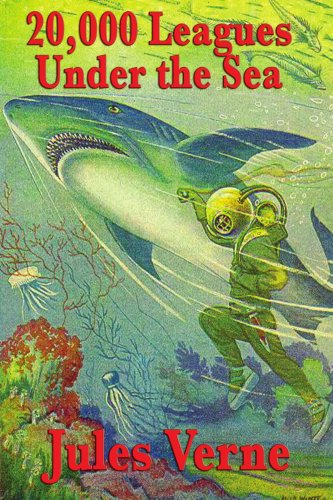
22. 20,000 Leagues Under the Sea (Unabridged
$7.33
23. The Blockade Runners
$23.64
24. The Fur Country
$8.13
25. Robur the Conqueror
 
26. THE SPACE NOVELS OF JULES VERNE:
 
27. Flood and Flame
$10.85
28. The Golden Volcano: The First
$9.98
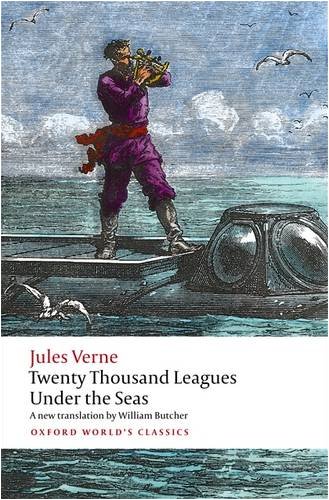
29. Twenty Thousand Leagues Under
 
30. The best of Jules Verne: Three
$0.48
31. Twenty Thousand Leagues Under
$15.18
32. Dick Sands, the Boy Captain (Dodo
$15.89
33. Dick Sand: A Captain at Fifteen
$17.99
34. In Search of the Castaways , Volume
$9.71
35. The Meteor Hunt: The First English
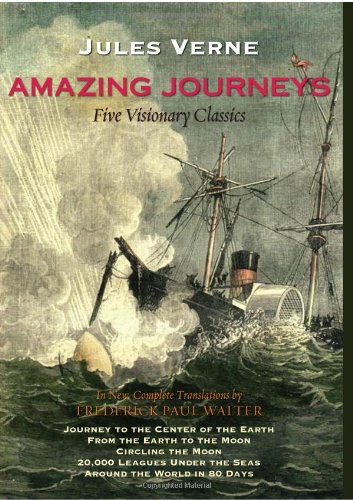
36. Jules Verne: Five Complete Novels
$9.42
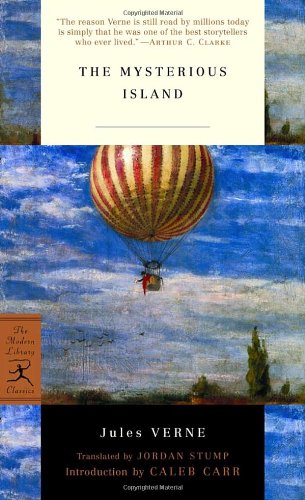
37. The Mysterious Island (Modern
$5.00
38. The Mammoth Book of New Jules
$195.22
39. Jules Verne's Twenty Thousand
$12.93
40. Journey Through the Impossible

21. Los Hijos Del Capitan Grant
by Jules Verne, Francisco Jose Fernandez Defez
 Paperback: 77 Pages (2004-08)
list price: US$5.95 -- used & new: US$5.50
(price subject to change: see help)
Asin: 9706437703
Average Customer Review: 5.0 out of 5 stars
Canada | United Kingdom | Germany | France | Japan
Editorial Review

Book Description
Classic literature at its best!Chock full of illustrations. Lively adventures from across the literary spectrum.Tried and truetales of some of fiction's most famous risk takers, the adventures weall grew up admiring.Sure to delight young readers and provide themwith many hours of exciting fun. ... Read more

Customer Reviews (2)

5-0 out of 5 stars Excellent action-packed historical fiction novel.
I read a Polish translation of this book when I was 9 years old, re-reading and re-re-reading it many times. Many years later, having migrated with my parents to Australia, thanks to that book I was veryfamilliar with Australia's early history, seeing me well into high school.As well as that I became very familliar with new Zealands history of whitesettlement, as well as some history and geography of South America. Thisbook is Verne at his best.

5-0 out of 5 stars Great book!Everybody's Must!
THIS IS A WONDERFUL BOOK, MY FAVORITE OF JULES VERN'S.EVEN THOUGH ITISN'T VERY WELL-KNOWN, I WAS LUCKY ENOUGH TO READ IT WHEN I WAS ABOUTTWELVE.IT HAS BEEN MY FAVORITE EVER SINCE.EVEYBODY WHO LOVES ADVANTUREWILL LIKE THIS BOOK!ENJOY! ... Read more


22. 20,000 Leagues Under the Sea (Unabridged Classics)
by Jules Verne
Hardcover: 320 Pages (2006-10-28)
list price: US$9.95 -- used & new: US$5.47
(price subject to change: see help)
Asin: 140272599X
Average Customer Review: 4.0 out of 5 stars
Canada | United Kingdom | Germany | France | Japan
Editorial Review

Book Description

Originally published in 1870, Verne’s amazing undersea adventure is one of the earliest science fiction novels ever written. Since that time, generations of readers have plunged below the ocean’s waves with Captain Nemo and his first-ever submarine, The Nautilus. It’s a voyage of exploration and the imagination.
... Read more

Customer Reviews (2)

4-0 out of 5 stars Good choice
A classic is a classic, but additional features in this edition make it a great choice. Nice illustrations, too!

4-0 out of 5 stars Good Read, But Long Read
I thought that the book had one of the best plot lines I've ever seen, reguardless of the fact that there is only slight building up to the climax.The only thing that I didn't think was that good about the book was that about every other page, Jules Verne would go into a paragraph description of the animals.For example, he would say something like: I just saw a tuna.But not the normal tuna, it was yellow-bellied, had dorsal fins that went at a downward angle, etc."Otherwise, I thought it was a great read and well worth the money.I will be purchasing more of Jules Verne's books very soon.I highly suggest for you to read this book.Another thing, if you enjoyed watching the 1954 "20,000 Leagues Under The Sea Film," I highly suggest the book because the movie only gives a small picture of what actually occurred during their submarine venture and the book tells you everything, and the occurrences are just amazing. ... Read more


23. The Blockade Runners
by Jules Verne
Paperback: 68 Pages (2005-11-30)
list price: US$10.99 -- used & new: US$7.33
(price subject to change: see help)
Asin: 1406501794
Canada | United Kingdom | Germany | France | Japan
Editorial Review

Book Description
However, the best informed, at least those who pretended to be so, agreed in saying that the steamer was going to take part in the terrible war which was then ravaging the United States of America, but more than this they did not know, and whether the Dolphin was a privateer, a transport ship, or an addition to the Federal marine was what no one could tell.Download Description
The Clyde was the first river whose waters were lashed into foam by a steam-boat. It was in 1812 when the steamer called the Comet ran between Glasgow and Greenock, at the speed of six miles an hour. Since that time more than a million of steamers or packet-boats have plied this Scotch river, and the inhabitants of Glasgow must be as familiar as any people with the wonders of steam navigation. ... Read more


24. The Fur Country
by Jules Verne
Paperback: 540 Pages (2003-07)
list price: US$24.95 -- used & new: US$23.64
(price subject to change: see help)
Asin: 1592241794
Average Customer Review: 5.0 out of 5 stars
Canada | United Kingdom | Germany | France | Japan
Editorial Review

Download Description
On the evening of the 17th March 1859, Captain Craventy gave a fête at Fort Reliance. Our readers must not at once imagine a grand entertainment, such as a court ball, or a musical soirée with a fine orchestra. Captain Craventy's reception was a very simple affair, yet he had spared no pains to give it éclat. ... Read more

Customer Reviews (2)

5-0 out of 5 stars Classic Jules Verne book both adults and kids will enjoy!
The story is set in the 1860's and is about several people from a fur company in Canada who set out on a journey to find a open a new store. They have to bulid it above the 70th parallel because that is where all the most animals are to be found in the area. They set out from their store in central Canada and head towards the west coast of Canada. Also with them comes a woman and her housekeeper whom she treats like a sister. This woman has traveled all over the world and now wants to discover the wetern part of Canada. Also along is an astronomer who came to study the solar eclipse that will be totally visible along the 70th parallel the following year.
The story talks about their adventures on their journey, finding the perfect location for the store, life at the store and how theire store turns out to be built on a piece of ice that breaks apart from Canada and begins floating in the far Northern Pacific Ocean.
Jules Verene makes you feel like you are there in northwestern Canada with his descriptions of the scenery. Verne also describes the characters and how they feel in a way that makes you feel for the characters and hope that they make it to saftey when the land becomes an island.
This is an excellent book about Canada and the landscape and climate of the area, and about the fur trading business that went for a long time in our history. This is another wonderful adventure book from Jules Verne that everyone should read. I am 21 and in college to become a high school english teacher and Ithis is a book that I would highly recommend teachers using as reading material in their classes. I will use it in my classes when I begin teaching.

5-0 out of 5 stars Classic Verne in the Arctic Circle
I bought this book last fall, and after a month or two it finally arrived from England.It was worth the wait.Excellent.The story is captivating and the characters are memorable.The environmental issues cannot gounnoticed, nor can the allusions to Noah's Ark.Verne takes some shots atthe fur industry of North America during the mid-1800s.He criticizestheir endless and mindless killing of animals just for the purpose ofmaking a buck.The story also demonstrates the will of man and the powerof faith in God when facing seemingly insurmountable odds. ... Read more


25. Robur the Conqueror
by Jules Verne
Paperback: 132 Pages (2007-04-23)
list price: US$13.95 -- used & new: US$8.13
(price subject to change: see help)
Asin: 1557429669
Average Customer Review: 3.0 out of 5 stars
Canada | United Kingdom | Germany | France | Japan
Editorial Review

Product Description
They laughed at his ideas of heavier-than-air flying machines. But he had the last laugh with the Albatross -- the most incredible flying machine ever built. Lord of the skies, Robur became the would-be conqueror of the world!

A fascinating companion to 20,000 Leagues Under the Sea, Robur the Conqueror explores many of the same themes. The Wildside Press edition contains a newly revised version of the first English-language translation.Download Description
The pistol shots were almost simultaneous. A cow peacefully grazing fifty yards away received one of the bullets in her back. She had nothing to do with the quarrel all the same. ... Read more

Customer Reviews (3)

5-0 out of 5 stars Very Enjoyable
I give this book a perfect score simply because I find it highly enjoyable. Make no mistake, though, the plot is basically the same as "20,000 Leagues Under the Sea" only this time set in the sky. Also, there is a racist depiction of an African-American servant who is very cowardly.

This novel is just one of Verne's many science fiction stories that ended up becoming (more or less) science fact. An amusing story at the start and end of the book concerns aeronaut enthusiasts who believe balloon travel is the way of the future. Robur (stating Verne's own beliefs that heavy machines being able to fly was possible and would be far superior) proves them wrong and becomes "conqueror of the skies." Others may have different opinions, but I found the book inspirational in that Robur's great willpower enable him to do the impossible (break free from gravity's hold) and become master of himself, not held down by anyone or anything.

1-0 out of 5 stars Along for the ride but, not part of the story
Verne's Robur the Conquerorand Master of the World begins with almost Swift-ian satire as the reader is introduced to the members of the Philadelphia Institute, a scientific society in the process of launching a motorized balloon. It devolves into a meandering, and poor travelogue as the two principle members of the institute, Uncle Prudent and Phil Evans, are abducted by the mysterious Robur. Robur has crafted a heavier than air machine and despite seeing it operate while onboard the two prisoners stubbornly cling to their idea that only lighter than air ships are the wave of the future.

In trying to create another enigmatic character similar to Captain Nemo Verne leaves out ANY characterizationor background on Robur. The man is completely one dimensional and therefore uninteresting and unsympathetic. The rest of the story is an around the world tour on Robur's ship the Albatross, part helicopter with multiple ascender propellers. Verne describes places from the prairies of America to the cities of China and India, but all literally from a distance as the ship never touches down at any point so no characters can interact or form any semblance ofa story.

Continued in the Master of the World Vern introduces Strock the American Police officer who is sent to investigate mysteries in Georgia and later to chase equally mysterious road, water and submersible technological terrors across the United States. It is not hard to guess the operator of these machines is Robur again. Just as cardboard and just as devoid of motive for doing the things he does. The character of Strock is once again along for the ride in Robur's craft; always as narrator, never as participant. Dry and plodding with only the fact of Verne's uncanny forecast of technology to supply any interesting points.

3-0 out of 5 stars Inferior to 20,000 Leagues
When bright lights and strange aerial phenomenon begin to be seen around the world, everyone is perplexed as to what such a thing could be. But, when the president and secretary of the Weldon Institute (a Philadelphia, Pennsylvania, USA balloon enthusiast society) are kidnapped by a seemingly mad engineer, Robur, they quickly find that he and his fantastic airship are responsible for the strange phenomenon. Robur has mastered heavier-than-air travel, with his giant electric-powered helicopter, and he is out to rebuild the world in his image. Can his poor prisoners escape from the clutches of Robur, and how will they stop his plans?

This book was first published in 1886 by that early master of science fiction, Jules Verne (1828-1904). In many ways it is reminiscent of 20,000 Leagues Under the Sea, but set in the air. For it's time, it was quite forward thinking in its science, and it has a very interesting story. However, it does drag at times, and overall the author does not succeed in generating any real drama therein.

Also, there is another reason why this book will never be considered one of Monsieur Verne's great works, and this is the character Frycollin, the only African-American character in the story. He is presented as an unvarnished Stepin Fetchit-type character, complete with calling his employer "Master", even though he had never known slavery. Indeed, at one point, Mr. Verne mentions Frycollin crying, "Like a child, like the Negro he was..." Yes, I do know that you cannot demand modern thinking out of people of the past, but Verne does go far too far with this character, Frycollin is definitely the poison pill of this story.

So, let me just say that I found this to be an OK book, decidedly inferior to 20,000 Leagues Under the Sea, and with the poison pill of racism included. Overall, I do not recommend this book. ... Read more


26. THE SPACE NOVELS OF JULES VERNE: To The Sun? Off On A Comet!
by JULES VERNE
 Paperback: 462 Pages (1960)

Isbn: 0486206343
Canada | United Kingdom | Germany | France | Japan

27. Flood and Flame
by Jules Verne
 Hardcover: Pages (1962)

Asin: B000GNXZBM
Canada | United Kingdom | Germany | France | Japan

28. The Golden Volcano: The First English Translation of Verne's Original Manuscript (Bison Frontiers of Imagination)
by Jules Verne
Paperback: 362 Pages (2008-05-01)
list price: US$15.95 -- used & new: US$10.85
(price subject to change: see help)
Asin: 0803296355
Canada | United Kingdom | Germany | France | Japan
Editorial Review

Book Description

The Golden Volcano thrusts two Canadian cousins—unexpectedly bequeathed a mining claim in the Klondike—into the middle of the gold rush, where they encounter disease, disaster, extremes of weather, and human nature twisted by a passion for gold. A deathbed confidence sends the two searching for a fabulous gold-filled volcano on the shore of the Arctic Ocean. But nature, both human and physical, hasn’t finished with them, and their story plays out with the nail-biting adventure of an action thriller and the moral and emotional force of high drama.
Like many of the works left unpublished when Jules Verne died, The Golden Volcano was altered and edited by his son, Michel. This first translation from the original manuscript allows readers of English to rediscover the pleasures of Verne’s storytelling in its original form—and to enjoy a virtually unknown gem of action, adventure, and style from a master of French literature.
... Read more

29. Twenty Thousand Leagues Under the Sea/Completely Restored and Annotated
by Jules Verne, Walter James Miller, Frederick Paul Walter
Paperback: 416 Pages (1993-09)
list price: US$29.95 -- used & new: US$9.98
(price subject to change: see help)
Asin: 0870216783
Average Customer Review: 5.0 out of 5 stars
Canada | United Kingdom | Germany | France | Japan

Customer Reviews (9)

5-0 out of 5 stars One of the Great Works
Who would have thought that a major contribution to the world of literature would come out of the Naval Institute Press!Normally, they come out with things like "An Illustrated Design History of the United States Destroyer."I'm not casting any aspersions on such a volume, and I may own a copy or two.But Jules Verne, is an a class by himself as one of the great inventive masters of literature.He stands up there with Homer and Chaucer and James M. Cain.And what a superb edition this is, the translation impeccable and the annotations which include technical and historical explanations of the text and are invaluable.I have to confess, it is one of the few times (not including Nabokov) I actually read all the footnotes in a novel (or any book) and found them to be supremely enjoyable.Anyway, treat yourself to this marvel!

5-0 out of 5 stars Must Read!
Twenty Thousand Leagues under the Sea is a brilliantly crafted piece of art. Not only is it a riveting novel with a brilliant plot it is also an accurate prediction of the future. I have never read a book that is so flawlessly combines the disparate worlds of science and story telling. Verne's writing style grabbed me from the get go, yet he never sacrifices any detail. Verne pulls you into another reality and where you never know what is going to happen next. Even in its most technical moments Verne's masterpiece demands your attention. Most people know the gist of the story. Three men are held captive in an extraordinary submarine vessel, the Nautilus, led by the Captain Nemo, a man who has left the human world to live under the sea. If you read the book you will find that there is much more to this story than you originally believed. Verne is also very accurate in predicting how a submarine would work. His Nautilus uses many of the same devices as the real submarines of the future!

Five Stars!

5-0 out of 5 stars A Masterpiece Restored to Its True Glory
The other reviewers have noted how the editors...both experts on Verne and the Victorian era science that guided him.. have gone back to the original French manuscripts, collated them to use the best, most reliable, paragraphs and phrases from each, and annotated the book to reflect on Verne's social, political and technical background as if affects the story.

If all this sounds like the book is some kind of dull scholarly treatise, rest assured that the novel as STORY is not harmed, but actually improved by the editors' restorations and fix-ups.

My own path to Nemo and the Nautilus was watching the Disney film version when I was 11, then getting the Classic Comics version, and finally going to the available butchered translation. Even that version captivated me, and sent me to the dictionary to decipher some of the hifalutin 19th century phrases.

Now, as then, I gloss over the endless catalogues of marine biology classification --- Verne as well as Victorian science fans were captivated by the then new interest in categorizing flora and fauna into genus, species, sub-species, varieties, etc. This stuff can be skipped without losing the story.

What interests me is the adventure under the sea, and the way in which these fellows are able to watch the wonders of the deep through the window of a plush 1860s salon. I am also interested in how Verne envisioned the workings of the sub. Interestingly, in 1904, just before his death, he wrote an article for Popular Mechanics in which he updated his thoughts on the future of the submarine, based on the Simon Lake and John Holland boats of that day. He had to explain to readers that he was NOT the inventor of the submarine, as popularly believed.

All in all, the editors have done a wonderful service in bringing the real "20, 000 Leagues" to light. I hope it will attract the interest of many bright and curious young boys and girls of the 21st century when the Sea Wolf and Virginia class subs of the USN have finally equalled the performance of the Nautilus of 1870.

4-0 out of 5 stars 20000 Leagues Under The Sea
The story basically begins with the very intelligent Professor Arronax calculating basic mesuremenets. He's a modern french biologist during this time period. The professor had somewhat of an understudy, an apprentice if you will, named Conseil. Conseil was just about as skilled as the professor as far as classification, and knowing so much information about just about everything. One day, the professor got a letter that invited him to go on a select trip to hunt the killer narwhal. Mysteriously, several ships had been rammed, and had a triangular shaped scar on the spot where the uncanny shipmates had decided that the narwhal hit. So Professor Arronax and Conseil went to examine the accidents.
They get on the ship and meet a Canadian harpooner named Ned Land. He told them that he was the best at what he does, and that he was ready to take out the narwhal. After a while, they come across the infamous narwhal. They find it strange that the narwhal is about three times as long as the ship they're on, and that it glows. The professor's ship is attacked, and they are stranded in the ocean, they climb aboard the narwahal to find out that it is in actuality a submarine. They finally meet a strange man named Captain Nemo, who explains to them that it is his ship and that the professor, Conseil, and Ned Land can stay as long as they go with him on a trip around the world in his submarine, the Nautilus. They begin to go on amazing trips, and don't know what exciting thing is to come up to them next.

5-0 out of 5 stars Best Translation Available -- accept no substitutes!
This is without a doubt the best translation of Jules Verne's 1870 science fiction classic "Vingt mille lieues sous les mers" ("20,000 Leagues under the Sea"). This translation by two Verne scholars, Walter James Miller and Frederick Paul Walter, takes all the knowledge available on the book and its author to not only make an accurate and readable complete text (early versions often omit a full quarter of the French original) that fixes the many errors of earlier translators, but also purges the text of many mistakes that were made by the original French compositors. The research and work that went into this translations is really quite stunning, and the result is a text that really lets Verne's genius shine: "20,000 Leagues under the Sea" is not only a brilliant piece of scientific prophecy, but also a thrilling story with superb, subtle characterizations.

The plot is familiar: Captain Nemo, an enigmatic figure who has withdrawn himself from the world, tours the oceans in his submarine called the Nautilus. We see this journey of 20,000 leagues (approx. 43,200 miles) through the eyes of Professor Pierre Aronnax, a scientist who is both Nemo's guest and prisoner. Also aboard with Aronnax are his manservant Conseil and a gruff ship's harpooner, Ned Land. The Nautilus encounters many wonders and obstacles on its long voyage: underwater forests, giant clams, attacks by huge squid, imprisonment in ice at the South Pole, monster storms, a war with a pack of sperm whales, and the discovery of the lost continent of Atlantis. But as something deep and destructive gnaws away at Captain Nemo, his prisoners seek a way to escape from the miracle ship.

In the English-speaking world Jules Verne has rarely received in the praise he truly deserves as a writer. People applaud his scientific foresight (while criticizing him for errors that were usually the fault of the translators), but shrug off his writing as inconsequential, with cardboard characters and plotless stories. If only these critics would read this translation of Verne's best novel...they would have to re-think their position on the great French writer! His genius for blending adventure, comedy, and psychology burst through in this translation. The book does veer into lengthy descriptions of marine life in places, and modern readers are likely to skim these parts (Verne even provides clues in the text to indicate when he's about to digress), but as a whole the novel is absolutely engrossing, throwing one stupendous adventure after another at the characters, while developing a mystery around Captain Nemo and increasing tension onboard the Nautilus so that the many different incidents hold together as a single plot. Even though submarines are commonplace technology today, Verne infuses his story with such awe-inspiring wonder that you can't help but feel the same sense of amazement as Professor Aronnax when he finds himself cruising the depths of the world's oceans. Real wonder never gets stakes, and no one was better at creating wonder than Jules Verne.

Aside from the excellent translation, this edition contains numerous extras (if this were a DVD, it would be labeled as a Special Edition Director's Cut). The lengthy introduction explains Verne's background, education, the development of the novel, the many things that Verne accurately predicted, the book's unsung literary qualities, the different French texts, and the problems with earlier translations. All the original illustrations from the original French edition are reproduced in the text, and generous footnotes give the reader a guide through Verne's more obscure references and shed light on the author's scientific genius. As a bonus at the end of the book, the editors include a new translation of the relevant passages from "Mysterious Island" that discuss Captain Nemo's background (just in case you're too impatient to go read "Mysterious Island" for yourself to solve the Captain Nemo mystery). There's also a table of the measurements used in the novel for those readers who really want to test the author's scientific accuracy.

There really isn't any other choice when it comes to translations of the "20,000 Leagues under the Sea." Nothing comes close to this: it will appease hard science readers, and it will open people up to Jules Verne's overlooked literary talents. With the wealth of background information available, this edition does better by Jules Verne -- ANY Jules Verne -- than has ever been published in the English language. ... Read more


30. The best of Jules Verne: Three complete, illustrated novels, with original illustrations
by Jules Verne
 Unknown Binding: 470 Pages (1978)

Isbn: 0890092702
Canada | United Kingdom | Germany | France | Japan

31. Twenty Thousand Leagues Under the Sea (Barnes & Noble Classics)
by Jules Verne
Paperback: 352 Pages (2005-03-03)
list price: US$5.95 -- used & new: US$0.48
(price subject to change: see help)
Asin: 1593083025
Average Customer Review: 2.5 out of 5 stars
Canada | United Kingdom | Germany | France | Japan
Editorial Review

Book Description

Twenty Thousand Leagues Under the Sea, by Jules Verne, is part of the Barnes & Noble Classics series, which offers quality editions at affordable prices to the student and the general reader, including new scholarship, thoughtful design, and pages of carefully crafted extras. Here are some of the remarkable features of Barnes & Noble Classics:
New introductions commissioned from today's top writers and scholars Biographies of the authors Chronologies of contemporary historical, biographical, and cultural events Footnotes and endnotes Selective discussions of imitations, parodies, poems, books, plays, paintings, operas, statuary, and films inspired by the work Comments by other famous authors Study questions to challenge the reader's viewpoints and expectations Bibliographies for further reading Indices & Glossaries, when appropriateAll editions are beautifully designed and are printed to superior specifications; some include illustrations of historical interest. Barnes & Noble Classics pulls together a constellation of influences—biographical, historical, and literary—to enrich each reader's understanding of these enduring works.

Widely regarded as the father of modern science fiction, Jules Verne wrote more than seventy books and created hundreds of memorable characters. His most popular novel, Twenty Thousand Leagues Under the Sea, is not only a brilliant piece of scientific prophecy, but also a thrilling story with superb, subtle characterizations.

The year is 1866 and the Pacific Ocean is being terrorized by a deadly sea monster. The U.S. government dispatches marine-life specialist Pierre Aronnax to investigate aboard the warship Abraham Lincoln. When the ship is sunk by the mysterious creature, he and two other survivors discover that the monster is in fact a marvelous submarine—the Nautilus—commanded by the brilliant but bitter Captain Nemo. Nemo refuses to let his guests return to land, but instead taking them on a series of fantastic adventures in which they encounter underwater forests, giant clams, monster storms, huge squid, treacherous polar ice and—most spectacular of all—the magnificent lost city of Atlantis!

Victoria Blake is a freelance writer. She has worked at the Paris Review and contributed to the Boulder Daily Camera, small literary presses in the United States, and English-language publications in Bangkok, Thailand. She currently lives and works in San Diego, California.
... Read more

Customer Reviews (2)

4-0 out of 5 stars Long Read, But Dry Read
I thought that the book had one of the best plot lines I've ever seen, reguardless of the fact that there is only slight building up to the climax. The only thing that I didn't think was that good about the book was that about every other page, Jules Verne would go into a paragraph description of the animals. For example, he would say something like: I just saw a tuna. But not the normal tuna, it was yellow-bellied, had dorsal fins that went at a downward angle, etc." Otherwise, I thought it was a great read and well worth the money. I will be purchasing more of Jules Verne's books very soon. I highly suggest for you to read this book. Another thing, if you enjoyed watching the 1954 "20,000 Leagues Under The Sea Film," I highly suggest the book because the movie only gives a small picture of what actually occurred during their submarine venture and the book tells you everything, and the occurrences are just amazing.

The novel basically tells the story of Professor Arronax, Ned Land and Conseil who get taken aboard the Nautilus and experiences many adverntures, such as going to Atlantis, an underwater hunt, getting trapped in an ice block and much more.

1-0 out of 5 stars An Obsolete Translation
This paperback, one of the Barnes and Noble "Classics Editions" is a republication of the original English translation by Rev. Lewis Page Mercier made in 1872. Mercier's translation leaves out 20% of the book and makes numerous other textual errors. These facts have been known for fifty years.The editor is a Victoria Blake, not otherwise identified, who in fact recommends in the Appendix that for further reading one might consult the complete novel as translated by Walter James Miller and Frederick Paul Walter and published by the Naval Institute Press in 1993. ... Read more


32. Dick Sands, the Boy Captain (Dodo Press)
by Jules Verne
Paperback: 304 Pages (2007-08-17)
list price: US$19.99 -- used & new: US$15.18
(price subject to change: see help)
Asin: 1406554170
Average Customer Review: 4.5 out of 5 stars
Canada | United Kingdom | Germany | France | Japan
Editorial Review

Book Description
Jules Gabriel Verne (1828-1905) was a French author who pioneered the science-fiction genre. He is best known for novels such as Journey to the Centre of the Earth (1864), Twenty Thousand Leagues Under the Sea (1870), and Around the World in Eighty Days (1873). Verne wrote about space, air and underwater travel before air travel and practical submarines were invented, and before practical means of space travel had been devised. He is the third most translated author in the world, according to Index Translationum. Some of his books have been made into films. Verne, along with Hugo Gernsback and H. G. Wells, is often popularly referred to as the "Father of Science Fiction". Amongst his other works are From the Earth to the Moon (1867), Five Weeks in a Balloon (1869), The Fur Country; or, Seventy Degrees North Latitude (1873), The Blockade Runners (1874), The Field of Ice (1875), The Mysterious Island (1875), Facing the Flag (1879), and An Antarctic Mystery (1899). ... Read more

Customer Reviews (2)

4-0 out of 5 stars Some classic, topical Verne.
Like many of the more famous Verne books, this has been seen as largely a children's book. While it is less "adult" than many of Verne's other works, it can be enjoyed by adults too. Also, the content is certainly not suitable for a particularly young audience.

The story is of Dick Sands - a 15 year old crew member on a ship with an eclectic collection of people on board during this particular voyage. After a tragedy, he is left to run the ship himself. They eventually run ashore and (thinking they are in South America) meet a man called Harris, who generously offers to be their guide in getting back to "civilisation". However, he has more sinister plans, as it turns out they are actually in Equatorial Africa at the height of the slave trade. Capitalising on their delusion, Harris betrays them and the party is enslaved. The rest of the book is an account of their (especially Dick's) attempts at resistance and escape.

The book is great at showing the maturity, courage and resourcefulness of Dick, a classic case of having to grow up soon and doing very well at it. It also offers a shocking and brutal portraying of the slave trade (which is why it's not suitable for the very young), largely based on the accounts of the explorers Stanely and Livingstone. It is here that I think the book suffers a setback, as Verne overdoes it in an oft-too-dydactic way. It is understandable due to the fact that he comes from a context of a newly-found French liberalism and in his time, slavery was a more recent issue in terms of the US and other Western countries. So, the level rhetoric detracts from the book for a modern reader.

Still, it's an unyielding and sublime account of the unspeakable horrors of the Atlantic slave trade and a good adventure story too, so an enjoyable and accessible work of Verne here.

5-0 out of 5 stars A jewel of children's literature
Though not directly related to Jules Verne's 20,000 Leagues Under the Sea - In Search of Castaways - Mysterious Island sequel, this book is very similar to them and just as good. It's a classical adventure, something that every child should grow up with, one of the jewels of world children's literature. It's all that - adventure and mystery, courage and love, gallantry and friendship. Left in the commandof a ship by an accident, the main character, a 15-year old boy, delivers his passengers and the crew through all the dangers on land and on sea and sucessfully overcomes the evil intentions of their enemy, who was trying to sell them to slavery. Let your kids read it - it's a must! ... Read more


33. Dick Sand: A Captain at Fifteen
by Jules Verne
Paperback: 354 Pages (2006-11-15)
list price: US$15.99 -- used & new: US$15.89
(price subject to change: see help)
Asin: 1426457790
Canada | United Kingdom | Germany | France | Japan
Editorial Review

Product Description
This vessel, of four hundred tons, fitted out at San Francisco for whale-fishing in the southern seas, belonged to James W. Weldon, a rich Californian ship-owner, who had for several years intrusted the command of it to Captain Hull. ... Read more


34. In Search of the Castaways , Volume IV: The Children of Captain Grant
by Jules Verne
Paperback: 484 Pages (2006-07-12)
list price: US$17.99 -- used & new: US$17.99
(price subject to change: see help)
Asin: 1426407718
Average Customer Review: 4.5 out of 5 stars
Canada | United Kingdom | Germany | France | Japan
Editorial Review

Product Description
From the preface: THE three books gathered under the title “In Search of the Castaways” occupied much of Verne’s attention during the three years following 1865. ... Read more

Customer Reviews (2)

5-0 out of 5 stars An interesting classic science-fiction story
I love this book especially because it was one of my most favorite books when I was a child. It was my first long story that I read tens of times. For me, still it's the best science-fiction book. If you want to enjoy whole the story I recommend you to read "The Mysterious Island" and "20,000 Leagues Under the Sea". All these 3 books are related to each other.

4-0 out of 5 stars Very happy to get this!
I loved this novel as a child and I am very happy that I can finally get a copy of it. The printing and editing are not the best but they don't bother me much. ... Read more


35. The Meteor Hunt: The First English Translation of Verne's Original Manuscript (Bison Frontiers of Imagination)
by Jules Verne
Paperback: 232 Pages (2006-10-01)
list price: US$15.95 -- used & new: US$9.71
(price subject to change: see help)
Asin: 0803296347
Canada | United Kingdom | Germany | France | Japan
Editorial Review

Book Description

The Meteor Hunt marks the first English translation from Jules Verne’s own text of his delightfully satirical and visionary novel. While other, questionable versions of the novel have appeared—mainly, a significantly altered text by Verne’s son Michel and translations of it—this edition showcases the original work as Verne wrote it.
The Meteor Hunt is the story of a meteor of pure gold careening toward the earth and generating competitive greed among amateur astronomers and chaos among nations obsessed with the trajectory of the great golden object. Set primarily in the United States and offering a humorous critique of the American way of life, The Meteor Hunt is finally given due critical treatment in the translators’ foreword, detailed annotations, and afterword, which clearly establish the historical, political, scientific, and literary context and importance of this long-obscured, genre-blending masterpiece in its true form.
... Read more

36. Jules Verne: Five Complete Novels
by Jules Verne
Hardcover: 820 Pages (1995-04-23)
list price: US$12.99
Isbn: 0517122502
Average Customer Review: 5.0 out of 5 stars
Canada | United Kingdom | Germany | France | Japan

Customer Reviews (4)

5-0 out of 5 stars How Well Does Jules Verne Write?
What a charming author! His ability to write has astounded me; and I know other people who are enchanted by Mr. Verne's books. My personal favorite is Twenty Thousand Leagues Under the Sea. I would highly reccomend these books for people aged 11 and up.

5-0 out of 5 stars How Well Does Jules Verne Write?
What a charming author! His ability to write has astounded me; and I know other people who are enchanted by Mr. Verne's books. My personal favorite is Twenty Thousand Leagues Under the Sea. I would highly reccomend these books for people aged 11 and up.

5-0 out of 5 stars 20,000 Leagues under the Sea summary
This book is about a naturalist who is invited to hunt for an ocean monster, but ends up in the monster, only it is actually an electrically run submarine. The captain of the submarine did not want any one to findout about it, so now the naturalist is a captive with his component and anagressive harpooner. He gets to explore the ocean, but craves land. Can heever get back on land?

5-0 out of 5 stars Excellent!
A collection of the greatest works of this great master. ... Read more


37. The Mysterious Island (Modern Library Classics)
by Jules Verne
Paperback: 672 Pages (2002-12-10)
list price: US$15.95 -- used & new: US$9.42
(price subject to change: see help)
Asin: 0812966422
Average Customer Review: 4.5 out of 5 stars
Canada | United Kingdom | Germany | France | Japan
Editorial Review

Book Description
Based on the true story of Alexander Selkirk, who survived alone for almost five years on an uninhabited island off the coast of Chile, The Mysterious Island is considered by many to be Jules Verne’s masterpiece. “Wide-eyed mid-nineteenth-century humanistic optimism in a breezy, blissfully readable translation by Stump” (Kirkus Reviews), here is the enthralling tale of five men and a dog who land in a balloon on a faraway, fantastic island of bewildering goings-on and their struggle to survive as they uncover the island’s secret. ... Read more

Customer Reviews (69)

3-0 out of 5 stars Super Reader
A group of civil war prison escapees manage to get wrecked on a strange island, after taking off in a balloon.

Being soldiers, they have a penchant for shooting things, breaking stuff and blowing things up. The characters do change over time and evolve in their outlook, while being limited by the knowledge of the time.

It all builds to an exciting climax as the group discovers they are being aided by the elusive Captain Nemo.

5-0 out of 5 stars marvellous translation
In one of those odd coincidences, there hasn't been an english translation of this book in about 100 years, but two came out in 2000/1. One is actually available online: it was done as a labor of love by a retired
engineer. I didn't like his prose style, and found that he actively
mistranslated a crucial section to make it politically correct (Nemo's dying words were crucial and not nice ones). So I bought the english-professor's (Jordan) version. I enjoyed it.

Effectively, it was a "Swiss Family Robinson" type story, though it was rather more butt-kicking than that book. It was amusing to note how progressive Verne was in some ways, and how oddly backwards he was in others. For example, Neb (the former slave negro) was treated as a dignified man rather than a shucking and jiving type. However, Verne couldn't help but make jokes comparing him to the "half man" orangutang who became part of the family as well. Worth a looksie if you area Verne fan. You have to understand what Verne is; he is a man of his time -you will be getting anarchic french Victorian-era technology-optimistic science fiction. If you're interested in that, this is a great introduction to it. If you're not, you'd probably be better off reading something else.

On a trip to Paris, my poking around the Verne themed metro station (a metro made up to look like a victorian submarine) inspired me to check out some Verne.

3-0 out of 5 stars Castaways in the Pacific
The book opens with two prisoners of the Cofederate army along with three other men escaping in a hot air balloon.Contrary to their plans, a storm arises that blows them all the way to an uncharted volcanic island in the southern Pacific.Cyrus Harding is the natural leader of the group, and apparently very well informed in matters of science, proceeds to guide the men into establishing a colony, and providing for their every need.They use the resources found on the island, as well as their education.The book is in the genre of "The Swiss Family Robinson", except that as one of the men said, "they quite took the wind out of the sails of the Robinsons, for whom everything was done by a miracle."The first half of the book details how they were able to provide for their needs, and build a home on the island.The reading can become tedious unless the science of the way they performed each action is considered very interesting.I enjoyed it for a while, but not being too scientific myself, near the end of the second half of the book, I just wanted to get through it.It is very detailed, and if I was interested in it all, it truly would have been captivating.

The second half of the book explains certain mysterious occurrences that two of the party had been observing from the beginning.The story moves along more quickly, and the mystery draws the reader to turn the pages faster.They meet Captain Nemo from "20,000 Leagues Under the Sea" in his final hours, and are finally rescued after the island has been blown into oblivion by the volcano.

I enjoyed all the information in the book, but it can a little dry at times.The men develop close relationships as they work together to survive, and they all seem to have unlimited faith in Cyrus Harding to know what to do in every situation.They appear to believe in God, but He is not a part of their lives; one could guess that Jules Verne was an evolutionary deist.We are not told that the men are evolutionists, but their words definitely reveal them to be humanists.So I would recommend the book to those looking for interesting educational entertainment, but nothing deeper.

3-0 out of 5 stars Mysteries abound
After reading The Mysterious Island, I wonder how much Jules Verne's current reputation is based on 1950s and '60s movies loosely--very loosely--adapted from his novels. In this book, there are no giant crabs or bees, or aliens, or even women. There are five men and a dog seeking to escape besieged Richmond during the Civil War who are carried off in a balloon by hurricane winds to an uncharted island in the Pacific, where they find and make what they need to survive.

The "colonists," as they style themselves to avoid the negative connotations of "castaways," are an improbable assortment, each man having knowledge or skills that complement those of the others. Cyrus Harding, the engineer, is not only a bottomless well of information about mechanics, chemistry, navigation, and other practical topics, but is also a natural leader. Gideon Spillett, the reporter, is an expert hunter. Pencroft, the sailor, knows shipbuilding and is a willing worker, while his teenage ward, Herbert, is a knowledgeable naturalist and able hunter. Harding's servant, Neb, plays the role of cook and domestic, while Harding's dog, Top, provides keen senses and instinct. When Verne wrote, "It would have been difficult to unite five men, better fitted to struggle against fate, more certain to triumph over it," it cannot have been without some sense of irony, since he is the one who brought them together in his imagination.

While a mysterious influence, whose acts are ambiguous at first but become more tangible over time, rescues the settlers or provides them with just what they need just when they need it, the real mystery of the island is the island itself. Perhaps Verne misunderstood or misused common names; he calls Jup's troop both "orangutans" (apes) and "baboons" (monkeys). He might have been pandering to a Victorian taste for the exotic. The island that the settlers call "Lincoln" for their wartime president is an impossibility of nature. Creatures from nearly every continent and ecosystem roam among an equally unlikely mixture of geological formations and collection of plants. Onagers from the Asian steppes and Middle Eastern deserts, koalas (described as "large" and speedy) from Australia, jaguars from Central and South America, orangutans from the Borneo rain forest, and musmons from isles of the Mediterranean are among Nature's bounty found on this small temperate island. Here, tropical apes, cats, and parrots survive below-freezing winters as easily as the musmons and goats.

The mineral riches are equally diverse, but even as he wonders about this paradise, Harding tells his comrades, "Nature gives us these things. It is our business to make a right use of them," signaling the beginning of man's never-ending quest to conquer and destroy nature. Even the water must be tamed; the settlers must "borrow its power, actually lost without profit to any one."

Under Harding's leadership, and with the occasional help of the island's secret benefactor, the colonists build an incredible infrastructure that provides them with shelter, water, food, clothing, power, tools, and weapons. Harding is not the leader because he is rich, good looking, charismatic, well spoken, or the other things that appeal to civilized man; he is the leader because he knows what to do and how to do it, and has faith in his ability to do it--and because he has intelligent followers in whom he can instill that same faith. The lack of discord among the colonists is as unlikely as the flora and fauna, but it may be Verne's commentary on leadership when it is most needed. When an important decision must be made, Harding refuses to make it without obtaining the opinions of all concerned, including his own servant. Taken away from civilization and its layers of social, moral, and other complexities, and forced into a situation where able leadership and willing cooperation mean not only survival but comfort and satisfaction, these men rise to the occasion. It is no coincidence that the impetus for the arrival on Lincoln Island is the Civil War, one of America's bloodiest, most savage times.

In the afterword, author Isaac Asimov tried to determine the appeal of "robinsonades" like Robinson Crusoe, Swiss Family Robinson, and The Mysterious Island. He came to the conclusion that such tales answer the question, "What do I do if civilization fails me?"--a question that could apply to castaways on an uncharted island or survivors of a civil war or a nuclear or chemical/biochemical holocaust. Perhaps, though, the question is more basic than that. It might be, "Do I need civilization at all?"

While the North and South were counting and burying their dead and trying to heal the nation--a process that in some ways has not been completed--Harding and his group were using both their minds and their hands to shape a near-paradise (interestingly, one in which tobacco is missed sorely, but not women).

The Mysterious Island starts off slowly; too much ink is dedicated to Pencroft's desire to kill eat every creature they encounter, and the characters can seem psychologically shallow and limited to a mature reader. At some point, however, I found myself so interested in Lincoln Island that I, like the colonists, was reluctant to leave it. I was even disappointed by the ultimate fate and home of the settlers, as it did not seem the right place for them to be. While not a literary masterpiece, The Mysterious Island does not need giant crabs, bees, or even women to be a good story of its kind.

4-0 out of 5 stars "All great actions redound to God, for it is from Him that they come!": Faith and Science
Jules Verne's _The Mysterious Island_ (1874 - 1875) is a massive work in terms of its scope and development.Verne spends over six hundred pages describing the lives of five castaways on a deserted island over a three year period.The men--Cyrus Smith, Gideon Spilett, Nebuchadnezzar (Neb), Pencroff, and Harbert Brown--have escaped captivity from Richmond, Virginia, during the Civil War.Taking to flight on an unguarded Confederate hot air balloon (an "aerostat") during a storm, the five men find themselves blown wildly off course-- providentially, though, to a hitherto undiscovered island in the middle of the wastes of the Pacific Ocean.

Unlike Daniel Defoe's protagonist Robinson Crusoe, who is able to scavenge supplies from the shipwreck, the five men must start their lives anew with nothing but the clothes on their backs.Cyrus Smith, an engineer, is a mechanical genuis, and slowly through his guidance, the colonists begin to establish themselves, inventing (or re-inventing) all that they need to survive.Through the improvements of the colonists, Verne is able to trace the scientific advancements of mankind through roughly five millenia, from the prehistoric period (3000 BC) up to the nineteenth-century.This is a brilliant aspect of the book.We see the colonists move from the production of pottery in a kiln, to metallurgy, the machine age, energy production, and the creation of weaponry and explosives.Verne's knowledge of science is copious, and the novel educates the reader about human progress.

Another interesting component is Verne's use of suspense.He works through the conventions of the castaway genre made famous in _Robinson Crusoe_--for example, the men's discovery that the land is an island not a continent; the question of whether there are other island inhabitants and, if so, whether they are friend or foe; the visit by outsiders; the buidling of a new ship, etc.Verne also adds many new elements.One problem with the book is a major timeline error, which the narrator himself admits in a footnote.The chronology issue will be apparent to readers who have read other Verne novels and who, as a result, anticipate the ending.Why Verne allowed such an error, after meticulously developing his novel with scientific accuracy, is itself mysterious since the ending could have been handled differently.

Two other points of note are Verne's depiction of Neb, a former slave who remains devoted to his previous master, Cyrus Smith, and Verne's predictions about future scientific advancement.On the former point, one wonders what Verne's views were about race relations in America after the Civil War.This friendship, for a contemporary reader, raises many questions.An example of Verne's knack for anticipating the advancement of science is his discussion of alternative energy, namely the hydrogen economy (yes, you read that correctly!).Cyrus Smith comments, "Yes, my friend, I believe that water will one day be used as fuel, that the hydrogen and oxygen of which it is constituted will be used, simultaneously or in isolation, to furnish an inexhaustible source of heat and light, more powerful than coal can ever be" (327).

Jordan Stump's translation can be a bit ponderous because of its faithfulness to the nineteenth-century French, which is also, it must be said, a strength.Although sometimes plodding, this is definitely a worthwhile book.Stump's translation reveals Verne's fascination with science and Verne's ability to make science absolutely fascinating in a novel. ... Read more


38. The Mammoth Book of New Jules Verne Adventures: Return to the Center of the Earth and Other Extraordinary Voyages, New Tales by the Heirs of Jules Verne
Paperback: 464 Pages (2005-01-25)
list price: US$13.95 -- used & new: US$5.00
(price subject to change: see help)
Asin: 0786714956
Average Customer Review: 5.0 out of 5 stars
Canada | United Kingdom | Germany | France | Japan
Editorial Review

Book Description

Jules Verne, one of the founding fathers of science fiction, was the author of such thrilling and perennial favorites as Around the World in Eighty Days, Journey to the Center of the Earth, and Twenty Thousand Leagues Under the Sea, as well as more than sixty other novels of adventure and exploration. One hundred years after his death, this magnificent new collection celebrates Verne’s amazing vision. A host of today’s top science fiction authors pay homage to Verne’s genius with a series of stories inspired by his groundbreaking imagination and original characters. In this anthology are extraordinary voyages of discovery and adventure from the four corners of the globe, and even within it. Following the tradition of Verne’s original tales, Ian Watson tells of a journey deep into the center of the Earth, where Verne himself does battle with occultist Nazis, and Adam Roberts takes us to latter-day California, where a descendant of Verne’s character Hector Servadac is preparing for the end of the world as we know it. These and many more compelling adventures add up to an anthology that will introduce a new generation to the wonder of Jules Verne and delight readers already familiar with the master.
... Read more

Customer Reviews (1)

5-0 out of 5 stars High Quality Homages to Jules Verne
I've decided to treat myself to only one of these a week after reading the first 4 this weekend.Who knows if we'll ever get new Verne stories again by authors of this caliber.(The editorial review doesn't do justice to the contributors. Check the table of contents scan.)Each story deserves to be savored fully.The first four are each very different - one's even a parody of Paris in the 20th Century - reflecting the various strengths and tastes of the authors; but, at the same time, you feel that you are reading Verne himself somehow.Even the parody! ... Read more


39. Jules Verne's Twenty Thousand Leagues Under the Sea: The Definitive Unabridged Edition Based on the Original French Texts
by Jules Verne, Walter James Miller, Frederick Paul Walter
Hardcover: 392 Pages (1993-09)
list price: US$42.50 -- used & new: US$195.22
(price subject to change: see help)
Asin: 1557508771
Average Customer Review: 5.0 out of 5 stars
Canada | United Kingdom | Germany | France | Japan

Customer Reviews (7)

5-0 out of 5 stars A Masterpiece Restored to Its True Glory
The other reviewers have noted how the editors...both experts on Verne and the Victorian era science that guided him.. have gone back to the original French manuscripts, collated them to use the best, most reliable, paragraphs and phrases from each, and annotated the book to reflect on Verne's social, politicaland technical background as if affects the story.

If all this sounds like the book is some kind of dull scholarly treatise, rest assured that the novel as STORY is not harmed, but actually improved by the editors' restorations and fix-ups.

My own path to Nemo and the Nautilus was watching the Disney film version when I was 11, then getting the Classic Comics version, and finally going to the available butchered translation. Even that version captivated me, and sent me to the dictionary to decipher some of the hifalutin 19th century phrases.

Now, as then, I gloss over the endless catalogues of marine biology classification --- Verne as well as Victorian science fans were captivated by the then new interest in categorizing flora and fauna into genus, species, sub-species, varieties, etc. This stuff can be skipped without losing the story.

What interests me is the adventure under the sea, and the way in which these fellows are able to watch the wonders of the deep through the window of a plush 1860s salon. I am also interested in how Verne envisioned the workings of the sub. Interestingly, in 1904, just before his death, he wrote an article for Popular Mechanics in which he updated his thoughts on the future of the submarine, based on the Simon Lake and John Holland boats of that day. He had to explain to readers that he was NOT the inventor of the submarine, as popularly believed.

All in all, the editors have done a wonderful service in bringing the real "20, 000 Leagues" to light. I hope it will attract the interest of many bright and curious young boys and girls of the 21st century when the Sea Wolf and Virginia class subs of the USN have finally equalled the performance of the Nautilus of 1870.

5-0 out of 5 stars Verne the way he was meant to be read!
When I was a child I loved reading the stories of Julio Verne. 20,000 Leagues Under the Sea, Journey to the Centre of the Earth and Around the World in 80 Days were my favorites. This new translation based on the original French texts is amazing, it moves quickly and I discovered things that I had never read in other English versions. You get more of Verne's politics here than in earlier translations including such memeorable phrases as: "The world needs no new continents, it needs new people."

The characters are well developed and you can indentify with all of them and how they view their effective captivity aboard the Nautilus. Captain Nemo is a wonderful character and Verne gives the reader just enough information about him to keep you enthralled but not enough to remove the mystery. The intro relates that Nemo was supposed to be a Polish aristocrat, getting back at the world for the the atrocities the Russians had commited against his family. But when Hetzel his publisher balked at the idea because of the new Franco Russian alliance Verne decided to remove any trace of nationality.

What else can be said? The English is not archaic!! This restored and annotated version, is a VAST improvement over previous English editions. The translation is very well done, and the annotations explain what has been changed and what previous translations accomplished. The wealth of background information also makes this one of the best English translations of this adventure I have ever read.


5-0 out of 5 stars A Joy to Read
Verne's prophetic masterpiece still thrills readers over 100 years after its publication.In this adventure, French naturalist Pierre Aronnax is taken aboard the Nautilus, a secret high-technology submarine capable of high speeds.Aronnax meets the enigmatic Captain Nemo, a renegade against society with a strong desire for revenge against the enemy that drove him under the sea.This novel is one of the first examples of modern science fiction.The world of science fiction owes Jules Verne a great debt.

This edition is particularly valuable.Most people aren't aware that the standard English translation is filled with lots of translation errors which botch the science of Verne's masterpiece.Also, the standard version cuts about 25% of the original French novel.This translation fixes the errors, and returns 20,000 Leagues Under the Sea's scientific accuracy (for that time).Also, the cut parts have been restored, so we can now enjoy reading a complete version of Verne's novel.

If you love classic books, and you're interested in reading about one of the greatest characters in science fiction, you have to read this.Also fans of science fiction should read this to understand where their genre came from.If you've read the old standard translation, you have to read this edition to see it the way it was meant to be.

5-0 out of 5 stars fantastic!
My (10 year old) daughter got interested in '20,000 leagues' after reading the "Wishbone" version (go ahead and laugh).I went searching for the real thing to read with her, and came across this edition.With all of the missing content recovered, plus the annotations to fill in all sorts of additional information, the result is fascinating for adult readers.If you read the usual (butchered) version as a kid, you really owe yourself this one.All of the critiques of Verne over the years that tried to belittle his knowledge of science turn out to have been based on translations that whacked out what Verne really said -- they thought it was too dry and boring.Reading what he really said, plus the extensive footnotes that describe the state of knowledge at the time, make Verne's brilliance tripling astonishing.Just consider that he wrote about the Nautilus at a time when the Hunley was the state of the art!

5-0 out of 5 stars The True Verne
One of the great problems with Jules Verne is that in the English speaking world he is relagated to the category of "Boys' Own Adventures".On the Continent, however, he is considered a brilliant social commentator,and biting satirist, AND a man who predicted the future.This is a volumethat helps set matters to the right.

If you know of "20,000Leagues" already, you will find little different at first.The plotis still the plot.Nemo is still Nemo, Prof. Aronnax is still pompous andfascinated by the Nautilus and Ned Land....

Ned Land is a flamingsocialist.

This is one of the major shifts between the original Frenchand the "cleaned up" English editions.Most of the science ofthe day was pulled out as a "dull read" and all the Socialism,anti-English remarks, and other commentaries of a "questionablenature" were excised.We Americans have unfortunately been until onlyvery recently only able to find these poor early translations, ortranslations based on these poor translations.There is much more to Vernethan submarines and diving suits.He is a man with a vision of his times,both scientific and political, and his books underline thisstrongly.

English readers, demand your Verne well-translated!Do notallow yourself to be fobbed off with bowlderized versions!To be able toread as he wrote himself (well, in English, for those of us who don't readFrench...) is a greater pleasure than merely an amusing old science-fictionstory from the 19th century.Reading this book, as Verne /meant/ it to beread, if a pleasure, but also a struggle to understand ourselves and ourrelationship to the oceans themselves. ... Read more


40. Journey Through the Impossible
by Jules Verne
Hardcover: 140 Pages (2003-05)
list price: US$21.00 -- used & new: US$12.93
(price subject to change: see help)
Asin: 1591020794
Average Customer Review: 4.0 out of 5 stars
Canada | United Kingdom | Germany | France | Japan
Editorial Review

Book Description
Here at last is the first complete edition and the first English translation of a surprising work by a tremendously popular French writer whose novels continue to delight readers and audiences nearly a century after his death.

Jules Verne (1828-1905), the most translated novelist in the world and best known for books such as TWENTY THOUSAND LEAGUES UNDER THE SEA and AROUND THE WORLD IN EIGHTY DAYS was also a prolific playwright.JOURNEY THROUGH THE IMPOSSIBLE, a play of fantasy and science fiction, ran 97 performances in Paris in 1882 and 1883.In three acts, the characters go first in the center of the earth, then under the sea, and finally to the planet "Altor."Characters from TWENTY THOUSAND LEAGUES UNDER THE SEA, FROM THE EARTH TO THE MOON, DOCTOR OX, and JOURNEY TO THE CENTER OF THE EARTH appear again in JOURNEY THROUGH THE IMPOSSIBLE, including Captain Nemo, President Barbicane, Michel Ardan, Doctor Ox, and Professor Lidenbrock.

Verne wrote this play in the middle of his life, between his optimistic (science helps humanity and is good) and pessimistic (science is dangerous and bad) works; the play is a vehicle for Verne to ask himself and his readers whether science, technology, and the pursuit of knowledge are good or bad.He used the play to pose questions about life and wisdom that are still important to us today.

The script of the play was lost to Vernian scholars for almost a century, until the text was discovered in 1978 in the archives of the Censorship Office of the Third French Republic.This special edition of JOURNEY THROUGH THE IMPOSSIBLE includes several important features that will enhance the reader's appreciation for the play.Edward Baxter's compelling English translation is augmented by a revealing Introduction written by Jean-Michel Margot, president of the North American Jules Verne Society, which places the play in historical context and explains its importance to Verne's corpus.Detailed references and explanatory notes by Margot expand upon important terms and concepts in the play and provide additional insights into the author.Many wonderful illustrations from the original set designs and a reproduction of a page from a lost scene of the play combine with spectacular original illustrations by artist Roger Leyonmark created specifically for this edition of the work.Leyonmark's artistry will transport readers to the world of Jules Verne on stage. ... Read more

Customer Reviews (1)

4-0 out of 5 stars Jules Verne's Stage Play of Intergalactic Travel
Most science fiction fans think of Jules Verne as the "father" of the genre, but with a rather remote paternity, the genre's modern directions owing more to H.G. Wells.Verne would hardly be suspected of telling a story of cosmic travel to another planet in a distant galaxy.And yet that is among the destinations in this incredible play, staged to acclaim in France in 1882, then lost for over a century until the manuscript's rediscovery in a French archive.This is not only the first English translation, it is also the only version in any language that offers the complete text of the play.With it, and other recent Verne books discovered or translated for the first time, readers of today can gauge Verne's imagination far more accurately than those of the 19th or 20th century.
Verne's editor constantly rejected or toned down his true science fiction, compelling his most inventive author to remain largely earthbound.For instance, 1994 saw the first appearance of Paris in the 20th Century, a book rejected outright by Verne's publisher, who refused to sanction a dystopia set a century in the future.Similarly, Verne's publisher compelled his author to transform his voyage around the solar system on a comet in Hector Servadac into simply a "dream."Journey Through the Impossible goes even further, because Verne found an escape from his publisher's censorship by turning to the theater.
In Journey Through the Impossible Verne takes us to the center of the earth and under the sea, destinations from some of his most popular novels.In the underground realms dwell Troglodytes anticipating the Morlocks of Wells's The Time Machine.On board the submarine Nautilus, a visit is made to the city of Atlantis.The play includes appearances by many of the most famous characters from Verne's novels, including the diabolical scientist Doctor Ox and the Baltimore Gun Club that launched the first projectile to the moon.This time the Gun Club's giant cannon sends a capsule full of explorers to Altor, a newly-discovered distant planet with two sons.
Journey Through the Impossible is published in association with the North American Jules Verne Society, and includes a preface and footnotes by its president, Jean-Michel Margot, one of the leading authorities on Verne today.The background explains the play's many allusions and allows the reader to readily imagine how its presentation might have appeared.Further visual embellishment is provided by lavish illustrations, including several originals by Roger Leyonmark that evoke the style of the engravings that were a trademark of the early French editions of Verne's books.Edward Baxter, translator of the play, has already earned approbation for his previous translations of Verne into English, including several novels.
This is an incredible book, one that is full of both Verne's imagination and Vernian scholarship.It will forever change the way readers think of Verne, and will re-establish his foundation as the originator of modern science fiction. ... Read more


  Back | 21-40 of 100 | Next 20
A  B  C  D  E  F  G  H  I  J  K  L  M  N  O  P  Q  R  S  T  U  V  W  X  Y  Z  

Prices listed on this site are subject to change without notice.
Questions on ordering or shipping? click here for help.

site stats