e99 Online Shopping Mall

Geometry.Net - the online learning center Help  
Home  - Authors - Theroux Paul (Books)

  Back | 21-40 of 100 | Next 20
A  B  C  D  E  F  G  H  I  J  K  L  M  N  O  P  Q  R  S  T  U  V  W  X  Y  Z  

click price to see details     click image to enlarge     click link to go to the store

$6.18
21. Sir Vidia's Shadow: A Friendship
 
22. O-Zone ***NOVEL***
23. Saint Jack
$9.05
24. The Mosquito Coast
$2.99
25. The Stranger at the Palazzo d'Oro
$44.00
26. Millroy the Magician
 
$26.47
27. The Imperial Way : By Rail from
$14.45
28. Pillars of Hercules, the
$16.00
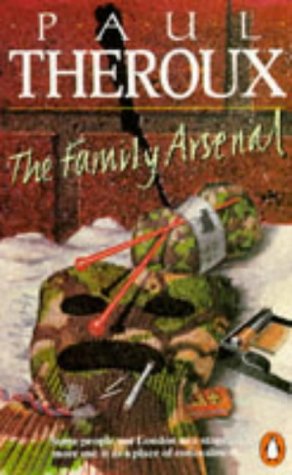
29. The Family Arsenal
$21.90
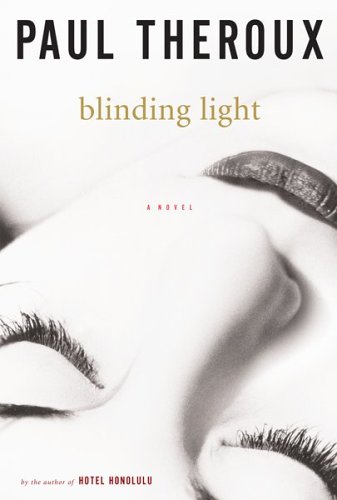
30. Hotel Honolulu
$32.99
31. The Elephanta Suite
$5.47
32. The Maine Woods: (Writings of
 
$4.50
33. The Black House
 
34. Travelling the World
$3.94
35. Riding the Iron Rooster
$12.00
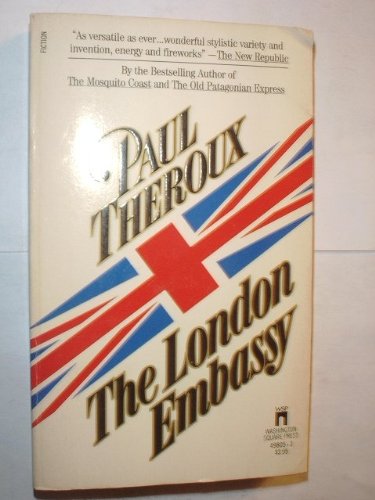
36. The London Embassy
 
37. The Cold World
38. On the Edge of the Great Rift:
 
39. My Secret History
 
40. To the Ends of the Earth: The

21. Sir Vidia's Shadow: A Friendship Across Five Continents
by Paul Theroux
Paperback: 368 Pages (2001-01-08)
list price: US$15.00 -- used & new: US$6.18
(price subject to change: see help)
Asin: 0618001999
Average Customer Review: 4.0 out of 5 stars
Canada | United Kingdom | Germany | France | Japan
Editorial Review

Amazon.com
In several of his recent fictions, Paul Theroux has visibly mined his own experience for raw material, going so far as to provide the protagonist of My Other Life with hisown name and curriculum vitae. Now, in Sir Vidia's Shadow, he casts a cold and cantankerous eye on his friendship with V.S. Naipaul. The two first met in Uganda in 1966, when the 23-year-old Theroux was teaching at the local university and trying, with only limited success, to transform himself into a writer. The arrival of Naipaul--at 34 already a world-class novelist, with A House for Mr. Biswas under his belt--was a signal event in Theroux's life: "I had been working in the dark, just groping, until I had met Vidia."

After being squired around Uganda, Kenya, and Rwanda by the author, Naipaul returned to London. Their correspondence continued, and the relationship--in which Theroux was very much the junior partner and acolyte--deepened. During a holiday visit to London the next year, he realized that their rapport "was as strong as love. He was my friend, he had shown me what was good in my writing, he had drawn a line through anything that was false." And indeed, over the next three decades the two exchanged a steady stream of letters, visits, phone calls, and authorial confidences. Yet this most productive of literary friendships came to an abrupt end in 1996, when Naipaul--now knighted and recently remarried--burned a number of bridges and tossed his relationship with Theroux into the conflagration.

All of which brings us to Sir Vidia's Shadow, a peculiar mixture of autobiography, Boswellian chronicle, and poison-pen letter. In many ways, it's a fascinating and devilishly skilled performance. For starters, Theroux spent more time in his subject's company than Boswell ever spent in Johnson's, which gives his portrait a widescreen verisimilitude. He documents Naipaul's loony fastidiousness, his passion for language, "the laughter in his lungs like a loud kind of hydraulics," and the very sound of his typewriter (which, just for the record, goes chick-chick-chick). Theroux also gives a superb sense of how such literary apprenticeships can function to the mutual benefit of master and disciple--and how they can erode. By 1975, after all, Theroux had become the bestselling author ofThe Great RailwayBazaar, while Naipaul remained an under-remunerated critics' darling. Out of habit, Theroux stayed in the older man's shadow. Still, as the book progresses, it becomes harder and harder to tell precisely who's got the anxiety and who's got the influence.

It also becomes harder and harder to ignore Theroux's late-breaking animus toward his subject. His goal--stated not only in the book but in various tailgunning replies to his critics--was to write an accurate account of a long, rich friendship. "This narrative is not something that would be improved by the masks of fiction," he declares. "It needs only to be put in order. I am free of the constraint of alteration and fictionalizing." Yet every book has a tendency to break free of the author's intentions, and Sir Vidia's Shadow is no exception. For each reverent (and convincing) passage about his subject, there's another in which Theroux seems to be administering some deeply ambivalent payback. He contrasts Naipaul's sexless misogyny with his own erotic enthusiasm, and his own generosity with his hero's miserly behavior (although Naipaul's penny-pinching and check-dodging can make him strangely endearing--the Jack Benny of contemporary letters). At times Theroux seems determined to explore all seven types of ambiguity, which makes for both deliberate and not-so-deliberate hilarity. He also sounds uncannily like a spurned lover. And perhaps that residue of expired passion accounts for both the brilliance of Sir Vidia's Shadow and its disturbing, sometimes queasy pathos. --James MarcusBook Description
This heartfelt and revealing account of Paul Theroux's thirty-year friendship with the legendary V. S. Naipaul is an intimate record of a literary mentorship that traces the growth of both writers' careers and explores the unique effect each had on the other. Built around exotic landscapes, anecdotes that are revealing, humorous, and melancholy, and three decades of mutual history, this is a personal account of how one develops as a writer and how a friendship waxes and wanes between two men who have set themselves on the perilous journey of a writing life. ... Read more

Customer Reviews (72)

4-0 out of 5 stars "I had admired his talent.After a while, I admired nothing else [about him].Finally, I began to wonder about his talent."
What began as a mentoring relationship between established novelist V. S. Naipaul and Paul Theroux, a young writer working on his first novel, went on to endure as a "friendship" for thirty years as both writers traveled the world but remained in touch.They met when Theroux was a young ex-Peace Corp worker teaching in Uganda at the university in Makerere in 1966, and Naipaul, nine years his senior, became "writer-in-residence" there, though Naipaul hated teaching and mocked the writing of his students and the Makerere faculty.He did, however, recognize Theroux's talent, and he did help and encourage him to get his novel published.Theroux, in turn, was an astute reader of Naipaul's work, and both benefited from the relationship, at least at first.

From 1967 - 1977, Theroux published ten successful novels and short story collections, all of which Theroux describes in this book, and all were praised, at least privately, by Naipaul.Somewhat less attention is paid to the almost equal number of works published by Naipaul, some of which Theroux read and helped proofread.A crusty, critical, and often cruel man, full of contradictions, Naipaul was a difficult "friend," and when he decided that he did not like someone, there was no turning back, no forgiveness for human failings. Theroux managed to navigate that minefield of hostility for thirty years.

In fact, shortly before the first of Naipaul's novels was published in the United States, Theroux (in 1972) wrote an introductory biography and critical assessment of Naipaul's work, full of praise for Naipaul, and helped to create an audience for Naipaul's work in the United States.After this somewhat effusive work was published, however, Theroux refused further interviews or commentary about Naipaul, insisting that "I will never [again] write about Naipaul.He is my friend."That declaration is belied by the publication of this book, the last twenty-percent of which is an uninterrupted excoriation of Naipaul and his second wife at the end of the friendship with Theroux.Here Theroux shows that he is at least as unforgiving as Naipaul, with a mean streak of his own.

In time Theroux would become a literary star with over forty novels and books of non-fiction.Naipaul, a painstaking, often philosophical writer, eventually won the Nobel Prize in 2001, and was knighted.Though this book is fascinating for its picture of the mentoring process and of a friendship which managed to survive despite the pettiness and frequent mean-spiritedness of Naipaul, it is also a portrait of Theroux, who published this book as his own enduring form of payback.nMary Whipple

5-0 out of 5 stars Theroux's biography
This book is supposed to be about the airing of dirty laundry.Instead it tells you much about the personality and expectations of a young Paul Theroux.Read this book to see the path of a young writer's rise in the literary world.I've heard many horror stories from established writers.Everything from those who have had their works stolen by other famous people to being treated like dirt by their editors.Unfortunately, due to lawyers, black mail, and even the fear of a loss of reputation, the average reader doesn't get to hear these things in detail.Theroux's account of the literary world is exciting.Finally, I think this book is good reading not just to those who are fans of the works of Theroux and Naipaul but also to aspiring, young writers about the realities of the literary world.

4-0 out of 5 stars Theroux critiques Nobel Naipaul
This was a catty but readable account of Paul Theroux's relationship with his onetime friend and mentor the Nobel Prize winning writer VS Naipaul. Theroux's at his best when he writes about things African, he's a great critic besides being a great writer, but his crustiness can't mask his love for the great continent and its people, especially its women. After leaving Africa and his African lover and marrying into a proper English family and lifestyle, and losing that to a divorce after a couple of decades, Theroux can't hide his supressed longing for his long lost African woman; in one short passionate passage he stunningly nails the youthful sensuality of their relationship. At the end of the book Sir Vidia's Shadow is a real-life sad but true tale, Theroux's family is breaking up and at that juncturehe needs Naipaul's approval more than Naipual needs his, and he was apparently blindsided by Naipaul's treating him no better than how Naipaul treated all those close to him by Theroux's own account: poorly. By the end of this book Theroux's become the cliche, that great writers are often damaged goods. It's a hard book to put down though, as this is one well written whinge.

5-0 out of 5 stars Writing Lives
I haven't read anything by V.S. Naipaul but I've read nearly every book by Paul Theroux (all but three).

I found SIR VIDIA'S SHADOW completely fascinating because it illuminates the private lives of two internationally-known authors in ways I never imagined: their boldest moves were frequently made out of poverty and desperation, their struggles for money long after their books appeared in print, their day-to-day lives while the world reads their words.

Most of the reviews praise Theroux's handling of his relationship with Naipaul and I agree with them.It's endlessly absorbing and interesting (and funny!).But I also enjoyed how he tracks his own career as well as Naipaul's.

This book is a must-read for anyone interested in living a writer's life--or how others have done it.

5-0 out of 5 stars A fascinating personal memoir
In many ways, this is Theroux's best book (at least of those I have read), because it is his most personal.I am amazed at some of the criticisms I have read of this book, especially the allegation that it is a "poison pen" document.It is nothing of the sort.It is a coldly objective, detailed, and analytical chronicle of the author's thirty year friendship, with the writer V.S. Naipaul, that ended abruptly.Naipaul ended it; the termination of the friendship was totally unilateral.

Some of the editorial reviews would give you the impression that the reader will be left totally clueless as to why the friendship ended.Not so.The reason it ended can be summed up in two words: new wife.Naipaul's wife of thirty or so years, with whom Theroux was friends and with whom he once fantasized having an affair, died of a lingering illness, and Naipaul, to everyone's astonishment, remarried within two months, to a woman that no one in Naipaul's inner circle even knew existed.The new wife apparently took an instant dislike to Theroux and let him know it.Soon all communication stopped.Theroux later runs into Naipaul on the street; Naipaul tells him to "take it on the chin and move on."Naipaul also discarded his long term mistress, whom Theroux quotes in an afterward as affirming that every word in the book is true.Naipaul appears to have been cleaning house and to be starting over in every respect.

Theroux portrays Naipaul as, in my view at least, a thoroughly repugnant person.Arrogant, racist, ill-mannered to the point of rudeness at times, Naipaul has an incredible sense of entitlement.He is in effect a moocher, letting Theroux pick up the lunch tab at an expensive restaurant at a time when Theroux had little money.However, Theroux never does what I think most people would have done in similar circumstances, which is simply to point to the check and say, "shall we split this?"Theroux comes across as essentially a wimp in the presence of Naipaul.Perhaps he believes this is the price he has to pay for Naipaul's mentorship of his budding writing career.However, this fawning continues long after Theroux has become an established writer with best sellers to his credit.Theroux appears to have been well aware of Naipaul's nasty side, yet overlooked it for the sake of having the friendship of someone he thinks is a great writer.Only when Naipaul ends the friendship does Theroux go public with a portrayal of Naipaul's true nature.But this is hardly poison pen; it is honest, warts and all biography.Boswell clearly revered Johnson, yet he doesn't flinch from portraying Johnson accurately, including much that is unflattering.

This book is an excellent read if you are interested in either of these two authors, or even if you just like a well-written, flowing narrative.Highly recommended. ... Read more


22. O-Zone ***NOVEL***
by Paul Theroux
 Hardcover: Pages (1986)

Asin: B000J0IKQ2
Canada | United Kingdom | Germany | France | Japan

23. Saint Jack
by Paul Theroux
Paperback: 224 Pages (1997-07-01)
list price: US$11.95
Isbn: 0140041575
Average Customer Review: 5.0 out of 5 stars
Canada | United Kingdom | Germany | France | Japan

Customer Reviews (6)

5-0 out of 5 stars Quick read, highly recommended for expats and tourists
Theroux is a well-traveled, workmanlike writer with a fondness for the raffish and louche, apt to find in it a premature redemption in order to wind things up in a snappy Yank fashion. To his credit younger and shallower readers think he has a Bad Attitude, which is one of the names under which Moral Seriousness goes these days.

Saint Jack's original may be found throughout the formerly Far East, on many a bar-stool and in many an AA meeting. The hero of this novel is undistinguished by wealth or fame and is instead of the so-called Greatest Generation, who served in WWII.

Writers of the immediate postwar like Bellow celebrated the American "logistical tail", which was extensive and included any number of typists; Tommy Wilhelm in Seize the Day, for example, flew a desk.

This may have been for the writer a labor-saving device. Having the character serve in a rifle platoon would mean the writer would have to deal with the large issue of how the combat affected the hero.

As the reader, you should realize that Saint Jack is a creature of the 1970s and a Singapore that is, as the guy below me in the postings here says, no more. He dates in other words from an era when a middle-aged and undistinguished guy could carry a message, the twilight of the Common Man as opposed to the trooping masses, destined, if they know what's good for them, only for approved lifestyles, dragging the kids to Disneyland, or Camp Snoopy in Sha Tin, their hopes for a better world downsized permanently.

Thanks to the guy below me for the suggestion of Theroux's novel Kowloon Tong. I shall definitely give it a read.

One great benefit from reading Saint Jack was a number of jokes, wheezers and gaspers popular twenty years ago in the saloon bar of the Peninsula or Raffle's after the women had left the room, to conspire.

5-0 out of 5 stars Great Novel of Singapore
Fine, absorbing literary novel follows the exploits of expatriate American stuck in Singapore because he has neither the ability nor the luck to go anywhere else.The novel has a nice atmosphere which reminded me of Graham Greene, Saul Bellow and Gore Vidal, and effectively evoked the sleazy underbelly of Singapore that still exists in that now outwardly squeaky-clean, but sinister city-state.I read this book while living in S'pore and was surprised how many attitudes and actions of the eastern and western characters were reminded me of the Singapore of today.So I felt the book worked in two ways, as a great, entertaining read for anyone interested in just a plain good book, and also as a fine evocation of the eternal aspects of Singapore.Saint Jack was also filmed - the film version is interesting because it captured the old colonial look of S'pore before the current regime of Harry Lee Kuan Yew tore most of it down, replacing it with souless concrete tower blocks.Yet the sleazy atmosphere remains, and comes out at night especially.Theroux's Hong Kong novel, *Kowloon Tong,* captures perfectly that other Far Eastern city state at the time of the 1997 Handover (I was living in HK at the time) and is also recommended, both as a fine read and as a fine description of the place. For a good non-fiction account of Singapore, try Stan Sesser's *The Lands of Charm and Cruelty,* with a great essay on S'pore and "the fear that even the best educated Singaporeans feel towards their government."

5-0 out of 5 stars Early Theroux That Holds Up Nicely
Below his somewhat crusty exterior, Jack Flowers cares - sometimes deeply - about the "flotsam and jetsam" he bumps up against - on the streets, in the bar, in his brothel. He really won't show it ... nor, perhaps, will he even admit it to himself ... but he does. And he has "all the time in the world" to do so, in his own backhanded way.

Paul Theroux cut some of his teeth on this early novel, and it holds up remarkably well on second reading. Somewhat acerbic, sometimes touching, "Saint Jack" is a true pleasure.

5-0 out of 5 stars expat life
Sure, lots of authors have done their take on the expat lifestyle, but few have done it better than Mr. Theroux has in St. Jack.This is a smart, deceptively simple take on the 'allure' of life abroad. A great book, evenif you've traveled no farther than your mailbox; though, for those whohave, the desriptions of people living abroad not so much because they wantto---but because they're afraid to go home--- are right on the mark.

5-0 out of 5 stars A Long Lost Singapore
I loved this book - it captures a spirit that has gone far away in the sterile atmosphere that surrounds that tiny island.Read this book! ... Read more


24. The Mosquito Coast
by Paul Theroux
Paperback: 384 Pages (2006-06-01)
list price: US$14.95 -- used & new: US$9.05
(price subject to change: see help)
Asin: 0618658963
Average Customer Review: 4.5 out of 5 stars
Canada | United Kingdom | Germany | France | Japan
Editorial Review

Book Description
In one of Theroux's most magnificent novels, the paranoid, brilliant, and self-destructive Allie Fox takes his family to live in the Honduran jungle, determined to build a civilization better than the one they've left. ... Read more

Customer Reviews (67)

4-0 out of 5 stars The Mosquito Coast
This book is extremely well written.Its subject matter of a dysfunctional family is somewhat of a downer.

4-0 out of 5 stars A haunting, disturbing read
Save for an anticlimatic ending, The Mosquito Coat is what all literary novels should be: compelling without relying on excessive action or much going on at all. I have always considered that a tremendous feat; for a story to work when it seems like it shouldn't. The author has created a giant of a character in Allie Fox, all the while leaving the remainder of the characters in shadows. Even the narrator, the 13 year old Charlie, is not developed fully... except in context with the overwhelming nature of his Father.

We watch as Allie goes from an idealist with whom we can sort of identify with, who we almost want to root for, to a monster who is out to prove himself right no matter the cost to his family. One can't help but hate the man in the end. One can't help but feel sickened at the brainwashing effects of the man's personality on his children.

That is the beauty of the book, it is the story of a man's degeneration, mirrored in the surrounding landscape of the jungle, witnessed and attested to by the plight of his family under his (unintentionally?)brutal thumb.

In the end, we wonder how far the reach of Allie Fox will extend into the future of his family. I personally felt a sadness for the loss of an intellect of staggering potential squandered on the whims of a man in the throes of a personality disorder seeking to drag all down with him.

At times mundane, at times stunning in its scope, often disturbing and terrifying, this was one of my favorite reads in some time. A literary success on the same level as Remains of the Day,and as deceptively horrifying as Lord of the Flies.

4-0 out of 5 stars The Pain
I only give this thing 4 stars because it awakens such pain in me.You have here several pretty good reviews that explain the external circumstances of this story.But what knocked me to my knees were the "internal" circumstances, mainly because it made me relive the hell of being a child and totally at the mercy of the so called "adults" who were legally in charge of you.And that is what happens to the kids in the story; at first Dad seems to have his *hit together somewhat, but due to exhuastion, overexertion, or his personal biology Dad starts to lose it, and it's painful to see the kids eventually realize this.If you have been around insane people, you realize the father's touch of madness before a trip to "Buzz Palace" is anounced.

Dad appears to be undone by finding out that the hand of civilization has been there before him - he seems to have need of thinking he is bringing it there himself, for the first time, from scratch.There is no place in this world that hasn't been touched by western civilization - too bad he does not know that.And then, during his stay in his paradise, refugees from Nicaragua come through there, running for their lives, and in the back of your mind, you are thinking of Dole and other produce growers in the country that have their own military death squads and basically run the country.Never mind.

Read it.They say it's humerous, and I'm possessed of a black sense of humour, but I didn't crack a smile once.In some ways this book is highly derivative, and you can pretty much tell what is to come, but never once do you feel as if you reading something that is a "warmed over" retelling of an old story.It's a huge story, actually, this story of "civilization" and it's impact on presumedly uncivilzed worlds.

5-0 out of 5 stars A Masterful Exotic Adventure
An eccentric father packs up his family and moves from the midwest to the Mosquito Coast of Honduras. His plan is to make a wondrous change in the lives of the Maya Indians by providing them with ice.What a character! What an adventure! A compelling story told with humor, a modern voyage into the heart of darkness.

The "Chicago Sun-Times" book review said, "The 'Mosquito Coast' is rich beyond compare...exhilarating and provocative, fun and terrifying."

Highly recommended!

4-0 out of 5 stars Genius or Madman
When I first heard about this book, I doubted whether the characters would be believable.However, once I started, I could not put it down.The story appeals to anyone who has ever wondered what it might be like to just pick up and leave to go live in a wilderness somewhere.The perspective of the son makes this story compelling, touching, frightening, and fascinating.I couldn't put it down. ... Read more


25. The Stranger at the Palazzo d'Oro
by Paul Theroux
Paperback: 304 Pages (2004-10-05)
list price: US$14.00 -- used & new: US$2.99
(price subject to change: see help)
Asin: 0618485333
Average Customer Review: 3.5 out of 5 stars
Canada | United Kingdom | Germany | France | Japan
Editorial Review

Book Description
From the best-selling author of Dark Star Safari and Hotel Honolulu, Paul Theroux's latest offers provocative tales of memory and desire. The sensual story of an unusual love affair leads the collection. The thrill and risk of pursuit and conquest mark the accompanying stories, which tell of the sexual awakening and rites of passage of a Boston boyhood, the ruin of a writer in Africa, and the bewitchment of a retiree in Hawaii. Filled with Theroux's typically exquisite yet devastating descriptions of people and places, The Stranger at the Palazzo D'Oro evokes "the complexities of matters of the heart with subtlety and grace" (People). ... Read more

Customer Reviews (8)

3-0 out of 5 stars say nothing and you have secrets
One thing you can say about Paul Theroux is that he appears to have no secrets, if you believe the quote in my review title from 'A Judas Memoir', one of the four stories in this collection. My title is actually an excerpt from a longer quote: 'naked people are strong, weak people make jokes, say nothing and you have secrets'.

All four stories are about youth and age. About the foolish confidence of youth before social constraints come into play, and about the frail vulnerability of the aged - yes, they too can - and do - make mistakes. For me, the title story of this book was far too ugly for me to really enjoy. For a while I liked 'An African Story' best. But there appear to be jokes - things that made me laugh - does that make Mr Theroux weak? - or was he trying to make the lead character appear weak? The sad thing about the mistakes of the aged - shown several times in these stories - is that often they do not have the time to throw their arms in the air and say 'How Fascinating!' as Benjamin Zander would recommend (the fascination being the opportunity to learn).

These stories are exotic and often erotic - although I would certainly avoid making any recommendation based on the erotic aspect of the stories. Repeatedly I found the sadness of the uncertainty of youth - the desires and dreams that probably will never be fulfilled, the acceptance of constraints - and the sadness of aging which occurs with such regret - why can the adventures of youth not continue?

Here's another quote - this time from 'An African Story' - 'People who read are not happy or else why would they be alone in a room with a book in their hands?'

Other recommendations:

Milroy the Magician - Paul Theroux
any of Mr Theroux's travel books (such as 'Riding the Iron Rooster')
The Art of Possibility - Benjamin Zander

4-0 out of 5 stars When the student becomes the teacher....
At the heart of the four stories in this exceptional collection is the exploration of power relationships in which the master becomes the slave, sometimes by choice, sometimes by manipulation or deceit, and sometimes as a matter of circumstance.Theroux is intrigued by what happens when a rich, aristocratic woman allows herself to be sexually dominated by a young, poor recent college graduate, or when a white South African writer, consumed by passion for a poor black woman, finds himself losing everything he has as a result of his pursuing her.In two other stories, he skillfully examines a group of young boys as they seek revenge against their priest, and a retired lawyer who finds himself at the mercy of his hired help after he follows them on their Las Vegas vacation.Each story is a classic case of role reversal.In each, the typical lines of authority are turned upside down, resulting in some fascinating discoveries about the essence of relationships and human character.

The first and title story is by far the best; both the story and the prose attain a height of mastery that aren't quite achieved in the following three stories.The writing has an ease and a grace that are hard to find, that only come from the most gifted of writers.And this is indeed writing with purpose.The `grafin', or countess, in this story, is an exquisitely drawn character, a perfect balance of royal aloofness and pretension with human vulnerability and insecurity.

The other three stories are treasures as well, though on a second tier.Of them, the best is "An African Story," in which Theroux first summarizes a half-dozen novellas written by a fictitious South African writer, then tells of the tragic downfall of the writer.The writer's stories, in many ways, foreshadow his own life's events in a way that underscores the intrinsic ties between life and literature.

4-0 out of 5 stars When I'm Sixty-Four....
I've always been a Paul Theroux fan so I found his latest fiction, THE STRANGER AT THE PALAZZO D'ORO, interesting for a couple of reasons:

The first is that we're reading about a 60-year-old man dealing with desire through his own life and the lives of others. Whether it's an aging countess from his own past or the ridiculous or tragic friends dealing with their own much-younger lovers, it was fascinating for me to read about people still grappling with lust, love and loss at a point in their lives when they should've figured that all out by now.
Perhaps that was Theroux's point: our own hearts will always remain a mystery no matter far we go or how much we see.

How much of this book reflects Theroux's own life?
That was the other reason I found this book so enjoyable: the first two novellas felt full of details from his own youth and I caught glimpses of incidents that would turn up in his earlier novels.
The countess in the first novella reminded me of the "patroness" from MY SECRET HISTORY. The boys plotting their revenge in the second novella reminded me of the comically-absurd caper of MURDER IN MOUNT HOLLY. The girl relieving herself outside of the boy's tent flashed me back to the "mutant" girl in the bathtub in O-ZONE.

Ultimately, I felt like I was listening to not only a great storyteller but also an elder trying to pass something on.
And it might be a warning.

3-0 out of 5 stars Not complete
I enjoyed some of the stories and some I didn't.But that's the way it is with collections of short stories.I was not disturbed by any of the stories, although I should have read the Amazon reviews before picking up the book as I was not at all prepared for what was coming.But the stories and the feelings of lust and loss were very intersting.I just didn't feel that any of the characters were developed fully.The first story, The Strangers at the Palazzo D'Oro was the best in my opinion.I always enjoy stories that are told from the perspective of the main character looking back on their life.I just wish there would've been a little more to it.Sex gets old when there's not more dialogue and plot.

2-0 out of 5 stars Literary Doodles
I often don't like to read short stories.For me, they are not - in general you understand - as satisfying as a novel.Too hasty and short if they are good, too unfulfilling and short if they are not.This is a slightly different case for me.

The theme of the title story is sort of retold in a different framework in a second one.Neither to me are satisfying. With the Palazzo story I get the feeling that it SHOULD HAVE BEEN a novel but that there really was only a limited story to tell.Sex without conversation gets dull even for an author.The "readalike" seemed to be another way to try and draw out the same story.Neither worked for me.

The stories that are grouped together under the "Judas" theme posed an even more difficult issue for me.They seemed like doodles.By that I mean - Theroux wanted the characters in them to do something but couldn't settle on one thing. So he tried in different ways, and lacking the ability to develop them (they really aren't interesting people) gave us all the attempts in this short story collection.To me they were barebones, or sketches if you will, of an idea.

Recently I saw a drawing show of Parmagianino's work at the Frick Museum in NYC.There were many sheets of what my friend calls "doodles" which is how he defines sketches and studies for "real" drawings or paintings.I asked myself why I loved looking at the art studies but resented reading what I thought were literary studies.I think the reason is that an artist's thought process is interesting for comparison to what he finally achieves.A writer's studies are not interesting in the same way unless there is a final definitive version.

Also, the artist - Parmagianino for example - never expected his studies (doodles) to be seen.In contrast, Theroux has assembled his and published them as a final product.

This is not satisfying to me.But I'm sure I am in the minority.Moral:I should stick to novels. ... Read more


26. Millroy the Magician
by Paul Theroux
Paperback: Pages (1996-08-27)
list price: US$11.00 -- used & new: US$44.00
(price subject to change: see help)
Asin: 0449911977
Average Customer Review: 4.5 out of 5 stars
Canada | United Kingdom | Germany | France | Japan
Editorial Review

Book Description
Fourteen-year-old Jilly Farina was enthralled with Millroy the Magician at the Barnstable County Fair. After all, he once turned a girl from the audience into a glass of milk and drank her, But when Jilly stepped into the wickerwork coffin during a performance, she had no idea he would transform her dreary life into something truly magical, and a touch bizarre.

For Millroy was no ordinary magician. He could smell the future, and Jilly was going to be part of it. Yet not even Millroy could foresee how far determination and a dream could take him, as he and his new young assistant hit the road -and the airwaves -- to save America's unhealthy appetite and floundering soul.... ... Read more

Customer Reviews (14)

5-0 out of 5 stars One of the most memorable books
I read this book in 8th grade (7 years ago). It's one of those books that you think about long after. After the many reviews, I'm not exactly sure if there's a message or if it is indeed a distorted satire of Jesus Christ's character. Besides the unexpected and unpleasant twist at the last page, it was a very pleasant and easy read. Of course saying that makes this book sound "dainty" and "lovely" but it is anything but. It is quite gripping, it provokes many thoughts, and is quite inspirationally bizarre.

I can still remember some of the scenes that I imagined. The descriptions are perfectly weighted, not the heavy excess of Proust, or the vague blah of typical Young Adult books. It is a book that piques your interests as you think of it between reading, but I wouldn't call it "addictive" or you "can't put it down".

I'm actually curious to read it again, now that I am seeing so many different interpretations of the same set of words!

In conclusion, this book is one that you will have no problems getting through and a story that you will not soon forget.

5-0 out of 5 stars I think Millroy is more than a Magician...
I actually loved this book to the very core...the apple core.
I read it and grew hungry for better things. I read it when it was first published and still think back on it. I felt like Millroy may be on to something and still do.

I changed my diet after reading this...

and haven't eaten a fastfood hamburger since.

5-0 out of 5 stars A modern miracle
Milroy is a prophet for our times - hilarious, earnest, quirky and sincere. As he preaches the Gospel of Bibical eating, he invents a new way of life - one that is destined to change the world.Of course, it soon becomes apparent that this tale follows the Christ story (in explicit detail) - from the ragtag group of followers, to the shunning masses (who STILL don't get the real message), to those who only care about the miracles to the raising of the dead and, at last, sacrifice and resurrection and a new life in his teachings.

On one level, there is the story of the mystery man - the one everyone knows - who becomes the great Teacher with the all of the attending attention.He is the moral teacher, the one who breaks the rules and must decide how far to go.Like Christ, he is aware of his own impending doom and sees that his message will only be greater after his death.This is the book that most authors wish they could write but never do.

1-0 out of 5 stars I hated it
I know it's politically incorrect to dislike work by the great Theroux, but frankly, I waded through this one for three weeks before abandoning it unfinished.
I found it repetitive and monotonous, and the tone itself was a little offensive to me.
I think Theroux could easily have written the same work in one-third the pages and not lost anything.
I love descriptive prose and dialogue, but this guy went on and on and on and on... I finally decided there were too many good books out there and not enough time left to waste on a turkey like this one.

5-0 out of 5 stars Fantastic!
Paul Theroux is one of the finest writers alive and the only one of his books I prefer to Milroy the Magician is My Secret History. Milroy the Magician is brilliantly written and deeply imaginative. If you are thinking of reading this book, treat yourself to a wonderful experience, get a copy now. ... Read more


27. The Imperial Way : By Rail from Peshawar to Chittagong
by Paul Theroux, Steve McCurry
 Hardcover: 143 Pages (1987-08)
list price: US$5.98 -- used & new: US$26.47
(price subject to change: see help)
Asin: 0395393906
Canada | United Kingdom | Germany | France | Japan

28. Pillars of Hercules, the
by Paul Theroux
Paperback: 544 Pages (1999-06)
list price: US$15.60 -- used & new: US$14.45
(price subject to change: see help)
Asin: 0140245332
Average Customer Review: 4.0 out of 5 stars
Canada | United Kingdom | Germany | France | Japan
Editorial Review

Amazon.com
Paul Theroux has developed one of travel writing's most identifiable styles: always the foreigner, always a bit apart, slightly irascible, but perfectly observant.At last he has venturedto one of the most traveled places on earth, and returned with hismost exhilarating, revealing, and eloquent travel book.In this modern version of the Grand Tour, Theroux sets off fromGibraltar, one of the fabled Pillars of Hercules, on a glorious journey around the shores of the Mediterranean.Book Description
"DAZZLING."
--Time
"[THEROUX'S] WORK IS DISTINGUISHED BY A SPLENDID EYE FOR DETAIL AND THE TELLING GESTURE; a storyteller's sense of pacing and gift for granting closure to the most subtle progression of events; and the graceful use of language. . . . We are delighted, along with Theroux, by the politeness of the Turks, amazed by the mountainous highlands in Syria, touched by the gesture of an Albanian waitress who will not let him pay for his modest meal. . . . The Pillars of Hercules [is] engrossing and enlightening from start (a damning account of tourists annoying the apes of Gibraltar) to finish (an utterly captivating visit with Paul Bowles in Tangier, worth the price of the book all by itself)."
--Chicago Tribune
"ENTERTAINING READING . . . WHEN YOU READ THEROUX, YOU'RE TRULY ON A TRIP."
--The Boston Sunday Globe
"HIS PICARESQUE NARRATIVE IS STUDDED WITH SCENES THAT STICK IN THE MIND. He looks at strangers with a novelist's eye, and his portraits are pleasantly tinged with malice."
--The Washington Post Book World
"THEROUX AT HIS BEST . . . An armchair trip with Theroux is sometimes dark, but always a delight."
--Playboy
"AS SATISFYING AS A GLASS OF COOL WINE ON A DUSTY CALABRIAN AFTERNOON . . . With his effortless writing style, observant eye, and take-no-prisoners approach, Theroux is in top form chronicling this 18-month circuit of the Mediterranean."
--Kirkus Reviews (starred review) ... Read more

Customer Reviews (36)

5-0 out of 5 stars Vintage Theroux
As expected, another wonderful travel book from a master, this time spiced with some biting observations of the moneyed tourist class.

5-0 out of 5 stars A gorgeous bit of writing.
I have read five of Paul Theroux's travel books: The Great Railway Bazaar, The Kingdom by the Sea, The Old Patagonian Express, Travel Fiend and now The Pillars of Hercules.I can say without a doubt, that this is my favorite travelogue of his.The book is concise and knowledgable and shows erudition lacking in most travelogues.

It is a total learning experience.I have looked up more words in this book than in most books I read.And I really appreciate that.He doesn't write books for people who are looking to read about the surface of a culture, or who just want the interesting bits revealed to them.He writes books for people that are truly interested and will take the time to learn all that he supplies the reader.

And I think this is his crowning achievement!

5-0 out of 5 stars Filled with great stuff
Well, I just enjoy listening to (reading) what this guy talks (writes) about in his travels.An example (just one of many, many) is about the Mafia Monks.Seriously!Their nefarious activities "never prevented their hearing confessions, saying masses, or preaching at funerals - in one case, the monk in question saying a funeral high mass and preaching piously over the body of a man he had ordered killed."And I like the way he talks to ordinary people on the street and gets their point of view.Yes, it's a topsy-turvy world, but it sure beats the artificial world of fiction.I just visited Las Vegas.People wasting their lives chasing the jackpot, the fantasy world.Well, to each his own.But Paul Theroux tells it like it is - nutty, maybe, but that's the reality.

5-0 out of 5 stars Terrific
Paul Theroux's travel books are a unique delight, and "Pillars of Hercules" is one of his best.In it, he travels from Gibraltar to Tangier, the long way, around the Med Sea.It's compelling reading: The places he visits and the people he meets; his 'take' on things.I had never even considered wanting to travel to Croatia or Albania or Syria or Tunisia, but now I'd like to go.But it's PT's take on places I've been to - Spain, France, Italy - that were most enjoyable, for he usually travels to out of the way places.I was pleased that he also noticed how much dog crap is on the sidewalks in France.His conversations with famed writers Naguib Mahfouz (after being stabbed by a fanatical Muslim)in Cairo and with Paul Bowles in Tangier are two of the books best parts.I highly recommend this book.

4-0 out of 5 stars Excellent travel narrative
This is the first of a few Theroux books I have read. I absolutely loved it.The book provides an excellent portrayal of people in the context of their history and culture. He travels to cities and regions along the Mediterranean that many of us wouldn't otherwise give a thought. One really gets a feel for what life is like in each town. This book, like his others, highlight the difference between a traveler and being a tourist.

I've given the book only 4 stars because your ability to enjoy the book will depend on how you feel about Theroux's voice.As other reviewers have indicated, he is a critical individual with a huge ego.If you find this tone off-putting, you may not enjoy the book. He does seem more annoyed in this book than in others, probably because there are more tourists around.Personally, I was so wrapped up in Theroux's excellent prose that I hardly noticed.

I am not sure why reviewers complain about this not being a good guide - it isn't meant to be a guidebook.Look to Fodor's, Frommer's, Rick Steves, or Lonely Planet for European guidebooks. ... Read more


29. The Family Arsenal
by Paul Theroux
Paperback: 288 Pages (1996-04-01)
list price: US$14.00 -- used & new: US$16.00
(price subject to change: see help)
Asin: 0140044655
Average Customer Review: 5.0 out of 5 stars
Canada | United Kingdom | Germany | France | Japan

Customer Reviews (2)

5-0 out of 5 stars Gripping Tale of London's Poor Laced With Violence
Without question, Paul Theroux has been among our most astute observers of human nature writing in the English language. In "The Family Arsenal", a terse, compelling look at crime in London's slums, Paul Theroux takes an unflinching, often brutal, look at the interplay between adverse poverty and crime. Furthermore he adds to this compelling mixture an intriguing look at IRA terrorism being waged on the streets of London. All of this is told through vivid, well-crafted prose. Fans of Paul Theroux's work will not be disappointed with his latest fictional excursion into an abyss of contemporary Western society.

5-0 out of 5 stars From the dark side of life...
Theroux has always been an unflinching narrator on human nature. With a novel like Mosquito Coast he gave you a look at the mind of a genius and his estrangement to materialism. With The Family Arsenal, Theroux gives you a look at the close knit troubles of family life in the slums of London, and the frightening results of sudden violence that can arrupt at any moment. A haunting portrait of a society on the downward trend towards hell on earth. ... Read more


30. Hotel Honolulu
by Paul Theroux
Paperback: 448 Pages (2002-05-02)
list price: US$16.50 -- used & new: US$21.90
(price subject to change: see help)
Asin: 014029936X
Average Customer Review: 3.5 out of 5 stars
Canada | United Kingdom | Germany | France | Japan

Customer Reviews (3)

4-0 out of 5 stars A Pleasant Read with a Little Bite
This is not really a novel, and as soon as I realized that I was able to enjoy it. Really, it is a series of interlocking short stories which progress inevitably toward a conclusion but remain more or less self contained. The tone is pure Theroux; aloof but self mocking, with the capacity to be tender or surprisingly mean. Theroux's main characters are often himself; an educated foreigner, misanthropic and past middle age, searching for and shunning social acceptance. This book is an easy read, and fun, but it has a gleeful mean-spiritedness that may be off-putting and some moments of geniunely deep and touching sadness.
Paul Theroux is often accused of misanthropy, and this is probably not the book that will disprove those allegations. He is less frequently called a racist, but I think it's clear that Theroux is not slamming natives of Hawaii any more than the white immigrants, Asian tourists, or any other group.
I deducted one star since some of the vignettes have a bit of a lackluster feel, especially those that are necessary to advance the meta-plot. This is not his best novel, but it is very good.

3-0 out of 5 stars I hope Paul is feeling better now
I have always enjoyed Paul Theroux's writing, hence the three stars, however here, he is one angry man. This book was quite a surprise to me. I bought it at Barnes and Noble and paid full price, assuming that I would like anything by this author.The cover states that this is a New York Times and Washington Post notable book of the year.They refer to Theroux as 'irascible'.I guess I would say this is one misanthropic, misogynistic, racist diatribe.We are told in the information on the author that he now lives in Hawaii and Cape Cod. After reading Hotel Honolulu I would guess he might have more friends on Cape Cod; but even there it is questionable.
It purports to be a novel, however it is more a collection of vignettes, observations by the protagonist about his employer, his fellow employees and assorted guests and visitors. There are two people who come out somewhat intact, Henry James' biographer, with whom the writer claims a civilized affinity,and the Chinese/Vietnamese bartender, Tran. The writing is Paul Theroux's so it is not bad,the problem is the jaundiced eye of the writer.

4-0 out of 5 stars Theroux is back, and he's feeling mean.
Paul Theroux writing on autopilot is still better than many other authors at the top of their form. His well-known ability to describe a place or person in just a few perfect words, his creation of believable characters with clear motivations, his ironic detachment as these same characters mess up their lives, and his depiction of a writer's battle with the demons of his craft are among his many brilliant qualities, all on vibrant display here.

Ultimately, however, this novel was a disappointment to me. Set in a 3rd-rate hotel in Honolulu, it has the characters and setting of a novel (and is called a novel on the cover), but it is so lacking in any sort of unifying plot, that it's not even possible to write a plot summary. The huge cast of characters has only one thing in common--they all live and/or work at the Hotel Honolulu. While some characters are complete enough that they could have been worked into a wonderful collection of short stories, others are seen only in tiny, three- or four-page vignettes and add nothing significant.

Like the author, the narrator is a writer who has had a failed marriage and difficult divorce in England and who has come to Hawaii hoping to escape his bad memories and the pressures of the writing life. He likes Hawaii "because it [is] a void"--almost no one recognizes his name, and those who do have not read his books. He works as the manager of the Hotel Honolulu.

Unfortunately, this fragmented book is shockingly mean-spirited in tone, going way beyond good-humored satire, and demeaning almost every aspect of Hawaii, its people, and its culture, while also taking pokes at some American icons. Virtually every woman in the book either is or has been a prostitute. All are dimwits. Even the narrator's wife is the product of a one-night stand between a Honolulu prostitute and John F. Kennedy, a man she supposedly never recognized in this most Democratic state. Hawaiian/Filipino girls are depicted as fair game, sexually, for their fathers, uncles, brothers, and other relatives.

Hawaiians who speak pidgin among themselves are mocked and their language derided. When he uses Hawaiian words, Theroux sometimes deliberately misspells them. Fellow-author Stephen King also takes a hit here, Theroux saying, "it takes only a modest talent to write about misery." In a particularly low blow, he comments on King's near-fatal accident by saying, "Gross reality [the accident] overwhelms his puerile and implausible fantasies." This novel may have its virtues, but modesty, tolerance, and good taste are not among them. Mary Whipple
... Read more


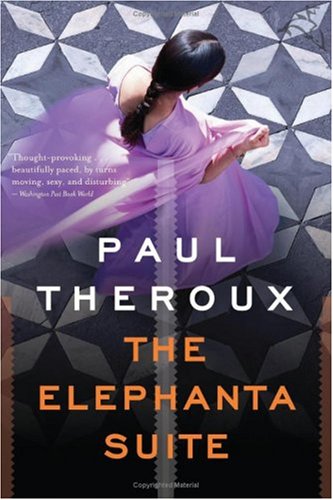
31. The Elephanta Suite
by Paul Theroux
Hardcover: 288 Pages (2007-10-16)
-- used & new: US$32.99
(price subject to change: see help)
Asin: 0771085214
Canada | United Kingdom | Germany | France | Japan
Editorial Review

Book Description
A master of the travel narrative gives us three intertwined novellas of Westerners transformed by their sojourns in India.

This startling and satisfying book captures the tumult, ambition, hardship, and serenity that mark today’s India. Paul Theroux’s characters risk venturing far beyond the subcontinent’s well-worn paths to discover woe or truth or peace. A middle-aged couple on vacation veers heedlessly from idyll to chaos. A buttoned-up Boston lawyer finds succour in Mumbai’s reeking slums. And a young woman befriends an elephant in Bangalore.

In these pages, we also meet Indian characters as singular as they are indicative of the country’s subtle ironies: an executive who yearns to become a holy beggar, an earnest young striver whose personality is rewired by acquiring an American accent, a miracle-working guru, and more.

As ever, Theroux’s portraits of people and places explode stereotypes to exhilarating effect. The Elephanta Suite urges us toward a fresh, compelling, and often inspiring notion of what India is, and what it can do to those who try to lose — or find — themselves there. ... Read more


32. The Maine Woods: (Writings of Henry D. Thoreau)
by Henry David Thoreau
Paperback: 400 Pages (2004-05-24)
list price: US$17.95 -- used & new: US$5.47
(price subject to change: see help)
Asin: 0691118779
Average Customer Review: 5.0 out of 5 stars
Canada | United Kingdom | Germany | France | Japan
Editorial Review

Book Description

Henry D. Thoreau traveled to the backwoods of Maine in 1846, 1853, and 1857. Originally published in 1864, and published now with a new introduction by Paul Theroux, this volume is a powerful telling of those journeys through a rugged and largely unspoiled land. It presents Thoreau's fullest account of the wilderness.

The Maine Woods is classic Thoreau: a personal story of exterior and interior discoveries in a natural setting--all conveyed in taut, masterly prose. Thoreau's evocative renderings of the life of the primitive forest--its mountains, waterways, fauna, flora, and inhabitants--are timeless and valuable on their own. But his impassioned protest against the despoilment of nature in the name of commerce and sport, which even by the 1850s threatened to deprive Americans of the "tonic of wildness," makes The Maine Woods an especially vital book for our own time.

... Read more

Customer Reviews (3)

5-0 out of 5 stars With Thoreau in the Maine Woods
In 1848, 1853,and 1857, Henry David Thoreau travelled to the wilderness -- forests, lakes, rivers, and mountains in the northwest part of Maine.He wrote three lengthy essays describing each of his journeys, and they were gathered together, as Thoreau had wished, and published after his death, together with an appendix, as "The Maine Woods."It is a moving book, a classic work of American literature, and the founder of a genre of descriptive travel writing.

Readers coming to "The Maine Woods" after "Walden" or "A Walk on the Concord and Merrimack Rivers" may be in for a surprise. These earlier books do include extensive descriptions of nature and of plants and animals, but their focus is much more internalized and philosophical.Both books are full of discussions of themes that have little direct connection with nature.They show Thoreau as a Transcendentalist, an American philosopher akin to Emerson and others.

"The Maine Woods", in contrast, shows Thoreau as much more of a naturalist interested in describing the wilderness in great detail for its own sake.I think the book articulates a philosophical temperament akin to Thoreau's earlier books, but it is for the most part implicit rather than stated at length.

The three essays describe Thoreau's journeys at widely separated times to Mount Ktaadn, the Chesuncook River, and the Allegash and East Branch Rivers, journeys that overlapped to some degree. Thoreau travelled with a companion and with Indian guides.He gives the reader pictures of what was still largely a pristine wilderness even though it was, at that early time, already being subject to logging, the growth of towns, and despoilation.We see Thoreau and his companions travelling in canoes or batteaus on the interconnected rivers and lakes of northwest Maine, carrying and portaging their vessels around falls, camping in the woods, observing the vegetation and animals, getting lost, finding shelter from the rain, visiting lumber camps and the hardy residents of the woods, gathering berries, hunting, and much else.The narrative is filled with detail of Thoreau's experiences and thoughts.

I found the most moving part of the book was Thoreau's description of his climb up Mount Ktaadn in the first essay.We see this journey in detail, described with ancient Greek and American Indian symbolism.It concludes with a long peroration of the value of wilderness -- of land not controlled or under the disposition of people.Thoreau observes that "the country is virtually unmapped and unexplored, and there still waves the virgin forest of the New World."The "Chesuncook" essay includes a vivid description of the stalking and killing of a moose and Thoreau's resultant sense of discomfort. It closes with a call for the creation of national preserves for wilderness.The final essay describes a broad spectrum of adventures and places on a day-to-day basis.There are many passages that describe Thoreau's Indian guide, Joe Polis. Although Thoreau was deeply fascinated with the Indian heritage of Maine, some of his treatment of Polis will sound stereotyped to modern readers.

Thoreau's book was the first in a long line of American works devoted to nature.But I was reminded most of the Beat writers in some of their moments, of Jack Kerouac, (a native of Lowell, Massachusetts) in "The Dharma Bums" describing rucksacking and the climbing of a mountain and of the poetry of Gary Snyder.

This book is about the need to leave the beaten path and follow one's star. There are some fine websites in which the interested reader can get more information about the places Thoreau visited. [...]

Robin Friedman

5-0 out of 5 stars Pure Travelogue
This book chronicles the adventures of Thoreau as he encounters wilderness in the guise of backwoods Maine.The book covers 3 separate expeditions that Thoreau made in 1846, 1853 and 1857.On each trip, Thoreau was accompanied by one or more companions, as well as an Indian guide.

Of all of Thoreau's books, this one sticks most closely to nature and travel writing, with little explicit philosophizing.Although Thoreau was accustomed to taking long walks off the beaten track in Massachusetts, it was in Maine where he first encountered genuine wilderness.He found the wild surroundings quite inspiring, and far from being overwhelmed by them, he seemed to want even more.In this book, he presents detailed accounts of the flora and fauna that observed on his Maine journeys. In addition to his observations of the natural world, Thoreau also describes many of the people and tiny communities that he found on his trips through Maine.While he follows his custom of never naming his traveling companions or providing personal information about them, he seems to feel no similar compunction about the privacy of his Indian guides, and describes them and their behavior in detail as if they were suitable subjects of his travel studies rather than co-travelers. One aspect that makes this book timeless is the fact that so much of the natural world that Thoreau describes has remained unchanged in the 150 years since his journeys.

5-0 out of 5 stars American wilderness as it was in the 1850s
Most people are familiar with Thoreau through his Walden. Few know perhaps that he didn't stay put in Concord but journeyed to the Maine Woods and elsewhere, and that these travels were formative of his philosophy and ideas. Thoreau believed the Maine wilderness north of Bangor was every bit as wild as the west and other far flung corners of the continent in the 1850s, and here he shows us an incredible panorama of beauty and wonder. You will gain insight into how Native Americans hunted Moose in the mid-19th Century and why Thoreau, a vegetarian, disdained the killing of animals for meat.One of the most sriking passages is his description of the sound of a huge tree falling in the forest in the distance at night.

In Ktaadn, Thoreau defines the essence of wilderness:

"Nature was here something savage and awful, though beautiful. I looked with awe at the ground I trod on, to see what the Powers had made there, the form and fashion and material of their work. This was that Earth of which we have heard, made out of Chaos and Old Night. Here was no man's garden, but the unhandselled globe. It was not lawn, nor pasture, nor mead, nor woodland, nor lea, nor arable, nor wast-land. It was the fresh and natural surface of the planet Earth as it was made forever and ever."

You do not need to read The Maine Woods on a wooded island in Maine (as I did) to be captivated and transported by it to a higher and greater sense of wilderness than you may ever have imagined. ... Read more


33. The Black House
by Paul Theroux
 Paperback: 256 Pages (1996-04-01)
list price: US$10.95 -- used & new: US$4.50
(price subject to change: see help)
Asin: 0140087923
Average Customer Review: 2.5 out of 5 stars
Canada | United Kingdom | Germany | France | Japan

Customer Reviews (7)

4-0 out of 5 stars A fine American entry in the English ghost story tradition.
English anthropologist Alfred Munday has returned to his homeland for health reasons after a decade in Uganda studying the Bwamba tribe.Frustrated by this forced change in his life, Munday finds himself unable to begin preparing his research for publication.His marriage sits on precarious ground, and he and his wife have just taken on a domestic disaster: the home they leased site-unseen--Bowood House, "the Black House" to locals--is ruinous, inhospitable, and apparently haunted.Munday's superior, intellectual airs quickly alienate the couple from their neighbors in the town of Four Ashes.Then the beautiful Caroline appears, and she initiates a torrid, reckless affair with Munday, whose old troubles are quickly exchanged for new ones.

There is a prevailing tone of despair, even damnation, to Paul Theroux's ghost story, THE BLACK HOUSE.Munday is a pathetic creature, a surly egoist unable to make or keep friends or to fill his roles as husband and scholar.He allows the trappings of his identity slowly to be stripped away until he is only a shadow of his formerly serious and professional self.He invites an African acquaintance to Four Ashes for a visit, but Munday, under the influence of this growing malaise, becomes suddenly embarrassed by the very sight of the man and abuses him at every turn.Though clearly he needs no help at it, some of his new neighbors are more than willing to aid Munday's decline: while giving a presentation at a local church about his anthropological work in Africa, a valuable and dangerous Bwamba artifact is stolen from him; the theft drives Munday to distraction, sensing that if he should ever see the object again it will not be under happy circumstances.The great irony which unfolds over the course of the novel is that this anthropologist, who considers it his vocation to make one African tribe comprehensible to the outside world, cannot himself adapt to the simple community of Four Ashes.In placing himself above small town life, Munday rejects the basic principals of social integration, thus making himself ideal prey for the mysterious Caroline.

The quality of Theroux's writing and the dark mix of psychology, intense sensuality, and metaphysical unease place THE BLACK HOUSE in the estimable company of Richard Adams' THE GIRL IN A SWING and Robert Aickman's "strange stories."This is a territory in which unexpected and inexplicable episodes drive the narrative: Munday glimpses two mutilated dogs under a tarp in a local man's garden; a woman applying for a maid's position at Bowood House leaves information leading the Mundays to the wrong address; the scorching eroticism of Caroline's surprise visits threaten to leave the Mundays' home in flames.Such incidents accumulate over the course of the novel, tempered by Theroux's cool but entrancing prose.From this grows a palpable tension that--perhaps in keeping with its nature--never actually resolves.One almost anticipates the novel's vague, indecipherable ending, a point at which Theroux compels his readers to share, for a moment, Munday's banishment to a maddening limbo.

1-0 out of 5 stars Really boring....
This is the first book that I have read by Paul Theroux. I am generally a Stephen King reader but unfortunally my English teacher does not allow him for a book report. Anyways, I had an oral presentation to do today on The Black House, and since this book didn't catch my intrest, I only read to page 25. Come on! I was falling asleep. I still give all regards to the author but I just couldn't stand the boring lit.

1-0 out of 5 stars Dreadfully boring
I could only bear the first 110 pages.I can't stand reading anymore.Argh!I gave it this much time of my life because he is a renowned author and deserved some respect, but, one can only take so much boredom.Sorryto all the Theroux lovers.

1-0 out of 5 stars Not impressed
I love Paul Theroux, I've read most of his work, but this cruelly disappoints. He can write great fiction : look at The Family Arsenal, but this is not great fiction. I couldn't get into the book at all, thecharacters didn't grab me, the plot seemed forced, and the sex scenestowards the close of the book seemed almost to be there to encourage thereader to actually finish the book. Disappointed.

2-0 out of 5 stars Good luck in your efferts to create a truly the black house
achilles heel -not truly the black hous ... Read more


34. Travelling the World
by Paul Theroux
 Hardcover: 320 Pages (1990-11-19)

Isbn: 1856190161
Canada | United Kingdom | Germany | France | Japan

35. Riding the Iron Rooster
by Paul Theroux
Mass Market Paperback: 464 Pages (1989-03-28)
list price: US$7.50 -- used & new: US$3.94
(price subject to change: see help)
Asin: 0804104549
Average Customer Review: 4.0 out of 5 stars
Canada | United Kingdom | Germany | France | Japan
Editorial Review

Book Description
Paul Theroux invites you to join him on the journey of a lifetime, in the grand romanttic tradition, by train across Euope, through the vast underbelly of Asia and in the heart of Russia, and then up to China. Here is China by rail, as seen and heard through the eyes and ears of one of the most intrepid and insightful travel writers of our time. ... Read more

Customer Reviews (38)

4-0 out of 5 stars A China Travel Time Capsule
From curmudgeon to comedian, Paul Theroux plays many roles. So too does China, and this is why they make such a good match. Certainly, this book drags in places, but to that end it only mirrors actual travel. It isn't just about the destinations, but the time spent between the destinations, or in this case the time the author spends riding China's trains. Those looking for an informative history of the Great Wall or an amusing anecdote concerning the Terracotta Warriors will have to look elsewhere. Theroux shuns tourist sites almost as much as he shuns foreign tourists. When he does encounter a famous place, he often gives it a one-line assessment. He sums up Beijing's abundant cultural offerings, for example, by saying that everything was "very big and very impressive."

There is no doubt that Theroux can be caustic, but his cold appraisals should ring true for anyone who has traveled in China, at least to some degree. The problem with many China books is that they are often penned by people who are smitten by the Middle Kingdom and therefore don't wish to offend. But Paul Theroux doesn't care who he offends. In any of his books. Period. Simply put, he calls it as he sees it. Despite his penchant for snobbery, one thing that Theroux is exceptionally good at is getting in on the ground level and talking to people. This makes for many of the volume's brighter moments, like when he asks to see a commune and a group of Cantonese laugh so hard they almost fall over.

RIDING THE IRON ROOSTER is a thorough inspection (pun intended) of China during the days it was emerging from the long shadow if Maoism, but before it had begun rocketing toward the realm of capitalism. As mentioned, it can be frustrating, but no more frustrating than China itself. And like China, it's worth it for those gripping moments and laugh-out-loud encounters. I have to hand it to Mr. Theroux. He traveled around China for an entire year, a trip so extensive that he visited several places twice. To my way of thinking, he deserves four stars just for that.

Troy Parfitt, author

5-0 out of 5 stars Fascinating journey across Europe via Rail
Armchair travelers and actual travelers will positively become immersed in the lives and countries of fellow travelers and foreigners as Paul Theroux journeys accross Europe. Scents, sights, sounds and a dead-on ability to skewer irritating passengers and crew, off-train traits and culture give much zing to the chugging train trip. Another Theroux treat.

5-0 out of 5 stars What would Theroux say today, over 20 years later?
I read this book over a week-long period, almost 20 years after he rode the Iron Rooster through China.The many commentaries of country life, the weird customs of the people and the constant yearning to shoot birds for food made me wonder if China today is still like it was 20 years ago.I certainly hope it is not, but Theroux's style and detailed observations of miniscule events make this a very interesting, graphic read.I had the sense of where I was in the country, from the barren desert to the freezing mountains and every track inbetween.I didn't want to get off the train.

This was my first Theroux travelogue.I will certainly read many more.

4-0 out of 5 stars Scrutinizing The Inscrutable
For many travel writers, the point is more in the journey than the destination. That is especially true with Paul Theroux here. Whether it is the rubble of the Great Wall, the desolate wastes of Inner Mongolia, or the awe-inspiring vistas of Tibet, Theroux uses the various places of China he encounters by rail as a backdrop for what interests him most, the people.

Published in 1988, as China emerged from the darkness of the Cultural Revolution and just before the Tiananmen crackdown of 1989, "Riding The Iron Rooster" captures the world's most populous nation catching a wave of democratic sentiment, embracing materialism and such symbols of Western decadence as Jan and Dean. Whether government handler or fellow rail passenger, most everyone Theroux meets has regrets about the country's hardline past and doesn't mince words expressing it, in the process challenging his (and our) expectations of encountering a continent of doctrinaire Maoists.

"We can always fool a foreigner" is a Chinese proverb Theroux quotes right off the bat, and he takes it as his job proving otherwise. Better equipped than most Westerners, he has not only been to China before but speaks the language, enough so he can distinguish genuine laughs from politeness or insecure warning, while asking questions that would have gotten him in trouble ten years ago but now evoke amusement and curiosity.

The result is a highly subjective, idiosyncratic blast, of a self-admittedly rude foreigner pushing boundaries in an attempt to uncover deeper truths from a populace unaccustomed to giving them. His admiration of the Chinese is not without frustration. "I hated sight-seeing in China," he writes. "I felt the Chinese hid behind their rebuilt ruins so that no one could look closely at their lives."

Score this one China 1, Theroux 0, but he does put up a noble fight, and provides you with an entertaining glimpse at a country that engages your deeper interest, and admiration for an author always willing to go the extra mile, even in a cold and filthy railcar.

The book does lack some sense of geography; even consulting the map on the flyleaf doesn't help as Theroux expands and contracts the reader's sense of time and space. He may dismiss the terra-cotta soldiers' ranks of Xi'an with a couple of paragraphs, while spending pages on the quality and universality of public spitting. But you wind up with a journey that tells you as much about the complexity of Theroux, a dyspeptic but very talented observer in the tradition of Evelyn Waugh, as it does about the great land he visits here.

"Travel is frequently a matter of seizing a moment," he writes. "It is personal. Even if I were traveling with you, your trip would not be mine." Here, you sort of are traveling with him, and the result is a literary journey as intoxicating as it is educational.

5-0 out of 5 stars What a trip!
I promise you will live this journey! It is incredible how Theroux describes the people, the places. A rail journey through China was nothing short of heroic back then, and I am sure would be nothing short of heroic now. I met the people, sat on the train, ate the strange foods, could taste the strange foods, slept on floors, in what is kindly described as inns. The rail stations, the villages, the towns.And the weather. I cannot imagine freezing like that, or sweating like that. Or can I???

All I know is that I want to make that journey. I was near there not too many years ago, shortly after I read the book for the first time. I was on a boat on the Amur River in the Russian Far East, and looked down toward China and thought of Theroux and his journey.

Riding the Iron Rooster is great literature for anyone who loves adventure travel. ... Read more


36. The London Embassy
by Paul Theroux
Hardcover: 248 Pages (1983-02)
list price: US$13.95 -- used & new: US$12.00
(price subject to change: see help)
Asin: 0395331072
Average Customer Review: 4.5 out of 5 stars
Canada | United Kingdom | Germany | France | Japan

Customer Reviews (2)

4-0 out of 5 stars London Embassy
Paul Theroux is probably best known as a travel writer and the author/creator of such films as "The Mosquito Coast" and "Half Moon Street." First person narrative of an American foreign service official who has been posted to London. A biting, sarcastic, and satirical series of stories.

5-0 out of 5 stars Fun in the foreign service
While written in 1983, this book is not at all dated.Paul Theroux invents a collection of bizarre characters associated in some way with an Anerican foreign service officer serving in the American embassy in London.The stories are hilarious, satiric, or touching.Theroux is a great author. ... Read more


37. The Cold World
by Paul Theroux
 Hardcover: 496 Pages (2009-09-01)

Isbn: 0771085095
Canada | United Kingdom | Germany | France | Japan

38. On the Edge of the Great Rift: Three Novels of Africa
by Paul Theroux
Paperback: 656 Pages (1996-10-01)
list price: US$16.00
Isbn: 0140248358
Average Customer Review: 5.0 out of 5 stars
Canada | United Kingdom | Germany | France | Japan

Customer Reviews (2)

5-0 out of 5 stars three well- written and topically interesting short novels
I am very glad I found this paperback at the library and took a chance on it. The first novel, Fong and the Indians, concerns a hapless petty merchant in East Africa.It is delighfully politically incorrect while maintaining a sympathetic opinion of the underlying humanity of all the characters.The third, Jungle Lovers, could have been written by a heavy drinker attracted to African women, because, well, the protagonist has these characteristics.It is also well-paced and mixes politics, plot, and character quite well.I am currently reading the "second" placed novel and it is also delightfully juicy and descriptive.Overall, these books made me want to read more novels set in Africa, by Africans as well as visitors.

5-0 out of 5 stars An enjoyable compiliation
This is actually a compilation of three previously-published novels, set in sub-Saharan Africa.To the best of my knowledge, all three are out of print, so the publisher has done the reader a service by re-printing all three in this volume.

Each of the novels in this volume has certain merits, and all three are worth your time.As a whole, they serve to encapsulate the experience of being a foreigner in Africa, in the 1970s.By foreigner I don't just mean Caucasian; the stories are told from diverse points of view.My personal favorite is the one about a group of women running a boarding school in upcountry Uganda, but anyone who either likes the writings of Paul Theroux or has an interest in Africa, would find that all three stories are worth his while. ... Read more


39. My Secret History
by Paul Theroux
 Hardcover: Pages (1989-06)
list price: US$21.95
Isbn: 5551375862
Average Customer Review: 4.0 out of 5 stars
Canada | United Kingdom | Germany | France | Japan
Editorial Review

Book Description
"Theroux's best novel in years."

CHICAGO TRIBUNE

MY SECRET HISTORY is Paul Theroux's tour de force. It is the story of Andre Parent, a writer, a world traveler, a lover of every kind of woman he chances to meet in a life as varied as a man can lead. From his days as an altar boy, to his job as a teenaged lifeguard, and then as a youth caught between the attentions of a beautiful young student and an amorous older woman. And as the boy becomes a man he turns his attention to writing, which brings him fame, and a wife, who may finally bring him to know himself. But not before he sets up his most dangerous secret life, one that any man might envy, but that could cost Andre Parent the delicate balance that makes him who he is.... ... Read more

Customer Reviews (15)

4-0 out of 5 stars If you like Paul Auster, Graham Greene or Phillip Roth you'll love this book!
I came late to Paul Theroux.I'd been aware of his travel books (never read them) but assumed a good travel writer does not make a good fiction writer - boy, was I wrong.So, one evening, while browsing the used book store for something to read I picked up "My Secret History."I opened it and read the first paragraph and was intriqued enough to purchase it. Once I got it home I couldn't put it down. "My Secret History" is five extraodinary books seperated into six chapters, the last being the weakest.I went from loving this book to hating it-specifically the main character, for his contradictions and selfishness. Then it(or the author) would redeem itself for it's honesty.Bukowski said to be a great writer one has to expose every miserable and disgusting thing becau