e99 Online Shopping Mall

Geometry.Net - the online learning center Help  
Home  - Authors - Solzhenitsyn Alexander (Books)

  1-20 of 100 | Next 20
A  B  C  D  E  F  G  H  I  J  K  L  M  N  O  P  Q  R  S  T  U  V  W  X  Y  Z  

click price to see details     click image to enlarge     click link to go to the store

 
1. Alexander Solzhenitsyn's One Day
$3.55
2. Alexander Solzhenitsyn
 
3. Gulag Archipelago 1918-1956
$1.98
4. One Day in the Life of Ivan Denisovich
 
5. Nobel Lecture
 
6. Alexander Solzhenitsyn for the
 
7. Stories and Prose Poems
 
8. Alexander Solzhenitsyn's One Day
9. ALEXANDER SOLZHENITSYN
 
10. Cancer Ward (Modern Library)
 
11. One Day in the Life of Ivan Denisovich
 
12. Alexander Solzhenitsyn Speaks
 
13. Alexander Solzhenitsyn. A Century
 
14. Alexander Solzhenitsyn A Century
 
15. STORIES AND PROSE POEMS
16. The Novels of Alexander Solzhenitsyn:
 
17. The Gulag Archipelago (Vol.2)
$18.95
18. August 1914 (The Red Wheel, Vol.
 
19. Alexander Solzhenitsyn
 
20. Alexander Solzhenitsyn (Twayne's

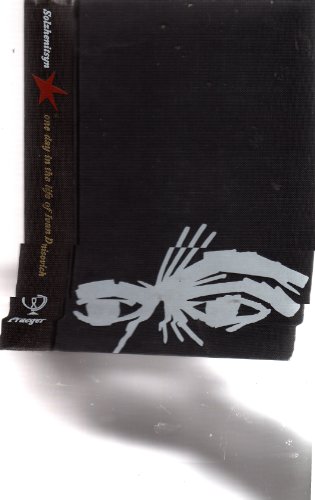
1. Alexander Solzhenitsyn's One Day in the Life of Ivan Denisovich (Monarch Notes)
by Aleksandr Isaevich Solzhenitsyn
 Paperback: 77 Pages (1985-10)
list price: US$4.25
Isbn: 0671009761
Average Customer Review: 4.0 out of 5 stars
Canada | United Kingdom | Germany | France | Japan

Customer Reviews (1)

4-0 out of 5 stars A DAY IN THE LIFE OF IVAN DENISOVICH
THIS IS A SHORT NOVEL BY ONE OF THE RUSSIA'S GREATEST AUTHORS.IT'S THE TALE OF A RUSSIAN PEASANT'S DREARY LIFE IN A SOVIET PRISON CAMP NEAR THE END OF WWII.SOLZHENITSYN'S DEPICTION OF THIS MISERABLE LIFE IS A VIEWINTO A COLD HELL.ITS LOW-KEYED NARRATIVE CONVEYS THE HOPELESSLYOVERWHELMING ODDS TO WHICH ONLY HUMAN WILL AND INTEGRITY CAN TRIUMPH. ... Read more


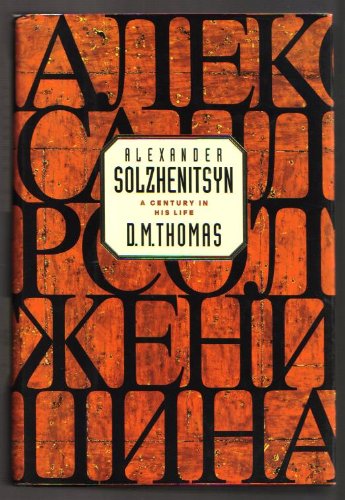
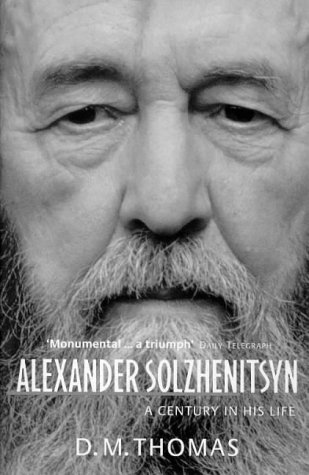
2. Alexander Solzhenitsyn
by D.M. Thomas
Paperback: 608 Pages (1998-12-15)
list price: US$20.00 -- used & new: US$3.55
(price subject to change: see help)
Asin: 0312198264
Average Customer Review: 4.5 out of 5 stars
Canada | United Kingdom | Germany | France | Japan
Editorial Review

Amazon.com
Russian writer/moralist AlexanderSolzhenitsyn is not pleased about this biography that draws on interviews with his first wife. Nonetheless, British novelist D. M. Thomas views Solzhenitsyn throughout with sympathy, depicting a difficult but admirable man as important for his role in the struggle against Soviet totalitarianism as for the artistry of his fiction. The final chapters, on Solzhenitsyn's return home in 1994 after 20 years in exile, show "the ultimate dissident" still alone, disdained as old-fashioned and irrelevant in the new Russia. Thomas writes with a lyrical soulfulness that underscores his sense of connection to Russian artists.Book Description

One of the most important literary biographies of recent times, this is not only the story of one of the century's greatest writers, but the history of Russia itself.

A rare combination of exhaustive research and novelistic style, Alexander Solzhenitsyn is the type of literary biography that appears rarely in a generation.D. M. Thomas depicts Solzhenitsyn's struggles, which led to years of imprisonment and subsequent exile, and paints a deeply affecting portrait of the intricate relationship between Solzhenitsyn's life and his art, always framing this masterpiece in the context of the historical times.
... Read more

Customer Reviews (12)

5-0 out of 5 stars A writer who shook the world
Solzhenitsyn is for Thomas the writer of the twentieth century who did the most to change its history. When Khruschev in the early 1950's surprisingly allowed the " The Life of Ivan Denisovich" to be published, this work shook the world. It was this short work , which some still believe to be Solzhenitsyn's finest with which he first brought to the world's attention, the Soviet Gulag. Solzhenitsyn then proceeded to provide to the world the results of his massive research on the Gulag. This epic work would far exceed in its power and literary weight the subsquent fiction, especially the vast "August 1914" which Solzhenitsyn would devote himself to in the years ahead.
Thomas traces the story of Solzhenitsyn from the early orphan years to his service in the Second World War, his imprisonment, his life as Zek, ( prisoner) his bout of cancer, his writing and publication, his becoming known to the world. He also extensively explores Solzhenitzyn's first marriage and reveals details hitherto unknown. The twenty years in exile in Vermont are also covered, including the 1989 Harvard speech in which Solzhenitzyn made it clear he was not the kind of ' liberal democrat' many in the West had thought him to be. The ironic return to a Soviet Union which his work helped collapse and which did not attest to his values is the coda of the story.
As George Steiner reports in 'The New York Times' Thomas shows a masterful knowledge of Russian Literature in this work, and writes passages of great intensity and power.

5-0 out of 5 stars As much about D. M. Thomas as Solzhenitsyn
I first picked up the this book because of the respect I have for its author, British novelist and poet D. M. Thomas.Thomas, in addition to showing so much talent in his own work, has begun to establish himself as a well-respected expert on Russian literature.

His novels also reveal him to be very much a student of Russian literature as well.Thomas is a great lover of Akhmatova as well, and has translated many of her poems.She also figures prominently into this biography, perhaps more so than she really did in Solzhenitsyn's life.This is important because the book is much more than a biography of one writer, but a history of the literary ideal Thomas subscribes to.Compassion.The role of the literal -- the stark, raving, brutal, literal -- to bring truth to people.

Thomas includes many references to his own literary philosophy throughout the work.Perhaps if you were here only for Solzhenitsyn, these passages would seem superfluous.He also injects snippets of the Freudian analysis that dominate his own fiction.If you were unfamiliar with his work, you might think that these sections were completely ridiculous.Even though I knew why they were there, I still thought they were out of place and that Thomas was trying to interject too much of his own personality.

The details of Solzhenitsyn's life are carefully researched.It helps that Thomas is also a novelist and is often of the same mind as his subject.Many times, his insights are fabulous.However, Thomas is a bit too subjective in his description of how Solzhenitsyn managed his personal life (and Solzhenitsyn felt he was too rough on him -- ha!).In many places, he spends far too much time finding ways to excuse the author's behavior.True, he does give a voice to to many Solzhenitsyn tampled on over the years, but it rarely extends beyond sympathy -- oh, his poor wife, oh, his poor friend -- into genuine criticism of the author.Not that criticism would have been warranted either.In these, he-said, she-said, situations, cold objectivity would have probably been best.It would led the biographer down fewer blind alleys.

This particular biography is special in that it also closely ties Solzhenitsyn to the history of 20th century Russia.Historical events have obviously influenced the author's work, but Thomas also carves out Solzhenitsyn's role in history, even before he was a literary giant.That interplay is quite important, Solzhenitsyn was not safely observing history unfold, he was living right in the horrible center of it.

I thought it was a little strange that the biography really began to speed up after the Solzhenitsyn's moved to Vermont.The author had a low personal profile during this period, but was still more accessible by the Western press.The author's work was largely fruitless in the 1980's, but Thomas detaches him from history -- as if the Vermont exile had dropped him off the planet -- and lets the 80's go by in a blur.Solzhenitsyn's return to Russia is also treated superficially, and it seemed like Thomas, without any influencial new works from the author to talk about in this period, was just trying to get it over with.But in a way, it was quite consistent with Solzhenitsyn's stature in the 1990's: his work was so literal and so tied to specific events, that the generations in ascendency at the end of 20th century could no longer relate to it personally.Why talk up the author if no one else was doing so?

I came away with a much greater appreciation for D. M. Thomas's fiction and poetry.Maybe that makes this biography, I don't know, less professional?But to me, that was an unexpected bonus.

5-0 out of 5 stars World history and the Russian novel
The Russian novel is an historical mystery, the last act of which gives us the great ones of Solzhenitsyn, whose life is told here briskly and well without hagiography and it adds up just as well to a snapshot version of Russian history that is to the point and acute in its indirect analysis of a suffering and quite mad civilization given a knockout blow by the novelist's exposure of the Gulags. The anti-modernism of Solzhenitsyn weighs in to the measure of the effect, but it would seem merely Dostoeyevskian liability at this point. Hits the mark.

5-0 out of 5 stars A Shockingly Beautiful Biography of a Powerful Man!
This book touched me in ways I had not anticipated!The author brings Solzhenitsyn's life to the lay man in easy-to-understand terminology and fascinating facts.I could not put this very thick book down; from the moment I got it I was enthralled.The rich characters and cultural reflections given in this book are enough to make any Russian history buff salivate!I was inspired and truly blessed by this amazing biography.

3-0 out of 5 stars Often rough but ambitious
Look, why I love D.M. Thomas's book "Solzhenitsyn: A Century in His Life" has little to do with how well the end product reads. This book is almost 150 pages too long, and rambles sometimes when the author is fighting with socially, politically and artistically complex balances of ideas expressed in narrative form. His subject is tricky, the time is difficult to explain in retrospect, and the beliefs of his subject are also both controversial and threatening. So, while he obviously had to get liquored up to [type] out some of these pages that are raw compilations of event which prepare us for the setting of future microdramas in the life of his subject, he tackled head on the difficult parts and made some poetic connections between the eras and symbols in the life of a great writer. In that ability to find hidden beauties, Thomas transcends being a biographer; the bulk of the book however is an average biography. I would recommend this to anyone with the momentum to get through 300 pages before beginning The Great Skim To The End. I will read more of Mr. Thomas' work, as he has impressed me as a perceptive observer of life and its people. ... Read more


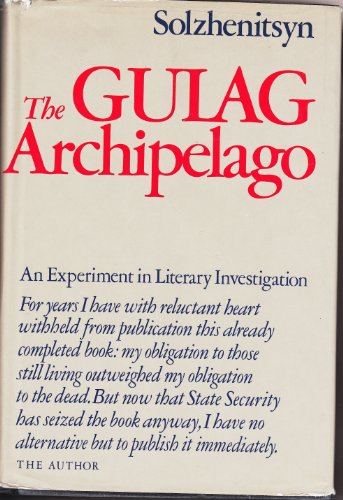
3. Gulag Archipelago 1918-1956
by Alexander Solzhenitsyn
 Paperback: Pages (1976-05)
list price: US$18.50
Isbn: 0809604760
Average Customer Review: 4.5 out of 5 stars
Canada | United Kingdom | Germany | France | Japan
Editorial Review

Book Description

Drawing on his own incarceration and exile, as well as on evidence from more than 200 fellow prisoners and Soviet archives, Aleksandr I. Solzhenitsyn reveals the entire apparatus of Soviet repression -- the state within the state that ruled all-powerfully.

Through truly Shakespearean portraits of its victims -- men, women, and children -- we encounter secret police operations, labor camps and prisons; the uprooting or extermination of whole populations, the "welcome" that awaited Russian soldiers who had been German prisoners of war. Yet we also witness the astounding moral courage of the incorruptible, who, defenseless, endured great brutality and degradation. The Gulag Archipelago 1918-1956 -- a grisly indictment of a regime, fashioned here into a veritable literary miracle -- has now been updated with a new introduction that includes the fall of the Soviet Union and Solzhenitsyn's move back to Russia.

... Read more

Customer Reviews (100)

4-0 out of 5 stars The book above them all, but with a twitch
I have not much to add to the praisals of this book above them all regarding GULAG. It really is the most important work about GULAG and nothing is above it.

However, the year is 2008 and Solzhenitsyn does still not want to publish his sources and in history writing souces are everything and without them it is only ledgends and fairy tales. In the case of Solzhenitsyn it is obvious why he could not reveal his sources earlier and his personal credibility ranks very high, but it is high time to tell about the sources now.

5-0 out of 5 stars nothing like it
vol. 2 of the Gulag Archipelago takes us d-i-r-e-c-t-l-y into hell.
however, it is not just an accusation and catalog of unbelievable, unheard of cruelty, but a cry for truth, spiritual awakening and self-discovery. literally changed my life (thanks to the friend who insisted i read it). plus, Solzhenitsyn's sarcastic manner can be funny as heck, despite the subject matter. i found the work highly entertaining and even addictive. AS is a giant among writers, God bless him! read all three books-you'll be glad you did. j

5-0 out of 5 stars Eloquent Expose of Stalinist Tyranny
I read this book (this edition is only Vol 1; I highly recommend reading through at least Vol 2) 25 years ago in the wake of this work becoming a political slogan and football bandied about so much during the Reagan years, as it turns out by people who obviously had not read it. While intially approaching that task with some skepticism, I quickly concluded that it was very well written and informed, being worth the time spent in reading it.

"Gulag" is an acronym in Russian for an agency that was known as the Central Administration of Corrective Labor Camps which the author, a former Red Army officer, entered in 1945 as a "zek" or prisoner. The book(s) is a very absorbing chronicle of the history of this system in general and through the personal stories of specific individuals that became known to the author. While Solshinitsyn is very explicit, obviously, in making his bitterly and well earned anti-communist outlook known, this work is not a hysterial rant or screed, but a serious memoir and work of historical literature, one that is neither boring nor tendentious. Moreover, while the author's affinity for Russia's Orthodox traditions shines through, a certain social-revolutionary sensiblity that has also been a hallmark of that culture during the last century and half of upheaval also emerges. As Herzen observed about Bakunin, who endured his own stuggles with Russian Tsarist tyranny and Siberian exile in the previous century, it seems that the Gulag's author was not born under any ordinary star, but a comet.

The forced labor camp system set up by Stalin was designed to purge his political opponents, set up a system of cheap forced labor to subsize his economic development and industrialization programs, and as a vehicle for the implementation of his own peculiar take on ostensible Marxist-Leninist class struggle, social cleansing, and transformation. Thus the first section is entitled "The history of our sewage disposal sytem," detailing how a quarter of "Leningrad" was "cleaned out" in the political and psuedo legal context of the newly adopted Soviet Constitution (Article 10 as I recall) that criminalized the formerly privileged classes and "socially hostile elements." In the camp context this meant that the common criminal element, "the socially friendly" (the title of a chapter in Vol 2 as I recall) that may have been present was pandered to while being incited against political enemies of the state, parts of this story being reminiscent of MacKinlay Kantor's fictional descrition of POW life in "Andersonville", although in this context it was a concious policy pursued as part of the "institutionalization of the dictatorship of the proletariat." And how does one recognize the socially friendly? The presence of tatoos on their bodies, for one thing, the author astutely observes.

The first camp that was set up was in the Solovetsky Islands during the era of the Bolshevik Revolution in the early 20s in the wake of the Civil War was not particulary egregious by prison standards of the time. The theme was set by the slogan on the Herring Gate which stated the theme, "For the Workers and Peasants!", a context in which one not atypical prisoner arrived garbed in a tuxedo. Later, in the days of the Great Purge and thereafter, privileged seeming arrivals would be jeeringly greeted at the Kolyma by the socially friendly with comments like "Welcome to Vorkuta, Fascist Gentlemen!" At this point, however, the definition of socially privileged was dramatically lowered to include "kulaks" or landed peasants; the campaign of the Soviet state against whom was an unmitigated moral and economic disaster.

The Gulag system in its maturity was set up under the leadership one Neftely Frenkel, a former Turkish businessman who oversaw the creation of a large network or "archipelago" of camps all over the Soviet Union, reaching to the remotest parts of Eastern Siberia. He supervised this vast fiefdom from his personal railroad car in which he traveled where he willed in the manner of a robber baron.

Solshenitsyn describes the pathological paronoia that set in during the era of the Great Purge and the arbitrary predations of Stalin's petty "Chekist" hacks, whose own subsequent demise provides some sweet irony to the author. All this actually weakened Russia, from the destruction of its officer corps to the inefficient and shoddy projects completed by convict labor, such as the Belamor Canal which Stalin forced to be built by hand and which turned out to be too shallow. Given the meagre rations that were based on Frenkel's concept of the "differentiated ration pot" which meant that, in theory, food was given out on the basis of labor expended, but in reality meant the socially friendly and others with relative privileges got more, survival meant getting out of "general assignment" into some special assignment outside of working in the main labor project. This the author managed to do by getting a job in camp administration based on his education. Otherwise he would have faced the prospect, leaving execution aside, of slow starvation after he fell out as one of the camp's "last leggers." Although executions are described in these camps, including en masse, they were not death camps on the Nazi model, as Stalin's regime, for the most part, didn't wait to ship people off it had already marked for death before killing them.

While the author disparges Marxism and atheism, he gives some grudging respect to Bolshevik and revolutionary traditions when linked with the struggles of the common folk and Russian patriotism. Thus we have the story of the Cossack who pole-vaulted over the camp walls to join the front line fight against the German invaders and Volume 2 concludes with the story of the Red Army veteran in 1945 who walks off a job cleaning up war rubble in protest of not having any shoes. When confronted by a cop with a threat of arrest and deportation to camp, he responds angrily that he is veteran of the war and a Bolshevik, willing to make further great sacrifices, but insists on at least having shoes. The cop backs off. Thus the theme is returned to that opened the work when the author, indignantly informs those arresting him, for writing comments critical of Stalin in personal letters, of his status as a Red Army tanker. Then of course there was his angry implication in reponse to the students that heckled him at Harvard in the late 70s that those privileged socially hostile elements could perhaps use some corrective labor.

I am surprised that Solshentisyn has not emerged more as a public figure in post-Soviet Russia. It seems that he would have a lot to contribute. I encourage people to read this work. It fully deserves the awards and accolades it has achieved.

5-0 out of 5 stars Memories
When I was in college back in the early 80s I felt a strange attraction towards Solzhenitsyn's books.

I read many of them twice.

The reason was as I read them I felt a strong bond with Solzhenitsyn.

I think somehow fate wanted me to read these books at that time to prepare my own mind for the struggles that lay ahead in my own life and to perhaps put them into perspective.

This is the story of people from different walks of life including highly educated intellectuals who are cast into a brutal and sinister environment.

Solzhenitsyn himself was one of those people.A very gifted writer.This is the story of his journey.

After I read books I don't have space to keep them all so I give a lot of them away.

However I have hard cover issues of the Gulag Archipelago books as well as my all time favorite 'The First Circle'.They have made it into my permanent book collection.

Who knows maybe someday I may brush them off and read them a third time.

Jeff Marzano

The Mind of Adolf Hitler (The Secret Wartime Report)

Cancer Ward

The First Circle (European Classics)

5-0 out of 5 stars When Hell Freezes
Solzhenitsyn gave the world a glimpse of man's darkness in the twentieth century far better than any fictional dystopia Orwell could dream up.Although this is an abridged version, it generally flows well and still hits with a punch.The book is a powerful testament to the best and worst qualities within the human race (mostly the worst).I must commend Solzhenitsyn on his brilliant combination of personal experience, history, dark humor, and at times optimism.
Solzhenitsyn isn't the first Christian author to portray the nightmare of totalitarism.Corrie Ten Boom's "The Hiding Place" and books by the Wurmbrands are quite powerful in their own right.I suppose one key difference is that Solzhenitsyn seems to be a more talented author (both an advantage and a disadvantage[sometimes personal experiences are better conveyed in more straight forward writing]).
Hopefully, readers (who weren't already aware) will realizes the tremendous harm and suffering political communism brought on the world.I get a little tired of the fact a certain dead communist revolutionary is considered "cool."Okay, so this book is about the U.S.S.R. and not about Latin America.Anyway, the sheer scope of the tragedy is difficult to even attempt to comprehend.Thankfully, the stories of at least some of those who suffered are available to enlighten future generations.
... Read more


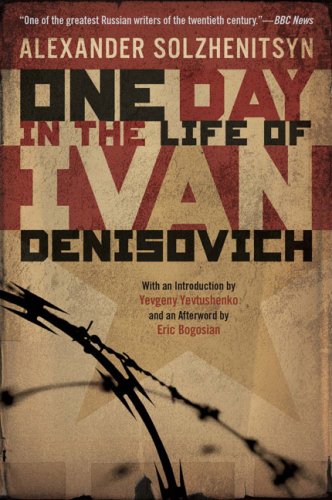
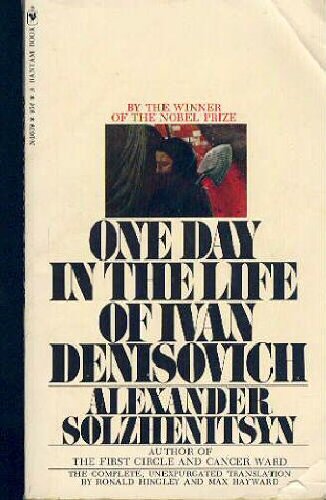
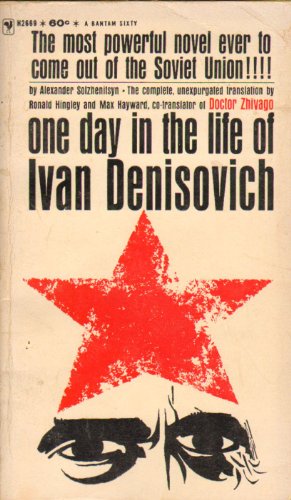
4. One Day in the Life of Ivan Denisovich
by Alexander Solzhenitsyn
Mass Market Paperback: 176 Pages (1984-08-01)
list price: US$5.99 -- used & new: US$1.98
(price subject to change: see help)
Asin: 0553247778
Average Customer Review: 4.5 out of 5 stars
Canada | United Kingdom | Germany | France | Japan
Editorial Review

Amazon.com
Solzhenitsyn's first book, this economical, relentless novel is one of the most forceful artistic indictments of political oppression in the Stalin-era Soviet Union. The simply told story of a typical, grueling day of the titular character's life in a labor camp in Siberia, is a modern classic of Russian literature and quickly cemented Solzhenitsyn's international reputation upon publication in 1962. It is painfully apparent that Solzhenitsyn himself spent time in the gulags--he was imprisoned for nearly a decade as punishment for making derogatory statements about Stalin in a letter to a friend.Book Description
From the icy blast of reveille through the sweet release of sleep, Ivan Denisovich endures.  A common carpenter, he is one of millions viciously imprisoned for countless years on baseless charges, sentenced to the waking nightmares of the Soviet work camps in Siberia.  Even in the face of degrading hatred, where life is reduced to a bowl of gruel and a rare cigarette, hope and dignity prevail.  This powerful novel of fact is a scathing indictment of Communist tyranny, and an eloquent affirmation of the human spirit. ... Read more

Customer Reviews (158)

5-0 out of 5 stars The Lifting of Stalin's Shroud.
This book; moving, inspiring, touching, humbling, pathetic.What Stalin did to his fellow countrymen has surely cast him into the lower pits of hell.This book illuminates only a single day of the hell on earth he put his comrades through.The characters strive to make it through the day without dying.They strive to live through the monotony of the toneless days.The horrific lives these people endured is nothing short of a miracle.The pages of this book shall stay with you long after you place it on your shelf.

5-0 out of 5 stars Moving book....
This novel by Solzhenitsyn is a classic to me. There are over 100 reviews here and its easy to see why the clear majority give it 4 or 5 stars. If I recall correctly, this is the book that launched his literary fame...
I won't discuss the plot since its been heavily reviewed. But I'd like to share my thoughts on why this book is important:

The Gulag was poorly known outside of the USSR until "One Day" was published. The book is sort of autobiographical; Alexandr used his own Gulag experiences to form the plot. Its not a book with a deliberate "hopelessness" theme, but it does revolve around the fatalistic, dealing-with-realityattitude of one Zek's (prisoner) life in the vast labor camps, and how he can only survive by giving up the future and living day to day. That's the major theme...(by the way, a similar theme is found in the book "All's Quiet on the Western Front" but with some differences and in a much different setting of course...)
Protagonist Ivan Denisovich never "gives up" on life - rather he resigns himself to his 10-yr sentence of labor and loss of identity as, presumably, millions of other peasants were forced to do. The ingratitude and indifference of the State to his past service and patriotism is as cold as the weather he describes...

Its a significant book in that it brings the lives of these mistreated and largely innocent masses down to a personal level. This is important for younger readers today who have no sense of what communism turned into (the Russia version, which was corrupted early on from the "workers paradise" utopia that the original communist/socialist philosophers were seeking). I recall visiting Germany in the early 1980s and seeing security guards at the airport - always in pairs, and always with automatic weapons; an image that disappeared with the breakup of the USSR (or at least, disappeared until 9/11 terrorism; I don't know if that level of security is back now)... My point is, we've forgotten some of the impact the Cold War had on both sides back then, an impact the younger generations can't identify with. "One Day in the Life of ID" helps to re-understand at least part of those days, especially from the side of the "enemy".

This book touches on everything from modern state slavery, human rights, impersonal politics, personal survival, the role of "Big Brother" and gov't in our lives - all through the eyes of one simple guy in a vast, "collective", crude, bureacratic "people's" system.

Its an easy read, great for non-academic people who don't have the time to read his other more involved books, and I think it ought to be required reading at some level in our secondary schools. Unfortunately, I suspect instead it may eventually slip into obscurity, which will be a loss.

Solzhenitsyn can be self-righteous (and tends to exagerate, IMO) in some of his later works - but this first one resonates. I highly recommend it, esp for someone with limited time to read political stuff from that era.

(ps - the Signet paperback copy I have has a nice artwork cover, awatercolor of an indistinct man standing behind barbed wire, but you can see his eyes and face).

5-0 out of 5 stars transfixing
For anyone who has not yet read anything by Alexander Solzhenitsyn, this particular book is a very good first choice.It's both shorter and less complicated than other of his great works such as THE CANCER WARD and THE FIRST CIRCLE.I read this book in one day sometime during the spring of 1976 and I have never forgotten it.Having read it, I felt shamed for ever having thought myself in any way deprived.

For those who have read this book and who appreciate its testimony to our common human capacity for spiritual triumph in the face of almost unimaginable physical and psychological distress, I'd also highly recommend ALEXANDER DOLGUN'S STORY.Dolgun was a young American living in Stalin's U.S.S.R. who in 1948 was picked up by the MGB, the secret police, and carted off first to prison and then prison camp.He spent eight years as a prisoner and was, according to Solzhenitsyn, the only person the great author ever knew to have survived detension in the infamous Sukhanovka.

5-0 out of 5 stars I really enjoyed this book, even though I got it for class.
I had to get this book for some college history class that I took, and didn't get around to reading it untill months after I was supposed to.Once I picked it up, it was hard to put down.There's something inspiring about it, as well as frightening.A good insight into the scary Soviet era.

4-0 out of 5 stars One Day in the Life of Ivan Denisovich
One Day In The Life Of Ivan Denisovich written by Alexander Solzhenitsyn is an incredible book. The book takes place in a Siberian Labor camp during World War II. The main character Ivan Denisovich has been in the camp for a very long time. He starts to think that he will never be liberated from the camp.
The book of 139 pages only covers one day in the life of Ivan Denisovich, this takes you through an entire day that is very stressful and hard on the characters in the book. Denisovich has many troubles throughout the one day. Throughout the day he moves up and starts getting more responsibilities like being in charge of the building of the wall. His squad leader Turin makes the life of the prisoners so much easier for example on roll call he never makes them stand out in the cold longer than they have to be. That shows true character to me by being so nice to the prisoners and not treating them like their scum. Overall this is a must read book and it truly amazing.
... Read more


5. Nobel Lecture
by Alexander Solzhenitsyn
 Hardcover: Pages (1972)

Asin: B000GLQI4A
Canada | United Kingdom | Germany | France | Japan

6. Alexander Solzhenitsyn for the Good of the Cause
by Alexander Solzhenitsyn
 Mass Market Paperback: Pages (1971)

Asin: B000YB1VQM
Canada | United Kingdom | Germany | France | Japan

7. Stories and Prose Poems
by Alexander Solzhenitsyn
 Paperback: 208 Pages (1973)

Isbn: 0140035478
Canada | United Kingdom | Germany | France | Japan

8. Alexander Solzhenitsyn's One Day in the Life of Ivan Denisovich (Monarch Notes)
 Paperback: Pages (1976)

Asin: B000F8IARM
Canada | United Kingdom | Germany | France | Japan
Editorial Review

Product Description
A critical guide to appreciation of structure, style, and significance: plot discussion; political background; biographical background; critical analysis; character analysis; survey of criticism; not on censorship; note on translations; bibliography. Written by Albert L. Weeks, Professor of Continuing Education, New York University. ... Read more


9. ALEXANDER SOLZHENITSYN
by D.M. THOMAS
Paperback: 594 Pages (1999)

Isbn: 0349111154
Canada | United Kingdom | Germany | France | Japan

10. Cancer Ward (Modern Library)
by Alexander Solzhenitsyn
 Hardcover: 560 Pages (1984-01-12)
list price: US$20.00
Isbn: 0394604997
Average Customer Review: 4.5 out of 5 stars
Canada | United Kingdom | Germany | France | Japan
Editorial Review

Book Description

Cancer Ward examines the relationship of a group of people in the cancer ward of a provincial Soviet hospital in 1955, two years after Stalin's death. We see them under normal circumstances, and also reexamined at the eleventh hour of illness. Together they represent a remarkable cross-section of contemporary Russian characters and attitudes. The experiences of the central character, Oleg Kostoglotov, closely reflect the author's own: Solzhenitsyn himself became a patient in a cancer ward in the mid-1950s, on his release from a labor camp, and later recovered. Translated by Nicholas Bethell and David Burg.
... Read more

Customer Reviews (35)

5-0 out of 5 stars Required reading
The media would like us to forget how wrong they were about the Soviet Union for 70 years.Stalin and his ilk were not agrarian reformers or overly enthusiastic New Dealers.They set up the most brutal political system in human history.Or maybe they were just overly enthusiastic New Dealers after all.Solzhenitsyn shows us what life was really like for those we helped condemn to live under that system, especially in Eastern Europe after the sell-out of Yalta.In this and in First Circle and Ivan Denisovich, he doesn't speculate like Orwell in 1984, he just tells it like he saw it.Consequently, he would never win a Nobel Prize today, not anti-American enough.

3-0 out of 5 stars The dismally depressing lives of Soviets suffering from malignant neoplasms two years after the death of Stalin.
What could be more depressing than a group of people living in an austere Soviet structure in 1955, discussing their dismal lives as denouncers, soldiers, labor camp workers and exiles under Stalin's policies? All of the aforementioned set in the confines of a dreary cancer ward. The conversations, thoughts, and actions involve a dozen or so patients undergoing treatment and the hospital staff providing it. Solzhenitsyn, winner of the Nobel Prize in Literature, survivor of cancer and of eight years in a labor camp, is a master writer, but this grim novel about life in a cancer ward can best be described by...any word synonymous with "depressing." The patients' ponderings on their diagnoses, treatments, and prognoses, as well as of their former lives "on the outside" are covered extensively. Preferable reads: The Gulag Archipelago by Alexander Solzhenitsyn, Kolyma Tales by Varlam Shalamov, and Journey into the Whirlwind by Eugenia Semyonovna Ginzburg.

5-0 out of 5 stars May be the best book I've ever read
I know that sounds like hyperbole, but seriously.He's just so very good at capturing a very wide variety of characters.It starts out like "Things Fall Apart" or "Palace Walk" as a portrait of an unlikable man.But it very quickly morphs into something much more complex and amazing as he widens the scope again and again to incorporate every one of the people in the Cancer Ward.Truly it's hard to speak about exactly what he's doing.But as a friend of mine said, even with that Nobel Prize, he's still underrated.

5-0 out of 5 stars What Russian literaute ought to be
In a letter to the Fourth Congress of Soviet Writers Solzhenitsyn writes, "Lierature that is not the breath of contemporary society, that dares not transmit the pains and fears of that society, that does not warn in time against threatening moral and social dangers - such literature does not deserve the name of literature; it is only a façade." Cancer Ward is no façade.

A truly moving story of life and death, disease and recovery, Cancer Ward is a novel with impact. The characters are brilliantly portrayed and it is they who tell the story. From loyal party member Pavel Nikolayevich to labor camp survivor Oleg Kostoglotov and through all the characters whose lives fit somewhere in between, the virtues and faults of socialism are examined, dissected, and layed out clearly for the reader.

While his contemporaries were busy writing safe novels, novels which towed the party line and supported the prescribed views of Stalinism, Solzhenitsyn took a grave risk. He wrote novels which reflected truth. He wrote novels which portrayed the real life trials of the people. And, in the end, he wrote novels which were not published in the nation he so dearly loved.

Make no mistake. Alexander Solzhenitsyn was no rebel. He truly loved his country and supported his government. His use of brutally honest literature was meant to strengthen his beloved country. It was Solzhenitsyn's hope that by portraying the weaknesses of his country he might help eliminate some of those problems. Alas, his works were largely ignored due to the unrelenting censorship of the Soviet government.

Fortunately for the rest of the world his works were not lost. They found their way out of Russia and onto the stage of World Literature. For this we can all be thankful. Cancer Ward is an enriching novel and a worthy addition to anyone's library.

This is not a book you want to pass up

5-0 out of 5 stars brilliant, life affirming!
Contrary to what might be assumed from the title this book is life affirming, particularly in the form of the main protagonist, Oleg Kostoglotov. If you want to be informed about the state of Russia in the immediate post-Stalin era or want to read a superbly written indictment of collectivism, or simply want a good old fashioned love story - this is for you! Has to be one of the top one hundred novels ever written. ... Read more


11. One Day in the Life of Ivan Denisovich By Alexander Solzhenitsyn
by Alexander Solzhenitsyn
 Paperback: Pages (1963)

Asin: B000YZOL4W
Canada | United Kingdom | Germany | France | Japan

12. Alexander Solzhenitsyn Speaks to the West
by Aleksandr Isaevich Solzhenitsyn
 Paperback: 100 Pages (1978-11)

Isbn: 0370301757
Canada | United Kingdom | Germany | France | Japan

13. Alexander Solzhenitsyn. A Century in His Life. First Edition.
by D. M. Thomas
 Paperback: Pages (1998)

Asin: B000OUEI1S
Canada | United Kingdom | Germany | France | Japan

14. Alexander Solzhenitsyn A Century in His Life
by D. M. Thomas
 Hardcover: Pages (1998)

Asin: B000K01AMW
Canada | United Kingdom | Germany | France | Japan

15. STORIES AND PROSE POEMS
by Alexander Solzhenitsyn
 Hardcover: 242 Pages (1971)

Isbn: 0370014510
Canada | United Kingdom | Germany | France | Japan

16. The Novels of Alexander Solzhenitsyn: 4-book Set (Cancer Ward, August 1914, the First Circle, One Day in the Life of Ivan Denisovitch
by Alexander Solzhenitsyn
Paperback: Pages (1974)

Asin: B000SEIV5E
Canada | United Kingdom | Germany | France | Japan
Editorial Review

Product Description
4 paperback books in box/sleeve; Novels by Solzhenitsyn: Cancer Ward, August 1914; The First Circle, One Day in the Life of Ivan Denisovitch. ... Read more


17. The Gulag Archipelago (Vol.2) 1918-1956
by Alexander trans.Thomas Whitney Solzhenitsyn
 Paperback: Pages (1975)

Asin: B000O8PAY4
Canada | United Kingdom | Germany | France | Japan

18. August 1914 (The Red Wheel, Vol. 1)
by Alexander Solzhenitsyn
Paperback: 832 Pages (1992-12-01)
list price: US$18.95 -- used & new: US$18.95
(price subject to change: see help)
Asin: 0140071229
Average Customer Review: 4.0 out of 5 stars
Canada | United Kingdom | Germany | France | Japan
Editorial Review

Book Description

In his monumental narrative of the outbreak of the First World War and the ill-fated Russian offensive into East Prussia, Solzhenitsyn has written what Nina Krushcheva, in The Nation, calls "a dramatically new interpretation of Russian history." The assassination of tsarist prime minister Pyotr Stolypin, a crucial event in the years leading up to the Revolution of 1917, is reconstructed from the alienating viewpoints of historical witnesses. The sole voice of reason among the advisers to Tsar Nikolai II, Stolypin died at the hands of the anarchist Mordko Bogrov, and with him perished Russia's last hope for reform. Translated by H.T. Willetts.

August 1914 is the first volume of Solzhenitsyn's epic, The Red Wheel; the second is November 1916. Each of the subsequent volumes will concentrate on another critical moment or "knot," in the history of the Revolution. Translated by H.T. Willetts.
... Read more

Customer Reviews (16)

5-0 out of 5 stars War and Peace in the 20th Century
This is not an easy book to read--but it's one of the greatest novels I've ever read.Readers who are familiar with the works of other Russian authors (e.g., Dostoyevsky, Tolstoy, etc.) will probably more readily appreciate "August 1914" than those who are picking up a Russian novel for the first time.Indeed, I found this novel reminiscent of Tolstoy's "War and Peace."Just as Tolstoy painted a masterful picture of Russian life during the Napoleonic Wars, so Solzhenitsyn paints an unsurpassed picture of Russia on the eve of the Great War 100 years later.Of course, Solzhenitsyn is far less concerned with faith and religion than Tolstoy was--political philosophy is more in Solzhenitsyn's focus.

"August 1914" almost seems to be an appeal by Solzhenitsyn across the years to countrymen long dead, to warn them of the disastrous war and revolution about to overtake them largely because of their own folly.Solzhenitsyn's antipathy for the subsequent Soviet regime is well known.His mockery (in "August 1914") of the revolutionary "intelligentsia" on the Left--for their eagerness to destroy without having an understanding of how to build--is none too subtle, although he does not deny the revolutionaries their opportunity to argue their point of view in the novel.(Ironically, many on the Left were among the earliest victims of the Bolshevik monster they did so much to unleash.)

The autocrats and reactionaries on the Right do not escape his scorn either.The unwillingness (or inability) of the Tsar and his ilk to face the realities of a changing world must of course also be held responsible for the cataclysm about to engulf Russia.But we see Tsar Nicholas II as more than just an empty-headed martinet--instead he comes across (in the latter part of the book) as a well-meaning but indecisive man, who cared deeply for Russia and her people...yet had no idea how to govern as an effective monarch (much less an enlightened one).

In the course of the novel we meet the one man who might have saved Russia--now largely forgotten--Pyotr Stolypin, Prime Minister of Russia from 1906 to 1911 (and arguably the greatest statesman Russia ever produced).Despised on the Left for his heavy-handed (but effective) tactics against revolutionary groups, and derided on the Right for his never completed program of reforms designed to move Russia progressively into modernity (politically and economically), Stolypin was mourned by few on either side when he was assassinated and killed, a victim of the apathy of a clumsy bureacracy and one misguided terrorist. Solzhenitsyn probably does more to mark Stolypin's proper place in history than any other work I've yet seen in English.The heart of the novelist is clearly broken over what might have been for Russia.

It must be said that "August 1914" is a lot more than simply a vehicle for reviewing the political torment of Russia in the late 19th and early 20th century.Solzhenitsyn also gives us an amazingly vivid portrayal of the action and confusion of the 1914 Battle of Tannenberg in the opening month of World War I.I'm not sure any other author, writing without the benefit of actual experience in the conflict that is his subject, has ever produced a more realistic "you are there" feel to his narrative of terrifying battle and mundane army life.

Note that there is a map at the back of the book for helping to keep track of placenames.Also be forewarned that characters will disappear for very long stretches and then re-appear without warning.This is not atypical of long Russian novels--which, at 896 pages, "August 1914" certainly is.Yet if you are at all intersted in Russian history--and would like to read an "insider's" novelization of how "modern" Russia came to be--then I think you will find this book worth the time.

Now, on to "November 1916"...!

5-0 out of 5 stars august 1914 - a tragicomedy
I skim read the reviews of this book on amazon, the lower star ratings shocked me more than the others in certain comments they made.
I am about 620 pages through this book, I have read the earlier draft version previously. I have also read one life in the day of ivan denisovich, cancer ward, the nobel speeches, letter to the soviet leaders and the first ward all at least twice (and very thoroughly). also the gulag (some chapters multiple times).... I am still in my early twenties. I agreed with a point a reviewer made about it being hard to work out which battalion is fighting who etc. The earlier draft has list of all these characters and also the russian army layout (it seems strange that this was left out in the later edition)(...so for me this never was a problem, especially since I am reading the book for the second time, a habit i encourage).
However, this book is by no means contrived, it requires a great deal of imagination to be able appreciate it. I find it strange that people compare this to War and Peace, even though Solz clearly critizes Tolstoy in this very book (as he does in Gulag chapter ascent). ALthough to be honest I haven't fully read Tolstoy's book (I started Anna Karenina, but stopped after about 40 pages a couple of years ago)...(so maybe in form there are similarities, I do not know).
Solzhenitsyn only holds bias in the sense that when one sees mass oppression of peoples one is bound to feel agrieved, and bitterness. If one didn't we could rightly claim that they had ceased to behave like a human being (and more like a rat!).
Be careful what translations you read, some seem far superior to others.
When reading this book one must remember how many different human beings are involved, each different.

4-0 out of 5 stars Man's Folly
Although difficult to follow at times, this work relates the tragedy of war, specifically war undertaken without the proper understanding and preparation necessary to sucessfully see it through. The sections written as a screen play are a mystery to this reader, even though the content of these sections are vital. Particularly touching and poignant is the sheer frustration experienced by the fictional Colonel sent to Second Army, and particularly sad and ironic is the account of Gen. Samsonov's turmoil, from the moment we are first introduced to him, to the bitter and unnecessary fate which is his.

5-0 out of 5 stars Inexorable flow of events
This is a momentous work - quite unlike FIRST CIRCLE or the GULAG ARCHIPELAGO.Solzhenitsyn cannot himself from centeringon people.Despite the epic events depicted, the start of WW1, the Battle of Tannenburg, the meeting of cultures, in the end this is a book of individuals, great and small.

The word pictures he has created of the rolling plains of battle, the lumbering armies, life in the military, are some of the greatest ever painted.One is transported back to that date when backward, religiously zealous, serf-like Russia meets the modern age. The story of the first vision of the industrial West by the illiterate Russian soldier - and the impact it makes on them - was breathtaking.

The story switches from one vista to another, battlefield to palace, and finally from the Romanovs to Lenin as the march of history continues steadily and inexorably onward.Even knowing the awful outcome does not decrease the pleasure of the story.At the end, you have come only so far and are ready for the next in the series, NOVEMBER 1916.I like the method in which he has chosen to write history - the selection of specific periods of time which he considered to have had the greatest impact on the modern Soviet state.

5-0 out of 5 stars I really liked it. . . A Great Book
August 1914
Alexander Solzhenitsyn

I remember when my son was little. He would bring me August 1914 and ask me to read it to him.There were no pictures in this book, but he knew that it was a book that I loved.So we would lie on his bed and as I opened the book and read to him about a world he could only discover in a book.Solzhenitsyn is one of my hero?s, a moral voice speaking against the tyranny of Soviet repression. This book about the battle of Tennenberg in August 1914 is not only a brilliant historical novel, but also a critique of the forces that lead to the October Revolution in Russia.Let?s talk about the story, before we continue the review.

The story is about the entrance of Imperial Russia into World War I.War is declared and Russia in its hurry to honor its commitments to France, invades Prussia.Its army under the leadership of General Samsonov is unprepared for war and Russia suffers a humiliating defeat as the army is surrounded and destroyed.The story is told through the eyes of a Colonel Vorotyntsey who alone sees the coming disaster and vainly tries to avert it.

It is a story of an Army that did not understand modern warfare.Samsonov, a cavalry officer, is used to sitting on his horse and viewing the battlefield; this battlefield, however, stretches for hundreds of miles.Communication is non-existent; supplies are scarce.The Germans, however, understood the new technology and were able to listen in on all the Russian communications.Samsonov makes one blunder after another; he is out classed and doesnt know what to do.With his army collapsing around him, he is lost.Lost in a forest, he ends his life with a bullet as he and his staff are attempting to escape the encirclement.

It is a wonderfully written book.One can hear the hoof beats of the charging cavalry, see the sabers glistening in the sun, sense the terror of the soldiers huddle in their trenches as thousands of shells fall around them and smell the cordite as it drifts across the fields.But Solzhenitsyn?s purpose is more than giving us a history of a battle fought long ago, we wants to expose the corruption of a Czarist Russia that lead to an even greater corruption of the Soviet System.This is a novel about truth and the attempt to conceal it.The old Czarist regime and the Soviet one that followed could only survive by the suppression and the corruption of the truth.No wonder that this book was banned in the Soviet Union.

It is a great book; I have read it at least a half dozen times over the years. ... Read more


19. Alexander Solzhenitsyn
by Stephen Allaback
 Hardcover: 222 Pages (1978-04)
list price: US$9.95
Isbn: 0800801679
Canada | United Kingdom | Germany | France | Japan

20. Alexander Solzhenitsyn (Twayne's world authors series ; TWAS 479 : Russia)
by Andrej Kodjak
 Hardcover: 170 Pages (1978-03)
list price: US$13.95
Isbn: 0805763201
Canada | United Kingdom | Germany | France | Japan

  1-20 of 100 | Next 20
A  B  C  D  E  F  G  H  I  J  K  L  M  N  O  P  Q  R  S  T  U  V  W  X  Y  Z  

Prices listed on this site are subject to change without notice.
Questions on ordering or shipping? click here for help.

site stats