e99 Online Shopping Mall

Geometry.Net - the online learning center Help  
Home  - Authors - Paine Thomas (Books)

  Back | 21-40 of 100 | Next 20
A  B  C  D  E  F  G  H  I  J  K  L  M  N  O  P  Q  R  S  T  U  V  W  X  Y  Z  

click price to see details     click image to enlarge     click link to go to the store

 
21. Political writings (The 100 greatest
$4.95
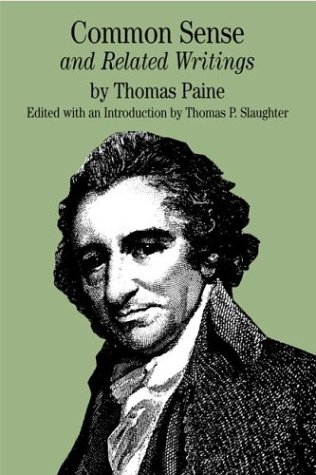
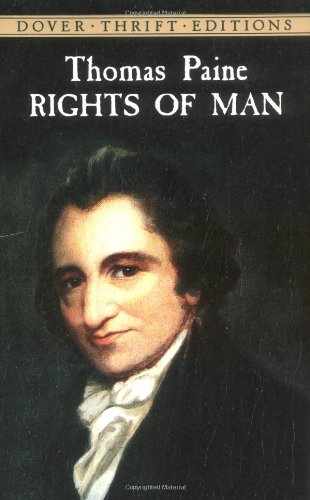
22. Rights of Man, Common Sense, and
 
$57.64
23. Thomas Paine (Twayne's United
 
$39.99
24. Thomas Nast: His Period and His
$3.95
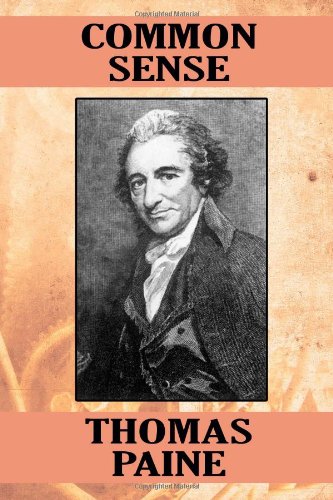
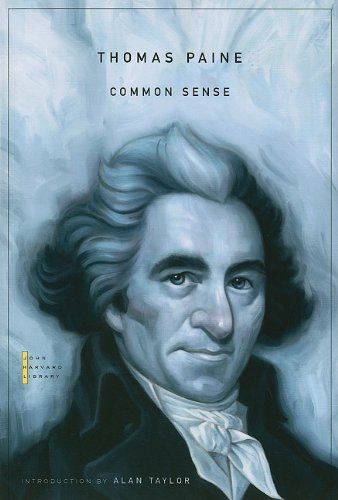
25. Common Sense
 
26. The Complete Writings of Thomas
$26.59
27. Thomas Paine: Revolutionary Patriot
$8.89
28. The American Crisis
$24.78
29. Thomas Paine: Enlightenment, Revolution,
 
30. Thomas Paine: Revolutionary Author
31. These Are the Times: A Life of
$8.10
32. Citizen Tom Paine
$28.99
33. Light From The Spirit World: The
 
$19.99
34. Thomas Paine: Common Sense for
 
$5.95
35. In Praise of Poverty: Hannah More
 
36. Thomas Paine's Common Sense: The
$105.86
37. The Life and Major Writings of
$6.01
38. Thomas Paine (Very Interesting
$29.99
39. The Writings of Thomas Paine:
$13.98
40. 46 Pages: Tom Paine, Common Sense,

21. Political writings (The 100 greatest books of all time)
by Thomas Paine
 Leather Bound: 627 Pages (1978)

Asin: B0006D047A
Canada | United Kingdom | Germany | France | Japan

22. Rights of Man, Common Sense, and Other Political Writings (Oxford World's Classics)
by Thomas Paine
Paperback: 544 Pages (1998-09-10)
list price: US$9.95 -- used & new: US$4.95
(price subject to change: see help)
Asin: 0192835572
Average Customer Review: 3.0 out of 5 stars
Canada | United Kingdom | Germany | France | Japan
Editorial Review

Book Description
`An army of principles will penetrate where an army of soldiers cannot . . . it will march on the horizon of the world and it will conquer.'Thomas Paine was the first international revolutionary.His Common Sense (1776) was the most widely read pamphlet of the American Revolution; his Rights of Man (1791-2) was the most famous defence of the French Revolution and sent out a clarion call for revolution throughout the world.He paid the price for his principles: he was outlawed in Britain, narrowly escaped execution in France, and was villified as an atheist and a Jacobin on his return to America.Paine loathed the unnatural inequalities fostered by the hereditary and monarchical systems.He believed that government must be by and for the people and must limit itself to the protection of their natural rights.But he was not a libertarian: from a commitment to natural rights he generated one of the first blueprints for a welfare state, combining a liberal order of civil rights with egalitarian constraints.This collection brings together Paine's most powerful political writings from the American and French revolutions in the first fully annotated edition of these works. ... Read more

Customer Reviews (1)

3-0 out of 5 stars Good collection but the texts are rambly.
This volume contains all of the principal works of the great mind of Thomas Paine. Although technically not one of the Founding Fathers of the US, his thoughts on liberty and the purpose of government have influenced the world. He lived in a time when democracy was in its infancy and so much of his views are particular to the newly formed governments of the US and France. But still an interesting insight into politics. He can generally be considered a libertarian.

The most famous works in the volume are Common Sense, Rights of Man and the Letter to the Addressers of the Late Proclamation. The texts are sufficiently annotated and there's a chronology of his life. If politics are your thing and you want to read about the forming of America, this is your book - it shows Paine's politics at their finest.

One word of warning - this isn't an easy read. Paine is often wordy and rambly. Often his texts have account ledgers - which is understandable for the time they were written but today break the flow of the work. The writing is dense and his points could have been made in half the number of pages. If this doesn't deter you, you'll find an inspiring read about the rights and responsibilities of people and government towards each other. ... Read more


23. Thomas Paine (Twayne's United States Authors Series)
by Jerome D. Wilson, William F. Ricketson
 Hardcover: 168 Pages (1989-03)
list price: US$34.00 -- used & new: US$57.64
(price subject to change: see help)
Asin: 0805775293
Canada | United Kingdom | Germany | France | Japan

24. Thomas Nast: His Period and His Pictures
by Albert Bigelow Paine
 Hardcover: Pages (1974-06)
list price: US$12.50 -- used & new: US$39.99
(price subject to change: see help)
Asin: 0878610790
Canada | United Kingdom | Germany | France | Japan

25. Common Sense
by Thomas Paine
Kindle Edition: 128 Pages (2007-03-03)
list price: US$7.95 -- used & new: US$3.95
(price subject to change: see help)
Asin: B000OIZT9U
Average Customer Review: 4.5 out of 5 stars
Canada | United Kingdom | Germany | France | Japan
Editorial Review

Amazon.com
"These are the times that try men's souls," beginsThomas Paine's first Crisis paper, the impassioned pamphlet thathelped ignite the American Revolution. Published in Philadelphia in Januaryof 1776, Common Sense sold 150,000 copies almost immediately. Apowerful piece of propaganda, it attacked the idea of a hereditary monarchy,dismissed the chance for reconciliation with England, and outlined theeconomic benefits of independence while espousing equality of rightsamong citizens. Paine fanned a flame that was already burning, but manyhistorians argue that his work unified dissenting voices and persuadedpatriots that the American Revolution was not only necessary, but anepochal step in world history.Book Description
"When my country - was set on fire about my ears, it was time to stir. It was time for every man to stir"Published anonymously in 1776, six months before the Declaration of Independence, Paine's Common Sense was a radical and impassioned call for America to free itself from British rule and set up an independent republican government. Savagely attacking hereditary kingship and aristocratic institutions, Paine urged a new beginning for his adopted country in which personal freedom and social equality would be upheld and economic and cultural progress encouraged.His pamphlet was the first to speak directly to a mass audience - it went through fifty-six editions within a year of publication - and its assertive and often caustic style both embodied the democratic spirit he advocated, and converted thousands of citizens to the cause of American independence.Isaac Kramnick's introduction examines Paine's life and work within the context of the political and social changes taking place in Europe and America in the late eighteenth century.Download Description
Society in every state is a blessing, but government even in its best state is but a necessary evil; in its worst state an intolerable one; for when we suffer, or are exposed to the same miseries BY A GOVERNMENT, which we might expect in a country WITHOUT GOVERNMENT, our calamity is heightened by reflecting that we furnish the means by which we suffer. ... Read more

Customer Reviews (46)

5-0 out of 5 stars Best Edited COMMON SENSE on the market ... perhaps ever.
Larkin's treatment of Thomas Paine's COMMON SENSE is one of the finest I've ever read -- and I have virtually everything ever written about Paine on my shelves. Superlatives don't really measure up to the full usefulness of this text, ESPECIALLY for educators.

Examples of the extraordinary contents include:

A cogent and accurate introduction to Paine and COMMON SENSE.

The text of COMMON SENSE itself is profusely annotated by Dr. Larkin.

A timeline for Thomas Paine.

A solid Works Cited section

Appendices that include Jefferson's notated version of the DECLARATION OF INDEPENDENCE that shows which words and phrases were edited OUT of the declaration and what was put in place of them.

Important antecedents to COMMON SENSE by Jefferson, Adams, and John Dickinson.

Key replies to Paine's COMMON SENSE by Charles Inglis, James Chalmers, William Smith, and the redoubtable John Adams.

The full text of Paine's AMERICAN CRISIS No. 1.

In my opinion, Larkin's work is simply the best single treatment of Paine's COMMON SENSE in existence. He makes it look easy to bridge the gap between readability, accessibility, and scholarly excellence. Were I asked to teach a class on this topic or even on the Revolution itself, this would be a first choice for a text.

By the way, Larkin is just the most recent of a distinguished group of English literature scholars who have contributed some of the finest work in the field of history. Lit professor Alfred Owen Aldridge is another distinguished contributor to Thomas Paine historical studies.

If you're interested in the subject matter, this book is a MUST HAVE.

5-0 out of 5 stars The Hobo Philosopher
Until I actually sat down and read Common Sense, I had no idea how incendiary these writings were. No wonder the King wanted Tom Paine's head on a platter. Boy, it is lucky for Tommy that the colonists won that mess because his butt would have been in the dumpster. And his criticisms of the British generals and their battle plans are hilarious.
Old Tom and all his Tom Foolery was really something. He had the gonads all right. Talk about a guy looking for a fight! This was the street talk of the day let me tell you.
This was the man behind and truly responsible for the American Revolution - make no mistake this man is the culprit.

5-0 out of 5 stars We have it in our power to begin the world over again
This was a required reading for a graduate humanities class.John Keane's biography succinctly showed that Tom Paine (1737-1809) was the consummate revolutionary and a daring adventurer.Not only was he an important figure in the American Revolution, but he also traveled to France in 1791 to give that revolution a push.Paine traveled from England, just in time to stoke the flames of the revolution with his pamphlet Common Sense, in January 1776.To call Common Sense a sensation in the colonies is actually a bit of an understatement.It was an unparallel sensation and monumental work of Enlightenment rhetoric that quickly fanned the flames of rebellion throughout the colonies.In four months, over 120,000 copies were printed in the colonies--over 500,000 copies by years end.No other pamphlet printed in seventeenth century America came close to its success.Most importantly, Common Sense served to get the colonial patriots to drop their fear of open rebellion, and also emboldened those delegates who favored declaring independence from Britain.The delegates now had the confidence that a large segment of the colonists would support rebellion.Similar to the Declaration of Independence, the philosophical ideas in Common Sense are primarily from the English philosopher, John Locke (1632-1704).The most moving quote from the pamphlet became quite prophetic, when one considers the impact it ultimately had on the delegates in the congress, the drafting of the Declaration of Independence, and on the world."We have it in our power to begin the world over again."

As a graduate student in philosophy and history, I heartily recommend this timeless classic to anyone who is interested in political philosophy, and history.

3-0 out of 5 stars 200 years ago I would have given it a 5/5, Today it gets a 3
After reading this one may think to them self that Thomas Paine does not get enough credit for motivating the masses to seek independence from British rule. He indeed had a significant part in the birth of the United States. With 64 pages of editor's introduction and commentary it still poses a challenge to those whom aren't familiar with the style and manner of old English dialect in which he speaks through his words. The subjects of conversation are: Origin of government in general, monarchy and hereditary succession and the time for the colonials to come together and unite. Much of this was motivated by new taxes imposed by the British at the time, that is basically how this all started, the greedy British wanted more control.

There are many things which are certain, he was indeed a theist. He was apposed to the way in which royalty obtain power and control, and how system of government can be based of such scandalous perversions of such ponderous propaganda. There are significant chucks of the book addressing the important observation of recognizing how such powers come to be. A good and almost perfect example of this was portrayed through the explanative dialogue of a famous and most humorous film entitled "Monty Python and the Holy Grail." The scene which tackles the absurdity of man bequeathed with eternal blessing to rule over all others as king shows us that such a system is nothing more than barbaric oppression and cruelty upon the common man, the people. In simple synapse: "Why should I be held on a pedestal above all others, especially you?"

The dialogue goes as fallows:

[...]

King Arthur: Old woman.
Dennis: Man.
King Arthur: Man, sorry. What knight lives in that castle over there?
Dennis: I'm 37.
King Arthur: What?
Dennis: I'm 37. I'm not old.
King Arthur: Well I can't just call you "man".
Dennis: Well you could say "Dennis".
King Arthur: I didn't know you were called Dennis.
Dennis: Well you didn't bother to find out did you?
King Arthur: I did say sorry about the "old woman", but from behind you looked...
Dennis: What I object to is you automatically treat me like an inferior.
King Arthur: Well I am king.
Dennis: Oh, king eh? Very nice. And how'd you get that, eh? By exploiting the workers. By hanging on to outdated imperialist dogma which perpetuates the economic and social differences in our society.

King Arthur: I am your king.
Woman: Well I didn't vote for you.
King Arthur: You don't vote for kings.
Woman: Well how'd you become king then?
[Angelic music plays... ]
King Arthur: The Lady of the Lake, her arm clad in the purest shimmering samite held aloft Excalibur from the bosom of the water, signifying by divine providence that I, Arthur, was to carry Excalibur. THAT is why I am your king.
Dennis: [interrupting] Listen, strange women lyin' in ponds distributin' swords is no basis for a system of government. Supreme executive power derives from a mandate from the masses, not from some farcical aquatic ceremony.

Dennis: Oh, but you can't expect to wield supreme executive power just because some watery tart threw a sword at you.

Dennis: Oh but if I went `round sayin' I was Emperor, just because some moistened bint lobbed a scimitar at me, they'd put me away.

(King Arthur begins to hit Dennis.)

Dennis: Come and see the violence inherent in the system. Help! Help! I'm being repressed!
King Arthur: Bloody peasant!
Dennis: Oh, what a giveaway! Did you hear that? Did you hear that, eh? That's what I'm on about! Did you see him repressing me? You saw him, Didn't you?

This is an obvious example, and not so far from the truth. How did kings gain power in history? Not by going hut to hut asking for votes or support; but by inflicting religion as a tool to claim enchanted power above all else. Using power and force, kings brutally acted as pimped out gangsters of the past, stealing land, burning villages and scaring the masses into repression. Collecting taxes as a form of appraisal for false protection they were able to build armies to rein their power against other kingdoms in an endless pursuit to concur the world, the world in which they claim god gave to them to rule upon.

Simple put I use this example; Imagine I hire 2 guys to steal stuff from your home while your gone, and if someone is there, I tell them to beat anyone up and rape them at will. I later go to your house after all this and pretend I'm in shock at your poor luck. I offer my protection, my service of security and If lets say if you happen to be on land that I was occupying or land I had stolen from someone else, I then charge you a wage, a tax to pay for future protection.

This example shows the false image Kings had put over "their" people in the past, as if they were cattle for the grazing. Mind you not all kings were so evil; they did claim power over all other man... Some even use to call it "Manifest Destiny."

5-0 out of 5 stars Have Not Read It Yet? Be Ashamed!
Thomas Paine's Common Sense was the first "best-seller" on this side of the ocean. More importantly, it captured the mind and spirit of the Revolution in a brief, readable format. Common Sense is not so much a book as it is a great essay that you wish would not end. Knowing his audience well, Paine traces the origins of monarchy to Saul (not exactly God's choice for the children of Israel) and, for Britains, William the Conqueror ("a French Bastard" with "armed banditti"). With wit and sarcasm, he destroys the argument that anarchy is the only alternative to monarchy, blasts the notion that the moral development of a nation is dependent upon the presence of a king and humiliates colonists who cling to poor parent (England).Paine's approach to politics is entirely American and it is easy to see why George Washington called Common Sense his favorite book. ... Read more


26. The Complete Writings of Thomas Paine
 Hardcover: Pages (1945)

Asin: B000CMKYXY
Canada | United Kingdom | Germany | France | Japan
Editorial Review

Product Description
2 Volume set with a biographical essay, and notes and introductions presenting the historical background of Paine's writings. ... Read more


27. Thomas Paine: Revolutionary Patriot and Writer (Historical American Biographies)
by Pat McCarthy
Library Binding: 128 Pages (2001-01)
list price: US$26.60 -- used & new: US$26.59
(price subject to change: see help)
Asin: 0766014460
Canada | United Kingdom | Germany | France | Japan

28. The American Crisis
by Thomas Paine
Paperback: 140 Pages (2007-11-13)
list price: US$8.99 -- used & new: US$8.89
(price subject to change: see help)
Asin: 1604591366
Canada | United Kingdom | Germany | France | Japan
Editorial Review

Book Description
Thomas Paine wrote the American Crisis in an effort to justify the American Revolution and to bolster the moral of the Continental Army. THESE are the times that try men's souls. The summer soldier and the sunshine patriot will, in this crisis, shrink from the service of their country; but he that stands it now, deserves the love and thanks of man and woman. Tyranny, like hell, is not easily conquered; yet we have this consolation with us, that the harder the conflict, the more glorious the triumph. What we obtain too cheap, we esteem too lightly: it is dearness only that gives every thing its value. Heaven knows how to put a proper price upon its goods; and it would be strange indeed if so celestial an article as freedom should not be highly rated. Britain, with an army to enforce her tyranny, has declared that she has a right (not only to tax) but "to bind us in all cases whatsoever," and if being bound in that manner, is not slavery, then is there not such a thing as slavery upon earth. Even the expression is impious; for so unlimited a power can belong only to God.Download Description
THESE are the times that try men's souls. The summer soldier and the sunshine patriot will, in this crisis, shrink from the service of their country; but he that stands it now, deserves the love and thanks of man and woman. Tyranny, like hell, is not easily conquered; yet we have this consolation with us, that the harder the conflict, the more glorious the triumph. What we obtain too cheap, we esteem too lightly: it is dearness only that gives every thing its value. ... Read more


29. Thomas Paine: Enlightenment, Revolution, and the Birth of the Modern Nations
by Craig Nelson
Audio CD: Pages (2006-09)
list price: US$39.99 -- used & new: US$24.78
(price subject to change: see help)
Asin: 1428105441
Canada | United Kingdom | Germany | France | Japan

30. Thomas Paine: Revolutionary Author (American Troublemakers)
by Karin Clafford Farley
 School & Library Binding: 128 Pages (1993-08)
list price: US$27.11
Isbn: 0811423298
Canada | United Kingdom | Germany | France | Japan

31. These Are the Times: A Life of Thomas Paine
by Trevor Griffiths
Hardcover: 160 Pages (2005-01)

Isbn: 0851246958
Average Customer Review: 5.0 out of 5 stars
Canada | United Kingdom | Germany | France | Japan

Customer Reviews (1)

5-0 out of 5 stars Timely Relevance
Those were the times, and, now, once again, these are times that try the soul. Fortunately, playwright and filmmaker, Trevor Griffiths, gives us a model to follow in These Are The Times; A Life of Thomas Paine, a play about how a seemingly ordinary person can do extraordinary things.That is Thomas Paine's philosophy, his life story, and his legacy.

For the folks who know about Thomas Paine (1737-1809), the enlightened philosopher of the American and French Revolutions, and the 18th century English revolution that did not take place, all the major aspects of Paine's adult life are included in Griffiths's epic tale.

Griffiths's screenplay, however, is not a documentary. Although rich with historical and multicultural detail, it is a highly innovative portrait of Thomas Paine, the person.Invented characters and incidents are added to help tell the story, to get to the essence of the life and times. The script begins in 1774 when Paine, aged 37, sails from England to America, and it continues across the time and space of a tumultuous era to his death in 1809 and beyond.Necessarily episodic, the fast-paced story, with its crisp dialogue and vivid images, is engrossing, sometimes sad, sometimes funny, but ultimately insightful and inspiring.

Thomas Paine is a man with a vision of a better world for all people, and he has the courage to write and speak out for it.The scenes of These Are The Times are laced with Paine's words, including an occasional voice over the action, often Paine's voice, quoting a relevant passage from his work.

The Paine first introduced in These Are The Times is a man "on the edge of things"-ready to seek a new life in a place where an ordinary person might have opportunities.The ocean crossing shows him to be gentle and helpful to other passengers, ordinary people, like himself, in distress.In America, though, he sees some of the same disparity and hostility that he left in England between the rich, powerful, and privileged and the ordinary people.But he is an observer, a self-educated thinker, a truth seeker, and Philadelphia seems to be a place where he can express his radical ideas of liberty and equality and help make a new and different world.

As Paine begins to have an impact, however, the self-styled important people call him "a ruffian," "a mere adventurer from England."And, it's true that he is without fortune, family heritage, connections, or even proper grammar.He is also fiercely independent and without ambition for personal gain and status, so he will never be called a "gentleman."But he is confident of himself, at ease with the high and the low of society, with workers, soldiers, women, and children, as well as with ministers, generals, presidents.When necessary, he spares no contempt for the rich and powerful who are also corrupt, greedy, and ruthless.

Paine's primary foils are financier/lawyer Gouverneur Morris, Edmund Burke, and Richard Bache, who is Franklin's arrogant son-in-law.Each is appropriately despicable regarding Paine, believing that he interferes with "the natural order of things."

Griffiths's Paine is blunt, provocative, the "orneriest cuss" Franklin ever met, defiant to the end, but a man of principle, if occasionally shown to be an "innocent" in a harsh world.He is a warm, sensuous man, a loving and sexual man.

"Old Common Sense" never becomes part of the select ranks of the illustrious Founders, either during his lifetime or beyond.His modest station in life and his self-imposed observer-critic role help to keep him from high office, and his challenges to authority, whether state or church, create enemies who slander his name, suppress his ideas, and limit his influence.

Griffiths, though, in his screenplay demonstrates how Paine's life offers a window through which the larger issues may be seen.From the beginning, Paine becomes aware that a merchant/land-owning class dominates the colonies of the New World.There is little equality of opportunity.The noble intentions of freedom and democracy pronounced in the Declaration of Independence (and in the French Déclaration des Droits de l'Homme et du Citoyen) are undermined by the ambitions and greed of those who have already grasped authority and who control the rest of society.The guiding ambition is still the accumulation of power and personal wealth for the few, not the promotion of the general welfare for the many.Paine sees betrayals of the revolutionary spirit and inconsistencies between stated ideals and pragmatic realities.The play, through Paine, challenges the official mythologies of history on both sides of the Atlantic.

Griffiths's play also reveals how relevant Paine's ideas are today.Paine speaks of a "brutal occupation," state terror to stop terrorism, the "strutting grandees of Congress," and rulers who may be monumentally incompetent, misuse power, and cause great harm.Paine is the embodiment of how ordinary people, though, who are well informed, can understand societal issues, can offer visionary solutions, and can become true participants in the democratic process and agents of their own destinies.Such people frighten and threaten the established order and must be slandered and, if possible, destroyed before they influence a deceived, distracted, and downtrodden populace.Paine warns, "A nation born in greed and graft and corruption will surely drown in them."

Yes, eventually the levees will break.Then, the bloggers (among whom Paine, a citizen of the world, would thrive today) will demand accountability from government hacks and corporate looters and will call for making the world anew.

These Are The Times is not a political pamphlet.It is a compelling biographical drama, a lively presentation of ideas that could actually inspire discussion and debate.If the barefoot soldiers of 1776, the sansculottes of Paris, and the early 19th century carpenters of Philadelphia can be seen as inspired by Paine's work to make another world for themselves, then these may be the times for us to pick up those ideas again for use against the tyrannies of our own day.


... Read more


32. Citizen Tom Paine
by Howard Fast
Paperback: 348 Pages (1994-05-05)
list price: US$13.50 -- used & new: US$8.10
(price subject to change: see help)
Asin: 080213064X
Average Customer Review: 4.5 out of 5 stars
Canada | United Kingdom | Germany | France | Japan
Editorial Review

Book Description

Among Howard Fast's historical fiction, Citizen Tom Paine-one of America's all-time best-sellers-occupies a special place, for it restored to a generation of readers the vision of Paine's revolutionary passion as the authentic roots of our national beginnings. Fast gives us "a vivid picture of Paine's mode of writing, idiosyncrasies, and character-generous, nobly unselfish, moody, often dirty, frequently drunken, a revolutionist by avocation"-Library Journal
... Read more

Customer Reviews (8)

3-0 out of 5 stars CITIZEN TOM PAINE-REVOLUTIONARY HERO
Howard Fast, as a part of a series on the American revolution, has written an interesting historical novel based on the exploits of the famous English-born American Revolutionary hero, Tom Paine. Thomas Paine is probably most well-known for his pamphlet COMMON SENSE which did much to galvanize the lower classes in American to support, even if haphazardly, the fight for independence. In fact, the part of the book concerning the distribution of the pamphlet is its most interesting part. If you like drama, history and an engaging, if sullen and unkempt,character this book is for you.

If Leon Trotskywas considered by many to be the "prince of pamphleteers" for his efforts on behalf of the Russian Revolution and socialism then Tom Paine can rightly be regarded as the "prince of pamphleteers"for his efforts on behalf ofthe American and French Revolutions (and its offshoot- the pro-revolutionary English radical movement of the 1790's) and plebian democracy.

Tom Paine, like many important revolutionaries in their time, had an impact on more than one revolutionary movement and therefore justly earned for himselfan honored place in plebian democratic history much to the chagrin of some later historians of these movements. In an age when sales of printed matter were small his tracts sold in the hundreds of thousands and those purchases were not merely for the coffee table at a time when money was dear. That alone helps defines the impact of his work.

Tom Paine, like other revolutionary leaders, has suffered through the ups and downs of reputation depending on the times. His Age of Reason, theconsummate tract in defense of 18th century popular deism, led to a steep decline in his reputation for most of the 19th century, an age in America of religious piety. Even the revolutionary abolitionist John Brown was driven by a religious furor. Paine has fared better lately, in an age that is much more secular and which is not shocked by deist conclusions. Paine also comes in handy as an ally when democratic rights are, like now, under full-scale attack in the name ofthe `war on terrorism'. Let me conclude by saying this, if a closet-Tory likeFounding Father John Adams can look pretty damn good in comparison to today's bourgeois politicians then Tom Paine can rightly take his place as a Founder in the pantheon of revolutionary heroes.


5-0 out of 5 stars Stirring, tragic historical novel
For those who need a refresher, Paine was the American revolutionary who helped transform a disorderly and often frightened collection of rebellious colonists into a nation with his series of pamphlets, beginning with the famous Common Sense.

When we first meet Paine, he is a frustrated loser on the verge of middle age, unable to break free of the class system that traps him in menial jobs in London. He forces his way into the office of Benjamin Franklin, the minister from the "colonies," who kindly recommends that he emigrate to America. When Paine, who tells Franklin that he "writes a little," comes to Philadelphia, he haltingly finds his true talent at last: as a propagandist. As the colonies hurtle towards revolution, it is Paine who roars the truth in his little pamphlets, giving courage and meaning to the efforts of the rebels.

For the first time in his life, this shambling, lonely, often drunk man is truly alive. Encouraging, exhorting, burning with anger and determination, Paine plays his vital role without thought of personal gain or a plan for the future. Before reading this novel, I hadn't realized how powerful the Tory forces were in America, especially in Philadelphia, nor how many folks simply sat on the sidelines during the war, wishing the whole mess would just go away. At the war's lowest point, Congress hightails it out of Philadelphia (then the capital) and begins talk of sacking George Washington.

Paine took personal responsibility for saving Philadelphia (the capital) from a Tory takeover, an action that may well have saved the country--but at the cost of making powerful enemies. Paine's passion and sacrifice for the cause sets the stage for the tragic second act of the book. Now a throughly committed revolutionary, Paine doesn't know what to do with himself after the American Revolution comes to an end.

He is once again a wanderer, but now he has a reputation to uphold. The only real satisfaction he can find is as a revolutionist, on the run from the authorities. He returns to England and tries to spark an uprising there. Eventually, disillusionment sets in. Paine learns that his desire to change the world is not enough.

Paine then becomes caught up in the French Revolution and is lucky to escape with his head. Falsely accused of atheism for some of his writings in France, Paine lives out his remaining years in America, despised by the very country he helped to create.

While not a jolly tale, Citizen Tom Paine is a compelling, gripping read. Fast himself was a radical, but this novel is no propaganda piece for radical politics. Instead, Fast examines with clear eyes and a compassionate heart the tragedy that befalls a creative man who can't be content with the temporizing and sorry realities of everyday life. This is a timeless story of idealism, its triumphs, and its limitations.

4-0 out of 5 stars Don't Know Much About History?
Let's play word association. Thomas Paine. Did you say Common Sense? So did I. In fact, that's about all I knew of Paine before picking up Howard Fast's piece of historical fiction about the revolutionary. It's not surprising that this should be what Paine is best remembered for. The "small book" appears to have been a bigger hit than the Da Vinci Code and was read by people across the intellectual spectrum. Paine became known to American soldiers and militiamen as "Common Sense". Paine was perhaps America's first motivational speaker.

There is more to Paine than Common Sense, however, and Howard Fast does a marvelous job leading us up to the point that Paine writes his masterpiece and beyond to his eventual demise and ridicule until his death. Along the way, Paine wrote a series of "Crisis" papers that picked up where Common Sense left off and re-inspired discouraged fighters. It is to Paine that we owe the line "these are the times that try men's souls." Paine later tried to become a revolution mercenary, trying his hand (unsuccessfully) in England and (arguably more successfully) in France. He was so well received in France that he became a deputy to the National Assembly.

A better historian -- or high school student -- would probably already know all of this about Paine. If you fall into that category, Citizen Tom Paine may be a waste of time. But if your knowledge of this gruff, intelligent, less-than-handsome revolutionary is as shallow as mine was, Citizen Tom Paine is a worthwhile read that has become a classic piece of historical fiction.

5-0 out of 5 stars Tom Paine - a Founder for the Common Man
The Tom Paine who Howard Fast creates in his excellent historical novel Citizen Tom Paine is not a traditionally sympathetic character. He is a course peasant with a chip on his shoulder, full of self-pity, usually rash, and often drunk, dirty, and mean. Yet through all of that, a fierce, pure light shines, that makes him the most compelling of characters, and an unlikely inspiring hero. Fast writes of him, "in the unshaven, hook-nosed, wigless head, there was something both fierce and magnificent, a grinding savagery that might be sculptured as the whole meaning of revolution, unrest and cruelty combine with a deep-etched pattern of human suffering and understanding." This Paine is good only for revolution, a continually lonely wanderer, who says that the world is his village, and wherever freedom is not, there he will be. He is the prophet of the age of the common man, old "Common Sense". And in the end, despite all that he contributed to liberty and his fellow citizen of three nations, he is forsaken by all to die alone, and even his bones are given no rest.
Fast surrounds Paine with a great cast of historical personages - Franklin, Washington, Jefferson, Burke, Blake, Marat, Robespierre, and Bonaparte among others - all men that Paine knew and moved among. They are all bit characters here, though. Whatever their worldly greatness, in Citizen Tom Paine they serve only to provide background to this great monolith of peasant philosopher revolutionary. Likewise, Fast convincingly shows us the world's first two great democratic revolutions, but only as they are viewed through the fierce eyes of Tom Paine. (This view is not entirely the one that you may have studied in school.) Everything else in this novel fades into the background as it keeps a tight focus on this amazing, sad man, who always had the courage of his convictions, no matter what price must be paid.
Paine is arguably the most neglected of America's founders. His frank writings on religion in his book The Age of Reason made him a pariah in his last days in America, and blackened his name here for over 100 years. Howard Fast has done an excellent job of rescuing Paine from that unfair obscurity, and presenting him as a complex, troubled, but fiercely honest hero for the common man. When I first read this book over twenty years ago, it gave me a new hero, and I have since read Paine's works and biographies, so I would say that Fast did his work well. Read it yourself to discover the brilliant character that Fast created, and then go out and discover the Tom Paine of history. Neither will disappoint you.

Theo Logos

5-0 out of 5 stars Transports the reader back to that time
First of all I found this book a pleasure to read.Howard Fast is an amazing writer.Reading the book I found myself carried back to the time of the revolution.Not only do you follow Tom Paine around, but you get peeks at Washington, Jefferson, Franklin, and Napoleon.Reading a historical novel like this shows these historical figures as real people - brings them to life just as if they lived in your neighborhood.True, they are fictionalized but it seems that the author did his best to conform to the known facts.I have tried a number of writers of historical fiction and find that Howard Fast is among the best.What a pleasant way to become acquainted with history! ... Read more


33. Light From The Spirit World: The Pilgrimage Of Thomas Paine And Others To The Seventh Circle In The Spirit World
by C. Hammond
Hardcover: 266 Pages (2007-07-25)
list price: US$42.95 -- used & new: US$28.99
(price subject to change: see help)
Asin: 054816150X
Canada | United Kingdom | Germany | France | Japan

34. Thomas Paine: Common Sense for the Modern Era
 Paperback: Pages (2007-11)
-- used & new: US$19.99
(price subject to change: see help)
Asin: 1879691876
Canada | United Kingdom | Germany | France | Japan

35. In Praise of Poverty: Hannah More Counters Thomas Paine and the Radical Threat.(Reviews of Books)(Book Review): An article from: Albion
by Edward Royle
 Digital: 4 Pages (2003-09-22)
list price: US$5.95 -- used & new: US$5.95
(price subject to change: see help)
Asin: B00082BVJO
Canada | United Kingdom | Germany | France | Japan
Editorial Review

Book Description
This digital document is an article from Albion, published by North American Conference on British Studies on September 22, 2003. The length of the article is 903 words. The page length shown above is based on a typical 300-word page. The article is delivered in HTML format and is available in your Amazon.com Digital Locker immediately after purchase. You can view it with any web browser.

Citation Details
Title: In Praise of Poverty: Hannah More Counters Thomas Paine and the Radical Threat.(Reviews of Books)(Book Review)
Author: Edward Royle
Publication: Albion (Refereed)
Date: September 22, 2003
Publisher: North American Conference on British Studies
Volume: 35Issue: 3Page: 500(2)

Article Type: Book Review

Distributed by Thomson Gale ... Read more


36. Thomas Paine's Common Sense: The Call to Independence
by Thomas Paine
 Paperback: 166 Pages (1976-01)
list price: US$5.95
Isbn: 0812006550
Canada | United Kingdom | Germany | France | Japan

37. The Life and Major Writings of Thomas Paine: Includes Common Sense, the American Crisis, Rights of Man, the Age of Reason and Agrarian Justice
by Thomas Paine
Hardcover: 632 Pages (2000-08)
list price: US$42.00 -- used & new: US$105.86
(price subject to change: see help)
Asin: 0735100772
Average Customer Review: 4.5 out of 5 stars
Canada | United Kingdom | Germany | France | Japan

Customer Reviews (4)

5-0 out of 5 stars The Hobo Philosopher
I think that every American should read all the works of Tom Paine. The phrasing and style are of today even though these works are over 200 years old. Read John Adams or even Thomas Jefferson and you can't help but to notice. It seems peculiar to me that I even hear conservatives today quoting Tom Paine. Tom Paine was no conservative. Read Agrarian Justice and you will have all the proof that you need. If that isn't enough try The Age of Reason on for size. If there were no Tom Paine I doubt very much that there would ever have been an American Revolution. Yet Tom takes no place in "monument" parks about this country. It is very sad.

5-0 out of 5 stars We have it in our power to begin the world over again
This was a required reading for a graduate humanities class.John Keane's biography succinctly showed that Tom Paine (1737-1809) was the consummate revolutionary and a daring adventurer.Not only was he an important figure in the American Revolution, but he also traveled to France in 1791 to give that revolution a push.Paine traveled from England, just in time to stoke the flames of the revolution with his pamphlet Common Sense, in January 1776.To call Common Sense a sensation in the colonies is actually a bit of an understatement.It was an unparallel sensation and monumental work of Enlightenment rhetoric that quickly fanned the flames of rebellion throughout the colonies.In four months, over 120,000 copies were printed in the colonies--over 500,000 copies by years end.No other pamphlet printed in seventeenth century America came close to its success.Most importantly, Common Sense served to get the colonial patriots to drop their fear of open rebellion, and also emboldened those delegates who favored declaring independence from Britain.The delegates now had the confidence that a large segment of the colonists would support rebellion.Similar to the Declaration of Independence, the philosophical ideas in Common Sense are primarily from the English philosopher, John Locke (1632-1704).The most moving quote from the pamphlet became quite prophetic, when one considers the impact it ultimately had on the delegates in the congress, the drafting of the Declaration of Independence, and on the world."We have it in our power to begin the world over again."

As a graduate student in philosophy and history, I heartily recommend this timeless classic to anyone who is interested in political philosophy, and history.

5-0 out of 5 stars Reviews by Nan Kilar and Bobby Miller
If you are a Fundamentalist, dust off your sandals and flee. At best this book will confuse you even more than you already are. Thomas Jefferson wrote that he merited the same censure visited upon the author of Rights of Man "for I profess the same principles."

Thomas Paine, Thomas Jefferson and Benjamin Franklin were Deists. Another thing they had in common was their contempt for the so-called mystery of God, and the pious frauds that perpetuated it in order to obtain those things they desired. One who has any knowledge of God Almighty whatsoever would be outraged at the claim that He would need or want a fallen angel to battle; that He would use a snake, of all creatures, to entice a female to sin or use a whale as a motel. Those who advocate such things fall into one of two categories: sociopaths or herd animals. The buildings they erect supposedly to honor God serve everyone involved but God. While they are gathering places for those desiring wool and those in need of shearing, they serve a far greater purpose--they allow those without the desire to serve the true God, a God that cautions them before they can even get a lie out of their mouths--a mystery to worship.

As Paine explains, "Mystery answers all general purposes, miracle followed as an occasional auxiliary. The former served to bewilder the mind, the latter to puzzle the senses. The one was the lingo, the other the legerdemain."

3-0 out of 5 stars About the Age of Reason
Paine who failed out of school at the age of 12 was not one of the best thinkers of all time. He joined the American Revoluntion immediately prior to its onset, and he met with the founding fathers and expressed the ideas of the American people of the time in Common Sense. Because of the fame he received from Common Sense he attempted to influence Christian nation he was living in. Although some of the other founding fathers were also deist, Paine's writtings in the Age of Reason (which contradicts his earlier statements)lead to his downfall. He attempted to take advantage of his limited fame and failed.

Some of Paine's arguments state that he can't accept the revelations of others because he cannot be assured of THEIR credibility. This comes from a man that failed out of school at 12 years old, failed at every job he attempted, and is only remembered for his statements in support of the American Revolution, which he only was apart of for a few years before it took place.

Much of Paine's arguments contain fallacies. His belief of an Age of Reason is not supported by logical or reasoning abilities. One example is the logical fallacy Post Hoc Ergo Propter Hoc (after this therefore because of this). One of Paine's arguments is that Satan was punished by being sent to a pit; Paine then states that the Greek god Jupiter punished his opponent (giants) by confining one under a mountain (Paine claims resulted in volcanoes). Paine claims that BECAUSE the legend of Jupiter imprisoning his rival allegedly preceded the concept of Satan being imprisoned that the Christian belief in Satan must have been derived out of the Jupiter legend. Paine's assumption excludes the fact that earthy crimes committed throughout all ages have had punishment or prison associated with them, and the claim that the Jews would have had to study Greek mythology to create their own beliefs is a complete hypothesis on Paine's part.

Paine's statements are wishy-washy to say the least. He makes statements that the Bible is only hearsay and has no merit, and then at other times makes statements based on Biblical passages as though they were a matter of fact. He states that Jesus was a great teacher, and that he (Paine) is going to stick with the philosophy of Thomas (doubting Thomas) and demand to see proof of everything. If Paine's theories were true that the Bible was only hearsay, he would have no way of judging what Jesus taught as his (Paine's) beliefs do not allow for Jesus or Thomas to have even existed.

A very interesting thing to note about Paine's beliefs is that if you apply his beliefs to his own work then you would PROVE in Paine's view point that HE never existed. Paine states that you cannot believe that Paul wrote the books of the New Testament attributed to him therefore the Bible is not true. This same principle can be applied to Paine's work to challenge Paine's very existence. None of us personally met Paine or verified that his writings were his own; we only have writings that we are told were written by Thomas Paine by others, and that the writings contained Paine's beliefs. If you apply this type of reasoning to Paine's own work then you would have to conclude that Paine's work might be a complete fabrication, and that there is no proof that he even lived that does not come from hearsay or documentation of other men.

In LIFE AND WRITINGS OF THOMAS PAINE it says: "Deism teaches us that God is a God of truth and justice. Does the Bible teach the same doctrine? It does not."

This concept of God being a God of Justice and Truth is taken from the Revelations of the Bible and not from the Deist's use of Reason. By simply observing Creation to understand God as Deist claims you would not come to the understanding of God as a God of Justice and Truth. The world is not naturally just. If you base your religion on observing nature you are more likely to conclude that God is growing people in order to eat them, as that is what is observable in nature. Human's raise animals for food and are not concerned about providing the animals with truth and justice. These traits cannot be determined by observing the movements of the sun or the actions of man.

Observing the nature of man; to rob, rape, and kill would appear to be a natural state of man, as these actions have been recorded throughout all history and still exist today. If Deists hold to the belief of judging God by observing the creation without giving any thought to Biblical Revelation then there is not cause to label such actions as sin. Revealed religion is what labels these instincts as sin. Paine's view originates in his Quaker up bringing, which he then perverts and intermixes with his concept of Reason to make up his odd belief and questionable belief system.

Paine also rests some of his arguments on the new definition that he gives to the word Revelation. He redefines the word to meet his desires. The problem with this argument is that when debating the usage of a word relating to a topic thousands of years earlier it is necessary to use the definition of word at that time. By changing the definition of the word thousands of years later you do not invalidate how it has been used for centuries. This argument is also a logical fallacy called the Straw man in which Paine creates his own new definition of the word and argues against his own definition and not the actual topic.

Much of Paine's view on Reason comes from ethnocentric thinking that He (educated to the level of a 12 year old boy) has a superior ability to think than those who have lived in the past. Paine views himself as an enlightened thinker when in fact the opposite is true. He values the usage of Reason in gaining wisdom, but the Reason that Deism promotes is ignorance. It involves a lack of study or research, and is simply the concept of "Believe whatever you reason without considering anything other than your own opinions", and leaves man to his own devices. The problem is that the Bible documents the results of man being left to his own devices, and if REASON were really being applied then an enlightened thinker would STUDY and learn from the mistakes of those of the past to prevent themselves from falling into the same snares.

There is nothing enlightened about reasoning through ignorance. Much of Paine's problems with Christianity are not actually with the Word of God (as Paine claims they are), but are against man's hypocrisy and use of religion wrongfully. The Bible is also against these things, so Paine's attacks on the Bible are misdirected. Paine's argument that Christianity is wrong simple because other religions exist is foolish. One would not assume that all foods are poisonous simply because some of them are. If you do not want to eat poisonous food the answer does not lie in blindly making up your own recipes and biting into them hoping you wouldn't die, but lies in studying the good and bad recipes to determine where the poison is in order to use the correct recipe that will allow you to live; that is how REASON is to be used intelligently. If you are an enlightened thinker then you would analyze, evaluate, contemplate, understand, and reason to determine the truth. Making up your own philosophy based on what feels good to you is not enlightenment, and it is not even a new way of thinking; this error is commonly documented in the Bible.

Paine's arguments show only a superficial understanding of the Bible. If he were to put effort into studying the Bible and applying reason to it then his questions and objections to it would be answered. He would also be able to answer why some religions are false ones and why they are so. As it is Paine argues that all religion say they are right and since they all cannot be right Paine assumes that none of them can be right. This is another error in his reasoning. Certainly there are an infinite number of examples of people doing things wrong, but someone else being capable of doing it right.
... Read more


38. Thomas Paine (Very Interesting People Series)
by Mark Philp
Paperback: 96 Pages (2007-11-15)
list price: US$9.99 -- used & new: US$6.01
(price subject to change: see help)
Asin: 0199217564
Canada | United Kingdom | Germany | France | Japan
Editorial Review

Book Description
Definitive, concise, and very interesting... From William Shakespeare to Winston Churchill, the Very Interesting People series provides authoritative bite-sized biographies of Britain's most fascinating historical figures - people whose influence and importance have stood the test of time. Each book in the series is based upon the biographical entry from the world-famous Oxford Dictionary of National Biography. The Very Interesting People series includes the following titles:1.William Shakespeare by Peter Holland2. George Eliot by Rosemary Ashton3. Charles Dickens by Michael Slater4. Charles Darwin by Adrian Desmond, James Moore, and Janet Browne 5. Isaac Newton by Richard S.Westfall 6. Elizabeth I by Patrick Collinson7. George III by John Cannon8. Benjamin Disraeli by Jonathan Parry9. Christopher Wren by Kerry Downes10. John Ruskin by Robert Hewison11. James Joyce by Bruce Stewart12. John Milton by Gordon Campbell 13. Jane Austen by Marilyn Butler 14. Henry VIII by Eric Ives15. Queen Victoria by K. D. Reynolds and H. C. G. Matthew 16. Winston Churchill by Paul Addison17. Oliver Cromwell by John Morrill 18. Thomas Paine by Mark Philp19. J. M. W. Turner by Luke Herrmann 20. William and Mary by Tony Claydon and W. A. Speck ... Read more


39. The Writings of Thomas Paine: Volume 2
by Thomas Paine
Paperback: 534 Pages (2001-07-11)
list price: US$29.99 -- used & new: US$29.99
(price subject to change: see help)
Asin: 0543763781
Canada | United Kingdom | Germany | France | Japan
Editorial Review

Product Description
Edited by Moncure Daniel Conway. This Elibron Classics book is a facsimile reprint of a 1894 edition by G. P. Putnam's Sons, New York, London. ... Read more


40. 46 Pages: Tom Paine, Common Sense, and the Turning Point to American Independence
by Scott Liell
Hardcover: 174 Pages (2003-03)
list price: US$18.95 -- used & new: US$13.98
(price subject to change: see help)
Asin: 076241507X
Average Customer Review: 4.0 out of 5 stars
Canada | United Kingdom | Germany | France | Japan
Editorial Review

Book Description
Thomas Paine, a native of Thetford, England, arrived in America's colonies with little in the way of money, reputation, or prospects, though he did have a letter of recommendation in his pocket from Benjamin Franklin. Paine also had a passion for liberty in all its forms, and an abiding hatred of tyranny. His forceful, direct expression of those principles found voice in a pamphlet he wrote entitled Common Sense, which proved to be the most influential political work of the time.

Ultimately, Paine's treatise provided inspiration to the second Continental Congress for the drafting of the Declaration of Independence. 46 Pages is a dramatic look at a pivotal moment in our country's formation, a scholar's meticulous recreation of the turbulent years leading up to the Revolutionary War, retold with excitement and new insight. ... Read more

Customer Reviews (14)

3-0 out of 5 stars Could have been a third as long
Thomas Paine's _Common Sense_ was a brilliant piece of political propoganda, providing a reason for the disaffected colonists to engage in treason against the British crown.His argument: that it is "common sense" that a continent cannot be ruled by an island, that the colonists' rights have been abused and abrogated, and that the person responsible for the perceived wrongs was King George III, captured the hearts and minds of the Americans of his generation.Liell's analysis of _Common Sense is excellent, and had he concentrated only on these points, the book would have merited five stars.

But Liell, a member of the Thomas Paine National Historical Association, could not stop there.He goes on to detail the spread of the pamphlet and to provide a biography of Paine.These parts (nearly 2/3 of the book) dragged, and served to dilute what otherwise is an excellent analysis of a seminal turning point in America's history.To be fair, some may find the biography fascinating - I thought it was out of place, awkward and not nearly as incisive as those parts that dealt with the actual pamphlet itself.

3-0 out of 5 stars If I can filter out all the glorification of Thomas Paine, it's a book worth reading.
I'm reading this book called "46 Pages" and it's intended to be a critical look at the essay by Thomas Paine: Common Sense. Common Sense, for all intents and purposes, was a 46-page pamphlet that questioned the legitimacy of a monarchial government, and the right for people to represent themselves. It was historically significant because it was a major impetus in getting the independent movement going. Just 6 months after it's release, the Declaration of Independence was written and signed.I'm enjoying the bits and pieces of history and the fact that this historically crucial bit of writing is being put into context. BUT... the majority of the book is a glorified "I love Thomas Paine" treatise.

No man is so wonderful in and of himself. People are great because they do great things. But this book is presuming that Thomas Paine was essentially a saint because he was one of the first to put in writing this idea of independence. But does that make him a saint? Not when you consider the fact that he took another man's thoughts and theories and with his permission, put it into pamphlet format.

So if I can filter out all the glorification of Thomas Paine, it's a book worth reading. About 46 pages of it, that is.

5-0 out of 5 stars A valuable addition to the history of the Revolution
In the year 1763, at the height of the First British Empire, an American colonist's greatest pride was to be the subject of an English king.For fifteen years thereafter, the ill-conceived policies of imperial ministers strained the bonds linking colonies and parent country to breaking point.Yet, even after the bloodshed at Lexington, Concord and Bunker Hill, those bonds stubbornly refused to break.

By 1775, Americans were prepared to fight for their rights, and did so.But the great majority could not bring themselves to throw off the glittering mantle of the British Empire.King George III embodied the venerable heritage that was part of their identity, and few dared speak against their monarch in public--even the leaders of the Continental Congress.The enemies of America were "ministerial" enemies: a group of corrupt men in Whitehall had misled the king and stifled the complaints of his loyal American subjects.The king himself could not be a party to such injustice; if he could, everything they'd been taught to believe would be wrong.Willing satellites of the British sun for a century and a half, Americans now began to fear they were in captive orbit around a black hole.For most, it was simply too much to accept.

In the early days of 1776, Thomas Paine published "Common Sense," severing the colonists' nostalgic ties to their ancestral nation with sudden finality.That a political pamphlet, in a matter of months, could profoundly change the course of history was stunning to those who witnessed its impact at first hand.It is no less so today.In "46 Pages," Scott Liell explains how and why an Englishman accomplished what no American of the time could.He explores the critical events in Paine's background and the evolution of his radical beliefs.He isolates the compelling lines of thought radiating from the groundbreaking pamphlet, and demonstrates how they utterly effaced colonists' lingering notions of their system of government.Countless Americans picked up "Common Sense" believing themselves the dutiful children of an enlightened and glorious monarch.They put it down again seething with anger and contempt.Paine showed the colonists that what they had taken as day was in fact night; but after reading his words, they did not lament the realization.Their former beliefs exposed as idolatry, they were willing to part with them at last.

The author goes on to trace the powerful effects of "Common Sense" on its diverse audience: the Founding Fathers in Congress, the generals and common soldiers of the Continental Army, the average farmer in his field and tradesman in his shop.With force and clarity, he illustrates its decisive importance in convincing the colonists that their true interest, and best chance of securing their rights, lay in independence from Great Britain.Before "Common Sense," America had been fighting with one hand tied behind her back.From now on, her course would be clear, her energies focused.

Mr. Liell's account is engaging, scholarly and thoroughly illuminating.On the road to a true understanding of the American Revolution, "46 Pages"is an essential part of the journey.

4-0 out of 5 stars Great narrative history
I had not thought much about Tom Paine since I read Howards Fast's novel about him while I was in college.Someone recommended this book to me and within the first chapter I remembered what I loved about Paine's story then. Liell's book is as well paced and well written as fast's even though it is a non-fiction work.One warning: five minutes after you are done with "46 pages" you will be going to Amazon to plunk down your cash for a volume of Paine's great writing. All in all an inspiring telling of a fascinating tale in American history.

2-0 out of 5 stars 46 pages never seemed so long
"46 Pages" unfortunately refers to the length of the Revolutionary War era pamphlet, "Common Sense," rather than this book about said pamphlet.Unfortunate because Liell could have made his basic point in 46 pages, or even much less.

As it is the book is pretty short, but we get the idea of Liell's thesis quickly - "Common Sense" sparked a change in the way Americans thought about their relationship with England.Before, Americans sought rights within the British system, after they wanted a whole different system.Further, "Common Sense" helped Americans think about a republican form of government rather than an independent government based on the British model.Good point.Now, if you want to read it again stretched over about 150 pages, pick up this book.

Liell runs into trouble in part because he's not sure what he wants to do with his book.There's a little bit of Gary Wills' "Lincoln at Gettysburg," a little bit of Richard Brookhiser's short biographies of the founding fathers, and a little bit of a grade-school text book.The combination does not achieve what any of its component parts succeed at.

Wills' book on Lincoln's speech explores its historic context, analyzes its every phrase, and then describes the effect it had on American thinking during and after the Civil War.A glaring absence of Liell's book is much analysis of the language of "Common Sense."He touches on it, emphasizing that it was written to be understood not just by the framers but also by common farmers, but we don't really come away with much appreciation of the actual language of the pamphlet.

Liell probably would have been better off writing a straight biography of Thomas Paine.Again, Paine's biography is touched on, but his life is glossed over.This may be because Liell is aiming at a very general audience and is afraid of being offensive.For instance, Liell mentions in passing that after the Revolution, Paine wrote against organized religion in Europe, but doesn't really explain Paine's views.Though the brief story goes on to discuss how Paine was imprisoned in France for his views, and was almost a victim of the Reign of Terror,I almost got the sense that Liell was avoiding Paine's more controversial positions out of fear of a modern reign of terror that reacts poorly to evidence of founding fathers' anti-religiosity.

Another glaring absence is "Common Sense" itself.The book's very title tips us off that the pamphlet is a short work; it could easily have been included as an appendix.Instead, the book reviews much of what anyone who knows what "Common Sense" is probably already knows.With our curiosity piqued, the end of the book would have been an opportune time to read the work, probably for the first time.

Devoid of in-depth biographical information, textual analysis and "Common Sense" itself, "46 Pages" is left with the same basic point repeated over and over again. Despite its brevity, the book therefore moves slowly to a scattered conclusion about "other founding fathers" (all of whom had already been discussed), and an epilogue about Paine's later life that hints at, but does not explore, what seems like a truly interesting story.
... Read more


  Back | 21-40 of 100 | Next 20
A  B  C  D  E  F  G  H  I  J  K  L  M  N  O  P  Q  R  S  T  U  V  W  X  Y  Z  

Prices listed on this site are subject to change without notice.
Questions on ordering or shipping? click here for help.

site stats