e99 Online Shopping Mall

Geometry.Net - the online learning center Help  
Home  - Authors - Lagerkvist Par (Books)

  1-20 of 100 | Next 20
A  B  C  D  E  F  G  H  I  J  K  L  M  N  O  P  Q  R  S  T  U  V  W  X  Y  Z  

click price to see details     click image to enlarge     click link to go to the store

 
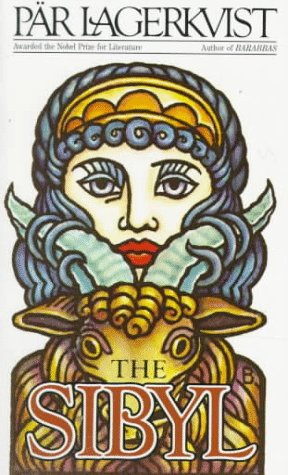
1. The Sibyl
$10.00
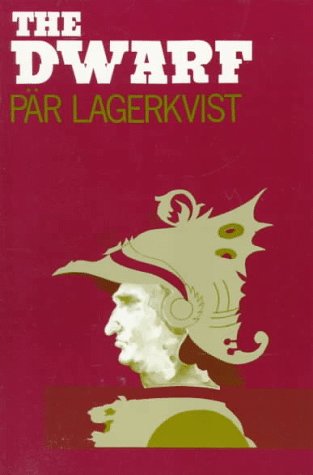
2. The Dwarf
$7.24
3. Barabbas
 
4. PAr Lagerkvist (Columbia essays
 
5. PAR LAGERKVIST a Critical Essay
 
6. Par Lagerkvist in America
 
7. PAR LAGERKVIST a Critical Essay
 
8. Evening land =: Aftonland
 
$87.49
9. The Holy Land
 
10. The eternal smile and other stories
 
11. Par Lagerkvist: En biografi
 
12. PAR LAGERKVIST: DIKTER.
 
13. Par Lagerkvists "Barabbas" som
$5.95
14. "Par Lagerkvist": A Biographical
 
15. Par Lagerkvist
 
16. Par Lagerkvist;: A critical essay
 
17. Ordnungsschwund--Ordnungswandel:
 
18. Som i Aftonland: Studier kring
 
19. NOBEL PRIZE LIBRARY: JUAN RAMON
 
$11.91
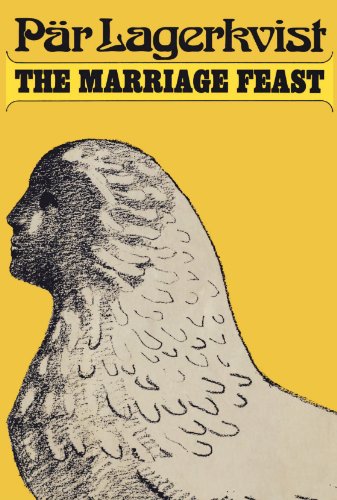
20. The Marriage Feast

1. The Sibyl
by Par Lagerkvist, Naomi Walford
 Unknown Binding: Pages

Asin: B00005WUFM
Average Customer Review: 4.5 out of 5 stars
Canada | United Kingdom | Germany | France | Japan
Editorial Review

Book Description
In this powerful, poetic, and moving parable, the Wandering Jew of medieval Christian legend journeys to Delphi to consult the famed oracle of the pagans. He is turned away but not before learning that one of the most adept of the old priestesses, or sibyls, lives in disgrace in the mountains above the temple. In her rude goat-hut he seeks the meaning of his disastrous brush with the son of God. She reveals that she, too, has been touched by the son of a god, a very different son, not quite human, born of her own body. He dwells with her as a constant reminder of the betrayal of her mystical and erotic union with the divine, her punishment, and—perhaps—her redemption. ... Read more

Customer Reviews (25)

5-0 out of 5 stars one of my all-time favorite books
to be honest, it's hard to explain why...but there is a mystical feeling to it all that lingers after reading.

one reviewer said that he/she didn't like the book and will remember the author for barrabas instead, because it was meaningful and refreshing...but barrabas ends negatively.this one...only ends with a question mark.

3-0 out of 5 stars Wonderful but cryptic.
"The Sibyl" is a work of mysterious beauty, hampered by a vague and hazy message.

With its spare and simple prose, as clear and solemn as a sacred spring, Lagerkvist captures the essence of natural religion and brilliantly conveys the experience of ecstatic spirituality. However, it's an odd fable, opaque in its meaning; the Wandering Jew and a disgraced Delphic oracle relate their respective experiences with "God" and subsequent divine punishments. I'm not really sure what Lagerkvist, the self-described "religious atheist", was trying to say here. We're told that meaninglessness is divine, that god can be fickle, cruel and evil, that curses are an experience of the divine as much as blessings, that god is something inscrutable, but that our destinies are bound up with "god" whether we hate him or love him, that it's the search that gives meaning. A previous reviewer described this as Taoism. Similarly, this could be also be described as paganism, Manicheanism, Fatalism, or simple Nordic literary obscurantism. Take your pick.

In its tale of two unfortunate spiritual seekers, it is a wonderful, beautifully written story. What the overlying philosophy is, I am left wondering.

5-0 out of 5 stars Awesome novel...
I absolutely love this book.It is a quick read and is very interesting.Anyone interested in reading about religion and the way it impacts us should read this book.

5-0 out of 5 stars Fabulous
It's mind-blowing!

Lagerkvist establishes the divinity of meaninglessness---

....."A son who must have come into the world just to show that meaninglessness, too, is divine.Or to be revenged upon [the sibyl] because she loved the one-armed man--because she rested one summer upon his single arm.Because she had experienced something other than god.Another love than the love of god."

And the comparison with the Wandering Jew's brush with a vengeful Jesus (not the nice canonical one) provides endless food for thought.

Curious how the Sybil's act of telling her story fulfills the Goat-god's incarnation, allowing him to return.


2-0 out of 5 stars Not much there
In 1962 I read Barabbas for a book report in eighth grade.I spent long hours trying to deal with the subject matter and the way it was presented.In the final analysis, I really enjoyed that book and was proud of the fact that, at 13-years-old, I read it and was able to glimpse what it was really about.

Over 40 years later, I decided to read another Lagerkvist book and selected The Sibyl.The concept of the Wandering Jew and how Lagerkvist would approach it captured my interest.I was 10 pages into the narrative and thought I was onto something.Then the story turned away from the Wandering Jew and to the Pythia of Delphi.From that point on, it was downhill.I struggled to finish the book and only did it in deference to Mr. Lagerkvist who had such an impact on my young life.

Perhaps I am displaying my ignorance to the thousands of readers who consider this book a masterpiece.I'm sorry, but I found nothing of permanent value in this book.I'll cast it from my memory and remember Mr. Lagerkvist as the author of Barabbas, a truly inspiring story. ... Read more


2. The Dwarf
by Par Lagerkvist
Paperback: 288 Pages (1958-01-01)
list price: US$14.00 -- used & new: US$10.00
(price subject to change: see help)
Asin: 0374521352
Average Customer Review: 4.5 out of 5 stars
Canada | United Kingdom | Germany | France | Japan
Editorial Review

Book Description

"I have noticed that sometimes I frighten people; what they really fear is themselves.They think it is I who scare them, but it is the dwarf within them, the ape-faced manlike being who sticks up his head from the depths of their souls."

Pär Lagerkvist's richly philosophical novel The Dwarf is an exploration of individual and social identity.The novel, set in a time when Italian towns feuded over the outcome of the last feud, centers on a social outcast, the court dwarf PIccoline.From his special vantage point Piccoline comments on the court's prurience and on political intrigue as the town is gripped by a siege.Gradually, Piccoline is drawn deeper and deeper into the conflict, and he inspires fear and hate around him as he grows to represent the fascination of the masses with violence.
... Read more

Customer Reviews (19)

5-0 out of 5 stars Release Your Inner Dwarf
This is a bitter little morsel of a book about the fear and hate that lies within us all.It may be a small seed inside you, but it is definitely there (listen to the album "Hate" by the Delgados for more insight into this idea), and it has the power to consume you if you do not keep it in check.The main character, the dwarf, in this book is similarly small, but his hate spreads quickly and soon infects an entire Renaissance court.This book addresses the ways in which people commit evil deeds to achieve their goals - how fear can be used to gain advantage in any given situation.Does evil exist innately or do we create it when it is useful to us? Is the dwarf the source of this evil or a by-product of our need for evil to exist?What came first - war or the desire for it?This is a great book.

5-0 out of 5 stars The Dwarf
'I am twenty-six inches tall, shapely and well proportioned, my heads perhaps a trifle too large.'

With this, Piccoline the dwarf begins his tale of hate and murder. He is the special servant of the Prince, and is devoted to the man like no other on this Earth. For Piccoline hates, despises, denies each and every single living thing, human, dwarf, animal: it does not matter to his hatred. He delights in his hate, lavishly describing his distaste for this or that person, or for this or that emotion.

Consider:

'I seized the opportunity to sneer...'
'They are buffoons, though they do not know it, and nor does anybody else...'
'I stood there defenceless, naked, incapable of action, though I was foaming with rage.'
'My hatred was so alive that I almost thought I should lose consciousness...'

All this and more within the first fifty pages. He is consumed by his hate. Yet, at least in the beginning, there are occasional flashes of some other emotion - not love or kindness, but at the very least some sort of neutrality. He admires the paintings of the 'genius' Bernardo, and still later admires the weapons of war that the man designs, but would never call him a friend. There is, of course, the love for the Prince, but this is a white love ringed with black, for he only loves the Prince when the Prince is commanding him to do bleak things, or when the Prince holds him visibly higher than the other servants.

Towards the middle of the book, a war begins with a rival kingdom, and it is here that Piccoline almost succumbs to an ecstasy of negative emotion. He revels in the violence and terror, killing another dwarf he finds merely to be part of the destruction. He compares this murder to the time when he killed the little Princess' cat, and the comparison is dispassionate and intelligent. Later, the dwarf sets into motion his greatest triumph, an orgy of death and despair that ruins both kingdoms, perhaps forever.

It is difficult to recommend this book, yet I believe it is a necessary read. A diligent reader would not deny himself the pleasure of a treatise on love, so why not dip into the opposite, a dirge of hate? We all suffer from the emotion, whether cold hate or fiery, rational or not so much, and through Piccoline, we are able to view every terrible aspect.

In a telling section, Piccoline describes the creation of dwarfs as such: '...Our race is perpetuated through them, and thus and thus only can we enter this world. That is the inner reason for our sterility.' It is here when it is made clear to the reader - if it is not already - that Piccoline is a metaphor for the hate that we all carry within ourselves. He is hatred unleashed, unrestrained, and unapologetic. We may feel remorse after our actions, Piccoline never does. Strip away all positive qualities from a human being and you are left with this terrible creature. He embodies the desires we should not give in to, indeed, he executes them with glee

The end is as expected as it is chilling, and serves as a lesson to us all. At the risk of spoiling, I will say that Lagerkvist does not take the easy way out by killing the dwarf. No, he is left alive, though suffering, and this is an important choice. While incarcerated, the two kingdoms set about rebuilding their shattered empires, forging ties of peace and harmony, and Piccoline seethes. He knows that one day, perhaps soon, perhaps far away from now, but one day, he will be summoned again to do his master's bidding. He will be set forth on the world, to spread his seeds of hate and torment, and until that day, he is content to lie silent, forgotten, hating.

5-0 out of 5 stars Nothing dwarvish about Lagerkvist's achievement
The Dwarf is a wonderful allegory on various aspects of the human condition, particularly in the realm of politics, statesmanship, leadership, and nation-building; it is also a novel that has a lot of applications to current global political situations, despite the fact it is set in medieval Italy. The titular character, the dwarf Piccoline, is one of the most chilling literary creations of the 20th century. Piccoline is the physical manifestation of the corruption, the dark-side, the hidden cruelty, and the amorality of the prince he serves. By extension, the Dwarf is the shriveled ethical and moral part of ourselves as a society. The image at the end of the novel, of Piccoline in chains, miserable, yet completely confident that the Prince will once again require his services, is a frightful, sobering, and potent image that serves as a reminder that evil and those who would be its agents are always close by and ready to act.

Lagerkvist was the Nobel Laureate in 1951. He is a great, often overlooked writer. He has a gift for tackling moral issues and presenting them through plots and characters that are never dated. I also recommend his novels Barabbas and The Sibyl.

4-0 out of 5 stars Wicked Little Man
The book is set as a journal for Piccoline. Not set-up as a diary, where the entries are entered via a date, but more of an account of the events. No chapters, no sections, no representation of passage of time (outside of the events discussed), just new paragraphs double-spaced down with a bolded first capital letter. No dialog, or conversations, aside from the interaction with certain people, but still al woven into the paragraphs and not braking up the pages. This style is nice. It adds a flow to the entire read yet doesn't seem drawn out.

Piccoline is one angry little guy. He hates everything there is about humans; being a dwarf he seems himself as a different `being.' Every smile, laugh, togetherness is nauseating to him. The sole item in his world that he actually respects and idolizes is the prince. In Piccoline's eyes the price can do no wrong and wants to be like him. Because of his job and his devotion, he has the rust of the Prince and Princess, which he eventually uses to his advantage.

As a reader you want to sympathize with the character presenting their story, with Piccoline, it's a different story. That is not to say the book isn't good, quite the contrary, I found it very fascinating to see the world through the eyes of a pissing vinegar, angst filled, bitter, mean little man. Some of his actions are unbelievable, but the better you get to know him the more it makes sense.

To take part in the evil of a servant dwarf is an adventure all its own. Here, an example:
"Then she asked me what I thought of her. I said that I considered her a voluptuous woman and that I was sure that she was one of those who are destined to burn for all enernity in the fires of hell.
...it was natural that the Savior should not listen to her prayers. He had not been crucified for the redemption of such as she."

A masterpiece of literature that I think many should read, if you can handle the audacity of this dwarf. Very enjoyable.

4-0 out of 5 stars A dark tale about something small and treacherous
This dismal book consists of the diary of a fiery, misanthropic dwarf in a city-state in
Renaissance Italy. The dwarf's words depict his poisonous and precisely wrathful actions.
Consumed with hatred the dwarf feels himself to be clean and all other humans and dwarves,
except the most cunning and fiendish of them, to be foul. He is incapable of love and
has honed his disgust and loathing into a razor-sharp contempt. He's the sadist we dare not
to be.

The characters in the book potray the dwarf as one with his master, the prince, and it is
rightly so. One of the tragedies of the book is that the prince fails to see this.

The whole story and most of the dialogue is allegorical. Although exhibiting reprhensible
attitudes, one sees the Dwarf as the hero of the story. At the least you might identify
with the sides of yourself mirrored within him. And I assume Pär Lagerkvist meant it to be
so.

Aside from some slow parts (a war and a feast) the book flows nicely. It's also entertaining
to follow the dwarf's reactions to guilt, love, humiliation, art, politics, religion and
psychology. Rich images and the Dwarf's personal narrative swallow the reader into a world
that still continues...

Although mostly allegory "the Dwarf" is a great story in it's own right. This book's
message about our lesser parts has something to offer us all. ... Read more


3. Barabbas
by Par Lagerkvist
Paperback: 160 Pages (1989-11-20)
list price: US$12.95 -- used & new: US$7.24
(price subject to change: see help)
Asin: 067972544X
Average Customer Review: 4.0 out of 5 stars
Canada | United Kingdom | Germany | France | Japan
Editorial Review

Book Description
Barabbas is the acquitted; the man whose life was exchanged for that of Jesus of Nazareth, crucified upon the hill of Golgotha. Barabbas is a man condemned to have no god. "Christos Iesus" is carved on the disk suspended from his neck, but he cannot affirm his faith. He cannot pray. He can only say, "I want to believe."

Translated from the Swedish by Alan Blair ... Read more

Customer Reviews (20)

3-0 out of 5 stars Thought-provoking, but too austere
One problem for me is that I read this novella while taking a break halfway through Lloyd Douglas' awesome epic, "The Robe" (The Robe is physically large, so I knocked off the compact Barrabbas during a single long airline flight).The effect was like taking a break from driving your BMW 700 series, for a Kia Rio.Like taking a break in the middle of filet mignon, for a pressed chicken nugget.

While "The Robe" follows the continuing life of a Roman Tribune, present at the Crucifixion . . . similarly "Barabbas" follows the continuing life of that infamous liberated murderer, who was also (fictionally) an eyewitness at Golgatha.(It is cruel of me to put "Barabbas" up against "The Robe", but they have clear similarities).

The story follows through with Barabbas' life immediately thereafter, in Jerusalem, then on to his slavery in far off places.There are hints that he was not such a bad guy, and in some ways better than the mainstream (acting in behalf of a disfigured executed Christian girl).He is privy to much inside knowledege regarding the resurrected Jesus and struggles greatly, trying to believe.Obviously, he is carrying a gargantuan guilt complex.Once, in order to save his own life, he denies that he is a follower of Jesus.He is portrayed despicably for this act, but did not Peter do the same, with forgiveness? (There is much such allegory).In the end, Barabbas is crucified for suspicion of being a Christian and participating in the burning of Rome.The ending paragraph is sublime, where as death approaches for Barabbas, the reader is left hanging as to his final spiritual state.There is a hint that he believed "enough".

BUT . . . perhaps something was lost in the translation from Swedish (no doubt), but this was very plain and mostly uninspiring reading.Written sparsely and a little strangely, it's a good parable, but a so-so novel.Notwithstanding the occasional high points, this was generally a drudge to work through.

3-0 out of 5 stars Darkness...
I decided to check "Barabbas" out from a college library as I had recently seen the film version.The novella is a quick read (I read it in one evening) and the language is not tedious.The book's most memorable quality is its apparently nilhistic view of human existance.In fact, I believe Par Lagkervist did a better job in that regard than Conrad did in "Heart of Darkness."
Why did I give the novella only three stars?For one thing, I feel "Quo Vadis" and "Ben-Hur" were far superior pieces of literature.As Barabbas is essentially a short symbolic tale, the dialouge seems rather lacking.I will credit the author for the final ambigious line as it was a very interesting finish.Personally, I thought Christopher Fry's screenplay was superior to the original novella.Okay, so I may be a little biased (the film version is one of my favorites).In conclusion, I'm glad I read the novella though I feel it is perhaps overrated (so is "Heart of Darkness" for that matter even though I enjoyed reading it as well).

4-0 out of 5 stars good condition
I received the bookin good condition and in a timely manner

4-0 out of 5 stars Exellent Read
This book takes a look at the time after Jesus Christ has been crucified through the eyes of the man who was to be in his place; Barabbas. Lagerkvist does an exellent job revealing the true person that Barabbas is underneath hard gruff shell this character puts up for everyone to see. The only hard part is following the spoken words of the characters considering there are no quotation marks used in this novel. Other than that it is a very interesting read for anyone to read.

3-0 out of 5 stars Giving Up the Ghost

Barabbas tells the tale of the common thief who was acquitted in place of Jesus Christ. Its palm is always open to catch what the New Testament, concerned with larger matters, lets drop. If such tales strike you as literary opportunism, a grab after ready-made thematic power, you're not alone. But it's probably best to approach this material with an open heart and mind.

The common thief turns out to be, of course, not so common. The narrative combines a bare-but-exalted prose style with grubbily realistic impressions of the era as it details his encounters with the Christians, who are refreshingly presented here in their first incarnation as a minor cult suffering under society's bewilderment and persecution. There are some wonderfully sensory scenes in slave quarters and echoing Christian catacombs, as well as thrilling "eyewitness" accounts of legendary figures like Lazarus.

Barabbas literally has given up relation to his own father (I won't reveal more), and has no son--therefore, the "holy ghost" is all he has, or might have, as an intimate anchor in the male-dominated society of the time period.

People who recommend this book do so with emphasis, and now I think I understand. It allows for spiritual absorption without an embrace of unseemly religious dogma. It's a book for everyone--for the religious, for the closeted religious, for the agnostic, for the atheist, even for the closeted atheist. It studies spirituality not from a position of certainty but from the position of human need.

All of us need to believe in something, and to belong to something, whether or not we acknowledge these needs. Lagerkvist's tale examines the human need to believe in something, and the profound isolation can that result from refusing to join any clan.

From a theological standpoint this makes Barabbas curiously versatile: its frightening parable of unbelief will keep the believers believing, while its compassion for the unbeliever, the lone mind, will resonate with society's "outsider." And reading folks, even religious ones, habitually enter the mode of "the observer" and therefore, on some level, will identify with the isolated mind of this fictional outsider.

Non-believers, however, may not be won over by descriptions of the Christ as "pale-skinned" and characters as blue-eyed, et cetera, when this clearly flies in the face of all historical evidence, and is the result of centuries of great European art that has unwittingly (and sometimes wittingly) acted as cultural propaganda. Also, Lagerkvist's depiction of Christ as slim-bodied, weak and fragile of frame, while endearing, directly contradicts the gospels' testimonial of his supposed lifelong occupation as a carpenter. How could Lagerkvist's Christ have angrily driven thieves from the temple? These flaws would matter less if the novel didn't seem to pride itself, like Gibson's Passion, on its gritty historical verisimilitude.

Your ability to lose yourself in the novella will also depend on your tolerance for lofty-sounding biblical phrases--which I have always found beautiful in a reasonable context--and for what I would argue are less successful attempts at evoking mystical or mysterious states of mind through the forced overuse of ellipses: "Strange... he had never felt that before... strange..." You get the idea.

I recommend Barabbas as an absorbing, even fascinating, but not particularly satisfying reading experience. At every turn the narrative stubbornly refuses to provide answers, favoring bleak existential mysteries over meat-and-potatoes resolutions. But the spare "parable" format only made this reader long for a clearer conclusion and for a clearer "message." Perhaps it's unfair to say that it reads more like a skillful literary exercise than as a story that needed to be told. But it takes some restraint not to respond to its existential "what if?" with a big non-existential "so what?"


... Read more


4. PAr Lagerkvist (Columbia essays on modern writers)
by Leif Sj-Oberg
 Paperback: 52 Pages (1976-05)
list price: US$20.00
Isbn: 0231031033
Canada | United Kingdom | Germany | France | Japan

5. PAR LAGERKVIST a Critical Essay
by Weathers Winston
 Hardcover: Pages (1968)

Asin: B000V6BI22
Canada | United Kingdom | Germany | France | Japan

6. Par Lagerkvist in America
by Ray Lewis White
 Paperback: 150 Pages (1980-01)

Isbn: 9122003622
Canada | United Kingdom | Germany | France | Japan

7. PAR LAGERKVIST a Critical Essay
by Weathers Winston
 Pamphlet: Pages (1968)

Asin: B000JFSFOE
Canada | United Kingdom | Germany | France | Japan

8. Evening land =: Aftonland
by Par Lagerkvist
 Unknown Binding: 193 Pages (1975)
list price: US$12.95
Isbn: 0814315429
Canada | United Kingdom | Germany | France | Japan

9. The Holy Land
by Par Lagerkvist
 Paperback: 85 Pages (1982-03-12)
list price: US$2.95 -- used & new: US$87.49
(price subject to change: see help)
Asin: 0394708199
Average Customer Review: 4.5 out of 5 stars
Canada | United Kingdom | Germany | France | Japan

Customer Reviews (3)

3-0 out of 5 stars What we need is a Longerquest
I have read 5 or 6 books by Lagerkvist.I read "Barrabas" first and then got into some other books of his after I intentionally started reading the Nobel Prize novelists.For me, I have found Lagerkvist to be unusually succinct.His quintology that "Holy Land" completes could easily have been one book in five parts."Holy Land" for example, is 80 pages long and those pages seem almost to be double-spaced.It doesn't take long to read his books and, frankly, I haven't exactly come away with any profound thoughts afterwards.I noticed a number of times in "Holy Land" that Lagerkvist tosses ideas out there and then goes on to other things.A number of his ideas gave me pause to consider them but I couldn't detect a cohesive theme.Two marooned sailers have an opportunity to see things through the eyes of a people who know nothing of the faith and culture that they came from.Occassional revelations along this line are the essence of the book.There was plenty of room to develop things further.Perhaps Lagerkvist merely intended to give us things to work out on our own.The message I was left with was that we worship what we do not understand and what we value in the abstract.Ultimately, if we persevere with our faith, we will discover the true value of what it is that we followed on faith alone.Not bad, but there was definitely room for improving the delivery of the message.At least there is in my opinion.

5-0 out of 5 stars Out of print? Incredible
Yes, to have the books in this quatralogy or whatever you call it out of print is definitely a shame -- it would be just made for a fat paperback with all the books included. You would also want to include the wonderful maze-like drawings that were in the hard-cover versions I read. Come on, publishers, it's a tragedy not to have this stuff available! Lagerkvist and Kazantzakis (sp?) seem to me to be very significant must-read authors in similar veins when it comes to coping with God, or the myth of God.

5-0 out of 5 stars Symbolic Climax
It is a shame that the last three books of the Tobias tetralogy (or quintology, if you include Barabbas) are not in print.What begins in The Sibyl is richly layered and continues in The Death of Ahasuerus, Pilgrim at Sea, and ends with this fine parable.Each book is sparsely written and, with each succeeding one, the story becomes more "fairy tale" like.

I love Lagerkvist's theology, his use of paradox, and his constant examination of faith and one's relationship to "god."Each of these stories mirrors an aspect of life.The setting for The Holy Land brings the series back to the setting of The Sibyl in Delphi which is now a ruined temple.This final book is more "scenic" than the others; short vignettes that gradually come together and conclude a wonderful parable that stretches from the crucifixion of Christ through the middle ages to today.

Lagerkvist won the 1951 Nobel for many good reasons! ... Read more


10. The eternal smile and other stories
by LagerkvistPar
 Hardcover: Pages (1954)

Asin: B000UVJWTE
Canada | United Kingdom | Germany | France | Japan

11. Par Lagerkvist: En biografi
by Ingrid Schoier
 Unknown Binding: 554 Pages (1987)

Isbn: 9100472182
Canada | United Kingdom | Germany | France | Japan

12. PAR LAGERKVIST: DIKTER.
by Par. Lagerkvist
 Hardcover: Pages (1951)

Asin: B000OZPFU6
Canada | United Kingdom | Germany | France | Japan

13. Par Lagerkvists "Barabbas" som roman (Par Lagerkvist-samfundets skriftserie)
by Viktor Claes
 Unknown Binding: 12 Pages (1993)

Isbn: 9197184632
Canada | United Kingdom | Germany | France | Japan

14. "Par Lagerkvist": A Biographical Essay from Gale's "Dictionary of Literary Biography, Vol. 259, Swedish Writers Before World War II" (code 9)
Digital: 29 Pages (2003-10-24)
list price: US$5.95 -- used & new: US$5.95
(price subject to change: see help)
Asin: B0000W8730
Canada | United Kingdom | Germany | France | Japan
Editorial Review

Book Description

Term paper due tomorrow? Need to bone up for a test? Or just looking for the best information about a favorite literary figure?

Turn to "Dictionary of Literary Biography" for the finest literature reference material. Brought to you by the Gale Group--the world's leading source of reference information--this e-doc contains a biographical essay written by a noted literary expert as well as extensive primary and secondary bibliographies.Download Description

Term paper due tomorrow? Need to bone up for a test? Or just looking for the best information about a favorite literary figure?

Turn to "Dictionary of Literary Biography" for the finest literature reference material. Brought to you by the Gale Group--the world's leading source of reference information--this e-doc contains a biographical essay written by a noted literary expert as well as extensive primary and secondary bibliographies. ... Read more


15. Par Lagerkvist
by Robert Donald. Spector
 Textbook Binding: Pages (1973-12)
list price: US$13.95
Isbn: 0805725091
Canada | United Kingdom | Germany | France | Japan

16. Par Lagerkvist;: A critical essay (Contemporary writers in Christian perspective)
by Winston Weathers
 Unknown Binding: 47 Pages (1968)

Asin: B0006BQTHG
Canada | United Kingdom | Germany | France | Japan

17. Ordnungsschwund--Ordnungswandel: Par Lagerkvist und der deutsche Expressionismus (Texte und Untersuchungen zur Germanistik und Skandinavistik)
by Piotr Bukowski
 Paperback: 241 Pages (2000)

Isbn: 3631355084
Canada | United Kingdom | Germany | France | Japan

18. Som i Aftonland: Studier kring temata, motiv och metod i Par Lagerkvists sista diktsamling
by Ingrid Schoier
 Unknown Binding: 365 Pages (1981)

Isbn: 9174101773
Canada | United Kingdom | Germany | France | Japan

19. NOBEL PRIZE LIBRARY: JUAN RAMON JIMENEZ, ERIK AXEL KARLFELDT, PAR LAGERKVIST & SELMA LAGERLOF
by Nobel Prize Library
 Hardcover: Pages (1971)

Asin: B000RIGSVA
Canada | United Kingdom | Germany | France | Japan

20. The Marriage Feast
by Par Lagerkvist
 Paperback: 222 Pages (1973-01)
-- used & new: US$11.91
(price subject to change: see help)
Asin: 080901372X
Average Customer Review: 5.0 out of 5 stars
Canada | United Kingdom | Germany | France | Japan
Editorial Review

Book Description
This collection of stories written over a period of more than thirty shows the deep seriousness and astonishing versatility of Par Lagerkvist's imagination. From the commonplace charm of the title story, to the searing futuristic satire of "The Children's Campaign, " to the disquieting fantasy of "The Lift That Went Down to Hell, " we see that Lagerkvist admits no settled boundaries between fact and fable. In this he is a poet for whom fantasy permeates the actual and "reality" can take on the dimensions of the fabulous. Life is, to him, a system of dark paradoxes; but there is also the good -- "a quiet, everyday radiance that mankind always had difficulty noticing and setting a value on." ... Read more

Customer Reviews (1)

5-0 out of 5 stars More "traditional" stories...
The Marriage Feast is a compilation of stories that appeared in the 1954 book titled The Eternal Smile, and Other Stories. The Marriage Feast omits "The Eternal Smile," "The Hangman," and "The Guest of Reality." So, if you can pick up a copy of the Eternal Smile compilation you will have more wonderful stories!
The Marriage Feast, though, does not suffer from the omissions! Those readers who first approached Lagerkvist through Barabbas and/or The Sibyl will relish many of the same themes and symbolism; yet, the style of many of these stories is vastly different from Lagerkvist's parables, more "traditional" in form and structure.

My favorite line comes from "The Masquerade of Souls." It reads: "And what more can we know? What else have we to go by than the fullness of our heart when we look back."

These stories will fill your heart! ... Read more


  1-20 of 100 | Next 20
A  B  C  D  E  F  G  H  I  J  K  L  M  N  O  P  Q  R  S  T  U  V  W  X  Y  Z  

Prices listed on this site are subject to change without notice.
Questions on ordering or shipping? click here for help.

site stats