e99 Online Shopping Mall

Geometry.Net - the online learning center Help  
Home  - Authors - Jefferson Thomas (Books)

  Back | 21-40 of 100 | Next 20
A  B  C  D  E  F  G  H  I  J  K  L  M  N  O  P  Q  R  S  T  U  V  W  X  Y  Z  

click price to see details     click image to enlarge     click link to go to the store

$12.50
21. The Garden and Farm Books of Thomas
 
22. Real Thomas Jefferson (Volume
$30.48
23. Thomas Jefferson and the New Nation:
$18.99
24. Thomas Jefferson: The Built Legacy
$17.29
25. The Adams-Jefferson Letters: The
$16.09
26. Twilight at Monticello: The Final
$25.00
27. The Political Philosophy of Thomas
 
$32.99
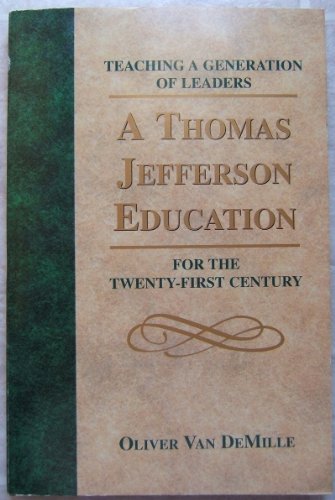
28. A Thomas Jefferson Education:
$9.78
29. Thomas Jefferson: Westward the
$6.65
30. Light and Liberty: Reflections
$4.49
31. Thomas Jefferson: (The American
$6.70
32. Thomas Jefferson: An Intimate
$10.22
33. Sally Hemings and Thomas Jefferson:
$7.69
34. The Declaration of Independence
 
$32.99
35. A Thomas Jefferson Education:
$6.65
36. Light and Liberty: Reflections
$6.96
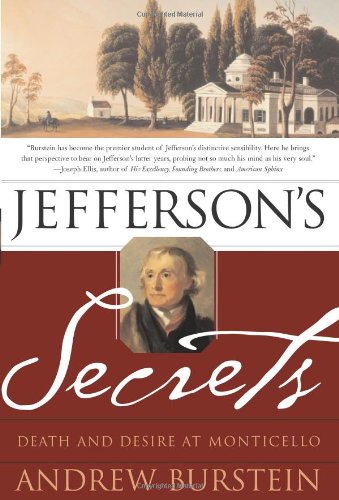
37. Jefferson's Secrets: Death And
$36.11
38. The Writings Of Thomas Jefferson
$8.95
39. The Essential Jefferson
$12.93
40. Thomas Jefferson Still Survives:

21. The Garden and Farm Books of Thomas Jefferson
by Thomas Jefferson
Hardcover: 540 Pages (1987-09)
list price: US$20.00 -- used & new: US$12.50
(price subject to change: see help)
Asin: 1555910130
Average Customer Review: 5.0 out of 5 stars
Canada | United Kingdom | Germany | France | Japan

Customer Reviews (2)

5-0 out of 5 stars If There Were a Ten Star Rating......
If there were a ten star rating, I would give it to this book! If only all of our Presidents were so committed to the values of home and garden.

This is a wonderful book, both for Jefferson fans and gardeners.Since I'm both, it is doubly wonderful.You can read Jefferson's records of what he planted when, his observations about all sorts of garden topics, his letters to friends and family about gardening, and see the voluminous records he kept about all things horticultural.

5-0 out of 5 stars Forget About Other Organic Gardening Books!
Forget About Other Organic Gardening Books!This collection of books and writings by Thomas Jefferson includes decades of his farm records and gardening notes from back when they didn't even have chemical fertilizers, herbiscides, and insecticides yet.He experimented with a huge variety of fruits, vegetables, and fiber plants (including hemp) that he imported from all over the world.He also kept complete ledgers of his slaves, chronicling their births and deaths.He kept records of their production and consumption of linen, wool, blankets, clothing, etcetera.This book is a gold mine of history, gardening tips, livestock records, diary tidbits, photos, diagrams and more. ... Read more


22. Real Thomas Jefferson (Volume 1 of the American classic series)
by Andrew M. Allison
 Hardcover: 709 Pages (1983-09)
list price: US$17.95
Isbn: 0880800054
Average Customer Review: 4.0 out of 5 stars
Canada | United Kingdom | Germany | France | Japan

Customer Reviews (6)

5-0 out of 5 stars Accurate and easy to read
I purchased this book probably 18 years ago. After reading it, I looked to buy several more copies to give as gifts. But, I couldn't find anymore. So, I called The Center For Constitutional Studies for their help. I told the person who answered the phone what I was looking for and why. I told this guy that I loved the book and how well I thought it was written. He said, "Thank you". You see, the guy who answered the phone was Andrew Allison, the author of The Real Thomas Jefferson.
I think you will really enjoy this book.

2-0 out of 5 stars 80 plus years of life in a short story
A very well written, factuol book. But squeezes years of life into 4-5 large print pages. Not a book to be read if your looking for details about his life or service to the country. No need to have a 325 page glossary, should have been more information about TJ.

3-0 out of 5 stars Truly the
Andrew Allison'a "The Real Thomas Jefferson" is truly a treasure.
Starting out with a really informative and well written short biography, and then going into an alphabetical section of Jefferson's views according to his actual quotes really makes this book shine. Jefferson is shown in his true glory as a champion of the common man, and a defender of liberty and freedom. It is also an excellent biography of his sterling character refuting the lies and propaganda about the alleged Hemings affair. A revolutionary, politician, architect, scientist this was Jefferson, an "American Da Vinci" so to speak. Particularly informative is the section showing his lifelong support for public education, and religious freedom. A great buy.

5-0 out of 5 stars THE BEST BIOGRAPHY I'VE SEEN ABOUT THOMAS JEFFERSON---
---In ONE volume!!

What is so good is that Andrew Allison completely documents his history so that you get a really clear view of Thomas Jefferson.I also appreciate the fact that the author doesn't pander to the sleaze that so many authors resort to in order to makea few extra sales.In fact he shows why the recent smear tactics on Jefferson are fraudulent.

THREE CHEERS FOR ANDREW ALLISON FOR HIS COURAGE TO TELL THE TRUTH ABOUT JEFFERSON!!!

The last 330 pages of text contain quotations from Thomas Jefferson himself on many different subjects.Each of these quotations is placed alphabetically according to the subject that it deals with.This way a reader can use this book as a reference to look up what Thomas Jefferson believed on any particular issue.This last section of the book was prepared by Cleon Skousen, Richard Maxfield and Delynn Cook, and is, by itself, worth the price of the book.

--George Stancliffe

5-0 out of 5 stars Get to know the REAL Jefferson
This book is well written and easy to read.I've developed a great love and respect for Thomas Jefferson after reading this book.He was a man of character and a man of vision.This book has helped me understand thetruth... Jefferson did not have sexual relations with Sally Hemings.Andhe is not the father of her children.That lie was made up by an angryrelative.

Read this book and get to know the REAL man! ... Read more


23. Thomas Jefferson and the New Nation: A Biography (Galaxy Books)
by Merrill D. Peterson
Paperback: 1104 Pages (1986-09-11)
list price: US$49.50 -- used & new: US$30.48
(price subject to change: see help)
Asin: 0195019091
Average Customer Review: 4.0 out of 5 stars
Canada | United Kingdom | Germany | France | Japan
Editorial Review

Book Description
The definitive life of Jefferson in one volume, this biography relates Jefferson's private life and thought to his prominent public position and reveals the rich complexity of his development.As Peterson explores the dominant themes guiding Jefferson's career--democracy, nationality, and enlightenment--and Jefferson's powerful role in shaping America, he simultaneously tells the story of nation coming into being. ... Read more

Customer Reviews (5)

2-0 out of 5 stars The Greatest President Since Sliced Bread
I'll start with what I liked about this book. The coverage of the Louisiana Purchase was exciting. Jefferson's ill-fated embargo in 1807 was really well done. The descriptions all throughout the book of Jefferson's underlying politics were enlightening. I certainly understood why Jefferson did what he did.

But if this was the only book you read about the American revolution and its aftermath, you'd think that the word "Federalist" was an obscenity. The book was so over-the-top pro-Jefferson, that it made me doubt the author's perspective on everything. So having trudged through all 1000 pages, I still have no idea what the great things were that TJ did, because according to Peterson, everything was great.

The book should have been 300 or 400 pages shorter. Every event in Jefferson's life is covered thoroughly, but each one goes on a little too long. Actually, if the author had simply taken out the paragraph or two in each section where he blames Hamilton for whatever just happened, I think he would have gotten it down a couple hundred pages on that alone.

4-0 out of 5 stars A very thorough view of a complex man
Over the last several years I've read about 40 presidential biographies, usually relying on Amazon reviewers to point me towards the best and most comprehensive works.I struggled in my choice of a Jefferson biography, but I'm glad I opted for Peterson's work.First, it is a massive 1,000 pages, and it`s not for the faint of heart. While Peterson writes well, he certainly doesn't have the breezy style of a David McCullough or a Robert Dallek. Even hardy readers will feel a bit spent with the complex content from time to time, and I'd doubt most high school readers' ability to wade through the material.

Despite these cautions, I give Peterson's book a very high rating. Peterson captured Jefferson's personality, accomplishments, and flaws.With as complex a guy as TJ, this is not easy. Peterson also describes the conflicts between Jefferson and the various Federalists as well as anyone I've read thus far.Jefferson saw this conflict as more treacherous for the US than the Revolutionary War (and his concerns are highly relevant is viewing today's politics).

The emphasis is on Jefferson and his public life, and to a somewhat lesser extent on Jefferson's private self.It was written many years prior to the DNA testing of Sally Hemmings' heirs, and while Petersonbriefly discusses the accusations of a Jefferson - Hemmings relationship, he dismisses it in favor of another Jefferson relative.But Peterson does not overlook Jefferson's conflicts about slavery, manumission, liberty, etc.As with other aspects of Jefferson's life, Peterson presents a comprehensive view and he is willing to point out Jefferson's mistakes. Does Peterson's probable error regarding the Hemming's controversy diminish this biography? Well, maybe, but with a man like Jefferson, this is but one facet of a very thorough and well-reasoned look at a extremely complex man who played a major role in several of the US's most challenging eras.

5-0 out of 5 stars Holds Up Well

The other reviews here go into some depth on the book, but mine rather is more in the form of a personal testament. There is so much to Jefferson's life, as with our other founding 'fathers' that I will not do him the injustice of trying to sum it up in only a few paragraphs.

When this book came out in 1970 I was in college, I'm now 61 years of age. Gives some indication how long this book has been continuously in print. With good reason for this is probably the best single volume on Jefferson's life ever printed.

When I was at Monticello last year I noticed several books on or about Jeffersonin the Mountaintop Shop and Monticello Museum, but prominently displayed too was this volume. Whenever I go to Borders bookstores this volume is on their shelves. It continues to be ubiquitous after almost 35 years.

This book is and has been an essential in my library, along side the Dumas Malone study, as well nigh on to 20 other volumes on Jefferson or his times. Though the subject matter in books on Thomas Jefferson is varied and extensive, this one volume study is an essential one for me.

I recommend it to both the novice or the seasoned Jefferson reader, neither will be disappointed.

Semper Fi.

5-0 out of 5 stars Exceptional. Probably the Best One-Volume Book on Jefferson
This classic is probably the best one-volume history of Thomas Jefferson ever written. Pulitzer Prize-winning historian Gordon Wood called this book "the most comprehensive and balanced single-volumed study of Jefferson ever written." I found the writing to very detailed and to the caliber of a reference work, but probably too lengthy and meticulous for the casual reader. I believe it to be the most authoritative book on Thomas Jefferson.

I rate it a collectors item. Indeed, 18 years after it was originally published in 1970, a special collector's edition was issued bound in leather, gilded in gold, and stamped with the presidential seal. It's a classic.

What distinguishes this book is that 1) Peterson the Jefferson scholar has an unrivaled understanding of Jefferson 2) Peterson explains Jefferson's thinking especially well 3) Peterson is balanced as he covers Jefferson's life in sprawling detail, though 3) Peterson's emphasis leans more towards Jefferson's role in American history, hence the title. This thick book is about as thorough as you can get in one volume, with a few quibbles.

The sections in this book about Jefferson's formative years in Virginia are especially interesting. Then he was a young man seeking enlightenment, as well as a lawyer and planter. Peterson especially understands Jefferson the thinker.

What is liberty? What makes an aristocrat become a revolutionary? How did Jefferson come to believe that "all men are created equal" and "the unalienable Rights to Life, Liberty and the Pursuit of Happiness?" How did Jefferson's experiences later influence the shape of the new American government and what it means to be America?

Jefferson was a young American aristocrat, a lover of books, a musician (the fiddle), a thinker, a farmer, a lawyer, an architect, and a scientist. He designed and built the splendid Monticello. His wife died young and it totally devastated him. He vowed to her that he would never remarry, which he never did.

Jefferson achieved the Virginia Statute for Religious Freedom, which guaranteed religious liberty. He passionately valued reason and truth, and therefore he hated the corruption of power that plagued the old world. Jefferson's view of the American revolution is relevant for the ages.

Jefferson became governor of Virginia, advocated (but failed to achieve) public access to education (no surprise that he would champion education), drafted the Declaration of Independence, and then kept a low profile during the Revolutionary War.

Jefferson argued strongly in favor of a Bill of Rights, which Alexander Hamilton strongly opposed, at a time when it seemed like there would be no Bill of Rights. The Bill of Rights is based much on Jefferson's ideals. Read the Bill of Rights and you see Jefferson: Freedom of speech. Freedom of press. Freedom of religion. Freedom of speech. Jefferson also inadvertently argued for judicial review.

He became a diplomat to France and later favored the French in foreign policy. He helped the French write the Declaration of the Rights of Man. He was a celebrity in France.

George Washington appointed Jefferson the first ever Secretary of State - the most important executive position other than president. Quite a resume already!

At this time his Republicanism (not to be confused with the Republican party although not entirely different) came into conflict with those of Federalist Alexander Hamilton. Jefferson then became vice president under president John Adame, his former close friend but by now an adversary, due to a quirk in early election laws (later changed). He quit because he disagreed with the Federalists.

The story of Jefferson's first presidential election is quite fascinating.

The election campaign against his former close friend John Adams was very nasty. In a real shocker, the election ended in a tie! Jefferson's sleazy vice presidential running mate almost stabbed Jefferson in the back by vying for the presidency himself as an alternative. In the end, Jefferson agreed to keep some Federalist policies in place, and the electors made him president.

Jefferson inauguration speech to reach out to his opponents and unite America was deeply moving. (Well, the words of the speech were moving. Jefferson was a terrible speaker. At first he seemed to bomb, but once the speech was circulated in writing, it was quite historic).

As president he orchestrated the Louisiana Purchase and then launched the fascinating Lewis and Clark Expedition. Although issues such as westward expansion will always be open to some interpretation, Jefferson's first term was a triumph.

He was a superb head of state, but Jefferson worked especially hard to advance his cause of individual liberty, because of his enlightened ideas and his earlier experiences with corrupted power in the old world. His presidency caused a second revolution of Jeffesonian ideals. He also strengthened the presidency and power of the federal government, contradicting his own written views against that.

Jefferson made some mistakes in his second term as president, such as a foolish embargo. The details are all here.

After being president, Jefferson founded the University of Virginia and even designed the neo-classical campus buildings. By then the rival Federalist party had become extinct and there was briefly only one party - the party of Jefferson!

He renewed his friendship with Adams late in life. They wrote frequently to each other (Jefferson wrote thousands of letters in his lifetime) and they both died on July 4.

Jefferson was an egalitarian aristocrat of reason, liberty, ideas, and achievement. His experiences and ideas led to his becoming a revolutionary. Jefferson profoundly shaped America.

5-0 out of 5 stars Definitely worth reading, very readable
For people who have recently become interested in the Founding Fathers and are interested in Thomas Jefferson, this is the book to read.I had just read Chernow's Hamilton and Ellis' Sphinx and several other recently written books on the Founding Fathers, and almost all of them had bad things to say about Jefferson.So much so that I really began to wonder how it came to be that Jefferson had gained such a great reputation.Why is his name revered???

Finally, I found a book that unabashedly took Jefferson's point of view on every single issue, which was refreshing.It balanced the lopsided information I had been receiving, though, knowing what I knew, I could also see where Peterson was possibly stretching things, such as portraying Jefferson as anti-slavery....Though at least I heard the rebuttal to Jefferson's pro-slavery leanings.Jefferson clearly couldn't have made the USA all by himself, as Hamilton could have, but Jefferson was clearly an important part of the picture.

One reservation I had going into the book is that the Jefferson papers were really just in the middle of being editted at Princeton University when the book was written in 1970.I was concerned that this edition may be lacking important information.It may have, but for an enthusiast like myself, the knowledge available in 1970, when the book was written, by the Thomas Jefferson Foundation Professor at the University of Virginia, was good enough.

The book,in short, is still considered the gold-standard biography of Jefferson, in addition to the six volume Dumas Malone work, which is simply too long.The book is very easy to read.The most interesting sections were on Jefferson's time in the Virginia legislature and as Governor of Virginia during the Revolutionary War, the leadup negotiation to and effects of the Louisiana Purchase, and the Burr conspiracy, in which the former Vice President to Jefferson tried to head up a break-away republic in the newly-purchased Louisiana purchase territory with him at the head.

The book is definitely long, just a few pages of text over 1000 pages, the longest book I had ever read, but the material is great.There's tons of quotes and source material written in the book, as one would expect from an author who had dedicated his entire life to Jefferson.There's an earlier book by Peterson, "The Image of Jefferson" which actually answers the question of how Jefferson has been portrayed throughout our history, which sounds fascinating.Jefferson's image is tarnished right now, but in prior eras, he was looked up to as a beacon of hope.I plan to read that one at some point, but, after 1000 pages of stright TJ, I need a break.

Just one other note, the second section "Philosopher of the Revolution", should really by re-read after you finish the book.You'll understand what Peterson is talking about better.You'll enjoy the book, all 1000 pages of it! ... Read more


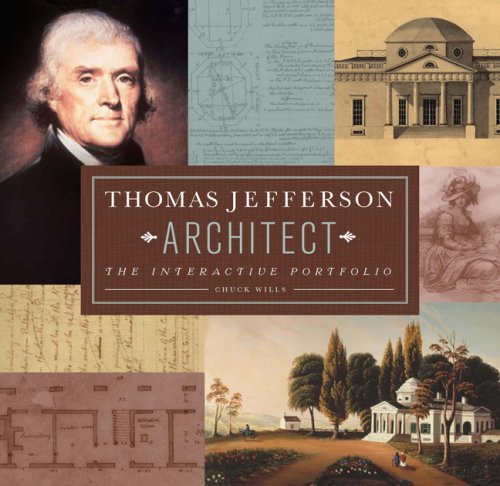
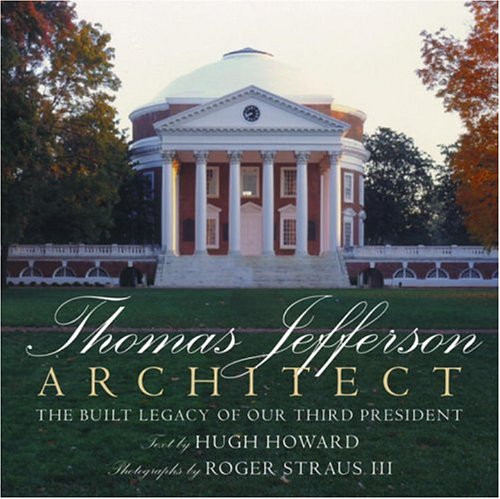
24. Thomas Jefferson: The Built Legacy of Our Third President
by Hugh Howard
Hardcover: 204 Pages (2003-08-23)
list price: US$40.00 -- used & new: US$18.99
(price subject to change: see help)
Asin: 0847825469
Average Customer Review: 4.5 out of 5 stars
Canada | United Kingdom | Germany | France | Japan
Editorial Review

Amazon.com
Thomas Jefferson, Architect: The Built Legacy of Our Third President, with text by Hugh Howard and photos by Roger Straus III, shows that the third U.S. President not only shaped democracy but also made the classical style of architecture an American architecture. Today, more than any other style, the columns and rotundas of classical Greece and Rome suggest "U.S. government building." Jefferson was a Renaissance man--inventor, politician, philosopher, scientist, doctor--but the dwellings and civic temples he designed are the only tangible legacy of his most Americans actually see every day. Arguably the crown jewel of Jefferson's architectural oeuvre, his Monticello mansion in Virginia receives a worthy 33 pages, with plenty of interior and exterior photographs. The Virginia Capitol also gets a chapter, as does his other home, Poplar Forest, along with other private dwellings Jefferson designed. Also in focus are public buildings such as the University of Virginia in Charlottesville, with its Rotunda at the head of a great lawn flanked by the copious colonnades-a design familiar now in campuses nationwide. Throughout the book, Howard guides us through the halls, sitting rooms, and grounds with writing that is knowledgeable but not overly technical. Straus' photos show off the estates and edifices in peaceable, natural light, illustrating some interiors as they would have been lit in Jefferson's day (i.e., by the sun). If not for Jefferson's vision, the book implies, our nation would look quite different today.-Eric ReyesBook Description

Thomas Jefferson, the third president of the United States, was also its first great architect. The Jeffersonian Classical style has been so influential that, along with Frank Lloyd Wright and Philip Johnson, Jefferson is one of the three most recognized architects in American history. Although never formally trained as an architect, Jefferson intensively studied the architecture of Paris when he resided there as minister to France and read extensively on classical architecture, particularly Palladio's Four Books on Architecture, all of which gave him a firm footing in the classical tradition.

Monticello, his own home, was constantly redesigned by Jefferson during his life time, and he referred to it as his essay in architecture. The University of Virginia, which he founded and conceived the architecture for, is perhaps the greatest campus of any American university and certainly one of this country's greatest public spaces anywhere. Both of these are well served by the beautiful panoramic photographs in this volume, which show them in the landscape they are situated in, an integral part of Jefferson's design. Less well known, but included here, is the balance of Jefferson's work as an architect: the Virginia State Capitol and over a dozen private homes which still stand today. Illustrated with splendid color photography by the same author-photographer team that created Rizzoli's Wright for Wright, this is the first volume to combine all the extant work of Jefferson.
... Read more

Customer Reviews (2)

4-0 out of 5 stars JEFFERSON
Thomas Jefferson was an amazing man, granted, because of his inherited wealth and his slaves doing all the work on his plantation he had all the time in the world..to the manor born so to speak, but still, this man was special.I love Georgian architecture and Jefferson was an amazing interpreter of the style.This book really captures his work, the images are very good and the text highly informative.Eventhough, Monticello is his most famous work, its the UVA campus that I love, it's just perfect.To me that was the apex of his work.Overall, nice book on the architecture of the iconic Jefferson.

5-0 out of 5 stars Simply splendid
I live in Virginia, and have relative easy access to many of Jefferson's architectural accomplishments. I've enjoyed many, many good books about the man and his brilliance with buildings. Both of these things said, Mr. Howard's thoughtful, engagingtext coupled with the truly breathtaking photography by Mr. Straus make this work a must-have treasure for anyone with more than a passing interest in Jefferson the architect. Icannot convey in words how Mr. Straus's skill with his many cameras give the viewer such a sense of immediacy about the buildings shown in this work. I've been on the grounds of several of Mr. Jefferson's buildings shown in this book - and photographer Straus's pictures truly give the viewer a sense of simply standing there on the grounds, seeing it all, "live and in person". As for the writing, it is all too common that sometimes a grand picture book has terribly dry and uninviting writing. Not so with this book. The writer has a highly engaging style that is yet not too obvious in its inviting charm, and, well, had me up reading the text this morning around 3. Three a.m. The writing is that good - and could stand alone even without those incredible pictures.
The book also does a beautiful brief salute to the remarkable Fiske Kimball, who published a book in the early 1900s by the same name. The work was a landmark compilation of Jefferson's architectural drawings.Those readers familiar with Kimball's life accomplishments will appreciate the fresh photographs of his private home Shack Mountain and its many grace notes to Jefferson's influence.
I had one small disappointment with the book but it is more puzzling than a showstopper: the pictures of "Bremo" , a property here in Virginia reputed to be more Jefferson than Jefferson himself in architectural style, just shows pictures from a historical archive. I wish Mr. Straus could have gained access to the property to show us all Bremo today as he does so remarkably with the other buildings. The other small regret is that I did not buy my copy of this marvelous book from Amazon. I paid full price at a local Roanoke bookshop - no regrets in supporting an excellent local business but the book's full price at first glance is steep. But you will quickly notice the book's very fine paper, binding and those other finishing touches that are hallmarks of truly beautiful books.
A treasure of a book. Especially if you love Jefferson's touch with architecture. ... Read more


25. The Adams-Jefferson Letters: The Complete Correspondence Between Thomas Jefferson and Abigail and John Adams
by John Adams
Paperback: 690 Pages (1988-09-30)
list price: US$25.95 -- used & new: US$17.29
(price subject to change: see help)
Asin: 0807842303
Average Customer Review: 5.0 out of 5 stars
Canada | United Kingdom | Germany | France | Japan
Editorial Review

Book Description
An intellectual dialogue of the highest plane achieved in America, the correspondence between John Adams and Thomas Jefferson spanned half a century and embraced government, philosophy, religion, quotidiana, and family griefs and joys. First meeting as delegates to the Continental Congress in 1775, they initiated correspondence in 1777, negotiated jointly as ministers in Europe in the 1780s, and served the early Republic—each, ultimately, in its highest office. At Jefferson's defeat of Adams for the presidency in 1800, they became estranged, and the correspondence lapses from 1801 to 1812, then is renewed until the death of both in 1826, fifty years to the day after the Declaration of Independence.

Lester J. Cappon's edition, first published in 1959 in two volumes, provides the complete correspondence between these two men and includes the correspondence between Abigail Adams and Jefferson. Many of these letters have been published in no other modern edition, nor does any other edition devote itself exclusively to the exchange between Jefferson and the Adamses. Introduction, headnotes, and footnotes inform the reader without interrupting the speakers. This reissue of The Adams-Jefferson Letters in a one-volume unabridged edition brings to a broader audience one of the monuments of American scholarship and, to quote C. Vann Woodward, 'a major treasure of national literature.' ... Read more

Customer Reviews (17)

5-0 out of 5 stars Not a book about History, this IS History
Have you ever wanted to be a fly on the wall and to be able to share in the thoughts and happenings of important places and people?Well, if your desires in that regard include the office of the Presidency of the United States and the early days following the American Revolution, that is exactly what this book provides.

As was typical of statesmen of that day, Thomas Jefferson and John Adams maintained a lengthy personal and professional correspondance the subjects of which were both mundane and highly intellectual.This book takes that correspondance, chronologically arranges it and then groups it according the characteristics of the time and the themes of their correspondance.As an additional bonus, John's wife Abigail Adams is included as well.

My attraction to this volume was to seek clarity and focus on several questions that are quite relevant to today.What was meant and intended by the concept of Separation of Church and State and what was the philisophic and religious thinking of there two important figures?There's no shortage of resources out there to tell you what these men thought, the context of their society and usually as an added bonus how these matters in one way or another support the agenda or perspective of the one putting the source together.

At some point however, if you really want to grapple with these issues or just understand the times and importance of these two men, there is no substitute for simply reading and allowing them to speak for themselves.

The added benefit of reading it through in its entirity is that you are not subjected to the judgement of another as to what is significant, what isn't and you aren't relying upon snippets and quotes that may or may not be in context and may or may not be representative of all that either man had to say upon a certain matter.

Certainly, this is just a small cross-section of all that these two men wrote and by itself there is much more that should be added.However, more than any other correspondance preserved from that day that these men engaged in, this was an exchange between men who considered the other his equal and for whom, with exceptions in time periods that are noted, mutual respect and a desire to explain themselves to one another motivated a candor and depth of intimacy that is difficult to find in other sectors.

Certainly, any student of American History needs this resource as a reference and as such it affords a ready means to add information and topically flip through the pages to see what each man had to say on a particular subject.

Every such student though, in my opinion, owes it to themselves, at least once, to just sit down and read the entire volume.Do this, and you'll have a handle upon the style of communication of the day, a feeling for many of the issues of the day and how they were viewed by the participants who did not have the advantage of knowing at the time how something would resolve.Idiosyncrasies in language and social custom will become more self-evident and the chances of being mislead by a quote isolated from its context will diminish considerably.

In short, for anyone who loves History, this is an experience not to be missed.

The footnotes and introductory passages to the different sections in my opinion do a remarkably good job of providing the reader with just enough context and outside information so that the letters themselves make sense and are not misunderstood.The reader is not told what to think about the letters per se, but rather equipped to make a better informed evaluation and come to their own conclusions.Those elements make the book valuable as well.

5 stars if ever there was a book worthy of 5 stars; again, this IS history.

Bart Breen

5-0 out of 5 stars Meet John Adams and Thomas Jefferson
Out second and third presidents began their political career as friends, fell out, and then fortunately became friends again.In this wonderful collection of personal letters we see not only the men but the times until their deaths July 4, 1826.One of our most beloved presidents and most mis-understood are brought into reality by this collection.They were after all both remarkable men and human beings.

5-0 out of 5 stars Throw Away the Text Books
Throw Away the texbooks. As others have said this is our Real History and Heritage. There is more to be found here on Ethics and Intergrity than in any of the pogressively vaporous decriptions of these men and their times. Imagine the chief architects of the Great Experiment in Representstve Democracy. Adversaries at the Constitutional Congress; ememies over the the transition from Adam's Presidency to Jefferson's. And then THESE! Conciliation and repect and eventually true affection - The founding fathers in thier own words - asessing what they had wrought - the good, the bad, the ugly - all passsed through that wondeful 18-19th Century Prose. Throw away the text books. Integrity was the founding principle of Taoism; Ethics the founding princple of Socratic/Platonic discouse. Adams and Jefferson knew this. Many Americans are waking up astounded by the lack of these two foundational elements in our modern system of governance. There is more to be learn of governance,literature and critical thinking on any page than there is in an entire high-school(and most college) curricula. Jefferson and Adams are stirring, stirring - and this can only be a Good Thing.

4-0 out of 5 stars Just what I was hoping for
This collection of historic dialogue is just what I was looking for.The simply and powerfully reprints the letters between Adams, the older more conservative thought leader for a nation, and Jefferson, the quiet country Gentleman who gave voice to that nation.This chronilogical collection of letters bring to life the common bond that brought together and then sustained these two giants; the love of well formed thoughts and learning.The addition of the Abigal to Jefferson letters adds a deeply spiritual and personal tough.A great tool for understanding the thoughts and arguments behind the norming and forming of the United States.

4-0 out of 5 stars Not just for historians
I have a hard time reading straightforward history. Usually, I would rather read fictionalized or storified versions of history.This is my first effort at reading original sources like letters of historical figures.So it was with real trepidation that I started reading.

It has been so worth it!The words and ideas of these two great men (and one great woman) are really interesting. The ideas that they discussed and fought over resonate into today's political discussions.What makes it all so much more interesting is the falling out that they had and the eventual reconcilliation.

Still, if you are like me, there are times when you may want to skim just a little.There is only so much reading about the commerce of the New England Whale Oil that I can take.Ride through it though...the good sections are very good and sometimes mixed into the dull sections. ... Read more


26. Twilight at Monticello: The Final Years of Thomas Jefferson
by Alan Pell Crawford
Hardcover: 352 Pages (2008-01-08)
list price: US$27.00 -- used & new: US$16.09
(price subject to change: see help)
Asin: 1400060796
Average Customer Review: 4.5 out of 5 stars
Canada | United Kingdom | Germany | France | Japan
Editorial Review

Book Description
Much has been written about Thomas Jefferson, with good reason: His life was a great American drama–one of the greatest–played out in compelling acts. He was the architect of our democracy, a visionary chief executive who expanded this nation’s physical boundaries to unimagined lengths. But Twilight at Monticello is something entirely new: an unprecedented and engrossing personal look at the intimate Jefferson in his final years that will change the way readers think about this true American icon. It was during these years–from his return to Monticello in 1809 after two terms as president until his death in 1826–that Jefferson’s idealism would be most severely, and heartbreakingly, tested.

Based on new research and documents culled from the Library of Congress, the Virginia Historical Society, and other special collections, including hitherto unexamined letters from family, friends, and Monticello neighbors, Alan Pell Crawford paints an authoritative and deeply moving portrait of Thomas Jefferson as private citizen–the first original depiction of the man in more than a generation.

Here, told with grace and masterly detail, is Jefferson with his family at Monticello, dealing with illness and the indignities wrought by early-nineteenth-century medicine; coping with massive debt and the immense costs associated with running a grand residence; navigating public disputes and mediating family squabbles; receiving dignitaries and corresponding
with close friends, including John Adams, the Marquis de Lafayette, and other heroes from the Revolution. Enmeshed as he was in these affairs during his final years, Jefferson was still a viable political force, advising his son-in-law Thomas Randolph during his terms as Virginia governor, helping the administration of his good friend President James Madison during the “internal improvements” controversy, and establishing the first wholly secular American institution of higher learning, the University of Virginia at Charlottesville. We also see Jefferson’s views on slavery evolve, along with his awareness of the costs to civil harmony exacted by the Founding Fathers’ failure to effectively reconcile slaveholding within a republic dedicated to liberty.

Right up until his death on the fiftieth anniversary of America’s founding, Thomas Jefferson remained an indispensable man, albeit a supremely human one. And it is precisely that figure Alan Pell Crawford introduces to us in the revelatory Twilight at Monticello. ... Read more

Customer Reviews (8)

5-0 out of 5 stars The "real" Thomas Jefferson
Twilight at Monticello is a wonderful read.A rare book that really "humanizes" Jefferson with frailties and day-to-day trials and tribulations that would be common in almost any age.Mr. Crawford paints a very sympathetic picture of Jefferson that many of us can relate to.

4-0 out of 5 stars The Real Jefferson
Twilight at Monticello: The Final Years of Thomas Jefferson is a first-class biography of a man it is possible to admire but harder to like.Crawford's achievement is the admirable clarity with which he guides the reader through the political, personal, and spiritual labyrinth of Thomas Jefferson.I finished the book without finding a dull page!Too often, historians get so caught up in the factual hodge-podge of their subject that they unknowingly drown the reader who is simply looking for new information or at lease a new perspective on an old topic or person.As a seasoned history teacher, I plan to use this book in my classes, including my philosophy class.I am sharing this work with all the teachers in the history department and have already put in a request to give this book a permanent home in the school library.A job well done!

Randall Hubbard
Springville High School
Springville Alabama

4-0 out of 5 stars The Complex Mr. Jefferson
Twilight At Monticello is an intelligent, well-written, well-researched book that is certainly well worth reading.It examines Thomas Jefferson's last years, from the time he left the Presidency in 1809, until his death in 1826.
Jefferson remains a complex and often contradictory character.He professed to hate slavery, yet he kept slaves throughout his life and freed a mere handful in his will.It's pretty certain he had children with a slave named Sally Hemings.Sally was forty years Jefferson's junior, and she may have been the half-sister of Jefferson's deceased wife.Crawford's book includes an excellent chapter on this relationship.
Jefferson was also irresponsible in his spending habits, and left a debt so huge at his death that Monticello and its lands and slaves had to be sold to help pay it off.Crawford offers an insightful examination on this aspect of Jefferson's character.
On a couple of issues, however, Mr. Crawford comes up short.In discussing the Presidential election of 1800, Crawford admits that Jefferson "discreetly approved . . . attacks on . . . Adams"(p.30).But Crawford downplays Jefferson's backstabbing of his old friend John Adams.Both parties ran nasty campaigns, but Jefferson personally hired a newspaperman, the notorious James Callender, to write lies about his friend.Adams never stooped to such depths.But Jefferson could be two-faced, a fact that George Washington learned over time.John Adams learned it too.This is an important trait of Jefferson's and it deserves more attention than Crawford gives it.
Concerning this same election, Crawford writes, "Jefferson proved immensely more popular than Adams . . . "(p.83).The truth is, were it not for the Three-fifths Compromise, which gave the South additional electors because of their slave population, John Adams would have won the Election of 1800, a point Crawford certainly should have noted.
The Louisiana Purchase and the subsequent Lewis and Clark Expedition were certainly the highlights of Jefferson's presidency, and Crawford appropriately devotes some ink to both.But he makes no mention of Jefferson's lost opportunity to eliminate slavery from Louisiana, which Jefferson could have done.Historian Joseph J. Ellis calls this Jefferson's "greatest failing."
There are also a number of mistakes in Crawford's book.Writing about the autumn of 1819, Crawford says, "Twenty years earlier, when Jefferson first became active in the American Philosophical Society, his circle included such first-rate minds as Benjamin Franklin . . ."(p. 182).But twenty years before 1819 -- in 1799 -- Franklin had already been dead for nine years.
Another sentence from Crawford reads, "Perhaps a February 17, 1825 letter to James Madison, written six months before Jefferson's death . . ."(p.196).In this case, Crawford has Jefferson dying in August of 1825, not in July of 1826, which is when Jefferson actually departed this life.
John Adams, of course, died the same day as Jefferson, on July 4, 1826, as Crawford writes, "at ninety-one" (p.141).Adams, born in October, 1735, was ninety at his death, more than three months shy of ninety-one.
These are, perhaps, trivial mistakes, but Crawford is the author and therefore the expert.He should get his facts straight.
Despite these shortcomings, Twilight At Monticello is a worthwhile read.It will introduce some to the complex Mr. Jefferson.To those already familiar with Jefferson's inconsistent character, it will add to your frustration.

4-0 out of 5 stars Enjoyable
I was surprised how well done this book is.It will appeal to the general reader due to its prose, but I think students and scholars will also get a lot out of the info, interp's etc.

5-0 out of 5 stars The End Times of Jefferson
Filled with excellent detail. Highly recommended and excellent read.

Author of: "Mr. NewHeart - Heart Attack to Transplant and Beyond" ... Read more


27. The Political Philosophy of Thomas Jefferson
by Garrett Ward Sheldon
Paperback: 184 Pages (1993-08-01)
list price: US$25.00 -- used & new: US$25.00
(price subject to change: see help)
Asin: 0801847141
Average Customer Review: 4.5 out of 5 stars
Canada | United Kingdom | Germany | France | Japan

Customer Reviews (2)

5-0 out of 5 stars Dr. Sheldon's Genius
I have had Dr. Sheldon for several classes, and his books are amazing. He has written many works that any Political Science major would grow from reading. Dr. Sheldon has an amazing grasp of Thomas Jefferson and his Encyclopedia of Political Thought is the most complete volume I have ever seen.

4-0 out of 5 stars Good
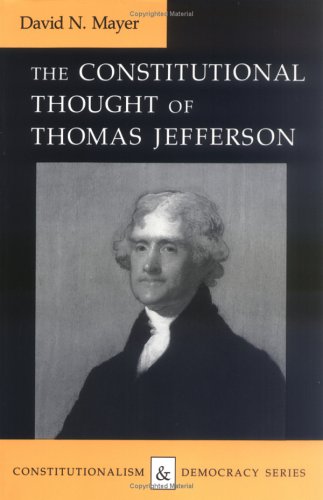
This work provides a good survey of Jefferson's political thought, as well as an excellent piece concerning the intellectual battle over the classical republican paradigm.This piece, by the way, is well worth the price ofthe book.Nevertheless, although this is a worthy work, it pales incomparison to David N. Mayer's "The Constitutional Thought of ThomasJefferson."If you are truly interested in Jefferson's politicalthought, Mayer's is the foremost work on the subject. ... Read more


28. A Thomas Jefferson Education: Teaching a Generation of Leaders for the Twenty-First Century
 Paperback: Pages (2000)
-- used & new: US$32.99
(price subject to change: see help)
Asin: 0967124611
Average Customer Review: 3.5 out of 5 stars
Canada | United Kingdom | Germany | France | Japan

Customer Reviews (10)

1-0 out of 5 stars "Thomas Jefferson" Education?
I recently read the book, "A Thomas Jefferson Education" as a requirement fora school class.I was disappointed with the way Dr. DeMille forces his views upon you and makes you seem like a "lower class" if you do not follow the guidelines set down in this book.He also treats it as a "second religion," making his points blunted by trying to force this "religion" upon you.
This feel passes on through the book to you. Many TJED followers discriminate you if you voice any feelings against Thomas Jefferson Education, insisting that you must not be educated enough.Sometimes, they become extremely hostile with you if you insist that you don't want to agree with TJED.
The book also uses pompous, highly ornate language to explain simple things."Colloquium" is a discussion, "Leadership education" is how leaders educations worked, though Dr. DeMille would have you believe that only a TJED is a "leadership education," and many, many more things complicated beyond belief!
This book is against today's public education, but that does not mean that it is correct.I also dislike public education, but feel TJED is too narrow-minded.
This book teaches you to be close-minded to everything but TJED.The smartest people I know dislike TJED, as it has a few sound ideas, while the rest being mainly half-baked ideas.
I was taught to be a TJEDer.
I went with it.
I didn't learn much, except for that I had to keep quiet, making sure not to say anything against TJED while TJEDers were around.
The message I derived from the book was, "You'd better get a Thomas Jefferson Education, and go to George Wythe college, or else you will not have a true education."
My message to you:
Do not send your children, or yourself, down a path that will make them(or you) feel superior to others while becoming ignorant to the fact that they themselves are the ones left behind in their education.

And if you do read this book, remember, take all information given you with a grain of salt.

3-0 out of 5 stars A Contradiction
I applaude the premise of the educational curriculum that Van DeMille outlines in his book: To teach in the way that the founding fathers were tought - through reading, writing about, and discussing the classics, as well as personal mentorship.But he seems to gloss over one very important aspect of Jefferson's education - the fact that he was given this education during the Age of Reason - and that he firmly believed in utilizing the principle of reason in decision making.

"Man once surrendering his reason, has no remaining guard against absurdities the most monstrous, and like a ship without rudder, is the sport of every wind. With such persons, gullibility, which they call faith, takes the helm from the hand of reason, and the mind becomes a wreck." --Thomas Jefferson, 1822

Sadly, Van DeMille's book does not follow in Jefferson's tradition.It is instead comes across as a manual of religious propaganda.For example:

pg 57-58
"Some of the most powerful discussions I've had with students at George Wythe College are about the book Lord of the Flies because everyone hates it.But there are some very powerful discussions that take place when you say 'Why do you hate it?''Because it leaves God out of everything.'He responds: 'Ok, that's a good reason.Does society ever make that same mistake?'"

Van DeMille is certainly no Thomas Jefferson.The book is therefore somewhat of a contradiction.Useful in its premise, but in opposition to Jefferson's own principles.

"Fix reason firmly in her seat, and call to her tribunal everyfact, every opinion.Question with boldness even the existenceof a God; because, if there is one, he must more approve of the homage of reason, than that of blindfolded fear." --Thomas Jefferson, 1787

5-0 out of 5 stars Beware of "reviews" in "not-so-well-informed clothing"
This book contains a powerful message that this current generation, as well as past generations, desperately need, a message which resonates in the hearts of the majority of people that read this book. Be careful of reviews that discredit Dr. Demille. Go to the George Wythe College website at www.gwc.edu and take a look for yourself what Thomas Jefferson Education has created and inspired. I personally have participated in 20 to 30 classes/seminars with Dr. Demille from The Federalist Papers to 20 volumes of Thomas Jefferson's Writings to speeches and biographies of President Reagan to Democracy in America to Math and Science classics, and each time I come a way wondering how one human being can know so much and inspire so much in me. Read the book and then look for any opportunity to hear Dr. Demille speak or teach you. It will change your life.

1-0 out of 5 stars Better homeschool guides are out there.
Having read numerous books on homeschooling ideas and techniques, I was not enthusiastic about this one.The concept of reading and discussing classic literature is not the problem with this book, rather it is Mr. DeMille's tone which is simplistic and vapid.At times it felt like one big advertisement for the college Mr. DeMille founded.Given the subject matter, I expected more substance and less fluff.

If you are serious about a good education for your children and want to use classic literature there are far more excellent books on the market with the same theme, such as, "The Well-Trained Mind," "A Charlotte Mason Companion," and "Recovering the Lost Tools of Learning."These books are more inspiring, convicting and contain better examples than "A TJ Education."

5-0 out of 5 stars Van Demille Nails What an Education Should Be
Van Demille argues that even though there are many quality teachers in the school system, the quality of educations has suffered from a reliance on curriculum, pedagogy, standardized tests, rote memorization, and a "conveyor belt" mentality that has lowered expectations to an unacceptable level.As a College Professor, I require my students to read this book.They need to step out of their perception that the institution or instructor is responsible for their education and realize that the responsibility lies with them.Parents should also understand this principal and not blame the school or teacher for their child's poor performance.In my Critical Thinking and Reasoning courses, the student's reflection essays enthusiastically endorse the concepts described by the author as they come realize why they struggle with college level requirements.I endorse the concepts of Van Dmille's thesis to anyone interested in why some individuals rise to leadership positions while others do not. ... Read more


29. Thomas Jefferson: Westward the Course of Empire (Biographies in American Foreign Policy)
by Lawrence S. Kaplan
Paperback: 198 Pages (1998-11-28)
list price: US$21.95 -- used & new: US$9.78
(price subject to change: see help)
Asin: 0842026304
Average Customer Review: 3.0 out of 5 stars
Canada | United Kingdom | Germany | France | Japan
Editorial Review

Book Description
This biography of one of America's greatest political figures focuses on Thomas Jefferson's role as a maker of foreign policy. Although he was not the sole formulator of American diplomacy, Jefferson's voice was the most pervasive in the first generation of the republic's history. This text explores how the concept of the United States' westward expansion worked as the moving force in forming Jefferson's judgments and actions in foreign relations. Although much has been written about Jefferson, this volume is one of the few that explores the full range of his positions on foreign relations. Readable and authoritative, Thomas Jefferson: Westward the Course of Empire offers new insight into the man who shaped American foreign policy.

... Read more

Customer Reviews (2)

3-0 out of 5 stars The foreign policy of Thomas Jefferson.
Kaplan debunks the theory that Jefferson was an idealist in foreign affairs.Jefferson was pragmatic on what he wanted.He was for the United States, and thus made alliances based on what was best for our country.Even though he thought the French Revolution was justified, his reason for supporting the French was as a counterweight to Great Britain.Jefferson may have been accused of some silly things such as the embargo and trying to cozy up to Great Britain at the last minute, but his actions were that of a nationlist, and not an idealist.

The language in this book is a little stilted.In some places, it is hard to read.However, this book gives a good summary of Jefferson's foreign policy.

3-0 out of 5 stars Nice little book on TJ's foreign policy views(pro Jefferson)
Kaplan clearly likes Jefferson. His recounting of Jefferson's foreign policy tend to give Jefferson the benefit of the doubt. This book is very informational and fairly short at around 200 pages. I harbor manyJeffersonian ideological thoughts, however, I'd have preferred Kaplan to bea bit more critical of some of Jefferson's actions. Even so, the book stillstands out as a good survey of Jefferson's foreign policy. 3 stars for agood book- but not exceptional. ... Read more


30. Light and Liberty: Reflections on the Pursuit of Happiness (Modern Library Classics)
by Thomas Jefferson
Paperback: 176 Pages (2005-06-14)
list price: US$11.95 -- used & new: US$6.65
(price subject to change: see help)
Asin: 0812974328
Average Customer Review: 5.0 out of 5 stars
Canada | United Kingdom | Germany | France | Japan
Editorial Review

Book Description
Were Thomas Jefferson alive to read this book, he would recognize every sentence, every elegant turn of phrase, every lofty, beautifully expressed idea. Indeed, every word in the book is his. In an astonishing feat of editing, Eric S. Petersen has culled the entirety of Thomas Jefferson’s published works to fashion thirty-four original essays on themes ranging from patriotism and liberty to hope, humility, and gratitude. The result is a lucid, inspiring distillation of the wisdom of one of America’s greatest political thinkers.

From his personal motto—“Rebellion to tyrants is obedience to God”—to his resounding discourse on “life, liberty and the pursuit of happiness” in the Declaration of Independence, Jefferson defined the essential truth of the American spirit. In the essays that Petersen has crafted from letters, speeches, and public documents, Jefferson’s unique moral philosophy and vision shine through. Among the hundreds of magnificent sentences gathered in this volume, here are Jefferson’s pronouncements on

Gratitude: “I have but one system of ethics for men and for nations—
to be grateful, to be faithful to all engagements and under all circumstances, to be open and generous.”

Religion: “A concern purely between our God and our consciences.”

America’s national character: “It is part of the American character to consider nothing as desperate; to surmount every difficulty with resolution and contrivance.”

Public debt: “We shall all consider ourselves unauthorized to saddle posterity with our debts, and morally bound to pay them ourselves.”

War: “I abhor war and view it as the greatest scourge of mankind.”

In stately measured cadences, these thirty-four essays provide timeless guidance on leading a spiritually fulfilling life. Light and Liberty is a triumphant work of supreme eloquence, as uplifting today as when Jefferson first set these immortal sentences on paper.


From the Hardcover edition. ... Read more

Customer Reviews (8)

5-0 out of 5 stars A Jefferson book for all Americans
This is a book that all Americans should read now, and re-read over one's lifetime.The editor has done an incredible job of distilling from over 20,000 of Jefferson's letters his elevating, illumining and inspiring thoughts.It is an insight into the man, the times and the country he so deeply loved and so tirelessly worked to create, nurture, expand and sustain. So many times I found myself exclaiming a "Wow!" over a quote, sometimes smiling, sometimes tearing-up, wistfully, at the depth of his soulful wisdom. Do not hesitate to bring this gem into your home, your library, and your heart.

5-0 out of 5 stars Feel the truth of Thomas Jefferson
Light and Liberty reveals the true Thomas Jefferson in all his intuitive grandeur. Thomas Jefferson envisioned and revealed the very qualities that made America evolve into the new model of government and society. In reading his innermost thoughts and ideals we can feel a small glimpse of the light that has, and should guide our country and all humanity into the future.

This book is not only a "must read" for all those who believe in our most basic principles, but also an incredible reference of higher ideals and progressive thought.

5-0 out of 5 stars A must have refrence guide for every THINKING American
After reading James Bovards "The Bush Betrayal" and then reading this excellent collection of letters and thoughts from Thomas Jefferson it is inescapable to not see the warnings of as well as the fears of the founding fathers of this nation were very real and foreseen, and that they did their best to set in place as many safe guards as they could in the world they lived in, to try and protect as well as warn the future generations of this nation that we must never turn a blind eye toward those in government.
This work is very well thought out and arranged to bring to a clear focus each area of thought that Jefferson reflected upon during his life both in and out of the political arena.

5-0 out of 5 stars A Great Bedside Book
LIGHT AND LIBERTY is what I call a "bedside book," something that deserves to sit on your nightstand FOREVER for those evenings you want to read something inspirational or inspiring before drifting off to La-La Land. It's a small, short, beautifully realized volume...and in this era when just about everybody is intent on trashing Thomas Jefferson, this is a wonderful antidote.

5-0 out of 5 stars High Marks
A nicely done anthology of precepts from Thomas Jefferson's writings. The author must have read the thousands of letters written by Jefferson during his lifetime. The only other book I have ever seen in which the author has taken the time to read everything in Jefferson's own hand is the book, West Point: Thomas Jefferson: Character Leadership Education, by Norman Thomas Remick. High marks and admiration to Mr. Petersen for his dedication and perseverance. Recommended to all. ... Read more


31. Thomas Jefferson: (The American Presidents Series)
by Joyce Appleby
Hardcover: 208 Pages (2003-02-01)
list price: US$22.00 -- used & new: US$4.49
(price subject to change: see help)
Asin: 0805069240
Average Customer Review: 3.0 out of 5 stars
Canada | United Kingdom | Germany | France | Japan
Editorial Review

Book Description
An illuminating analysis of the man whose name is synonymous with American democracyFew presidents have embodied the American spirit as fully as Thomas Jefferson. He was the originator of so many of the founding principles of American democracy. Politically, he shuffled off the centralized authority of the Federalists, working toward a more diffuse and minimalist leadership. He introduced the bills separating church and state and mandating free public education. He departed from the strict etiquette of his European counterparts, appearing at state dinners in casual attire and dispensing with hierarchical seating arrangements. Jefferson initiated the Lewis and Clark expedition and seized on the the crucial moment when Napoleon decided to sell the Louisiana Territory, thus extending the national development. In this compelling examination, distinguished historian Joyce Appleby captures all of the richness of Jefferson's character and accomplishments. ... Read more

Customer Reviews (13)

2-0 out of 5 stars Jefferson Remains Unidentified
First, let's begin with the premise that the collaberation of, at one time, in one relative place, and with (seemingly) one goal, those who have come to be collectively known as the Founding Fathers was, by any accounts, an extraordinary period in the history of humanity.A Dream Team, if you will.

Second, let's remind ourselves that none of these men were devoid of their flaws.Many, in retrospect, carried their warts and blemishes with a sense of pride, if not prominence.

While it is inevitable, and not inappropriate to find an interest in these founders and their various achievements so timely and exciting centuries after they did what they did, it is also inevitable that the lines of truth and accuracy have faded in the interim, and an honest interpretation of events between 1750 and 1820 requires of the interpretor an open mind, and a lack of preconceived notions.

Ms. Appleby has not satisfied that requirement in her Jefferson interpretation.

Appleby admits in the opening paragraphs to be an admirer, and continues to clarify that point throughout the book.She sets Jefferson apart from the other 'founders,' who are minimized, if not dismissed as having provided less,if any substance to the drive for that ultimate goal.Indeed, Appleby seems to be saying that the goals of the various gentlemen involved were so varied as to be in direct opposition to each other.

Moreover, Appleby outrightly idolizes Jefferson.Her platitudes do not, however, shine any more light on the man, who certainly qualifies as one of the more secretive/introspective of the bunch.Instead, one is left the option of accepting Jefferson as a Moses-like character, or of choosing to look elsewhere for a more in depth assessment of this certainly great man.

Other reviewers have noted her attention to Jefferson's issues with slavery, with women, with indians.These are discussed, but rather than in a way that would try to find a root cause, or to compare them with other frailties in his character, the effort seems to be to offer them as some offset to the bulk of the material, which is close to hero worship.

There is enough information about Jefferson, even considering the depths of his persona, to identify some (but certainly not all) of the demons that tormented the man.And also enough information to know that Jefferson was not immune to crossing the lines of decorum that separate the common man from the political climber.But you wont find that discussion here.

In the end, we have yet another portrait of this man, who deserves his place in the pantheon, but ther is no flesh, no blood, no heart.Just canvas.

5-0 out of 5 stars A Fine Book on Jefferson's Presidency
Joyce Appleby's concise "Thomas Jefferson" is a well-written book mainly about Thomas Jefferson's presidency. Appleby understands Jefferson's place in history and gets the story right. I also recommend R.B. Bernstein's concise "Thomas Jefferson," which covers Jefferson's entire life better. But for a book on the presidency of Thomas Jefferson, Appleby's book is a fine choice.

4-0 out of 5 stars Jefferson: Our First "democratic" President (4.3 *s)
Many may believe that political equality has existed in the United States since the very founding. Even ignoring the disenfranchisement of women and the subjugation of twenty percent of the population to slavery, that is a questionable belief. Many elites in the colonies, including many directly connected with the revolution, wanted to roll back any unleashed democratic impulses.The landed gentry, lawyers, the educated, merchants and creditors, and the like assumed that their superiority entitled them to control society's institutions including government. In their view, it was in the best interests of all if the unlearned population deferred to the better element of society. That was Thomas Jefferson's assessment of the political culture in the early years of the US.

According to the author, one of Jefferson's main achievements was countering this presumption of elite control of society and politics. Though an aristocrat and intellectual, Jefferson developed a respect for the political rights and participation of the average citizen. Jefferson along with democratic political clubs infused with admiration for the French Revolution and a vigorous oppositional press formed an unofficial political party, the Republicans, to oppose the entrenched elites, known as the Federalists. The passage of the Sedition Act under Adams confirmed the Federalist fears and disdain for true political freedom.

Jefferson dispensed with all symbols of aristocratic pretension when assuming the Presidency. Under Washington and Adams, the protocols of the European courts were rigorously followed. Jefferson understood that the style of his Presidency made a statement about whom or what was truly important.

Jefferson was also very interested in the expansion of the US into the West beyond the Appalachian Mountains. He saw the West as a tremendous opportunity for hard-working average Americans, and not the province of elite speculators. The Louisana Purchase and the Lewis and Clark expedition were bold and promising acts.

The Jefferson Presidency had to contend with the wounded Federalists, including their personal attacks concerning Jefferson's religion and character. In addition, the French-English conflict escalated in his second term and resulted in wholesale predations on American commercial ships. The Embargo Act, enacted to curtail opportunities for conflict, was highly unpopular and unsuccessful.

The author does discuss the contradictions of Jefferson. Jefferson extolled the essential equality of all men and promoted widespread political participation. Yet he could not extend that concept fully to Negroes or to native Indians. It is a troublesome inconsistency, but the huge impact that Jefferson had on the direction that the political culture took in the US cannot be overlooked. It is inaccurate to suggest that the author excoriates Jefferson through a political correctness lens.

The book is not an exhaustive study of Jefferson; it is not supposed to be. Jefferson does deserve to be rated as a president just behind FDR or Lincoln. His Presidency represents a decided shift from an elitist political culture to one far more democratic, hardly an insignificant development in a democracy. The author makes that point quite well.

5-0 out of 5 stars PC or Truth?
I disagree that Appleby wrote a PC view of Jefferson - I loved Appleby's style and came away from the book with a balanced and informed view of the topic. Jefferson has blemishes - he practiced the sort of politics that he said he dispised.He had a relationship with a slave that produced children.He personally hurt the man who recommended that he write the Declaration of independence. He also helped establish the idea of the loyal opposition, the peaceful transition of power, of keeping most of what Washington and Adams had put into place so that we would have traditions for our government.he represented an idealism - all of this came across in Appleby's book.

3-0 out of 5 stars A man for everyone, but does that make greatness?
Much like the subject of this book, this text left me puzzled.At times I thought the author too dismissive of important issues about Jefferson.At other times the author gave excellent perspectives of this founding father.

I do not rate this book too high, but I do not downgrade this book as have several other reviewers, who seem to espouse an anti-intellectual view of history.I disagree with the concept that one should not criticize historical figures with current day knowledge.I notice that these same folks are not restrained from praising historical figures using twenty-first century perspectives.But, mostly these people only use their "don't criticize" argument to protect those with whom they agree, and conversely bash other historical figures with whom they dislike (e.g., try reading some of those anti-Lincoln books by southern apologists).An if someone truly doesn't believe in critical evaluations of the founding fathers, then let them stick to reading children's nursery rhymes.

I want to read more books about Jefferson, but from what I have read he is a very contradictory fellow.For example, has anyone noticed how often he was wrong in his policies and programs?He fought Hamilton on the economic system best for this nation (Hamilton's system won), he supported ties with the French over the British.How did that result?(Freedom fries anyone?).He "argued" for full democracy (only for white males), yet current republicans ridicule true democracy as anarchy.He denigrated centralized federal government, yet now the current administration is telling local schools how and what to teach our children.He opposed the Alien-Sedition Act, but only by the federal government, he thought states were fine to prosecute the same type of dissent.He preferred tobacco farming over wheat farming since it takes more effort to grow the former, yet the only accounts of Jefferson the farmer was how he constantly brought himself on the edge of financial ruin, while keeping his nails clean of soil.

He wanted open debate, but often stood in the shadows using others as his mouthpiece to snipe at his foes such as Adams.He moved quickly for the U.S. to attack the Barbary Coast, but took to his horse when the British approached the Virginia capital when he was governor (but cowardice is still not keeping a person from being elected president).We are told that he was an inspired inventor, but can anyone name a single Jefferson creation that had any public use at any time in history?

Please do not misunderstand.Jefferson does deserve a place of high honor among this country's founding fathers.His Monticello home was superbly designed especially how he formed the home with the landscape.I just have not seen, and this book did not provide, the reason to place him above people like Washington, and Franklin, etc.His words are, or should be, engrained in the American conscious, but his words were not original, he depended on various philosophers in Europe and ancient Rome.

Honestly, I believe that the reason Jefferson garners more historical interest than so many other figures of 1776 is because he was full of so many contradictions.He can be made into whatever you want since he seemed to have said, or acted in so many ways that it is easy for a person to believe that Jefferson would have been on his (but not on her) side.
... Read more


32. Thomas Jefferson: An Intimate History
by Fawn McKay Brodie
Paperback: 594 Pages (1998-04)
list price: US$18.95 -- used & new: US$6.70
(price subject to change: see help)
Asin: 0393317528
Average Customer Review: 3.0 out of 5 stars
Canada | United Kingdom | Germany | France | Japan
Editorial Review

Book Description
An ambitious, perceptive portrayal of a complex man, this best-selling biography broke new ground in its exploration of Jefferson's inner life. Here for the first time we meet Jefferson as a man of feeling and passion. With a novelist's skill and meticulous scholarship, Fawn M. Brodie shows Jefferson as he wrestled with issues of revolution, religion, power, race, and love--ambivalences that exerted a subtle but powerful influence on his political writing and his decision making. The portrait that results adds a whole new depth to those of the past. ... Read more

Customer Reviews (21)

4-0 out of 5 stars Did he or didn't he......??????
When this book came out in 1974, there was hell to pay...for the first time, a respected historian gave credence in print to the Tom and Sally stories. Mrs. Brodie tried to prevent Dumas Malone and Merrill Peterson from reviewing it, but both blasted away. Of course, this was really very old news; the rumors started as campaign dirt though a drunken fable spun by James Callender, who was no historian, and was far from respected. Mrs. Brodie gave us "An Intimate History", looking at Mr. Jefferson as a real person, rather than as simply a skilled writer of great ideas. Of course, she also more than covered the ideas and accomplishments, and did it very well. Still, the unique focus is on the five "loves" of Jefferson's life....

[1] Rebecca Burwell---a youthful infatuation, of which nothing ever came. Actually, nothing ever started...she is important as the mother-in-law of John Marshall.

[2] Betsey Walker---if true, this is FAR worse than Sally. If true. Betsey was the wife of a good friend of Jefferson, and, her husband was away in the Army...a double betrayal. Problem is, there is no real evidence. When the story came out 30 years after the "fact", it was more campaign dirt. Light Horse Harry Lee publicized it to get at his political enemy, Mr. Jefferson; of course, Callender was happy to vomit whatever garbage he could find. Mr. Walker never left his wife; negative evidence, I know, but still evidence. Light Horse Harry was a bum, and his son Black Horse Harry was worse; Robert E. Lee spent his life atoning for the bad character of his Dad and his older half-brother. The worthlessness of a man doesn't make everything he says a lie, but we do need to look carefully...

[3] Martha Wayles Skelton Jefferson, known as Patty---the young widow who became Tom's wife, suffered ill health, and died far too young, leaving him two [originally, three] daughters to raise. Whatever Jefferson did, or did not, do before, or after, Patty, there has NEVER been the slightest hint of infidelity during the marriage.

[4] Maria Cosway---artist, wife of an artist, whom Jefferson met while he was Minister to France. Sorry, Tom; guilty as charged on this one. The affair was far too open, the written evidence is far too authentic, to deny..."My head and my heart"....

[5] Sally Hemings---mulatto slave who met Jefferson in Paris when she traveled as maid to Jefferson's daughter. Described as "mighty near white", she was part of Jefferson's inheritance, AND, was Patty's half-sister. If Jefferson had an affair with Sally, he had to be Houdini to be undetected, and stupid to think he could be; Monticello is not that big, and Jefferson was NOT stupid. Yes, Sally had children by a white man; there were plenty around. IF the stories about present day blacks having the Jefferson DNA marker are true {IF}, there were other sources, like Tom's dimwitted brother, 5 nephews, and a cousin...Jefferson's two nephews, the sons of Dabney Carr, also lived at Monticello; they could not have provided the Y-chromosome, but there is evidence of one, or both, being involved with Sally.

Thomas Jefferson was the greatest collection of talents one can imagine...attorney...architect...botanist...author...great horseman; in many ways, the "Father of our Country". He is also a mass of contradictions...a slave owner who hated slavery [so were Washington, Marshall, Patrick Henry, George Wythe]...apostle of fiscal responsibility who lived his last 50 years flat broke...athiest who "swore on the altar of God" [he was NOT really an athiest]...effective attorney who couldn't speak well in public...opponent of big government who bought Louisiana and greatly expanded the federal bureaucracy...the list goes on. And, what does "All men are created equal" REALLY mean?

To answer my own question in the header...Who Cares? There are far more important things about Thomas Jefferson than whether he produced mulatto kids with a servant; plenty of white southern politicians, from George Wythe to Strom Thurmond did, but, with Tom, the evidence is VERY thin. One can quote Jefferson to prove anything; those who would attack him have plenty without Sally; those who would praise have plenty even with Sally.

Mr. Jefferson wrote the two most important documents in the English language, and founded a great university. He will be studied, and argued about, unto eternity. Everybody needs to read at least one biography of him, though you don't need to go to the extent I have. If you're looking for a one volume study, this would be a fair choice. I usually recommend Joseph Ellis' "American Sphinx", or Willard Sterne Randall's book, but you could do worse than this; it's readable, even if her conclusions are questionable. Merrill Peterson's "Thomas Jefferson and the New Nation" is fabulous, but is over 1000 pages. Dumas Malone's six volumes are definitive, but six volumes....

2-0 out of 5 stars Speculative beyond reason
First of all I must concede that I was unable to finish this book - it just wasn't interesting enough and the prospect of a new Harry Potter novel was more than enough enticement to put it aside in favor of something that didn't pretend to be anything but fiction.The premise - a history about Jefferson's thoughts and what made him tick - certainly sounded like it would be interesting.Instead, I was amazed at how often she used phrases like "from this we can infer..." or "based on this we must conclude..."In fact, it would appear that the whole book is nothing more than speculations about what was going on in his mind based on what he did or didn't say or write or his choice of words.And only slightly less irritating is that Ms. Brodie (who apparently enjoyed creating controversy) seems obsessed with Jefferson's sexual life.Early on she dismisses it as only natural that he had human appetites and almost unworthy of comment, but then goes on to guess and speculate as to why he was attracted to Sally Hemmings and others and the nature of their relationships.Honestly, I thought the book looked like a serious history about Jefferson, and I was really just looking to learn more about him, but I'll have to look elsewhere.

5-0 out of 5 stars A humanistic look
Over the years, I have read much on the Sphinx.But this book was the first that actually believed he was human and not a god and took great pains to put a human face to the man.Given that he guarded his legacy and shaped it during his lifetime, we will never know the real man.But at least someone is trying to show us that he was human and had all the strengths and weakness of a man.For that, and only that, this book is invaluable.For those who only take interest in him because of the Hemmings controversy, you are missing out on so much.The political intrigue alone is worth reading this book.

5-0 out of 5 stars Man of genius, vision and wisdom
Dr. Brodie's biography on Thomas Jefferson is a wondrous piece of work, balancing both the personal and public lives of this remarkable man:
Writer of the Declaration of Independence, author of "Notes on the State of Virginia" and the "Constitution for Virginia", minister to France, war Governor of Virginia, Secretary of State under Washignton, Vice-President under John Adams, two term President of the United States, aquisition of the Louisiana Purchase, founder of the University of Virginia, horticulturist, architect and so much more.He spoke his mind and he spoke it for the people: "The care of human life and happiness, and not their destruction, is the first and only legitimate object of good government."
Without a doubt, Jefferson's private life was controversial and Brodie brings this to light.Although his personal life story reads like a soap opera, we see how both the personal and public worlds, at times, influence each other.Brodie unfolds his relationships with such women as Betsey Walker, Maria Cosway and the slave Sally Hemings, along with delving into his enemies and friends in public circles.
A lengthy but fascinating read and thanks to Dr. Brodie's tenacious research efforts, the reader gains a deep understanding into the life of this extaordinary man.

2-0 out of 5 stars unengaging psychohistory
You take your expectations to a book, and this one badly missed the mark for what I was looking for.Rather than a portrait of TJ that delved into how his personality influenced his political life and choices, this is purely about his psychological makeup. It has very little about the times and context he lived in, which left me quite bored.Instead, the reader is treated to the debate on his relationship with the slave woman who bore him so many children, what impact the loss of his wife had on him, etc. Indeed, I was looking for something on the level of Young Man Luther by Eriksen, and this falls so short of that mark that it is awful by comparison.As such, you have all of the flaws of psychohistory - that we can never really understand someone's psychological makeup who is long dead - and yet none of the advantages of Eriksen's approach, which did treat the historical context while being so splendidly evocative about life in general.Brodie apparently just doesn't have that kind of depth.

Recommended only as a useful perspective for specialists who might benefit from this kind of speculative enterprise.I do not believe that many general readers who want to know about TJ's life and times would enjoy this. ... Read more


33. Sally Hemings and Thomas Jefferson: History, Memory, and Civic Culture
Paperback: 280 Pages (1999-11)
list price: US$16.22 -- used & new: US$10.22
(price subject to change: see help)
Asin: 0813919193
Average Customer Review: 3.0 out of 5 stars
Canada | United Kingdom | Germany | France | Japan
Editorial Review

Book Description
The publication of DNA test results showing that Thomas Jefferson was probably the father of his slave Sally Hemings's children has sparked a broad but often superficial debate. The editors of this volume have assembled some of the most distinguished American historians, including three Pulitzer Prize winners, and other experts on Jefferson, his times, race, and slavery. Their essays reflect the deeper questions the relationship between Hemings and Jefferson has raised about American history and national culture.

The DNA tests would not have been conducted had there not already been strong historical evidence for the possibility of a relationship. As historians from Winthrop D. Jordan to Annette Gordon-Reed have argued, much more is at stake in this liaison than the mere question of paternity: historians must ask themselves if they are prepared to accept the full implications of our complicated racial history, a history powerfully shaped by the institution of slavery and by sex across the color line.

How, for example, does it change our understanding of American history to place Thomas Jefferson in his social context as a plantation owner who fathered white and black families both? What happens when we shift our focus from Jefferson and his white family to Sally Hemings and her children? How do we understand interracial sexual relationships in the early republic and in our own time? Can a renewed exploration of the contradiction between Jeffe