e99 Online Shopping Mall

Geometry.Net - the online learning center Help  
Home  - Authors - Hamilton Alexander (Books)

  1-20 of 100 | Next 20
A  B  C  D  E  F  G  H  I  J  K  L  M  N  O  P  Q  R  S  T  U  V  W  X  Y  Z  

click price to see details     click image to enlarge     click link to go to the store

$8.14
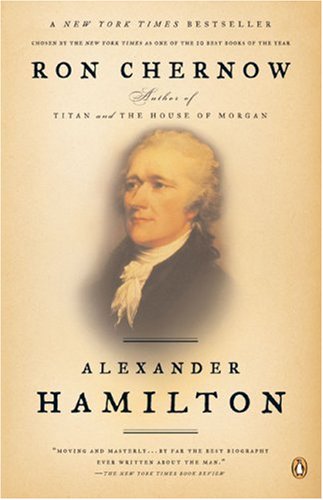
1. Alexander Hamilton
$21.90
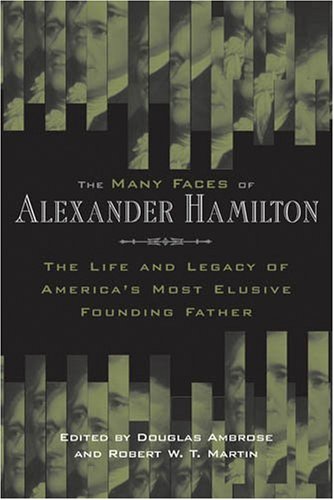
2. The Many Faces of Alexander Hamilton:
$22.41
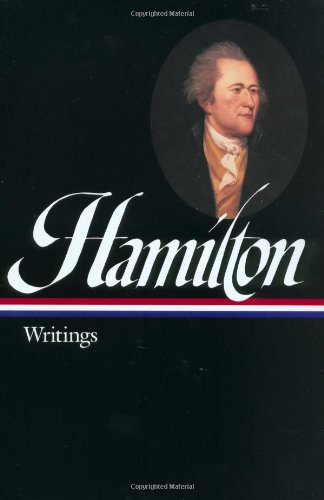
3. Alexander Hamilton: Writings (Library
$2.48
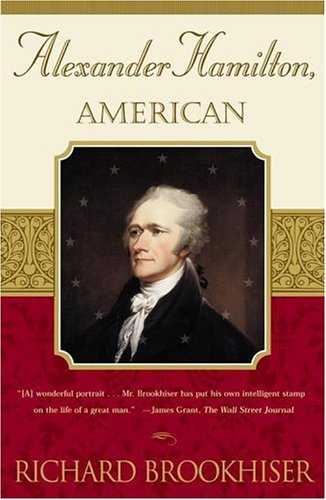
4. Alexander Hamilton, American
$3.65
5. The Alexander Hamilton You Never
$7.95
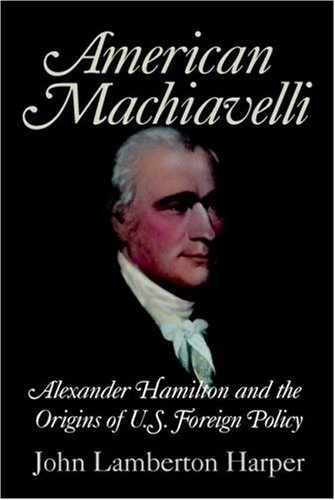
6. American Machiavelli: Alexander
$32.95
7. Alexander Hamilton America's Forgotten
 
8. Alexander Hamilton (American statesmen
 
$6.99
9. The Reports of Alexander Hamilton
$8.58
10. Pay No Taxes: Keep Your Money
$19.18
11. Hamilton's Blessing: The Extraordinary
$19.75
12. Alexander Hamilton And the Persistence
$10.50
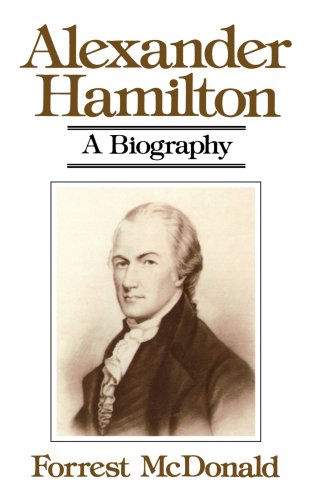
13. Alexander Hamilton: A Biography
$19.95
14. Thomas Jefferson and Alexander
 
15. Alexander Hamilton and the Constitution.
$11.06
16. Alexander Hamilton's Report On
$12.01
17. Alexander Hamilton : A Life
 
18. A comprehensive and popular history
$36.99
19. Thomas Jefferson Versus Alexander
20. Alexander Hamilton: First U.S.

1. Alexander Hamilton
by Ron Chernow
Hardcover: 832 Pages (2004-04-26)
list price: US$35.00 -- used & new: US$8.14
(price subject to change: see help)
Asin: B000UENRQU
Average Customer Review: 4.5 out of 5 stars
Canada | United Kingdom | Germany | France | Japan
Editorial Review

Amazon.com
Building on biographies by Richard Brookhiser and Willard Sterne Randall, Ron Chernow's Alexander Hamilton provides what may be the most comprehensive modern examination of the often overlooked Founding Father. From the start, Chernow argues that Hamilton's premature death at age 49 left his record to be reinterpreted and even re-written by his more long-lived enemies, among them: Thomas Jefferson, John Adams, and James Monroe. Hamilton's achievements as first Secretary of the Treasury, co-author of The Federalist Papers, and member of the Constitutional Convention were clouded after his death by strident claims that he was an arrogant, self-serving monarchist. Chernow delves into the almost 22,000 pages of letters, manuscripts, and articles that make up Hamilton's legacy to reveal a man with a sophisticated intellect, a romantic spirit, and a late-blooming religiosity.

One fault of the book, is that Chernow is so convinced of Hamilton's excellence that his narrative sometimes becomes hagiographic. Nowhere is this more apparent than in Chernow's account of the infamous duel between Hamilton and Aaron Burr in 1804. He describes Hamilton's final hours as pious, while Burr, Jefferson, and Adams achieve an almost cartoonish villainy at the news of Hamilton's passing.

A defender of the union against New England secession and an opponent of slavery, Hamilton has a special appeal to modern sensibilities. Chernow argues that in contrast to Jefferson and Washington's now outmoded agrarian idealism, Hamilton was "the prophet of the capitalist revolution" and the true forebear of modern America. In his Prologue, he writes: "In all probability, Alexander Hamilton is the foremost figure in American history who never attained the presidency, yet he probably had a much deeper and more lasting impact than many who did." With Alexander Hamilton, this impact can now be more widely appreciated. --Patrick O'KelleyBook Description
From National Book Award winner Ron Chernow, a landmark biography of Alexander Hamilton, the Founding Father who galvanized, inspired, scandalized, and shaped the newborn nation.

Ron Chernow, whom the New York Times called "as elegant an architect of monumental histories as we've seen in decades," now brings to startling life the man who was arguably the most important figure in American history, who never attained the presidency, but who had a far more lasting impact than many who did.

An illegitimate, largely self-taught orphan from the Caribbean, Hamilton rose with stunning speed to become George Washington's aide-de-camp, a member of the Constitutional Convention, coauthor of The Federalist Papers, leader of the Federalist party, and the country's first Treasury secretary. With masterful storytelling skills, Chernow presents the whole sweep of Hamilton's turbulent life: his exotic, brutal upbringing; his brilliant military, legal, and financial exploits; his titanic feuds with Jefferson, Madison, Adams, and Monroe; his illicit romances; and his famous death in a duel with Aaron Burr in July 1804.

For the first time, Chernow captures the personal life of this handsome, witty, and perennially controversial genius and explores his poignant relations with his wife Eliza, their eight children, and numberless friends. This engrossing narrative will dispel forever the stereotype of the Founding Fathers as wooden figures and show that, for all their greatness, they were fiery, passionate, often flawed human beings.

Alexander Hamilton was one of the seminal figures in our history. His richly dramatic saga, rendered in Chernow's vivid prose, is nothing less than a riveting account of America's founding, from the Revolutionary War to the rise of the first federal government. ... Read more

Customer Reviews (225)

5-0 out of 5 stars We Need Hamiltion Now!!
Ron Chernow's biography of Alexander Hamilton brings to life a man who was central to the formation of the United States, but is most often remembered, if at all, for being killed in a duel with Aaron Burr in 1804. He traces the arc of Hamilton's life from his birth in poverty on an obscure Caribbean island, to his days as a pampleteer in New York, his roles as aide-de-camp to General Washington and hero during the Revolutionary War, his authorship of most of the Federalist Papers, and his role as the first Secretary of the Treasury of the new United States government. Hamilton was a fiery writer and debater who believed in a strong central government, often quarreling with Jefferson, Madison, and other founding fathers. This intense behavior also led to an affair with a married woman whose husband blackmailed him, and his ultimate undoing in his feud with Aaron Burr. Alexander Hamilton has received mostly positive reviews. The Rocky Mountain News calls it "a book that does such a fine job, not only of bringing Alexander Hamilton to full and varied life but of providing the reader, as well, with a richly textured picture of the America that was emerging from the blood and turmoil of the Revolutionary War."
[...]

5-0 out of 5 stars The Life of Alexander Hamilton
Chernow has brought Alexander Hamilton into the pantheon of our greatest founding fathers. Without question, one feels the purpose of his book is to give credit where credit was due, especially when considering the attention that has been given to other key founders. Perhaps Chernow is a bit too focused on this issue which tends to lead to an overly praiseworthy account of Hamilton, but I think he can be forgiven to a certain extent. Without doubt, Hamilton was a brilliant man and a major player in the creation of a strong, central federal government. We also see the family man and the notable personal attributes of Alexander Hamilton, but we see the foibles in his character and the mistakes he made. We also see the politics of his day and the nastiness of it. Notable figures are discussed at some depth, including Washington, Jefferson, Madison, Adams and Burr, but many others as well, including Hamilton's early and later acquaintances, his wife Eliza and their children and many others. In my case, I learned much to increase my appreciation of Hamilton's contributions to our nation and much to admire in his character, as well as things that weren't so admirable.

The identity problems associated with a turbulent and transient childhood are the natural focus of the beginning of this book. This becomes the backdrop to understanding the sharp contrast he creates with his own family in later years. His role in the commercial sphere of American life and the Revolutionary War play hugely important roles in the shaping of the man to become such a predominant force in American politics. The most critical relationship forged during the Revolutionary War years is without a doubt that forged with General Washington (future first president). Hamilton and Washington both shared the same critically important views on the necessities for a strong federal government. The nature of their relationship is quite acutely discussed, e.g. how each one had his own strengths and needed the talents of the other. It was during the Washington administration that Hamilton was brought onboard as the first secretary of the treasury.

He tackled the issues of the assumption of state debts incurred during the war, creating a national bank, fostering the growth of commerce, promoting those who helped to create the wealth needed for a robust economy, promoting a stronger military, creating aids to navigation and other maritime commercial needs and so forth. Hamilton's vision was one of economic diversity and growth through commerce. The competing world view for others followed the Jeffersonian model, which was more agrarian in concept and was more limited government (in a nutshell). Needless to say, you will see this clash of visions for America's future in the battles that raged between Jefferson and Hamilton and their respective supporters. Jefferson does not come off looking that good in Chernow's book. If you're looking for evaluations of some of these important founders, you'll get a good dose of it here.

The later period of Hamilton's short life takes on a dramatic turn as we see the loss of a son, the lead up to the infamous duel with Aaron Burr, and the aftermath. In trying to offer an informative, yet concise review of Chernow's book, there is much noteworthy material I've left out, but I hope the general themes of the book have been at least partially revealed. As mentioned earlier, I learned much more about the life of Alexander Hamilton than I would have otherwise known. I've gained greater appreciation for the man and his contributions. But I think the greatest lesson I've learned is that none of these founding fathers, who are so often put on a pedestal and utterly revered, were infallible. Indeed, they were all too human after all.

5-0 out of 5 stars Most Important Founding Father?
Long, but almost reads like a suspense novel as the history of the early United States unfolds before your eyes.The brilliant Hamilton was heavily involved in the American Revolution as Washington's right hand man and in the Constitutional Convention as a primary organizer andcontributor.He was the primary author of the Federalist papers and primary apologist for the ratification of the Constitution (Chernow places Madison in 2nd place on both counts).Most importantly he was the principle organizer of the new government during the Washington administration.

An unbelievably effective and creative implementer, he knew his job and everybody else's.If one of his colleagues just suggested an idea to him, he might show up with a 100 page plan of organization within a few days, gleaned from the latest books from Europe on military matters, economics, fiscal policy, manufacturing, or government.He eventually had more staff members in his department than the President and the rest of the cabinet members put together.After he left Washington the remaining cabinet members continued to rely on him.Adams kept Washington's cabinet and Hamilton's active influence continued into that administration while he maintaining a private law practice.His policies of US assumption of state war debt, central banking, standardized currency, a customs service with coast guard, federalization of import tax, manufacturing subsidies, and liberal constitutional interpretation (among many other things) were all interrelated, creating a stronger federal government than many wanted.Once established, it would have been difficult for anyone who followed him to break down this intermeshed system.When the opposition party of Jefferson finally took over, they discovered how well Hamilton's systems worked in the strong economy they had inherited.Tinkering with his systems lost its appeal and Hamilton's influence remained intact.

Unfortunately, Hamilton was not as good a politician.As charming and endearing as he was, he consistently made enemies, becoming a major adversary in the partisan insultfests of the era. He committed many outrageous errors in judgement, particularly when not subject to Washington's moderating supervision. His idealistic thinking eventually led to his tragic death at the hands of Aaron Burr, covered in great detail by Chernow.

The downside of this book is excessive hero worship by the author, particularly before Hamilton leaves the moderating influence of Washington.In the last half, Hamilton's faults are well-covered, but if the author is to be believed, the sheer talent and energy of this man are almost superhuman.

Washington comes off well, whereas Adams is portrayed as a completely ethical but marginally effective president, tormented by a cabinet controlled by the private citizen, Hamilton. Interestingly, Hamilton and Adams agreed on most things and could have made a strong team if either had exercised a modicum of diplomatic skills. Chernow's Jefferson was devious and partisan, but effective.The trio of Madison, Monroe, and Jefferson came off poorly, though - I think because these Virginians' views were so influenced by the politics dictated by their geography.The southern states were against a strong federal government for various stated and unstated reasons, mostly revolving around perpetuating their slave-dependent economy.No wonder they opposed Hamilton, whorelentlessly strengthened the federal government.He and other former soldiers of the Revolution couldn't forget how weak the government was under the Articles of Confederation - so weak, the country couldn't afford to feed, clothe, or pay its troops...so why inflict another weak federal government on the fledgling country?

With complete attention to detail, perhaps more than the reader wants at times, Chernow slowly takes us through early US history, finishing with the duel and an epilogue aboutHamilton's exceptional wife, who lived to be 97.This book is a fine chance to learn about the history of the period and the crucial influence of this easily forgotten Founding Father.While the others spent their golden years manicuring their legacies, he didn't live long enough to spruce up his image, yet the case could be made he was the most important one.


5-0 out of 5 stars Alexander Hamilton
An extremely entertaining, well written account of one of our greatest founding fathers (I had no clue how great before the book) who is unfortunately known not by the great things he did for our country, but for his ill-favored duel with Burr.The book made me a Hamilton-phile.

Clarke McIntosh

5-0 out of 5 stars Engrossing.
A complex man in a complex age, deeply involved in the experiment of self governance, all Americans should be thankful for Alexander Hamilton.

Depending on the focus currently in vogue, states rights or the lack thereof, Hamilton and his nemesis, Thomas Jefferson, periodically go in and out of American History's doghouse. It is easy to take sides. It is difficult to remember today that all of the Founding Fathers were feeling their way, that the American experiment, while previously talked about, had never really been tried. With Hamilton being autocratic, seeing things in black and white, and Jefferson the master of indirectness, seldom taking a firm stand, these two had to clash.

The Founding Fathers had much at risk. They were gambling their futures. Moreover, they could only view their futures through their pasts. So it was quite natural for the leaders of the day to become personally involved and, just as we see in today's political environment, those on the extremes tend best to define the problems. Those who represent consensus never really are capable of problem definition as they do not frame the issues in an "I win, you lose manner." However, as we now understand, democracy needs all three positions, rightists, leftists and centrists. For every Jefferson, we need a Hamilton and for every Jefferson-Hamilton combination, a Washington is required.

Ron Chernow does an excellent job of helping us understand the evolution of the American Republic as we know it today. At the start, there were no parties, just former comrades in arms. But as the Nation moved forward, more and more we needed to define just what kind of nation we wanted to become. It was this self defining, more than anything else, that established the 2 party political system in the United States. Hamilton headed the rightists, the Federalists; Jefferson headed the leftists, the Republicans. Hamilton was for urbanism, Jefferson for agriculture. Hamilton was for centralization, Jefferson for decentralization. Both were necessary to the evolution of the democratic process, yet each saw the other as the arch villain of our new nation, the Devil incarnate!

No one did more for the stabilization of the United States early on than these two protagonists. And Chernow does an excellent job of sticking to the facts, presenting each in an unbiased manner, as these two Founding fathers go at it hammer and tong. Federalism and Republicanism are each called different things today and both sides, Democrat and Republican, quickly wrap themselves in the mantra of Hamilton and Jefferson whenever they can. We owe much to these two Founding Fathers and it is the ultimate compliment to each that everyone wants to claim them as there own.

This is the story of Alexander Hamilton's Federalism, why it was necessary and how, in certain instances, it went too far. But make no mistake; Federalism was necessary to our survival. Ours is a nation of checks and balances we say today. I wonder if Hamilton and Jefferson realized that was their role from 1787 until Hamilton's untimely death in 1804, that in only 17 years they framed the issues that govern our behaviors today. I doubt it, their hatred was too intense.

This is a remarkably good work.
... Read more


2. The Many Faces of Alexander Hamilton: The Life and Legacy of America's Most Elusive Founding Father
by Douglas Ambrose, Robert Martin
Paperback: 312 Pages (2007-09-01)
list price: US$22.00 -- used & new: US$21.90
(price subject to change: see help)
Asin: 0814707246
Average Customer Review: 5.0 out of 5 stars
Canada | United Kingdom | Germany | France | Japan
Editorial Review

Book Description

View the Table of Contents
Read the Introduction

”Scholars whose interests include the political, diplomatic, and economics aspects of the early republic will find these works rewarding additions to their reading.”
—Journal of the Early Republic

"Talleyrand, who was acquainted with all of the statesmen of Europe, once remarked that he had never encountered anyone 'equal to Alexander Hamilton.' Hamilton may, in fact, have been the greatest of the American Founding Fathers. He was certainly one of the most important. Despite this, he has rarely been given his due. This superb collection of essays goes a considerable distance towards redressing the balance and towards restoring an American statesman to the central place that he occupied in his own time."
—Paul A. Rahe, author of Republics Ancient and Modern: Classical Republicanism and the American Revolution

"Here are many fresh thoughts by many of the most innovative scholars at work on Alexander Hamilton today. Every student of the new republic and many general readers who are captivated by the subject will want to read this volume."
—Lance Banning, author of Conceived in Liberty: The Struggle to Define the New Republic, 1789-1793

"This supberb collection of essays goes a considerable distance towards redressing the balance and towards restoring an American statesman to the central place that he occupied in his own time."
—Paul A. Rahe, author of Republics Ancient and Modern: Classical Republicanism and the American Revolution

Revolutionary War officer, co-author of the Federalist Papers, our first Treasury Secretary, Thomas Jefferson's nemesis, and victim of a fatal duel with Aaron Burr: Alexander Hamilton has been the focus of debate from his day to ours. On the one hand, Hamilton was the quintessential Founding Father, playing a central role in every key debate and event in the Revolutionary and Early Republic eras. On the other hand, he has received far less popular and scholarly attention than his brethren. Who was he really and what is his legacy?

Scholars have long disagreed. Was Hamilton a closet monarchist or a sincere republican? A victim of partisan politics or one of its most active promoters? A lackey for British interests or a foreign policy mastermind? The Many Faces of Alexander Hamilton addresses these and other perennial questions. Leading Hamilton scholars, both historians and political scientists alike, present fresh evidence and new, sometimes competing, interpretations of the man, his thought, and the legacy he has had on America and the world.

... Read more

Customer Reviews (1)

5-0 out of 5 stars A Must Read For Those Interested in The Founding Fathers
This crisply written volume of eleven essays by leading Alexander Hamilton scholars provides an excellent reading experience for any person interested in the founding years of the United States. The essays are well documented and present new scholarship and a clearer understanding about the centrality of Hamilton throughout the founding period of the U.S. The beauty of the book comes from the clarity of writing and information conveyed, while not glossing over the debates still surrounding Hamilton and his many legacies. ... Read more


3. Alexander Hamilton: Writings (Library of America)
by Alexander Hamilton
Hardcover: 1108 Pages (2001-10-15)
list price: US$40.00 -- used & new: US$22.41
(price subject to change: see help)
Asin: 1931082049
Average Customer Review: 5.0 out of 5 stars
Canada | United Kingdom | Germany | France | Japan
Editorial Review

Book Description
One of the most vivid, influential, and controversial figures ofthe American founding, Alexander Hamilton was an unusually prolific and vigorouswriter. As a military aide to George Washington, forceful critic of the Articlesof Confederation, persuasive proponent of ratification of the Constitution,first Secretary of the Treasury, and leader of the Federalist party, Hamiltondevoted himself to the creation of a militarily and economically powerfulAmerican nation guided by a strong republican government. His public and privatewritings demonstrate the perceptive intelligence, confident advocacy, drivingambition, and profound concern for honor and reputation that contributed both tohis rise to fame and to his tragic early death.

Arranged chronologically, Writings contains more than 170 letters,speeches, essays, reports, and memoranda written between 1769 and 1804. Includedare all 51 of Hamilton's contributions to The Federalist, as well assubsequent writing calling for a broad construction of federal power under theConstitution; his famous speech to the Constitutional Convention, which gaverise to accusations that he favored monarchy; early writings supporting theRevolutionary cause and a stronger central government; his visionary reports asTreasury secretary on the public credit, a national bank, and the encouragementof American manufactures; a detailed confession of adultery made by Hamilton inorder to defend himself against charges of official misconduct; and his self- destructive attack on John Adams during the 1800 campaign. An extensiveselection of private letters illuminates Hamilton's complex relationship withGeorge Washington, his deep affection for his wife and children, his mountingfears during the 1790s regarding the Jeffersonian opposition and the FrenchRevolution, and his profound distrust of Aaron Burr. Included in an appendix areconflicting eyewitness accounts of the Hamilton-Burr duel.

Joanne Freeman is the editor. ... Read more

Customer Reviews (4)

5-0 out of 5 stars Alexander Hamilton: Writings (Library of America)
I do not think Library of the America has even put out a bad bood and this is no exception.The contents are of great use to anyone interested in our government.The index in the back is exhaustive and helps greatly.Buy this book.

5-0 out of 5 stars Essential writings from a great American
Alexander Hamilton is one of the most important, most misunderstood and most under studied Americans ever.He is the central figure in establishing the Federal Bank, as different as it is today from what it was then.He is responsible for the majority of the Federalist Papers, the most important documents produced in support of the Federal Constitutuon and the heated debates it entailed.But another thing most people don't know is that he is an American Revolution hero, serving, with distinction under Geroge Washington, receiving his highest praise and becoming his right hand man.He is the most elegant and gifted of writers.To understand his beginnings, read Alexander Hamilton: American by Richard Brookheiser, and understand the humble beginnings he was born into, working as a store clerk in the West Indies, educating himself in America and turning himself into one of the Americans who has a true grasp on the English language.His politics aside, he was a brilliant man.He was a gentleman and he was honest.He was a mna full of pride and great courage.He refused to let himself be bad mouthed, accepting Aronn Burr's duel, but he refused to fire at his opponent, instead firing into the air.A very honourable end to a great American.His writing are essntial to understand his life and his mind, his political orientation and lifelong goals.Not only that, but this is great literature.This receives my highest recommendation.

5-0 out of 5 stars Alexander Hamilton Speaks for Himself
With this volume, the Library of America continues its project presenting the best of American culture and thought in an accessible way.

The subject of this volume is Alexander Hamilton. Although John Adams has frequently been regarded as the least understood of the Founders, Hamilton has his own plausible claim to this honor. History has not treated Hamilton kindly. He has certain obvious flaws in terms of arrogance,temper, and judgment.These flaws are amply revealed in this collection of writings. Hamilton, nevertheless, has much to teach us about government and about our country.This collection of his writings is a treasure.

At the outset, I was reluctant to begin a project of reading this volume through in its entirety. As my reading progressed, I couldn't put the volume down.

The book covers all phases of Hamilton's political and personal life, from its beginnings in what is now the U.S. Virgin Islands to his death at age 49 in the notorious duel with Aaron Burr. The heart of the book begins with Hamilton's role in the Constitutional Convention, in which he advocated for a strong Federal government and, in particular for a strong Executive. The book continues with Hamilton's 51 contributions to "The Federalist" in which he explained the Constitution to the people of the State of New York in terms which remain a seminal exposition of the basic governing document of the United States. Again the focus is on the need for a strong central government with a will and ability to act for the public good.

Hamilton was the first Secretary of the Treasury.This book gives us long selections from his work in which he advocated forcefully for having the Federal government pay the Revolutionary War Debt, for founding the Bank of the United States, and in promoting industry in the fledgling United States. These works divided Hamilton from Jefferson and Madison and became the basis of partisan politics in the United States.
In defending the constitutionality of the National Bank from attacks from Jefferson and Madison, Hamilton set the foundation for an expansive view of the power of the Federal government under the constitution.This view was controversial in its time and remains so.Hamilton's position, however, has largely come to prevail over the years and is an important basis for our governmental structure as it has developed over time.

The book includes Hamilton's public confession of an adulterous affair, his criticism of John Adams which divided and doomed the Federalist party, and Hamilton's own political career,and documents regarding Hamilton's fatal duel with Aaron Burr.

There is much to be learned from this book. Hamilton was a paradoxical figure both behind and ahead of his time. This is a valuable work for understanding our country. Kudos to the Library of America for allowing us to learn.

5-0 out of 5 stars The best one-volume Hamilton collection ever assembled.
With this volume, Alexander Hamilton assumes his rightful place in the ranks of the Library of America -- not only as a key historical figure in the founding of the Republic, but as a master of political argument and writing.With care and sensitivity, Prof. Joanne B. Freeman of Yale University has assembled the best and most comprehensive one-volume Hamilton collection ever assembled -- but she has done something even more important:She has presented us with a thorough, judicious, and enlightening documentary life of Hamilton.This book will be indispensable to anyone who wants to understand the origins of the Constitution, of the American economy, and of the nation's political system and public life.It also will be indispensable to anyone who wants to understand Alexander Hamilton as a political, constitutional, and economic thinker, as a key shaper of American government and public policy, and as a human being.

-- R. B. Bernstein, Adjunct Professor of Law, New York Law School ... Read more


4. Alexander Hamilton, American
by Richard Brookhiser
Paperback: 256 Pages (2000-04-12)
list price: US$15.00 -- used & new: US$2.48
(price subject to change: see help)
Asin: 0684863316
Average Customer Review: 4.0 out of 5 stars
Canada | United Kingdom | Germany | France | Japan
Editorial Review

Amazon.com
The man on the $10 bill is probably the most overlooked Founding Father. This book--not a names-and-dates biography, but an appreciation and assessment in the tradition of Plutarch--should help change that. Richard Brookhiser is an outstanding writer well known for his previous books (especially the wonderful Founding Father: Rediscovering George Washington) and journalism (in National Review and the New York Observer); Hamilton could not have asked for a better advocate. A signer of the Constitution and author of roughly two-thirds of the Federalist Papers, Hamilton became the first secretary of the treasury at the age of 32. In this capacity, Brookhiser argues that the scrappy Caribbean native gave birth to American capitalism by developing the country's financial system. Brookhiser also reveals the sex and violence of Hamilton's life: he survived personal scandal but was shot down by Aaron Burr in an 1804 duel. The end came too soon for Hamilton--and it also helped elevate the reputation of his nemesis, Thomas Jefferson. Alexander Hamilton: American is by turns learned, funny, and inspiring. A model of popular biography, it convinces us why we should care deeply about a remarkable man who lived two centuries ago. --John Miller Book Description
Alexander Hamilton is one of the least understood, most important, and most impassioned and inspiring of the founding fathers. At last Hamilton has found a modern biographer who can bring him to full-blooded life; Richard Brookhiser. In these pages, Alexander Hamilton sheds his skewed image as the "bastard brat of a Scotch peddler," sex scandal survivor, and notoriously doomed dueling partner of Aaron Burr. Examined up close, throughout his meteoric and ever-fascinating (if tragically brief) life, Hamilton can at last be seen as one of the most crucial of the founders. Here, thanks to Brookhiser's accustomed wit and grace, this quintessential American lives again.

... Read more

Customer Reviews (50)

5-0 out of 5 stars Excellent Primer
As the title of my post states, this is an excellent primer for those interested in learning more about one of the greatest and least appreciated Founding Fathers.

This book provides and easy to read and yet thorough review of Hamilton's life and provides a good foundation and understanding before you read some of the more in-depth biographies and studies.

I love this book.

4-0 out of 5 stars Nicely done - well researched
The author has done a very good job of researching and reporting to us on one of the great icons of American history.

There were a few times when writing on the machinations of government, politicians, and legal maneuvering got a little tedious but it was probably necessary to give readers a full perspective.

At the end of the day, the author has done us a favor by giving us a detailed and historical perspective of Alexander Hamilton.Thank you!

4-0 out of 5 stars `Those who stand for nothing fall for anything.'
Brookhiser presents the man, not just the life of one of our brightest and most ingenious founding fathers in "Alexander Hamilton, American." If you're unfamiliar with Hamilton, this book should acquaint you with the man whose career is a necessity for understanding the founding of this nation. Hamilton lived an extraordinary life which not only makes an fascinating and educating read but also presents us with little known and exclusive details of his private life. His works remain immortal and accomplishments highlight his brilliancy but remain essential in comprehending United States history from the genesis of independence to the infancy of statehood.

Leaving no aspect of Hamilton's life untouched, a reader becomes acquainted with his highly-publicized milestones and triumphs to the regrettable hardships and misfortunes experienced throughout a turbulent but ultimately successful life. Coming from a tumultuous childhood, Hamilton rose to become prominent American public figure in colonial America as a successful Revolutionary War commander, Lawyer, and the first US Treasury Secretary. Brookhiser's examination of Hamilton's life is one of both reverence and cynicism. Unhampered by the author's personal views, this heavily researched, highly detailed and accurate narrative of a profoundly influential and inspiring American's life is of invaluable importance in grasping the fundamentals of the early American democracy, liberties, and economy.

Possibly vying for the title of "America's First Great Success Story", surviving the tumult of childhood andsuccessfully completing a demanding education, have undoubtedly shaped his character from an early age and serve as a testament to his success shown throughout this chronicle of Hamilton. Although probably not befitting as a biography in the strictest sense; as you read Brookhiser's recital of Hamilton's life, you become not only familiar with Alexander Hamilton but also with many other important Founding Fathers. Whether be political adversaries, Federalist proponents, Revolutionary War comrades, and even the country's first President. A perspective from the eyes of a fellow statesman intersecting the achievements of fellow prominent early Americansdelivers an interesting and fresh examination of our first President; as well as the many other Forefathers from his generation who were instrumental in shaping the country.

Without question, Alexander Hamilton's life is among the most important biographies of primordial America dignitaries. Shaping the new democracy, composing forcible works which withstand the test of time and remain essential in the politics of contemporary America are among the contributions of knowledge to a student of hiscareer. Brookhiser's purpose is to bring to life Hamilton's experiences through the pages of his book, fostering an intimate portrait that accustoms a reader with the factual, unadulterated figure enduringly steeped in American history.

4-0 out of 5 stars A clear view of Alexander Hamilton
Richard Brookhiser writes with clear and precise prose.His abiltyto make an eighteenth Century icon come alive on paper is wonderful.If you want to get a good feel for the american revolution and the personalities that formed it this book should be on your reading list.

3-0 out of 5 stars Disappointing
Alexander Hamilton, American is a fascinating book and is extremely well researched. However, it does not flow well. I was extremely disappointed by the Brookhiser's inability to connect paragraphs together. Moreover, he bombards the reader with trivial facts, and places too much emphasis on Hamilton's affair. Sadly, he did not place the same value in explaining Hamilton's feud with Aaron Burr. I expected more from this book. ... Read more


5. The Alexander Hamilton You Never Knew
by James Lincoln Collier
Paperback: 80 Pages (2004-03)
list price: US$6.95 -- used & new: US$3.65
(price subject to change: see help)
Asin: 0516258346
Canada | United Kingdom | Germany | France | Japan
Editorial Review

Book Description
Newbery-finalist James Lincoln Collier creates insightful character studies of our most well-known American figures. By blasting through the myths surrounding our heroes, we see them as they really were, with their conflicts, their fears, their shortcomings, and their ambitions. We come to know them and so to admire their achievements all the more. ... Read more


6. American Machiavelli: Alexander Hamilton and the Origins of U.S. Foreign Policy
by John Lamberton Harper
Paperback: 362 Pages (2007-07-30)
list price: US$21.99 -- used & new: US$7.95
(price subject to change: see help)
Asin: 0521708745
Average Customer Review: 4.5 out of 5 stars
Canada | United Kingdom | Germany | France | Japan
Editorial Review

Book Description
Alexander Hamilton (1757-1804) was an illegitimate West Indian emigrant who became the first U.S. Secretary of the Treasury. American Machiavelli focuses on Hamilton's controversial activities as foreign policy adviser and aspiring military leader. In the first major study of his foreign policy role in 30 years, John Lamberton Harper describes a decade of bitter division over the role of the Federal government in the economy during the 1790s and draws parallels between Hamilton and the sixteenth century Italian political adviser, Niccolò Machiavelli. Harper provides an original and highly readable account of Hamiltonas famous clashes with Thomas Jefferson and John Adams, and his key role in defining the U.S. national security strategy.John Lamberton Harper is Professor of Foreign Policy and European Studies at the Johns Hopkins University Bologna Center. He is the author of America and the Reconstruction of Italy, 1945-1948 (Cambridge 1986), winner of the 1987 Marraro Prize from the Society for Italian Historical Studies, and American Visions of Europe: Franklin D. Roosevelt, George F. Kennan, and Dean G. Asheson (Cambridge 1994), winner of the 1995 Robert Ferrell Prize from the Society of Historians of American Foreign Relations.His articles and reviews have appeared in numerous publications, including The American Historical Review, The Journal of American History, The Times Literary Supplement and Foreign Affairs. ... Read more

Customer Reviews (4)

3-0 out of 5 stars American Machiavelli:Alexander Hamilton and the Origins of U.S. Foreign Policy
Ordered as a Christmas gift.Did not arrive until after.Person receiving the book was pleased.

5-0 out of 5 stars To Be Not Good
Alexander Hamilton no doubt read Niccolo Machiavelli, but his writings indicate he looked elsewhere for his inspiration. Instead, Hamilton was inspired by the virtuous lives described by Plutarch (Machiavelli also studied Plutarch) and by the English Constitution so praised by Montesquieu. Our modern instinct (as reflected by another reviewer here) is to reject any similarity between Machiavelli and one of the greatest of our Founding Fathers. The term Machiavellian has become, unfortunately, a political epithet. It wasn't for nothing that Aaron Burr was dubbed the "modern Machiavelli."

Nevertheless, Professor Harper makes a persuasive case for the similarity of outlook between Machiavelli and Hamilton. Both were democrats who saw that energy in an executive was essential to the proper functioning of a republic, both in foreign as well as domestic affairs.Hamilton also recognized that sometimes the executive, to use Machiavelli's phrase, has "to be not good."

Harper's work is very well written and documented.Considering Harper is a diplomatic historian by trade, he is to be applauded for his intense study and mastery of the literature of the revolutionary and founding era.American Machiavelli admirably fills a gap in the otherwise voluminous and well-trodden historiography of Alexander Hamilton.

5-0 out of 5 stars A well-deserved tribute to Alexander Hamilton
I sort of wish that Professor Harper hadn't pushed so hard the Machiavelli/Hamilton comparison. Hamilton tried to model himself after so many other political thinkers and theorists, and a case could be made that some of his policies and initiatives were anti-Machiavellian. But that's my only gripe, and it's not a major one. John Harper's "American Machiavelli : Alexander Hamilton and the Origins of U.S. Foreign Policy" is a brilliant examination of a facet of Hamilton's career that hasn't been spotlighted. Most biographies of Hamilton and/or the Founders tend to focus mainly on Hamilton's economic prowess and his dedication to a commercial American society versus the more Jeffersonian agrarian society.

But Hamilton kept an astute eye on the goings-on in Europe, like the need to trade with Great Britain and the growing horrors of the revolution in France. In one regard, the need to trade with Great Britain was an outgrowth of his economic concerns but, more importantly, to maintain a commercial link with it nearly guaranteed peace with a nation that had so huge a navy. Harper goes to great lengths to emphasize Hamilton's frustration with John Adams' foreign policy. Because of his alleged "monarchist" sympathies, Hamilton was essentially dismissed by the Republicans. He warned that the failure to maintain friendly ties with Great Britain might lead to future tensions. Unfortunately, Hamilton was right and in 1812... well, we know what happened. Fortunately, Hamilton didn't live to see his dark prophecy fulfilled.

In any event, Professor Harper's study is worth reading for students of American history and people interested in the tangled world of international policy.

5-0 out of 5 stars An excellent biography of Hamilton
According to Harper, Alexander Hamilton was a pragmatist just like Machiavelli. Hamilton favored greater ties to England because the United States needed the English navy for its protection and England was the main market for American goods. Hamilton's pragmatic policies toward England were in direct contrast to the ideologically driven Jefferson who favored an impratical alliance with the French because France was a republic after 1792.Hamilton was also concerned about the French retaking Louisiana since this might threaten American interests in the southern part of the United States. However, after 1796, Hamilton's concerns were ignored by John Adams, who supported an alliance with France. The only weakness of this book is that Harper spends too much time describing the 1796 election which had little to do with the foreign policy issues mentioned in the rest of the book. Otherwise this is an extremely well written analysis of Hamilton's views on the foreign policy of the early Republic. ... Read more


7. Alexander Hamilton America's Forgotten Founder (HC)
by Joseph A. Murray
Hardcover: 264 Pages (2007-04-01)
list price: US$32.95 -- used & new: US$32.95
(price subject to change: see help)
Asin: 0875865011
Average Customer Review: 5.0 out of 5 stars
Canada | United Kingdom | Germany | France | Japan
Editorial Review

Product Description
Alexander Hamilton promoted a vigorous national government to create a strong and unified country out of a mixed bag of 13 sovereign states. Hamilton's varied contributions give him a claim to the title of architect of the US Government. This new biography introduces the general reader to some of the challenges and controversies of the early days of the Republic and highlights Hamilton's brilliant contributions to US policy and structure.

Alexander Hamilton: America s Forgotten Founder describes the character and achievements of a man who was instrumental in casting the form of our government and especially its strong financial structure. His financial innovations renewed the public credit when war debts threatened to swamp the fledgling economy, provided a stable currency system and established a federal revenue system. Hamilton s involvement in the foreign affairs of the new republic assured its unity, sovereignty and rapid economic growth.
Born in the West Indies, Alexander Hamilton migrated to America when he was fifteen years old, at a time when Colonial America was torn by political unrest with Great Britain. He served in the Revolution as General Washington s chief aide-de-camp and as an officer in combat units. He was a persuasive presence in the Constitutional Convention and helped to lead the subsequent ratification process.
Hamilton was a proponent for a strong central government, believing that its direct influence over the people would strengthen the unity of the country. As Secretary of the Treasury, he understood that a strong financial system was essential to provide credibility and economic growth to the new republic. He based his financial plan on the consolidation of the national debt and the adoption of a taxation system to service and retire that debt. He promoted the chartering of the Bank of the United States as the keystone to his financial plan.
Arguably the Father of Federalism, Hamilton gave more to the structure and process of the United States government then any other single individual. His opponents, principally the Jeffersonian Republicans, argued for greater sovereignty for state governments and sought to diminish the role of wealth in structuring and operating the financial systems of the country. When it came, the Civil War vindicated Hamilton s politics over Jefferson s view of a more tenuous and tentative union.
He authored the lion s share of The Federalist Papers, writings which remain an important guide to the meaning and the intended function of the Constitution today.
Regrettably, the hostility of his political opponents has transcended the country s recognition of the debt owed to this man.
This work introduces the general reader to some of the challenges and controversies of the early days of the Republic and highlights Hamilton s brilliant contributions to US policy and structure. Hamilton promoted a vigorous national government to create a strong and unified country out of a mixed bag of 13 sovereign states.
This book was written for the broad cross-section of American readers, particularly those who, while not having an abiding interest in history, would welcome an interestingly written, brief history of Hamilton s life and the great events surrounding the founding of the nation. The book is also suited for high school and college-level students of US history.
Other recently published biographies of Alexander Hamilton are lengthy and minutely detailed. While those will be useful tools for the more serious students of history, they are unwieldy and off-putting to the general reader. Most Americans today have little understanding of the character, the life and accomplishments of Alexander Hamilton, an extraordinary man by any account and an extraordinary American. The current work intends to make his life and accomplishments accessible to a broad ... Read more

Customer Reviews (2)

5-0 out of 5 stars America's Forgotten Founder
The author of Alexander Hamilton - America's Forgotten Founder brings to light the unique accomplishments that this too often overlooked founder of our republic played in the formation of our government. It is a well-researched and skillfully written book that quickly captures the attention of the reader, whether a student of American history, or a casual general browser.
This is a book that reveals both the man as well as his many outstanding and varied accomplishments in an easily understandable way. Whether during the revolution where the colonies all characteristically pulled against each other, or later when the states were reluctant to give up an inch of their sovereignty, or during the complex financial problems of the new republic, the author spotlights the most remarkable role Alexander Hamilton played in resolving what seemed like insurmountable obstacles. No other book makes Alexander Hamilton more clearly defined in an easily understandable way. Aid-de-camp and trusted confidant of General Washington, first to fire a shot at Yorktown, and later a major general, stirs any student of military history to appreciate Alexander Hamilton as the man he was. Gifted writer, financier, and first Secretary of the Treasury are only a few of his great accomplishments. Any reader of this book is left with a lot more to remember of Alexander Hamilton than his duel with Burr.
Most interestingly, this is a book not only for those with an interest in the American Revolutionary War, or the early formation of our government, but for those who want an understanding of the very roots of the Civil War. In reading this book, I often found myself saying "this is where that war began!" The differences between Jefferson and Hamilton concerning what powers the federal government should have, that are so well clarified in this book, weren't settled until the end of the Civil War, when Alexander Hamilton's position promoting a strong central government was vindicated. This is a book written in an entertaining way that educates the reader in regard to the legacy of a most remarkable man.
As a literary endeavor, this book is amazingly clarifying, and it fulfills a previous deficiency in other books I have read on this subject. i enjoyed this book immensely and I highly recommend it to others.

David W. Shave MD(authorof "Small Talk - Big Cure!")

5-0 out of 5 stars Alexander Hamilton America's Forgotten Founder
I thought this was an excellent book through which the author substantiates his premise that Alexander Hamilton is indeed a "forgotten founder." He is remembered by most for his untimely end after his infamous duel with Aaron Burr. Indeed, his enigmatic personality which lead in part to the duel, may also have been responsible for his status as a forgotten founder. The author sketches Hamilton's somewhat humble origin from his birth in the Caribbean through his life as a founding father. The author convincingly argues that Hamilton was involved overtly or behind the scenes in virtually every event in our young nation's life from the Revolution through the adoption of the U.S. Constitution and beyond. Hamilton's position and influence as an aide to General Washington, or as one of the trinity of writers of the Federalist Papers, or as our first Secretary of the Treasury, amply demonstrate his influence at the highest levels of government. Perhaps no founding father argued more forcefully for the need for a strong federal government. For the young nation to be respected among the world's powers, Hamilton believed that the country needed a stable financial system. This lead of course to his plan for chartering the Bank of the United States. His prescience for that National Bank was amply demonstrated during the War of 1812 when the country desperately needed loans but had no national bank because its Charter had been allowed to expire at the end of its original 20-year term.

Why then "forgotten founder"? The author argues that Hamilton's personalty and strongly held opinions were partially responsible. He made many enemies because, as the author points out, he would stick to his convictions to both his political and personal detriment. His position on returning confiscated property to Tories was unpopular as was his conviction regarding the integrity of contracts over the perceived rights of war veterans. Once the Federalists lost power, it was perhaps much easier to discredit both Hamilton and his "politics." Because of his untimely death, (with apologies to Shakespeare) it is possible that his perceived evils lived after him while the good he did was interred with his bones. History has done a good job of documenting Hamilton's negatives, including his enigmatic personalty, his marital infidelity, and his obstinacy which lead to many (and frequently unjustified) personal attacks by his enemies. The author, while not overlooking Hamilton's personal foibles, has done an excellent job of restoring him to his proper place as one of the preeminent founders.

I found this to be a fascinating book. For those with some background in American history I think it is an excellent review of the Revolution and the founding of our nation. I believe it would also serve as a good primer for anyone who has an interest in American history. I found the book to be very interesting and for me very educational. In short, I thoroughly enjoyed reading it.


... Read more


8. Alexander Hamilton (American statesmen series)
by Henry Cabot Lodge
 Paperback: 317 Pages (1981-02)
list price: US$4.95
Isbn: 0877541795
Average Customer Review: 4.0 out of 5 stars
Canada | United Kingdom | Germany | France | Japan

Customer Reviews (1)

4-0 out of 5 stars Dated but worthwhile
More interesting for an examination of how the perception of Hamilton has changed over time than as a biography (the book is over 100 years old). The author was the Senator who destroyed President Wilson's dream of a League of Nations, leaving him a broken man ... Read more


9. The Reports of Alexander Hamilton
by Jacob E. (editor) Cooke
 Paperback: Pages (1964)
-- used & new: US$6.99
(price subject to change: see help)
Asin: B000EEFZBQ
Canada | United Kingdom | Germany | France | Japan

10. Pay No Taxes: Keep Your Money
by Alexander Hamilton
Paperback: 54 Pages (2001-06-03)
list price: US$14.95 -- used & new: US$8.58
(price subject to change: see help)
Asin: 0966523458
Average Customer Review: 3.5 out of 5 stars
Canada | United Kingdom | Germany | France | Japan
Editorial Review

Book Description
LEGALLY SAVE MORE MONEY PAY NO INCOMETAXES!

Avoid paying taxes, read Pay NO Taxes and protect yourmoney from lawsuits, the government, capital gains taxes, greedy lawyers,and scorned spouses.

This easy to read book has information gathered from former IRS agents and20 years of personal experience. Learn what the IRS agents know, and Ilearned, to beat the system!

Use the same Loopholes the smartest people in America use to become andremain rich.

Its your money-keep it. ... Read more

Customer Reviews (3)

5-0 out of 5 stars Dont be afraid of the IRS anymore
I thoroughly enjoyed Pay NO Taxes. I have read 800 page books on taxes in the past and got lost in the overflow of information 90% of which was just fluff.
I found this book to be short concise and to the point. I could easily understand how the author stood up to the IRS and lessened his taxes to zero.
I am not afraid to apply his methods, I'm actually excited because I now know how to stand up to that bully.

1-0 out of 5 stars Don't waste your money
Looking to save money on taxes? Start by NOT PURCHASING this book!
Actually, it's more of a pamphlet than a book, with all the pages stapled together along the spine.

Notice how the author uses the name "Alexander Hamilton" instead of his real name. After reading his recommendations, it is clear why he didn't want to disclose his true identity. His bogus recommendations are extreme and not for the faint of heart. I felt ripped-off! Put those $10 toward a book that offers legitimate strategies to save on taxes. I only gave him one star because I couldn't give him "zero stars!"

5-0 out of 5 stars This is a great book
I am implementing the strategies from this book and already saving thousands! I wish I had this book years ago. I highly recomend anyone to buy a copy! ... Read more


11. Hamilton's Blessing: The Extraordinary Life and Times of Our National Debt
by John Steele Gordon
Hardcover: Pages (1997-01)
list price: US$21.00 -- used & new: US$19.18
(price subject to change: see help)
Asin: B00007D02Z
Average Customer Review: 4.0 out of 5 stars
Canada | United Kingdom | Germany | France | Japan
Editorial Review

Amazon.com
Over the past couple of decades, our national debt has become a favorite political football for Democrats and Republicans alike. Yet few Americans seem aware that the debt has a long and (mostly) honorable history. Alexander Hamilton considered it a kind of political Krazy Glue, which would also spur American industry by keeping taxes high. This borrowing power enabled the North to win the Civil War without wrecking its economy and rescued us from the Great Depression. John Steele Gordon doesn't deny the dangers of an entire nation living on credit; indeed, he believes that our fiscal affairs are a mess. But he puts this mess in fascinating perspective. And he's quick to see the human side of economic behavior: "One problem," he writes, "is that human nature predisposes us to recognize depression easily and quickly, but prosperity, like happiness, is most easily seen in retrospect." Bull's-eye!Book Description
Measured at the staggering amount of $5.1 trillion (and growing every day) the national debt is unfathomable to most Americans. What we may not realize is that the United States was born out of debt. After the Revolution, the brilliant Alexander Hamilton was less interested in paying down the Revolutionary war debt than in using it to create a vibrant national economy. "If it is not excessive," he declared, "a national debt will be to us a national blessing."In a fascinating narrative brimming with colorful characters, historical accidents, and American ingenuity, business historian John Steele Gordon leads us on a tour of an American institution whose largely unknown story has been integrally entwined with our country's destiny. At key points in U.S. history, Gordon shows how the national debt has been a potent instrument of fiscal policy in keeping the world safe for democracy.But how much debt is too much? At a time when we despair of balancing even a single year's budget, Hamilton's Blessing provides much needed perspective - and hope.* Author writes the "Business of America" column in American Heritage magazine and is heard often on public radio's "Marketplace." ... Read more

Customer Reviews (11)

5-0 out of 5 stars Fantastic, brief history of a nation's national debt
John Steele Gordon has taken what could be an amazingly dull topic, limited in appeal, and translated it into a spectacular read for anyone with at least a basic education. This great little book is a welcome addition for folks interested in finance, the U.S. economy, and the national deficit. Nonetheless, despite its breezy style and short length (traits typically necessary for widespread appeal), I don't expect it will reach a wide audience. Consider yourself lucky that you've discovered this plain-language, excellent primer on how our national debt came to be!

The author's premise, like that of Alexander Hamilton, is that a national debt can be used constructively to monetize an economy. Both men were quite correct, and the debt served its purpose beautifully in supporting the fledging United States of America. It's subsequently been bastardized by numerous administrations, as a means of funding open-ended congressional and executive expenditures of middling value. Throughout the narrative of changes in the U.S. debt, the author details the creation and destruction of the National Bank of the United States. This institution flourished under Federalist rule, and languished or disappeared entirely when populist presidents (Thomas Jefferson, Andrew Jackson) sat in office.

Overall, a remarkable book that will be discovered by too few, and certainly treasured by those lucky enough to discover it.

3-0 out of 5 stars acceptable... but not unique
The book is okay ... but in general the book attempts to have the reader buy into Hamilton and his develpment of the National Debt as a good thing in todays economic system.

It was set up originally to help our economy expand and to be used in a way such that in difficult times money would be borrowed so that in prosperous times it could be paid back.Although it is a factual account of a major portion of our Nations'Economic history it fails to take into account one thing in its summary, the Human Equation.

All things work great on paper but in this instance this is not the case.The current system, seeing that it has no intent of ever paying back the current debt, now has adopted the belief that as long as the debt to GNP ratio stays within + or - 5%, everything will be OK.This is where the book falls short, it doesn't analyse Hamiltons' theories as they apply today, accounting for Human Intervention.It instead tries to explain away our current economic problems as part of economic evolution.Not the case.Socialism works great on paper but fails in real life.Why.... Humanity.Simply put, if you borrow more than you could ever make or pay back, sooner or later you reach a point of critical mass (or you just keep printing more money, hence inflation).

None the less, if some basic, simplistic history is what you want want, here it is.

4-0 out of 5 stars An insightful look into the making of the national debt
I tip my hat to Mr. Gordon for providing a compelling short history of national debt, and how it has been shaped by tariffs, taxation and ever-increasing spending that has run amok in recent decades.It is a fascinating study into the competing visions of fiscal responsibility, notably the balanced budget extolled by Jeffersonians, which has actually been achieved on numerous occasions, versus deficit spending espoused by Hamiltonians, and of which John Maynard Keynes became the leading exponent in the inter-wars years between WWI and WWII.

While debts traditionally run high during wars, Gordon notes that since WWII, the yearly budget has rarely been balanced.It is during this time that Keynesian theory took hold and in Gordon's view led to a budget deficit that quickly spun out of control as entitlement programs took up fully three-quarters of the yearly budget.These programs have been virtually untouchable, but in 1995 (the point to which Gordon takes his history) a new reckoning emerged with the Republican landslide in Congress.Bill Clinton duly responded by proposing a balanced budget.

Gordon is a fiscal conservative, but recognizes the need to run in the red during hard economic times. He notes that this wasHoover's mistake at the onset of the Great Depression, as he continued to push for a balanced budget despite warnings that it would make the recession worse. However, the federal deficit, which has mushroomed to over $5 trillion, threatens to bankrupt many of the entitlement programs including social security.

4-0 out of 5 stars Intersting Little Book on US Fiscal History
John Steele Gordon is an excellent writer, one whom I have enjoyed very much in the pages of American Heritage and who wrote a nifty history of Wall Street called "The Great Game."

This book, "Hamilton's Blessing: The Extraordinary Life and Times of Our National Debt" is a good, if brief, overview of the fiscal history of the American government.It is somewhat misnamed, since the National Debt serves as a background and tie in to each period of fiscal history studied.

The author does a superb job of explaining Alexander Hamilton's establishment of our financial, banking, debt and money system.Here is a woefully under appreciated founder explained succinctly and whose brilliance and indispensability are brought forth by Gordon.

Descriptions of attitudes towards and major changes in financial policy and tools follow.Gordon covers the major aspects:the struggle over the Second National Bank, Jackson's paying off the debt (the only time the US Gov't has been debt free), Lincoln and Chase's tax, greenback and bond finance of the Civil War, the long fight to establish the income tax, the fight over high marginal rates and an efficient system of taxation, and the change in view in the last century from one that deficits and debt were something to be controlled to our current sorry state of view whereby no one worries about much about deficits anymore.

Debt, when properly used, has allowed us to primarily wage wars.It was retired in times of peace.We face an interesting time now, when debt as a percentage of GDP is much higher than it has been in most peacetimes.This raises the question that if we have to fight a truly massive and long war in the future, will we have the capacity to borrow what we need (based on historic statistics, it is a question well worth pondering).

Gordon finishes the book with a polemic against the political culture that has lost its way in terms of providing an efficient and fair and economically sound system of taxation and the willingness to moderate the nation's debt.

This is a good and interesting book.Anyone looking for a succinct telling of the development of our government's fiscal structure will appreciate this gem.

4-0 out of 5 stars A Good Primer on the History of U.S. Fiscal Policy
Just two years ago, John Steele Gordon's book on the history of the U.S. federal debt would have seemed dated, even though it was published in 1997. After more than twenty consecutive years of operating in the red, the U.S. federal government had not only erased its annual deficits and began paying down the debt, but surpluses were projected over the next ten years.

This is no longer the case. A tax cut, the war on terrorism, and a slowdown in the economy have combined to push the U.S. government's outlays above its revenues. They have also made this book -- "Hamilton's Blessing" -- relevant again.

Gordon's book is two things: 1) a basic history describing the twists and turns of U.S. fiscal policy over the last two hundred-plus years and 2) a political tract condemning the latest turn U.S. fiscal policy has taken since the Great Society.

By combining the two, Gordon seeks to show that the most recent practice of U.S. fiscal policy -- that of habitually running deficits in peacetime -- is not only unprecedented in U.S. history, but also, more importantly, unsupported by any sound theory of economics.

"Hamilton's Blessing" is well-written and interesting. The book is only slightly marred by a lack of detail in some areas. How exactly does a large public debt hurt your average citizen and by how much? We never find out.

Gordon also should have kept his own political bent out of the book. Among other things, he spends three pages in a less than 200-page book detailing Jack Kemp's personal and political history, including his football career. All very interesting, but not really relevant to the history of the U.S. debt. ... Read more


12. Alexander Hamilton And the Persistence of Myth (American Political Thought)
by Stephen F. Knott
Paperback: 336 Pages (2005-09-16)
list price: US$19.95 -- used & new: US$19.75
(price subject to change: see help)
Asin: 0700614192
Average Customer Review: 4.5 out of 5 stars
Canada | United Kingdom | Germany | France | Japan
Editorial Review

Book Description
Alexander Hamilton and the Persistence of Myth explores the shifting reputation of our most controversial founding father. Since the day Aaron Burr fired his fatal shot, Americans have tried to come to grips with Alexander Hamilton's legacy. Stephen Knott surveys the Hamilton image in the minds of American statesmen, scholars, literary figures, and the media, explaining why Americans are content to live in a Hamiltonian nation but reluctant to embrace the man himself.

Knott observes that Thomas Jefferson and his followers, and, later, Andrew Jackson and his adherents, tended to view Hamilton and his principles as "un-American." While his policies generated mistrust in the South and the West, where he is still seen as the founding "plutocrat," Hamilton was revered in New England and parts of the Mid-Atlantic states. Hamilton's image as a champion of American nationalism caused his reputation to soar during the Civil War, at least in the North. However, in the wake of Gilded Age excesses, progressive and populist political leaders branded Hamilton as the patron saint of Wall Street, and his reputation began to disintegrate.

Hamilton's status reached its nadir during the New Deal, Knott argues, when Franklin Roosevelt portrayed him as the personification of Dickensian cold-heartedness. When FDR erected the beautiful Tidal Basin monument to Thomas Jefferson and thereby elevated the Sage of Monticello into the American Pantheon, Hamilton, as Jefferson's nemesis, fell into disrepute. He came to epitomize the forces of reaction contemptuous of the "great beast"--the American people. In showing how the prevailing negative assessment misrepresents the man and his deeds, Knott argues for reconsideration of Hamiltonianism, which, rightly understood, has much to offer the American polity of the twenty-first century.

Remarkably, at the dawn of the new millennium, the nation began to see Hamilton in a different light. Hamilton's story was now the embodiment of the American dream--an impoverished immigrant who came to the United States and laid the economic and political foundation that paved the way for America's superpower status. Here in Stephen Knott's insightful study, Hamilton finally gets his due as a highly contested but powerful and positive presence in American national life.

This book is part of the American Political Thought series. ... Read more

Customer Reviews (4)

3-0 out of 5 stars Different Approach to Alexander Hamilton
When one looks at American political history, we tend to analyze the issues at the surface without realizing the ideology that influenced policies over the last 200 years.Stephen Knott developed a unique method at extracting the driving force behind American history.His thesis is that Alexander Hamilton was so influential in the development of the American government and economic system that his ideology has loomed in the background of every major period in U.S. history.

Mr. Knott provides research on historians, authors, and politicians of the last 200 years who have provided favorable and/or critical analysis of Hamilton's influence on American government and policy.What Knott was successful in proving was the point that Hamilton has had an effect, for better or for worse, on nearly every presidential administration.He also demonstrated how these administrations tended to attribute their policies to either Hamilton or Thomas Jefferson.The rivalry that began while both worked in George Washington's administration has continued to this day.

While unique and informative, this particular book on Hamilton does have one major drawback.Knott eventually shows his admiration for Hamilton.However, although he wisely references the negative material against Hamilton made by politicians and historians over the years, he tends to dwell on one particular comment that has not even been completely proven:the supposed quote that was used to show Hamilton's preference for a monarchy when he called the general public 'the beast'.Knott concludes his book by saying that most of the negative comments made towards Hamilton are not warranted, especially that particular quote.He does not help his own position with his constant referral to that quote throughout his book.He uses it so often, it tends to become distracting and it takes away from the other good material he has provided.

This is not a biography on Hamilton.Therefore, before purchasing this book, it is recommended that a biography on Hamilton be read first.Knott assumes the reader already knows some of Hamilton's accomplishments, milestones, and thoughts on government.Recommended biographies on Hamilton would be the books by Ron Chernow or Forrest McDonald.

5-0 out of 5 stars "THOSE WHO STAND FOR NOTHING..."-A. Hamilton
"fall for anything."

Construction on the myth began years before Alexander Hamilton died on July 12, 1804.It surely got its nurturing from the National Gazette started in 1791 by Philip Freneau, Madison's Princeton roommate, and Thomas Jefferson.And it surely had its fires flaming during the fallout from Hamilton's Reynolds Affair which tainted his career from then on.From the get go, Hamilton's image was tarnished.He didn't fall for anything however.The day he died is the same day as the battle of the Boyne where the catholic, Stuart King James II and his Jacobites were defeated by the protestant William III, of Orange.Another Hamilton had died in a duel on November 15, 1712 in Hyde Park in London.Although his birth was deemed illegit, Alexander Hamilton was of noble lineage; his father's family was derived from the Scottish, ducal line of Hamilton.

Stephen F. Knott's book is not a biography; it's more of a thoughtful, unbiased tracing of pundits' and politicians' interpretation/opinion of his work in American government through the years up to the present.It is a must read for anyone who attempts to judge Hamilton's person because the historical record is replete with misrepresentations of his life's work.Knott's analysis is thorough; you'll understand the bias behind any biographer who studies him.I believe one best understands Hamilton from his own writings and those scholars who studied them as Knott did.Knott shows that Hamilton has been labelled a fascist, a monarchist, a Napoleon, a dictator, a Caesar by mostly Jeffersonians who were content with superficial studies of his life.He also explains how Hamilton viewed popular opinion, how he saw government stood to represent the people, how government stood to protect the people from unwise, even lawless movements such as fascism and communism.Knott also feels that we have much to learn from his thought on how our government should function.

In Knott's Chapter 7, entitled Hail Columbia!, he quotes the historian Daniel J. Boorstin as writing, "we are either Jeffersonians or Hamiltonians.In no other country has the hagiography of politics been more important".However, where does Burr fit in?He was Jefferson's Vice President at the time, good friends of the New York governor Clinton who was vehemently opposed to the Constitution.Indeed, New York was the state most resistant to its ratification, very nearly succeeding in killing it altogether if it had not been for Alexander Hamilton and others.And, as Knott relates, Adams, Jefferson, Washington, and the other founding fathers saw Burr as unprincipalled and unfit to govern.As to labelling Jefferson's people as "the beast", Knott rightly traces it to a comment a Henry Adams made, years after Hamilton's death, from a comment he heard fourth hand.I believe, and noone has made the connection, if Hamilton made that comment, "the beast" that he referred to is none other than the symbolic beast of Daniel 7 and Revelation 13 which opposes the saints and God and which exalts itself above God and above the law.Hamilton was christian to the core, fighting the good fight, not participating in evil deeds of darkness but exposing them just as Paul exhorted the Ephesian church to doin Ephesians 5:11.He publicly confessed his adultery.I believe he died a martyr and a saint.

5-0 out of 5 stars Extraordinary
Knott provides us with a clear account of Hamilton's philosophical contributions and a compelling story about the uncertainty with which Americans approach his legacy.This book is masterful in detailing the competing political agendas and in framing how politicians, acamedicians, and pundits use the Founders and their rhetoric to push forward their own agendas.A wonderful book that helps us understand our American political culture, as much as one of our country's most important Founding Fathers.

5-0 out of 5 stars Getting right with Hamilton
Finally! A compelling defense of the Founder second only to Washington in terms of indespensibility to the creation and greatness of this county. Professor Knott chronicles the roller-coaster ride of Hamilton's reputation, from his murder by the scoundral Burr to the present. He presents overwhelming evidence that General Hamilton has been abused by critics, historians and Jefferson-lovers alike. Knott's painstaking history of the apochryphal "great beast" comment provides a frightening lesson of how a single malicious report can turn even a great man's historical reputation upside down. The fact that Mr. Hamilton's solitary statue stands ignored at the back door of the Treasury Department while Mr. Jefferson is surrounded by marble and carved words perfectly illustrates how the myth of greatness trumps the reality of greatness. Professor Knott's conclusion that "a return to Hamiltonianism" could fix much of what ails American politics is right on the money. Fantastic book. ... Read more


13. Alexander Hamilton: A Biography
by Forrest McDonald
Paperback: 1 Pages (1982-10)
list price: US$17.95 -- used & new: US$10.50
(price subject to change: see help)
Asin: 039330048X
Average Customer Review: 4.0 out of 5 stars
Canada | United Kingdom | Germany | France | Japan

Customer Reviews (24)

4-0 out of 5 stars Alexander Hamilton
This biography focuses heavilty on Hamilton's fiscal policies, particularly in his role as Secretary of the Treasury. It is well written and relies heavily on primary sources. The book sometimes becomes heavy reading when McDonald disucsses some of Hamilton's more complex financial dealings.

5-0 out of 5 stars A Focused Look at the Core of Hamilton's Greatness
Forrest McDonald wrote this book out of a profound knowledge of the legal, financial, and economic environment of the world of late-colonial America that Alexander Hamilton came into, and of the early Republic, that he transformed. Hamilton was a brave soldier, an astute politician, an extremely talented administrator, a great lawyer and a man of extraordinary personal morality and honor. These characteristics were enough to vault him to the upper reaches of early American society. But his financial and economic program -- that rescued this new and foundering nation -- is the true basis of his greatness.

Hamilton was a man of parts, not least of which was his technical mastery of the financial means to establish and maintain a sound currency and national credit. Apprenticed to a merchant at an early age, he quickly came to appreciate the mentally invigorating effects of the commercial life. He was naturally quick and, as in repudiation of his socially marginal origins, a rigorous adherent to morality and "gentlemanly" honor. His talents, hard work and charm bouyed him up, and he seized each new opportunity with both hands, for his ambition would not let him rest. McDonald tells the story of Hamilton's early years with vigor and interest, but it is clear that the thrust of this book is to elucidate his real accomplishment as Secretary of the Treasury. This was the funding and assumption of the debts that the just-formed United States had inherited, the taxes and tariffs to pay for these, and the financial mechanisms -- including the Bank and the sinking fund -- to create, as out of nothing (or less than nothing) a universal and sound currency, as well as a store of capital to fund businesses, which he felt must be the drivers of the economy.

This book is fairly compact, but gives a good feel for Hamilton the man. If you want more in that line, then the current biography by Ron Chernow is where to look. But here you will learn what Hamilton did that no one else could have done, and that needed doing. Even his enemies -- Jefferson especially -- found, though they repudiated the man and his politics, that in the end they couldn't do without his works.

4-0 out of 5 stars 'Of no sect am I'-Alexander Pope
Though this biography is about 25 years old now, it's one on Hamilton that I will not part with.Forrest McDonald has written many books on early colonial American history, on the Constitution and on the presidency of Washington and Jefferson. He is now a Distinguished University Professor at the University of Alabama.This biography is more substantive than Brookhiser's and Brookhiser, I believe, actually consulted with Forrest McDonald when he wrote his book on Hamilton.Our government sometimes consults McDonald on Constitutional issues.As to political affiliations, McDonald describes himself as "an unreconstructed Hamiltonian Federalist".(The federalist party doesn't exist anymore; the present day republican and democratic parties are both offshoots from the previously named democratic-republican party).

I've written this review so many times, mainly because I think that this Hamilton's life deserves a careful study, particularly with regard to his work on getting the Constitution ratified and his work in the treasury department.I highly recommend Frederick Scott Oliver's Alexander Hamilton:an Essay on Union which I've reviewed previously and Knott's Alexander Hamilton and the persistence of myth.Oliver's book is really dated, going back to 1928, and is written from a British viewpoint.He was a Scottish lawyer, read by Lord Tweedsmuir/John Buchan, who unfortunately only wrote several other books; his biography on Hamilton, in my opinion, is beautiful.This biography is good too.I love the quotes from Pope that McDonald heads every chapter with.(Hamilton's favorite authors were Pope and Plutarch).Chapter 8 is entitled Funding and Assumption which deals primarily with Hamilton's solution to the huge debts the colonies owed other nations following the Revolution.Stephen Knott's suggests in his book that Hamilton's solution of setting up a sinking fund would have been a good solution to another huge debt that our Treasury Department had to deal with soon after, (I believe), Bush Sr.'s four years, yet Congress gave this suggestion little notice.What makes McDonald's bio a standout, I think, is the depth of material he provides in explaining what he did as Treasurer.He's also biased toward Hamilton which I think actually is a good thing and paints not so rosy a picture about Jefferson, Madison, Monroe, or Burr.

I think this biography will stand the test of time because of its solid research from Hamilton's birth to his death; McDonald's biography is the most comprehensive and complete.(I haven't read the newer biographies yet; I do believe this one will remain the standard).I was particularly impressed with his treatment of Hamilton's youth and parentage.I'd like to give this book 5 stars, yet American politics and writers to some extent alarm me.If I could, I would give this book 4.5 stars, the 0.5 subtracted for my cautious misgivings stated previously, and, compared to Oliver's biography, Oliver really understands the characters of Hamilton, Jefferson and others, most accurately portrays them, which is what a biography should be.To McDonald's credit, his and Oliver's agree on many points.Highly recommended for serious students of American history and of this most notable, yet rarely noted founding father.

2-0 out of 5 stars Lack of objectivity overshadows any good points
The author of this book is so enamored of Hamilton that it completely blinds him to any faults Hamilton may have had.Furthermore, anyone who showed any opposition at all to anything Hamilton proposed is deemed either delusional or a traitor.His treatment of Jefferson and Adams is amazingly disrespectful.Even Washington comes accross as a feeble leader at times without the constant support and advice of his most trusted advisor Hamilton.

As the book progresses, the bias gets worse and almost preachy.

Shockingly, the famous duel with Aaron Burr gets only about 3 pages worth of description.....probably since it was not exactly a high point in his life.

Avoid this book if you want a well-balanced biography.

4-0 out of 5 stars A Brilliant But Unbalanced Account
This is a well-written and thought-provoking book, but at the same time one that I found unsatisfactory on certain levels. For one thing, as a biography, it's limited in scope, providing little information about Hamilton's life beyond his administrative and political affairs. His childhood and youth are dispensed with in about 15 pages, and the American Revolution - in which Hamilton participated as an senior aid to Washington and as combat officer - is already over by page 25,bypassing what one assumes should have been a wealth of fascinating material. His wife is mentioned no more that the few times, his children hardly at all, and we learn very little about his personal relationships with the other leading figures of his era.A life-and-times style biography was obviously not part of the author's design in the first place,and this criticism may thus be irrelevant, but a more substantive problem is the bias that pervades his book. While it's common enough for biographers to fall in love with their protagonists, Professor McDonald to carries his enthusiasm to an extreme. I'm not a historian by any means, but I've read enough to know that the men surrounding Alexander Hamilton were a prodigiously gifted array of politicians. Yet a reader who knew nothing of the period beyond the contents of this book would have the impression that they were a collection of relative mediocrities who paled in the light of Hamilton's genius. Even Washington, who comes off better than most, seems to have achieved success only through his willingness to acquiesce, most of the time, to Hamilton's uner