e99 Online Shopping Mall

Geometry.Net - the online learning center Help  
Home  - Authors - Gaskell Elizabeth (Books)

  1-20 of 100 | Next 20
A  B  C  D  E  F  G  H  I  J  K  L  M  N  O  P  Q  R  S  T  U  V  W  X  Y  Z  

click price to see details     click image to enlarge     click link to go to the store

$10.89
1. The Moorland Cottage
 
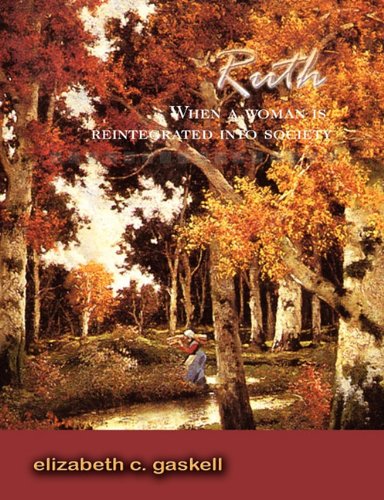
2. Ruth (Nonsuch Classics)
$6.13
3. North and South (Oxford World's
$4.63
4. Mary Barton (Oxford World's Classics)
$11.20
5. Cranford (Penguin Classics)
$42.80
6. Elizabeth Gaskell: The Early Years
$9.94
7. North and South (Norton Critical
$2.68
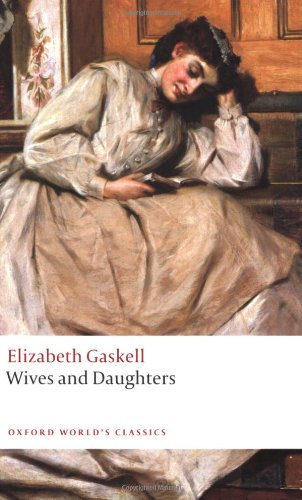
8. Wives and Daughters: In Half the
 
$110.42
9. Elizabeth Gaskell: A Biography
$32.16
10. Wives and Daughters (Dodo Press)
$11.12
11. Cranford / Cousin Phillis (Penguin
$2.96
12. Cranford & Other Stories (Wordsworth
$21.43
13. Cranford (Complete Classics)
$18.90
14. The Cambridge Companion to Elizabeth
$24.85
15. North and South
$11.89
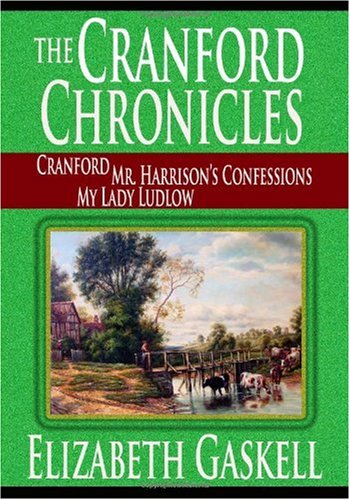
16. Cranford
$8.00
17. Cousin Phyllis (Hesperus Classics)
$14.63
18. Elizabeth Gaskell's Mary Barton
 
$25.00
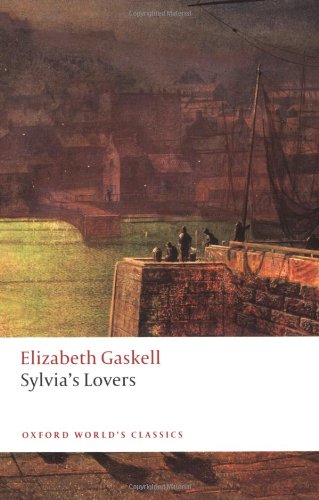
19. Sylvia's Lovers
$82.35
20. Servants and Paternalism in the

1. The Moorland Cottage
by Elizabeth Cleghorn Gaskell
Paperback: 112 Pages (2006-11-08)
list price: US$10.99 -- used & new: US$10.89
(price subject to change: see help)
Asin: 1426448546
Canada | United Kingdom | Germany | France | Japan
Editorial Review

Product Description
If you take the turn to the left, after you pass the lyke-gate at Combehurst Church, you will come to the wooden bridge over the brook; keep along the field-path which mounts higher and higher, and, in half a mile or so, you will be in a breezy upland field, almost large enough to be called a down, where sheep pasture on the short, fine, elastic turf. ... Read more


2. Ruth (Nonsuch Classics)
by Elizabeth Gaskell
 Paperback: 480 Pages (2008-04-01)

Isbn: 1845886232
Average Customer Review: 4.0 out of 5 stars
Canada | United Kingdom | Germany | France | Japan
Editorial Review

Book Description
One of the less familiar of Mrs. Gaskell's novels, Ruth was in its own time a cause celebre which not only contributed substantially to its author's growing reputation but also won the approval of a number of her distinguished contemporaries.The text used for this edition is based upon that
of the first edition published in 1853. ... Read more

Customer Reviews (10)

4-0 out of 5 stars resembles common mistakes & the strenght of society
the story of that girl, and that "mistake" and how 90% of the world closes their door, and turns their back

4-0 out of 5 stars Ruth review
I have read most of Elizabeth Gaskell's books, and like some of her others, this one starts out slow, but builds in interest towards the middle. You really empathize with the main character, and the harsh judgement she receives is shocking by today's standards. The book provided a lot of food for thought and was an enjoyable read.

4-0 out of 5 stars Evocative of life in 19th century England
"Ruth" is one of five books written by Elizabeth Gaskell.It deals with aspects of English life in the first half of the 19th Century.

It is difficult to say much about the plot itself without giving away important details of the story.Suffice to say that Ruth, who is an orphan and from a humble background is put through the wringer of life.

The characters and their actions are often exaggerated to the point of almost being caricatures to modern readers.But this style maximises the emotional content of many of the incidents described in the book and is very typical of "romantic" English literature of the era. The same can be said of Dickens, Thackeray and Jane Austen.

Extended descriptive passages and the drawing-out of emotional scenes can be irritating because it slows down the narrative and is too obvious a device to hook the discerning reader.Presumably readers of the day loved this stuff - much as modern readers go for similar depictions on TV and in print.

However, the narrative itself is gripping, especially towards the end of the book when events reach their climax and the various threads of the plot are drawn together.There are exciting twists and turns in the plot, almost like a modern thriller.This is where Gaskell shines - she is a very skilful constructor of intricate story plots.It is difficult to put the book down as we near the end of the story.

Another area in which Gaskell shines is her depiction of characters, even though they might be standard "types" to readers of the day.

Mr Bellingham, who later changed his name to Mr Donne, is a central figure in the story, yet he is only superficially dealt with by the author.For much of the book he is just a ghostly presence.This appears to me to be such a glaring fault that I assume the handling of Bellingham/Donne was a conscious decision of Gaskell.

I can only assume that by making him such a shadowy, almost trivial, figure Gaskell makes the contrast with Ruth's trials and tribulations even more stark and harrowing.If that is indeed the case, then this book becomes more stylistically sophisticated and modern than a mere tear-jerking romance.

"Ruth", like all Gaskell's books is an enjoyable read for the story alone.One can skip over much of the purple descriptive bits without any loss.The book also gives a valuable insight into attitudes and ways of life in the early 19th century.This will interest readers who love history.Fiction such as this can illuminate social history.


4-0 out of 5 stars Controversial subject (for Victorian readers)
Mrs. Gaskell tackled a very controversial theme in this novel (having a child out of wedlock) and shocked many of her contemporary readers. Ruth Hilton, a dressmaker, is seduced by the wealthy Henry Bellingham; he deserts her, after which she bears his child.Taken in by the kindly Thurston Benson and his sister under the pretense of being a young widow, Ruth gains employment as governess to the Bradshaw family. When Bellingham returns and Ruth will have nothing to do with him, the self-righteous Mr. Bradshaw learns the truth of her past and dismisses her. In a disappointing (though perhaps obligatory for the time) ending, when Bellingham becomes ill with cholera, Ruth goes to his aid, contracts the disease, and dies. Many have questioned why Mrs. Gaskell had to have Ruth die, and it does seem unnecessary, except that throughout the book Ruth has been portrayed almost as perfect as an angel, and perhaps it was to the angels she needed to send her. The most human character (as opposed to typecasts, as most of the others are) is Sally, the Benson's servant girl; she is funny, brutally honest, and wonderfully practical, especially in her dealings with Ruth (the scene where she crops Ruth's hair to make her look like the widow she is claiming to be is delightful). Mrs. Gaskell's purpose in writing the book was to generate sympathy for women who were victims of unscrupulous men; forty years later Thomas Hardy wrote a similar themed novel, TESS OF THE D'URBERVILLES. Ruth and Tess are twin characters in many ways. It's an interesting slice-of-life from the mid-Victorian period.

3-0 out of 5 stars Least Favorite Gaskell Novel
I was surprisingly unimpressed with this book. So far I have read three of Gaskell's other novels -- North and South, Wives and Daughters and Mary Barton. I loved them all. Gaskell's faith, the elegant strength of her heroines, and the attention that she pays to the details of daily life kept me interested and engaged. Gaskell is just such a passionate and compassionate writer.I have loved the way she combines social commentary with fine story telling. But while Ruth starts out just as strong as her other books, I was bored a third of the way through. Ruth's long suffering, her sobbing and sighing and crying through her desertion by Mr. Bellingham, her motherhood, and her stuggle to overcome her sin drove me to distraction. I found this character annoying and insipid. While her early innocence was refreshing I really didn't feel there was much character development after that point. In fact, Ruth seems less like a real person than any of the other characters in Gaskell's novels. If you have never read anything by this author I would not recommend this book as the place to start. Any of the others is a better choice ... Read more


3. North and South (Oxford World's Classics)
by Elizabeth Gaskell
Paperback: 496 Pages (1998-11-19)
list price: US$7.38 -- used & new: US$6.13
(price subject to change: see help)
Asin: 0192831941
Average Customer Review: 4.5 out of 5 stars
Canada | United Kingdom | Germany | France | Japan
Editorial Review

Book Description
`she tried to settle that most difficult problem for women, how much was to be utterly merged in obedience to authority, and how much might be set apart for freedom in working.'North and South is a novel about rebellion.Moving from the industrial riots of discontented millworkers through to the unsought passions of a middle-class woman, and from religious crises of conscience to the ethics of naval mutiny, it poses fundamental questions about the nature of social authority and obedience.Through the story of Margaret Hale, the middle-class southerner who moves to the northern industrial town of Milton, Gaskell skilfully explores issues of class and gender in the conflict between Margaret's ready sympathy with the workers and her growing attraction to the charismatic mill ownder, John Thornton.This new revised and expanded edition sets the novel in the context of Victorian social and medical debate. ... Read more

Customer Reviews (35)

5-0 out of 5 stars An excelent book to any person
You have to get familiar with the characters and then you slowly star to love them all.
At the beggining I felt sorry to poor Mr Lennox,he was a Miss Hale's friend but he took her love for granted and he was rejected by her.
Miss Hale is a nineteen years old girl who has always lived in a confortable way with her parents but some day Mr Hale finds that his faith has change and he can not continue in the church with such doubts and they decided to move to the north of England.
Mrs Hale gets sick because the air and the rhythm or life in such a place is very hard to face however the family find a house where to live and a new way to start all over. They meet Mr John Thornton a mill's owner who wants to become a more educated person learning some literature now that Mr Hale has become a tutor in his new hometown.
The prejudices Miss Hale shows for him at the beggining and the tough way of Mr Thornton made them fell uneasy every time they meet however this are the very things that make them get closer and realize that north and south can not be so different after all and that the things one place lacks can be fulfill by the other place.
It is a masterpiece.I was so glad I bought this incredible good book.
I red it and just want to read it again.

3-0 out of 5 stars A Botch. Not as Good as the Splendid 2004 BBC Miniseries.
The best thing about Elizabeth Gaskell's "North and South" may be that it inspired the superlative 2004 BBC miniseries by the same name. In fact, the miniseries was so good the day I finished watching it I began reading Gaskell's novel.

Given its failings, it is miraculous that director Brian Percival, writer Sandy Welch, Martin Phipps, who wrote the score, and the entire excellent cast were able to create such a stunning miniseries out of this less than stellar novel.

"North and South" has its appeal. If you are interested in class relations in Manchester, England during the Industrial Revolution, and the transition from an agrarian culture to a mercantile one, you have to read this book. And, if you are one of us who was stung by the "North and South" bug thanks to the BBC miniseries, nothing will stop you from reading this novel.

But if you are craving a richly worded, expansively populated, nineteenth century novel, by all means read Dickens, Austen, the Brontes, and their fellow English-language writers in America -- Twain, Alcott -- before you read Gaskell's "North and South."

It's a botch. Gaskell's talent shines through, but her need for a good editor is evident on every page. There are obvious errors, such as her giving one character two separate names. Pages and pages of footnotes and explanatory notes are meant to pick up where Gaskell fell short.

Characterizations of the main characters, Margaret and Thornton, are unforgivably weak. Margaret never became a fully fledged character. Oddly, minor characters -- Mr. Bell and Dixon, a maid -- are much stronger.

The central relationship, between Margaret and John Thornton, is underfed to the point of anorexia. Who are these two people? Why do they care about each other? Do they care about each other? They don't come across as fully rounded human beings at all, but as didactic cut-outsGaskell has trumped up to sell an idea -- and a fine idea it is -- of class and lifestyle reconciliation during a time of traumatic shifts in English traditional life.

Transitions are handled amazingly poorly. Climactic confrontations thud -- or, worse, tinkle -- on the page. Tension is mentioned between two characters, and suddenly you realize that they are in the same room, and, and, and ... nothing happens.

Gaskell constantly -- on almost each page -- makes references to other literature, high and low, familiar and obscure, and much too much of it simply middlebrow. Again, the reader is left to leaf through pages of explanatory notes to penetrate these allusions.

These allusions suggest literary laziness on Gaskell's part. Rather than animating a unique, living, breathing, human being in whom the reader can invest, Gaskell tells us that a given character is like the Biblical Vashti or like Cleopatra.

All these allusions to other literature, and use of allusions to do the work of creating characters or atmosphere that Gaskell's writing is not doing, prevent the reader from ever experiencing the most elemental of literary pleasures -- entering another world. Rather than entering another world when reading Gaskell's "North and South," one enters an annotated Anthology of World Literature. The book tastes of leftovers.

One of the most poignant moments in the BBC miniseries occurs when Mr. Thornton, watching Margaret depart from him, wishes that she would turn her head and look at him one last time. This moment pulses, it feels thrillingly inhabited and spontaneously alive. All distance of time, class, dialect, between the viewer and the 19th century gentleman in the high collar melts. You're certain you've felt the same thing when watching a loved one depart, even if you never have.

In the novel, this scene is crafted with all the subtlety of a putty knife. It's stiff, and it's dead. Here's a quote, from page 399: "...she kept rigidly to her resolution but in the respect and high regard which she had hoped would have ever made him willing, in the spirit of Gerald Griffin's beautiful lines, 'To turn and look back when thou hearest the sound of my name.'"

Be honest, now; don't tell me that that is good writing.

Again, the book has its charms. The BBC miniseries made me fall in love with these characters, and I had to read the book just as a way to avoid letting go of them.

But I wish Mrs. Gaskell had had a better editor, to eliminate the chaff in this book, and burnish the worthy passages that are here to shine as brightly as the good intentions behind their creation warranted.

5-0 out of 5 stars "brutalised both as to his pleasures and his pains"
North and South is a very ambitious novel, and the fact that it has flaws in the execution do not detract from its successes.

It is, first of all, a social novel. It explores the differences between the industrialized north of England and the older more agricultural life in the south. The characters are all gripped by the hand of change-- changing religious beliefs, changing relationships between master and servant, changing expectations of family life and changing socio-economic conditions. What Gaskell does very well in North and South is forefront these critical themes. Since the novel is also a love story, it would have been easy to use the social aspects of the novel as nothing but pretty backdrop. Instead, Gaskell places it front and center-- to the point where occasionally the relationship between Margaret and John feels like nearly an afterthought. I like the emphasis-- it saves the novel from being a Pride & Prejudice retread. It may, however, account for some of the oddities of pacing noted by other reviewers.

As a reader, I really love the small moments in the novel. There is a wonderful scene when Margaret realizes that her habit of visiting the worthy poor is much less acceptable in the industrial north. She recoils when her offer to visit a sick neighbor girl is seen as condescending and possibly unwanted. That small moment captures volumes both about the character of Margaret and about the world in which she lives.

This is the third book by Elizabeth Gaskell that I have read. I believe that it is the best of the three (the others being Mary Barton and Cranford). Considering how much I enjoyed the other two novels, this is very high praise. I would recommend North and South to anyone interested in the social novels of the Victorian period, historical fiction with a focus on labour issues, or works that critiqued the role of women in Victorian society.

It is a moving, entertaining and thought-provoking book.

5-0 out of 5 stars Surprisingly modern tale of class conflict, management theory, and of course, love
I read the book, like many other reviewers here, after I had watched the brilliant BBC miniseries starring Richard Armitage and Daniela Denby-Ashe. I definitely agree with the comments of many reviewers here that you somehow seem to develop a finer appreciation of the nuances of both after doing that.

A lot of reviewers have covered the ground admirably on the story itself, so I won't go into too much detail on that. In addition to the fine development of plot and characters alike, what I found refreshing about the novel were:

a. Unlike a few other writers of her time, Elizabeth Gaskell focuses a lot more on the thought processes and feelings of the male characters in the novel. For example, you don't get to hear a lot of what Darcy or Edward Ferrars are thinking in Pride and Prejudice, or Sense and Sensibility, except almost tangentially. In sharp contrast, Mrs. Gaskell gives quite a detailed peep into what John Thornton and Richard Hale are thinking, throughout the novel. As someone who is always interested in the differences in thought processes between the sexes, I found this to be refreshingly different from other novels of the time.

b. Being in business, it was quite a new experience to read about John Thornton's evolution first as a business owner and then as a "leader", to use that overused term of today. Mrs. Gaskell appears to have a remarkably sophisticated understanding of both management and labor issues. The examples that stand out in my mind - John Thornton's increasing interest in exploring a better construct for labor-management relations beyond the mere "cash nexus" (towards the end of the novel), and his practice of building what we would call a business case today, as he asks Nicholas Higgins to put some figures together for the new cafeteria.

c. A valuable peep into the mores of the time - for example, despite being fond of Bessy Higgins, Margaret recoils in horror at the thought of visiting her after Bessy's death, a point glossed over in the BBC mini-series, - it gives you a rare insight into things like death and burial customs of the time,.

I must agree with a few other reviewers that the last few chapters seem a little rushed, but from an overall perspective, it is hard to beat this novel for its pure wholesome enjoyment value - more serious and deep than a Pride and Prejudice, and still light enough for people like me who cannot take Thomas Hardy. A definite five stars!

5-0 out of 5 stars For Any Romantic Reader!
I loved this book!I liked how the chapters were short, so I could read it in snippets.Elizabeth Gaskell is amazing.I loved the characters and how well written the plot is. ... Read more


4. Mary Barton (Oxford World's Classics)
by Elizabeth Gaskell
Paperback: 480 Pages (2006-04-20)
list price: US$8.95 -- used & new: US$4.63
(price subject to change: see help)
Asin: 0192805622
Canada | United Kingdom | Germany | France | Japan
Editorial Review

Book Description
'It's the masters as has wrought this woe; it's the masters as should pay for it.'Set in Manchester in the 1840s - a period of industrial unrest and extreme deprivation - Mary Barton depicts the effects of economic and physical hardship upon the city's working-class community. Paralleling the novel's treatment of the relationship between masters and men, the suffering of the poor, and the workmen's angry response, is the story of Mary herself: a factory-worker's daughter who attracts the attentions of the mill-owner's son, she becomes caught up in the violence of class conflict when a brutal murder forces her to confront her true feelings and allegiances. Mary Barton was praised by contemporary critics for its vivid realism, its convincing characters and its deep sympathy with the poor, and it still has the power to engage and move readers today.This edition reproduces the last edition of the novel supervised by Elizabeth Gaskell and includes her husband's two lectures on the Lancashire dialect. ... Read more


5. Cranford (Penguin Classics)
by Elizabeth Gaskell
Paperback: 224 Pages (2008-04-01)
list price: US$14.00 -- used & new: US$11.20
(price subject to change: see help)
Asin: 0143039415
Average Customer Review: 4.0 out of 5 stars
Canada | United Kingdom | Germany | France | Japan
Editorial Review

Book Description
A gently comic picture of life in an English country town in the mid-nineteenth century, Cranford describes the small adventures of Miss Matty and Miss Deborah, two middle-aged spinster sisters striving to live with dignity in reduced circumstances. Rich with humor and filled with vividly memorable characters—including the dignified Lady Glenmire and the duplicitous showman Signor Brunoni—Cranford is a portrait of kindness, compassion, and hope.Download Description
In this classic portrait of life in a quiet English village of the early nineteenth century, Elizabeth Gaskell writes with wit and affection of the foibles, follies and endearing eccentricities of its occupants as they struggle to maintain standards in their genteel poverty. This witty and poignant comedy, with its ironic observations on the pretensions of class is told through the eyes of a young woman who befriends the elderly ladies of Cranford. ... Read more

Customer Reviews (15)

4-0 out of 5 stars Cranford: Fading fairy-tale village
Not a novel, not an anthology of short stories, Cranford is perhaps best described as a cohesive series of vignettes. Recounted by a young woman of about 30 from the city of Drumble [Manchester], these stories depict family, friendship, and love lost and found in a village dominated by poor but genteel spinsters and widows. ". . . all the holders of houses, above a certain rent, are women." Small, rural, and elitist in its way, Cranford is a place out of time, where faded fashions and proprieties still matter.

Gaskell begins Cranford with a series of descriptive statements. Some are accurate, while others prove to be ironic. For example, "Although the ladies of Cranford know all each other's proceedings, they are exceedingly indifferent to each other's opinions." While discovering Cranford and the Amazons who possess it, we also learn the dry perspective and voice of the narrator, who clearly loves the village while gently highlighting the foibles of its female inhabitants. "But I will answer for it, the last gigot, the last tight and scanty petticoat in wear in England, was seen in Cranford--and seen without a smile."

Like Gaskell's Wives and Daughters, Cranford is focused on gender roles and the different lives of women and men. The sexes share many characteristics; Captain Brown and Peter Jenkyns display the thoughtful, neighborly solicitude associated with women (with Peter going so far as to don a woman's dress), while Miss Jenkyns (the woman Peter impersonates) exhibits a manly will and resolution. It is the opportunities they have and the way in which they live that separates the sexes. Captain Brown, Peter, and Signor Brunoni have traveled and seen some of the world, and have even influenced it, while Miss Jenkyns, Miss Matty, Miss Price, the narrator, and their friends are constrained by their gender, gentility, and social code to hearth and home. Here, they perform their small household tasks, including ensuring that their maidservants are not disturbed or distracted by "followers," or interested young men. The social code that prevents any of them from working in "trade" also determines the hours that can be spent outside the home. "Then there were rules and regulations for visiting and calls . . . 'from twelve to three are our calling-hours.'"

In such a small, interconnected village, everything that happens is noteworthy, and every decision is important if the occasionally cruel social order is to be maintained. "The whole town knew and kindly regarded Miss Betty Barker's Alderney," whose fall into a lime-pit warrants Captain Brown's advice, "Get her a flannel waistcoat and flannel drawers . . .," so the narrator can ask the reader incredulously, "Do you ever seen cows dressed in grey flannel in London?" Miss Matty's decision not to marry against her family's wishes keeps the peace at great personal cost, and her wistful decision to allow Martha to have a follower recompenses her later when the outside world intrudes into her realm with its ugly realities--one of the many signs that Cranford must and will change. When Lady Glenmire renounces her title and takes the name of Mrs. Hoggins upon her remarriage, Cranford reels with shock and dismay, and it takes Peter Jenkyns, and his broader perspective from India, to reconcile the village and its de facto leader, Mrs. Jamieson, with the new ways.

The narrator, who divides her time between her father in the progressive world of Drumble and the slowly and reluctantly changing Cranford, finds herself under the village's influence. As an observer, she describes the complex set of rules that governs Cranford society and the social slights they necessitate, not without a sense of regret. She is aware of the absurdity of Cranford society's beliefs and behavior combined with expediency, such as the occasion of Miss Betty Barker's party for the Cranford elite. "'Oh, gentility!' thought I, 'can you endure this last shock?'" when "all sorts of good things for supper" appear. ". . . we thought it better to submit graciously, even at the cost of our gentility--which never ate suppers in general--but which, like most non-supper-eaters, was particularly hungry on all special occasions." More seriously, she pities Miss Matty and her lost love and life, and like her other well-meaning friends determines that she shall be happy.

With the arrival of Signor Brunoni and the ensuing panic over the perceived crime wave that seems to hit Cranford, the narrator loses some of her wryness and seems to become nearly as frightened by the rumors of strangers and robberies as her elderly friends. It is the new outsider, Lady Glenmire, who "never had heard of any actual robberies; except that two little boys had stolen some apples from Farmer Benson's orchard and that some eggs had been missed on a market-day off Widow Hayward's stall." Even while caught up in the panic, however, "I could not help being amused at Jenny's position . . .." When she speaks of Jenny's ghost, the narrator says, ". . . for there was no knowing how near the ghostly head and ears might be . . .."

Through the narrator, who seems to represent Gaskell's own perspective, Cranford pokes gentle fun at a time and place that had already become a fairy tale-like setting, where goodness outdoes pettiness, justice prevails over setbacks and hardships, and even the prodigal son (or prince) can return to set things right. In Cranford, Gaskell reminds the reader of a recent past that is both amusing and moving, a time to look upon fondly but without regret for the changes that Peter and the marriage of Lady Glenmire/Mrs. Hoggins bring about. The one constant in life is change, and in Cranford change is at least as much for the better as for the worse.

5-0 out of 5 stars A small gem for Gaskell fans
Cranford by Elizabeth Gaskell, follows the lives of a group of women living in a small English town.

I enjoyed this book very much. More of a collection of stories than a novel, it reminded me of The Pickwick Papers by Charles Dickens, to whom Mrs. Gaskell pays particular homage in more than one place in the book.

Like most Victorian novels, the humor is droll and significant attention is played to social class. But it is also a quick, somewhat easy read, adjectives that don't usually come to mind when describing works of this era.

This is a book about women, a point that Gaskell makes clear in the first line:

"In the first place, Cranford is in possession of the Amazons; all the holders of houses above a certain rent are women."

And while the middle-aged spinsters of Cranford are a far cry from the women warriors who came to the assistance of the Greeks at Troy, the stereotypical rich, handsome man who comes to marry the woman in distress and therefore saves the day is absent from this story.

Told through the eyes of Mary Smith, the two main characters of the novel, Miss Deborah Jenkyns and her sister Matty, put me very much in the mind of the Miss Brownings in Gaskell's final novel, Wives and Daughters. The foibles and misadventures of these two sisters and their circle of friends often had me laughing out loud.

This is a delightful book. Written at a time when a woman's worth was often tied to how well she married, the gently humorous but dignified way in which Gaskell treats her characters in this novel is lovely.

5-0 out of 5 stars Full of charm and wit
Delightful, surely one of the most charming novels ever written. Using the lightest of touches, Mrs. Gaskell pokes fun at the simple people who inhabit the provincial community of Cranford in rural England in the 1840s, a village we are told at the beginning that is curiously "in possession of the Amazons": its male inhabitants nowhere to be found. Told in the form of reports by a frequent visitor to the village (Mary Smith) from a more cosmopolitan place, we are made privy to the disappointments, hopes, fears, and affronts of a number of the female residents, particularly Miss Matty Jenkyns and Mrs. Jamieson. All are related humorously, some wildly so. My favorite scenes include Mrs. Jamieson's defense of Samuel Johnson over Captain Brown's preference for Dickens's Boz and the sad story of Peter Jenkyns who is insulted by his father and runs away to join the navy. But every chapter offers its delights, and it's easy to see, as Frank Swinnerton mentions in the introduction, how many people at one time knew the book by heart. Long a best seller in the Everyman's Library, it's sad to see the book not included in the recent reissue of 100 of that library's most popular books, a gross oversight for sure.

4-0 out of 5 stars Victorian Zen
Sherwood Anderson once described life as a "history of moments".Miss Gaskell has created in Cranford a glimpse into a dying culture of the more egalitiarian rural Bitish Yoemanry of the 18th century collapsing under the urbanization of the society and with a more repressive capitalism to claim the lives and souls of the youth leaving the village for better lives.Goldsmith's the "Deserted Village" comes to mind.

The story is told from the lives of elderly mostly female, spinster as well as widowed community of genteel rural poverty- self imposed and otherwise.Quaint yet, but with vinegary pithiness of death, stoicism and social veneer, in other words real life.This is civilized 19th century social writing at its best, like a journalistic Austen. The unnamed narrator is a wise insightful character commenting on the eccentric and slightly mad village women who make up this world.The rivalry between Captain Brown and Miss Jenkyns based upon their literary preference of Dr. Johnson vs Charles Dickens is especially amusing considering that Cranford first appeared in Dicken's magazine, "Household Words". Endearing and haunting- much more than its surface appearance.

3-0 out of 5 stars A pleasant read for Gaskell fans
Elizabeth Gaskell's Wives & Daughters and North & South have recently become two of my favorite books, so it stood to reason that I should check out her other novels. When I read Cranford I already knew that it wouldn't have a coherent plot, so I wasn't disappointed about that. What I found was a short but slow read made charming because of Gaskell's humor and elegant style of writing.

Plotwise, it reminded me of L.M. Montgomery's stories, because Montgomery usually features young girls being brought up by dominant spinsters in small towns. Cranford doesn't include children of any variety, but similar quirks of aging ladies and domestic life are depicted. Of course, Gaskell's writing is not quite as saccharine as Montgomery's.

Men are so rare in this novel that they are great curiosities, to the main characters and to the reader. My only complaint is that the narrator (I think her name was Mary Smith) did not talk more about herself. Was she destined to grow old without love just like her friend Miss Mattie?

I was tempted to give Cranford 4 stars just because it is Gaskell, but it is not a book I would read more than once or twice. I can't imagine that I would have enjoyed as much if I hadn't already been obsessed with the author. ... Read more


6. Elizabeth Gaskell: The Early Years
by John Chapple
Hardcover: 492 Pages (1997-06-15)
list price: US$52.95 -- used & new: US$42.80
(price subject to change: see help)
Asin: 0719025508
Average Customer Review: 1.0 out of 5 stars
Canada | United Kingdom | Germany | France | Japan
Editorial Review

Book Description

This absorbing study of Elizabeth Gaskell's early life up to her marriage in 1832 is based almost entirely on new evidence. Also, using parish records, marriage settlements, property transfers, wills, record office documents, letters, journals and private papers, John Chapple has recreated the background of one of the nineteenth century's greatest novelists.
... Read more

Customer Reviews (1)

1-0 out of 5 stars Elizabeth Gaskell
I see I'm the first person to review this book, and I can understand why. No one else has read it. That's because it's almost unreadable. The type is very small. The author cannot have omitted a single scrap of his copious research. His selection skills need honing. People with only remote connections to EG, and many with no connection at all, are discussed in tedious detail.

This book is definitely not for the common reader. The details may interest other scholars, and the author is probably justifiably proud of all the new facts he's unearthed, but these do not make for compelling, or even interesting, reading by ordinary fans of literary biographies. ... Read more


7. North and South (Norton Critical Editions)
by Elizabeth Gaskell
Paperback: 608 Pages (2004-11-19)
list price: US$12.50 -- used & new: US$9.94
(price subject to change: see help)
Asin: 0393979083
Average Customer Review: 5.0 out of 5 stars
Canada | United Kingdom | Germany | France | Japan
Editorial Review

Book Description
A revolutionary social and political commentary, North and South solidified Gaskell's place in the company of Victorian England's finest novelists. This Norton Critical Edition of her best-selling novel is annotated and edited by preeminent Gaskell scholar Alan Shelston.

"Contexts" includes contemporary reviews and correspondence related to North and South, along with the full text of Gaskell's 1850 short story "Lizzie Leigh," which, like North and South, is set in industrial Manchester and deals with strong working women. This topic is further addressed in Bessie Rayner Parkes's essay on Victorian working women.

"Criticism" collects eleven assessments of the novel, among them Louis Cazamian's 1904 study of industrial fiction and Hilary Schor's recent study of North and South in the context of discourse analysis.

A Chronology and Selected Bibliography are also included.

About the Series: No other series of classic texts equals the caliber of the Norton Critical Editions. Each volume combines the most authoritative text available with the comprehensive pedagogical apparatus necessary to appreciate the work fully. Careful editing, first-rate translation, and thorough explanatory annotations allow each text to meet the highest literary standards while remaining accessible to students. Each edition is printed on acid-free paper and every text in the series remains in print. Norton Critical Editions are the choice for excellence in scholarship for students at more than 2,000 universities worldwide. ... Read more

Customer Reviews (2)

5-0 out of 5 stars A welcome surprise for a Jane Austen fan!
I was told by my sister that I just HAD to see the BBC miniseries "North and South" based on the book by Elizabeth Gaskell.I am here to repeat that advice but also to add that you don't want to stop there!As a big Jane Austen fan, I was surprised and ashamed to find that I had never heard of Elizabeth Gaskell.I really enjoyed her writing--the story behind "North and South" and the characters were excellent.I also learned so much about England during that time that I did not know.

I highly recommend the Norton Critical Edition of "North and South" as well.It provided helpful footnotes throughout the story and interesting letters and analysis following the conclusion of the novel.I also must again recommend the BBC miniseries...it was a fairly true adaptation, and the characters came to life!I really don't think you'll be disappointed either way--book or DVD!

5-0 out of 5 stars So much more!
I love the Norton Critical Edition because it contains so many secondary sources; from letters to contemporary criticism! That is useful to get a better understanding of this novel and its author. The footnotes are on the page and not somewhere in the back of the book, so it's a very easy to use edition. I'd recommed it for college use. ... Read more


8. Wives and Daughters: In Half the Time (Compact Editions)
by Elizabeth Gaskell
Paperback: 368 Pages (2007-09-01)
list price: US$9.95 -- used & new: US$2.68
(price subject to change: see help)
Asin: 0753822725
Canada | United Kingdom | Germany | France | Japan

9. Elizabeth Gaskell: A Biography (Oxford Paperbacks)
by Winifred Gerin
 Paperback: 336 Pages (1980-07)
list price: US$9.95 -- used & new: US$110.42
(price subject to change: see help)
Asin: 0192812963
Canada | United Kingdom | Germany | France | Japan

10. Wives and Daughters (Dodo Press)
by Elizabeth Gaskell
Paperback: 692 Pages (2007-05-04)
list price: US$42.99 -- used & new: US$32.16
(price subject to change: see help)
Asin: 1406528099
Average Customer Review: 4.5 out of 5 stars
Canada | United Kingdom | Germany | France | Japan
Editorial Review

Book Description
1865 novel from the English novelist and short story writer, whose writings can be seen as critiques of Victorian era attitudes, particularly those toward women, with complex narratives and dynamic women characters.Download Description
To begin with the old rigmarole of childhood. In a country there was a shire, and in that shire there was a town, and in that town there was a house, and in that house there was a room, and in that room there was a bed, and in that bed there lay a little girl; wide awake and longing to get up, but not daring to do so for fear of the unseen power in the next room - a certain Betty, whose slumbers must not be disturbed until six o'clock struck, when she wakened of herself 'as sure as clockwork', and left the household very little peace afterwards. ... Read more

Customer Reviews (35)

3-0 out of 5 stars A VERY slow read...
I have seen this novel recommended to lovers of Austen, but they may find themselves disappointed. Mrs. Gaskell was of an altogether different era than Austen, and compared to the latter author's lightness and elegant wit she downright oozes Victorian ponderousness. The story is a fairly simple one, revolving around a mere handful of characters, and hardly bears protraction to around 600 pages.

A scheming, hypocritical stepmother tries to secure one of the sons of the local, impoverished squire for her own daughter, Cynthia. The younger son falls in love with the frivolous girl, but then sets off on a long scientific expedition to Africa with only a vague engagement settled, and Cynthia strangely indifferent to his adventures. Her stepsister Molly, meanwhile, is the one who has real feelings for him; she is also the one who soon delves beneath all the surfaces and discovers why the eldest son of the squire wasn't interested in marriage, and which secrets govern the whimsical behaviour of her stepsister. The marital ups and downs of Molly's father, a country doctor, and the occasional interference by the local grandees and the town gossips provide secondary plot material.

The outcome is a foregone conclusion, looming large at an early stage - though ironically we never actually reach it, as death whisked the author away before she could pen the final one or two chapters. Her editor wrote an afterword revealing the unravelling of the plot as already sketched out by Gaskell.

It takes some stamina to arrive there. After the first half, the narrative starts to drag, making obvious points over and over again, and deluging the reader with obsessive detail. Once Osborne Hamley's secret and fate have been revealed, it seems as if the author is groping her way towards the predictable end, not sure how to get there. Her predilection for inserting pedantic literary and biblical references at every turn also grows tiring soon enough (and makes an annotated edition a necessity).

Despite all that, there is a general sense of charm; nor can it be denied that there are several well-rounded and believable characters in this book, squire Hamley and the new Mrs. Gibson the most successful among them (the former truly endearing, the latter, however, eventually degenerating into stereotype). For those with a taste for (upper) middle class life in 19th century in England this will hold interest, but I find it hard to believe in this novel as a work of genius, and it certainly doesn't compare favourably to major works by Austen or George Eliot.

5-0 out of 5 stars wives and daughters by elizabeth gaskell
I love this story.For anyone that likes Pride and Prejudice or Jane Eyre.This is in a similar vein but less intense.Very good read and video.

5-0 out of 5 stars Nothing every-day about this Victorian chronicle
With its fairy-tale beginning ("In a country there was a shire, and in that shire there was a town, and in that town there was a house . . ."), the subtitle of Wives and Daughters is gently ironic. While the basic plot is standard--boy and girl meet and overcome many obstacles, including themselves--Gaskell's tale is as much about the rapidly changing Victorian world as about Molly Gibson and her provincial village of Hollingford.

Set before the 1832 Reform Bill, Wives and Daughters consciously brings together England's aristocratic past, represented by Squire Hamley and the upstart earl and countess of Cumnor Towers, and the future, represented by Molly Gibson and Squire Hamley's sons, especially Roger. The elder son, Osborne, puts his own interests and more modern sensibilities above those of his father, while Roger envisions a future of science, exploration, and expansionism. To Mrs. Gibson, who marries to avoid having to work and dependence on the aristocracy, Osborne offers her daughter an entrée into at least the landed gentry, whereas Roger is merely a second son demeaning himself by dabbling in the sciences. Although renowned in London for his travels and discoveries, Roger becomes worthy of her notice only when he is taken into the inner circle of Lord Hollingford and the Towers as a result of his personal achievements.

While the visible action takes place within the small circle of Hollingford, Cumnor Towers, and Hamley Hall, Gaskell encompasses the widening world of rural England. Cynthia attends school in France while the Hamleys are off to Cambridge. The Hamley home is filled with relics from India, while Lady Harriet advises the Miss Brownings on how to obtain the best-priced Indian tea. Cynthia returns from her jaunts to London fashionably dressed and with hints of admirers, while Roger comes back from Africa browned, bearded, and mature in aspect and mien. Even villagers like Miss Hornblower feel the pull of the larger world and the new technology. As Mr. Gibson tells Molly, " . . . if these newfangled railways spread, as they say they will, we shall all be spinning about the world; 'sitting on tea-kettles,' as Phoebe Browning calls it."

The spheres of the sexes are vastly different. Clare Kirkpatrick thinks "how pleasant it would be to have a husband once more; some one who would work while she sat at her elegant ease in a prettily-furnished drawing-room." Even as Mr. Gibson thwarts the advances of Molly's first suitor, he tries to keep his "little goosey" unprepared for anything but life under the protection of a man, either father or husband. He advises her governess, "Don't teach Molly too much: she must sew, and read, and write, and do her sums; but I want to keep her a child, and if I find more learning desirable for her, I'll see about giving it to her myself." As men of science, he and Roger believe themselves to be dispassionate and rational, yet Molly senses their obvious mistakes before they do and that they are more deeply affected than they appear to be. Gaskell's characters, however, do not follow stereotypes. Lord Cumnor, a garrulous gossip, and Squire Hamley, an openly emotional man, are "womanly" in their ways, while Lady Cumnor and her daughter, Lady Harriet, are models of independence and detachment. Rather than assert her own independence and risk upsetting her excitable, patriarchal husband, Mrs. Hamley wastes away, ironically depriving her husband of her management of his emotions and their expression.

Molly is raised to suppress her feelings. As Mrs. Gibson's values clash with those of Mr. Gibson and Molly, he is able to ride off and immerse himself in his work, while Molly can only swallow her emotions or, as a last resort, hide them in solitude. There is hope, however, that Molly can avoid the life for which Mr. Gibson is preparing her, that of an obedient wife. Her life as companion to Mrs. Hamley shows her impressionable mind the folly of pride and the lasting harm it causes as it separates Mr. Hamley and his elder son. Her natural curiosity and intelligence, consciously discouraged by Mr. Gibson, are encouraged by Roger Hamley, who bridges the ancient Hamley past and the future of science and discovery. This future will be built on achievements, not family name, which makes young Osborne's parentage significant only to traditionalists like the squire and Mrs. Gibson. Their vision of the possibilities never extends beyond their own desires and concerns.

In Wives and Daughters, Gaskell addresses myriad issues important to her and her contemporaries--medicine, science, marriage, the family, gender roles, monetary wealth and land wealth, rural mores, the perception of English heritage and strength and French decadence, exploration, and change. Her characters are so richly drawn that the reader begins to anticipate Mrs. Gibson's "infinite nothings" and Mr. Gibson's searing irony. Gaskell imbues some of them with an enticing air of unsolved mystery. What are Mr. Gibson's origins? Who was Jeanie, his first love, and why did he not marry her? How does that and his other early relationships influence his behavior toward Molly? Why, at age 28, does Lady Harriet refuse a good match and seemingly scorn romance? Gaskell does not judge her characters--even Mrs. Gibson has redeeming qualities--nor does she reveal all their secrets. Wives and Daughters is an enlightening, captivating, and, despite its unfinished state, satisfying look at Victorian life and society, the influence of which is still felt.

4-0 out of 5 stars Impressive craftmanship
I wasn't that excited about reading "Wives and Daughters", since I'd just finished "North and South" by Mrs. Gaskell, and found it rather tedious.I was pleasantly surprised.

Gaskell did a fabulous job drawing the characters in this book.Cynthia is one of the most skillfully crafted characters I have ever encountered.She's shallow and selfish, but also very kind and lovable -- and it's completely believable.All the others are very easy to accept as "real people" - something I don't encounter very often in victorian literature.

It's a love story that becomes predictable early on, but the complexities along the way are fascinating.Molly finds herself in the middle of every scandal, although she has nothing to do with any of it.Her stepmother, who throws off phony aristocratic airs at every turn, is actually a very funny character rather than a villain.Though Molly has had to face many hurtful challenges, she never acts victimized.Though she struggles with the choices she has to make, she never loses her strength.

It's sad that Gaskell didn't live to finish this book, but it's pretty much wrapped-up where she left off, so not much is lacking.Don't let that stop you from reading this book.

3-0 out of 5 stars Her Gifts Lay More in the Direction of Social Realism
"Wives and Daughters" is a novel of provincial life, set in the small town of Hollingford. Some commentators have identified this with Mrs Gaskell's own home town, Knutsford in Cheshire, but references to the Malvern Hills and to its proximity to Birmingham suggest that it is located further south, probably in Worcestershire. The action takes place several decades before it was written in 1864-65, although the exact time-frame is difficult to determine exactly. Some topical references, such as to Catholic emancipation which took place in 1829, suggest that the book is set in the late 1820s and early 1830s, but other factors suggest a somewhat later date. (The barrister Mr Kirkpatrick is referred to as a Q.C., not a K.C. as he would have beenbefore the accession of Queen Victoria in 1837).

The main character is Molly Gibson, the daughter of the local doctor. Molly is befriended by Mr Hamley, the local squire, and his wife, who see her almost as a substitute daughter (their own daughter having died in childhood). Molly falls deeply in love with Roger, the Hamleys' academically brilliant younger son, but he sees her only as a friend, being infatuated with Molly's stepsister Cynthia. (Dr Gibson is a widower who has remarried a widow with a daughter around the same age as Molly). Roger is a scientific explorer who travels to Africa in search of new species of animals and plants; his character may have been inspired by the exploits of the likes of Charles Darwin and Alfred Russell Wallace. ("The Origin of Species" had been published only a few years earlier).

The book is clearly influenced by the work of Jane Austen (at times it reads like a pastiche), not only in its subject-matter but also in the way in which Mrs Gaskell tries to draw ironical, satirical pen-portraits of her characters. Cynthia, for example, is beautiful but shallow and fickle, and her mother, Hyacinth Kirkpatrick Gibson, is hypocritical, manipulative, conceited and snobbish. Dr Gibson is generally portrayed as a sensible, level-headed man, so it is not easy to understand why he should have taken such an obnoxious woman as his second wife.

The Austen novel with which "Wives and Daughters" has the greatest affinities is "Mansfield Park". In both books the central male character (Roger/Edmund) is the younger son of an upper-class family, overshadowed by a flashier elder brother (Osborne/Tom), but steady, reliable and decent. In both books he is loved patiently and in secret by a quiet, demure girl (Molly/Fanny) but becomes infatuated with another woman, beautiful but flighty and superficial (Cynthia/Mary). In both cases the patient girl's devotion is rewarded with marriage to the man she loves; Mrs Gaskell died before she could write the final chapters of "Wives and Daughters", leaving it unfinished, but there can be little doubt that this is the ending that she intended. Mrs Gaskell left what may have been a deliberate hint that Austen's book was her inspiration; the Hamleys refer to Molly as "another Fanny", that being the name of their deceased daughter.

I have some sympathy with those readers who preferred Cynthia, who for all her obvious character flaws is at least a rounded human being, to the idealised but insipid Molly. (But then, I am one of those who hoped that "Mansfield Park" would end with Edmund marrying Mary rather than Fanny, surely Austen's dullest heroine). Mrs Gaskell seemed to try so hard to make Molly good that she forgot to make her interesting.

Some of the most interesting scenes in the book were those involving Roger's older brother Osborne and his clandestine marriage to a French nursery maid. Osborne needs to keep this marriage a secret because his autocratic father, who has set his heart on a brilliant, financially advantageous match for his son and heir, would not welcome a daughter-in-law who was foreign, a Catholic and a former servant. I felt, however, that this potentially interesting theme was wasted by being relegated to a sub-plot, and wished that Mrs Gaskell had paid more attention to Osborne and Aimee and less to the Roger/Molly/Cynthia triangle.

At well over 600 pages this is a long book, much longer than any of Austen's, being a product of the system of publishing by weekly or monthly instalments, a system which had the effect of inflating by a considerable amount the average lengthof a novel during this period. Dickens also used this method of publishing, but although he was occasionally guilty of padding his books he was generally able to turn the system to his advantage by producing plots of ingenious complexity and finishing each episode at a dramatic point in the narrative. The plot of "Wives and Daughters", however, is too slender to support such a weighty book, and at times I found it frustrating as the action was slowed down to a standstill by yet another lengthy and discursive conversation a propos (to use a typically Gaskellian phrase) of nothing. (The book was successfully adapted as a TV series a few years ago, possibly because the dramatist was able to keep the basic plot but to prune out the duller passages) There were characters whose appearances I learned to dread, particularly the Misses Browning, a tedious pair of garrulous spinster sisters. Even the satire at the expense of Hyacinth, amusing at first, gradually became repetitive; Mrs Gaskell seems to have lacked Austen's gift for playful irony.

Elizabeth Gaskell is often regarded today as a novelist of the early Victorian industrial North, writing social-realist novels which tackled the problems of poverty, unemployment and labour relations ("Mary Barton", "North and South") and unmarried motherhood ("Ruth"). In "Wives and Daughters" she tried to move into Austen's territory, love and marriage among the provincial upper and upper-middle classes, but my view is that her gifts lay much more in the direction of social realism.
... Read more


11. Cranford / Cousin Phillis (Penguin Classics)
by Elizabeth Gaskell
Paperback: 368 Pages (1977-01-27)
list price: US$12.00 -- used & new: US$11.12
(price subject to change: see help)
Asin: 0140431047
Average Customer Review: 3.5 out of 5 stars
Canada | United Kingdom | Germany | France | Japan

Customer Reviews (3)

5-0 out of 5 stars Meet the Cranford Ladies, and Enjoy the Tragicomedy of Human Nature
(This is a book review about `Cranford' and `Cousin Phillis' of the Penguin Classics edition, edited by Peter Keating.)

[CRANFORD] Elizabeth Gaskell's `Cranford' is very different from her more serious `Mary Barton' and `North and South,' both written with socially conscious messages. In fact, its basic tone is comedy (or tragicomedy) set against the background of the changing local community of Cranford, or `Our Society' which is, as the narrator says, "in possession of the Amazons."

The main characters are all elderly ladies. You meet kind-hearted and timid Miss Matty with her domineering sister Deborah, the most memorable characters in this town. Narrated by one Mary Smith, we are introduced to the small world of Cranford, where smallest things can be pleasure or trouble such as `conjuror' Signor Brunoni amazing the ladies in the town's Assembly Room, or some rumor about `robbery' and even `ghosts' that scare them in `Darkness-Lane.' There is Lady Glenmire, who comes to Cranford, and shocks the community by marrying a doctor (and becoming `Mrs. Hoggins'). With these episodes, Elizabeth Gaskell deftly describes the sisterhood among the gossipy ladies with deep sense of sympathy, and the events are described with her sure-handed touch, which provides funny moments and occasional pathos.

Some part may not be interesting today. Captain Brown and Miss Jenkyns have an argument about the merit of novel reading, and while Captain praises Dickens' `Pickwick Papers,' Miss Jenkyns insists on the superiority of Samuel Johnson This is not only an in-joke (`Cranford' first appeared as eight-part serial in Dickens' Household Words first in 1851), it also reflects that these ladies in Cranford stick to their strict social codes that are clearly getting too old outside the community. The scene itself is humorous, and behind the humor you can find the author's keen eye for details.

But the book can be enjoyed without such historical knowledge, and there are many touching scenes concerning Miss Matty's life. As `Cranford' is written without concrete planning, the entire work looks very episodic. Actually it is episodic (and that's why one major character suddenly disappear at Chapter 2), and it should be read as such, like a series of sketches or short stories.

[COUSIN PHILLIS] `Cousin Phillis' is first published as four-part serial in 1863, and is about a fleeting love affair in a rural community, where the titular daughter of a `minister' (and self-help type of farmer) lives quietly. This is what we call a `novella' and its tone is sadder than `Cranford' but still is written with well-observed descriptions of the characters and the community that we know would undergo drastic change sooner or later.

THE PENGUIN edition by PETER KEATING contains Appendix A: `The Last Generation in England' and Appendix B: `The Cage at Cranford' both by Gaskell. The first one would throw light on the background of Cranford, and the second one (a sequel written about 10 years after the original) is an enjoyable (if not outstanding) short story.

`Cranford' is a delightful book that reminded me of E.F. Benson's equally delightful Mapp and Lucia books. Teachers may not use these books as text in the English literature courses in university, but the fact remains that these books are as priceless as any other Victorian novels.

3-0 out of 5 stars The last sentence should be " to be continued"
One of the books in which every thing seems to be so perfect and good ,but in the end everything is ruined.It is one of the book, which I never wanted toend.It justs need a little sentence in the end and that is "to be continued" .

3-0 out of 5 stars Cousin 90 days you might still be reading
It took me several months to finish this rather short book. The plot isfairly simple with nary a twist, the characters admirable but somewhatone-dimensionable.It seems to be an ode to conservatism--a longing forthe "peace of the old days."As a fan of 19th century Englishlit, this left me wondering why Elizabeth Gaskell is considered a classicwriter; admittedly I haven't read some of her better known works such as"North and South." ... Read more


12. Cranford & Other Stories (Wordsworth Classics)
by Elizabeth Gaskell
Paperback: 544 Pages (2006-07-10)
list price: US$5.99 -- used & new: US$2.96
(price subject to change: see help)
Asin: 1840224517
Canada | United Kingdom | Germany | France | Japan
Editorial Review

Product Description
With an Introduction and Notes by Professor Emeritus John Chapple, University of Hull The sheer variety and accomplishment of Elizabeth Gaskell s shorter fiction is amazing. This new volume contains six of her finest stories that have been selected specifically to demonstrate this, and to trace the development of her art. As diverse in setting as in subject matter, these tales move from the gentle comedy of life in a small English country town in Dr Harrison s Confessions, to atmospheric horror in far north-west Wales with The Doom of the Griffiths. The story of Cousin Phillis, her masterly tale of love and loss, is a subtle, complex and perceptive analysis of changes in English national life during an industrial age, while the gripping Lois the Witch recreates the terrors of the Salem witchcraft trials in seventeenth-century New England, as Gaskell shrewdly shows the numerous roots of this furious outbreak of delusion. Whimsically modified fairy tales are set in a French chateau, while an engaging love story poetically evokes peasant life in wine-growing Germany. ... Read more


13. Cranford (Complete Classics)
by Elizabeth Cleghorn Gaskell
Audio CD: 6 Pages (2008-01-08)
list price: US$34.98 -- used & new: US$21.43
(price subject to change: see help)
Asin: 962634850X
Canada | United Kingdom | Germany | France | Japan

14. The Cambridge Companion to Elizabeth Gaskell (Cambridge Companions to Literature)
Paperback: 238 Pages (2007-03-19)
list price: US$29.99 -- used & new: US$18.90
(price subject to change: see help)
Asin: 0521609267
Canada | United Kingdom | Germany | France | Japan
Editorial Review

Book Description
In the last few decades Elizabeth Gaskell has become a figure of growing importance in the field of Victorian literary studies. She produced work of great variety and scope in the course of a highly successful writing career that lasted for about twenty years from the mid-1840s to her unexpected death in 1865. The essays in this Companion draw on recent advances in biographical and bibliographical studies of Gaskell and cover the range of her impressive and varied output as a writer of novels, biography, short stories, and letters. The volume, which features well-known scholars in the field of Gaskell studies, focuses throughout on her narrative versatility and her literary responses to the social, cultural, and intellectual transformations of her time. This Companion will be invaluable for students and scholars of Victorian literature, and includes a chronology and guide to further reading. ... Read more


15. North and South
by Elizabeth Cleghorn Gaskell
Hardcover: 516 Pages (2007-11-12)
list price: US$24.95 -- used & new: US$24.85
(price subject to change: see help)
Asin: 1934648248
Canada | United Kingdom | Germany | France | Japan
Editorial Review

Book Description
NORTH AND SOUTH (1854) by Elizabeth Gaskell is both a social commentary and the romantic story of a young lady, Margaret Hale, who is relocated with her family from the affluent South of England to the industrial North.

Margaret comes in contact with the difficulties of the working class and her sympathies are engaged.She also encounters the fascinating John Thornton, a wealthy local mill owner and a man of true integrity.Romantic tension ensues, reminiscent of Jane Austen's PRIDE AND PREJUDICE. However, unlike an Austen heroine, Margaret lives in a world of harsher realities, with few things whitewashed, and suffering going hand in hand with ultimate exultation.

A classic portrayal of nineteenth century industrialization, and of the complexities of the human heart. ... Read more


16. Cranford
by Elizabeth Cleghorn Gaskell
Paperback: 178 Pages (2006-07-13)
list price: US$11.99 -- used & new: US$11.89
(price subject to change: see help)
Asin: 1426409338
Canada | United Kingdom | Germany | France | Japan
Editorial Review

Product Description
Short excerpt: In the first place, Cranford is in possession of the Amazons; all the holders of houses above a certain rent are women. ... Read more


17. Cousin Phyllis (Hesperus Classics)
by Elizabeth Gaskell
Paperback: 124 Pages (2007-05-28)
list price: US$13.95 -- used & new: US$8.00
(price subject to change: see help)
Asin: 1843911469
Canada | United Kingdom | Germany | France | Japan
Editorial Review

Book Description

A haunting, beautifully controlled novella, Cousin Phyllis is considered to be among Elizabeth Gaskell's finest short works. Lodging with a minister on the outskirts of London, Paul Manning is initially dismayed to discover that the uncle he must visit in the country is also a churchman. Yet far from the oppressively religious household he envisages, Manning is delighted to meet his genial relations—not least, his cousin Phyllis. But when Phyllis falls for the charms of his more sophisticated colleague, Manning's family ties render him powerless to prevent the inevitable heartbreak that ensues. Collaborator and friend of Charles Dickens and Wilkie Collins, Elizabeth Gaskell (1810–1865) is a leading figure in Victorian literature.
... Read more

18. Elizabeth Gaskell's Mary Barton
Paperback: 106 Pages (2007-04)
list price: US$18.95 -- used & new: US$14.63
(price subject to change: see help)
Asin: 1854599518
Canada | United Kingdom | Germany | France | Japan
Editorial Review

Book Description

Set in Manchester between 1837 and 1842, Elizabeth Gaskell's first novel paints a powerful and moving picture of working-class life in Victorian England. It concerns Mary Barton, a mill worker's daughter eager to rise through the ranks, and her father, who shoots dead the mill owner's son. This adaptation offers a stirring narrative with real insight into the lives of the Victorian working classes.

... Read more

19. Sylvia's Lovers
by Elizabeth Cleghorn Gaskell
 Hardcover: Pages (2001-09)
list price: US$25.00 -- used & new: US$25.00
(price subject to change: see help)
Asin: 1582871671
Average Customer Review: 4.0 out of 5 stars
Canada | United Kingdom | Germany | France | Japan
Editorial Review

Product Description
The magic tale of three live interwoven by love, deceit, courage and sacrifice. Twelve 90-minute cassettes. ... Read more

Customer Reviews (1)

4-0 out of 5 stars History's Cold Shadow
In this bleak novel Elizabeth Gaskell deftly weaves a dark thread of history into her narrative tapestry.While war hovers on the margins of the novel, no one is left unaffected by its horror.After a sometimes painfully slow setup of domestic life in the seaside town of Monkshaven in the first third of the book, the sense of doom grows increasingly palpable.Sylvia, the novel's heroine, is isolated by her supposedly protective domestic sphere, but Gaskell shatters the delicate domestic circle that surrounds her.While Sylvia is left to bear emotional scars, becoming an impassive, hardened woman, Charley Kinraid, her true love, returns from war a ghost, haunting the margins of Monkshaven to hide his terrible physical scars.The full realization of the blight on Sylvia's life comes when the novel spirals down to its inevitable conclusion, where even reconciliation and understanding brings a powerful sense of loss. ... Read more


20. Servants and Paternalism in the Works of Maria Edgeworth and Elizabeth Gaskell (The Nineteenth Century Series)
by Julie Nash
Hardcover: 142 Pages (2007-11-12)
list price: US$89.95 -- used & new: US$82.35
(price subject to change: see help)
Asin: 075465639X
Canada | United Kingdom | Germany | France | Japan

  1-20 of 100 | Next 20
A  B  C  D  E  F  G  H  I  J  K  L  M  N  O  P  Q  R  S  T  U  V  W  X  Y  Z  

Prices listed on this site are subject to change without notice.
Questions on ordering or shipping? click here for help.

site stats