
|
Help |
| Home - Authors - Barnes Julian (Books) | |
e99 Online Shopping Mall
|
|
Help |
| Home - Authors - Barnes Julian (Books) | |
| 1-20 of 100 | Next 20 |
click price to see details click image to enlarge click link to go to the store
| 1. Nothing to Be Frightened Of (Vintage) by Julian Barnes | |
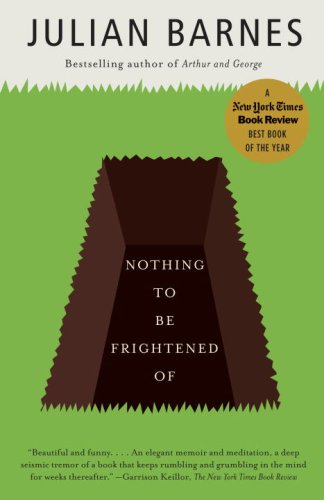 | Paperback: 256
Pages
(2009-10-06)
list price: US$15.00 -- used & new: US$6.98 (price subject to change: see help) Asin: 0307389987 Average Customer Review: 
Canada | United Kingdom | Germany | France | Japan |
|
Editorial Review Product Description Customer Reviews (28)
| |
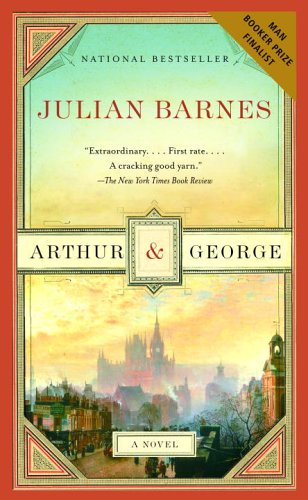
| 2. Arthur & George by Julian Barnes | |
 | Paperback: 464
Pages
(2007-01-09)
list price: US$16.00 -- used & new: US$4.00 (price subject to change: see help) Asin: 1400097037 Average Customer Review: 
Canada | United Kingdom | Germany | France | Japan |
|
Editorial Review Product Description The victimization of George takes the form of nasty letters, the theft of a school key, and finally, the accusation that he has mutilated animals.Meanwhile, Arthur is becoming more and more famous for creating Sherlock Holmes, whom he tries to kill off once and is forced to resurrect because of his fans' outcry.He marries, fathers two children and then, when his wife is invalided by consumption, falls madly in love for the first time with Jean Leckie. The novel's style is smoothly revelatory.We slowly come to realize that George is half-Indian, that Arthur is the famous Doyle, that the woman he loves, chastely,is not his wife and, sadly, that George will not prevail over the forces ranged against him. When George, desperate to resume his law career after imprisonment, sends Arthur the sad chronicle of his history, Arthur sees immediately that he could not be guilty and sets out to clear his name.This case of George's lifts Arthur from the slough of despond into which he has sunk after his wife, Touie, dies.He is guilt-ridden, constantly wondering if he was attentive enough, if she could possibly have known about Jean.Realizing the immense injustice George has suffered, he is shaken out of lethargy and, in Holmesian fashion, sets out to solve the case. Julian Barnes is a gifted writer of enormous accomplishment.This novel is thoroughly engrossing, filled with Barnes's trademark themes of identity and love, longing and loss, and ultimately, an examination of man's inhumanity to man. --Valerie Ryan Customer Reviews (99)
| |
| 3. Flaubert's Parrot by Julian Barnes | |
 | Paperback: 192
Pages
(1990-11-27)
list price: US$15.00 -- used & new: US$7.36 (price subject to change: see help) Asin: 0679731369 Average Customer Review:
Canada | United Kingdom | Germany | France | Japan |
|
Editorial Review Product Description On the surface, at first, Julian Barnes's book is the tale of an elderly Englishdoctor's search for some intriguing details of Flaubert's life. GeoffreyBraithwaite seems to be involved in an attempt to establish whether aparticularly fine, lovely, and ancient stuffed parrot is in fact oneoriginally "borrowed by G. Flaubert from the Museum of Rouen and placed onhis worktable during the writing of Un coeur simple, where it iscalled Loulou, the parrot of Felicité, the principal character of thetale." What begins as a droll and intriguing excursion into the minutiae ofFlaubert's life and intellect, along with an attempt to solve the smallpuzzle of the parrot--or rather parrots, for there are two competing forthe title of Gustave's avian confrere--soon devolves into something obscureand worrisome, the exploration of an arcane Braithwaite obsession that isperhaps even pathological. The first hint we have that all is not as itseems comes almost halfway into the book, when after a humorouslycantankerous account of the inadequacies of literary critics, Braithwaitecloses a chapter by saying, "Now do you understand why I hate critics? Icould try and describe to you the expression in my eyes at this moment; butthey are far too discoloured with rage." And from that point, things justget more and more curious, until they end in the most unexpected bang. One passage perhaps best describes the overall effect of this extraordinarystory: "You can define a net in one of two ways, depending on your point ofview. Normally, you would say that it is a meshed instrument designed tocatch fish. But you could, with no great injury to logic, reverse the imageand define the net as a jocular lexicographer once did: he called it acollection of holes tied together with string." Julian Barnes demonstratesthat it is possible to catch quite an interesting fish no matter how youdefine the net. --Andrew Himes Customer Reviews (37)
| |
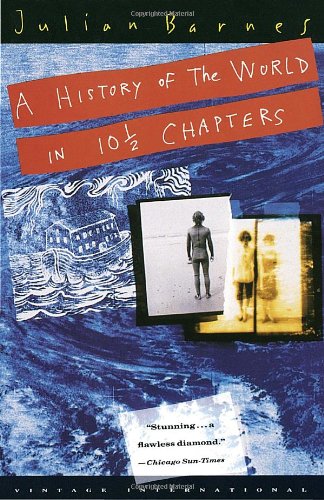
| 4. A History of the World in 10 1/2 Chapters by Julian Barnes | |
 | Paperback: 320
Pages
(1990-11-27)
list price: US$15.95 -- used & new: US$8.00 (price subject to change: see help) Asin: 0679731377 Average Customer Review:
Canada | United Kingdom | Germany | France | Japan |
|
Editorial Review Product Description Customer Reviews (60)
| |
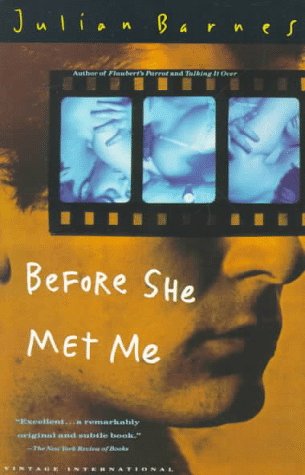
| 5. Before She Met Me by Julian Barnes | |
 | Paperback: 192
Pages
(1992-10-27)
list price: US$15.00 -- used & new: US$5.90 (price subject to change: see help) Asin: 0679736093 Average Customer Review: 
Canada | United Kingdom | Germany | France | Japan |
|
Editorial Review Product Description Customer Reviews (18)
| |
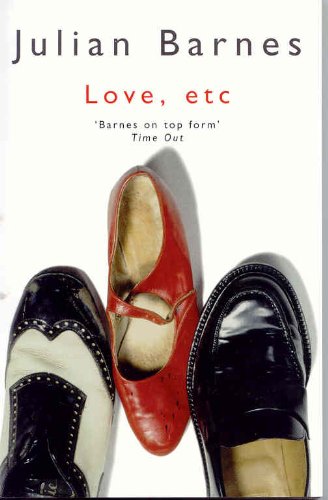
| 6. Love, Etc by Julian Barnes | |
 | Paperback: 240
Pages
(2001-06)
list price: US$16.50 -- used & new: US$7.34 (price subject to change: see help) Asin: 0330484184 Average Customer Review:
Canada | United Kingdom | Germany | France | Japan |
|
Editorial Review Product Description Customer Reviews (2)
| |
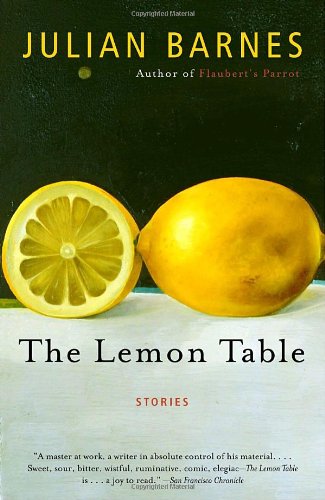
| 7. The Lemon Table by Julian Barnes | |
 | Paperback: 256
Pages
(2005-04-05)
list price: US$13.95 -- used & new: US$6.42 (price subject to change: see help) Asin: 1400076501 Average Customer Review:
Canada | United Kingdom | Germany | France | Japan |
|
Editorial Review Product Description Customer Reviews (21)
| |
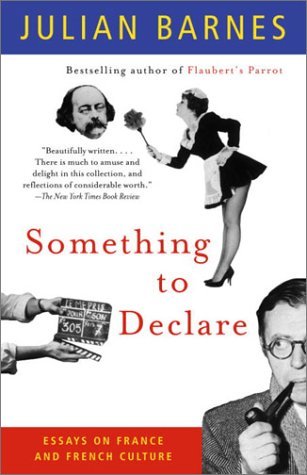
| 8. Something to Declare: Essays on France and French Culture by Julian Barnes | |
 | Paperback: 320
Pages
(2003-09-09)
list price: US$14.95 -- used & new: US$6.99 (price subject to change: see help) Asin: 1400030870 Average Customer Review: 
Canada | United Kingdom | Germany | France | Japan |
|
Editorial Review Product Description Customer Reviews (4)
| |
| 9. England, England by Julian Barnes | |
 | Paperback: 288
Pages
(2000-04-11)
list price: US$15.00 -- used & new: US$6.91 (price subject to change: see help) Asin: 0375705503 Average Customer Review:
Canada | United Kingdom | Germany | France | Japan |
|
Editorial Review Product Description Customer Reviews (39)
| |
| 10. The Pedant in the Kitchen by Julian Barnes | |
 | Paperback: 136
Pages
(2004-05-13)
list price: US$16.50 -- used & new: US$6.42 (price subject to change: see help) Asin: 1843542404 Average Customer Review:
Canada | United Kingdom | Germany | France | Japan |
|
Editorial Review Product Description Customer Reviews (5)
| |
| 11. The Porcupine (First edition) by Julian Barnes | |
| Paperback:
Pages
(1992)
-- used & new: US$23.95 (price subject to change: see help) Asin: B000OPFX1W Canada | United Kingdom | Germany | France | Japan | |
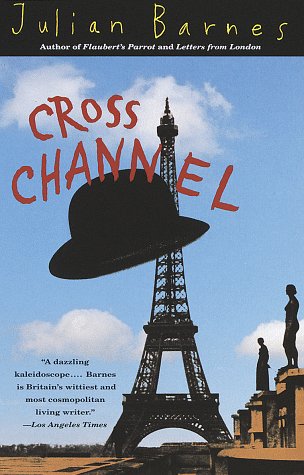
| 12. Cross Channel by Julian Barnes | |
 | Paperback: 224
Pages
(1997-02-11)
list price: US$13.00 -- used & new: US$1.96 (price subject to change: see help) Asin: 067976755X Average Customer Review:
Canada | United Kingdom | Germany | France | Japan |
|
Editorial Review Product Description Customer Reviews (3)
The commonality here is not as apparent as in his "History Of The World", or other collections that carry a continuous thread. There is the consistency of the experiences of the English and the French, and the events they share, memorialize, desecrate, and impose upon one another. The most interesting manner by which these stories are linked is literally explained in the final sentence. It is not a clumsy device, but a bit of insight typical of Mr. Barnes. While a given story may not encompass a great swath of time, when taken as an assemblage the reader tours the Centuries ranging from the 17th to the 21st. And while not heavy handed, he manages to bring together the farthest stretches of time in his stories to common points. They are often subtle, other times less so, but always inventive. Two aspects I enjoyed were the use of "The Dragons", and the part wine played in this writing. Many of the stories are lighter, highlighting relationships, shared positive experience, and success. Mr. Barnes brings balance to this anthology by also exposing the darker sides of man's history, as well as his attributes. We watch Religious fervor visited with a cruelness that is painfully unique to the religiously persecuted, one person's vision of a time when sacrifice will not longer be remembered much less honored, and the events that the future does unfold. Memories play a variety of roles even when uttered by the same individual. The reader can decide if the recalled thoughts are revisionary, romanticized, or outright fabrication. But whichever category you choose you will be greatly entertained.
| |
| 13. Talking It Over by Julian Barnes | |
 | Paperback: 288
Pages
(1992-10-27)
list price: US$16.00 -- used & new: US$4.50 (price subject to change: see help) Asin: 0679736875 Average Customer Review:
Canada | United Kingdom | Germany | France | Japan |
|
Editorial Review Product Description Customer Reviews (22)
| |
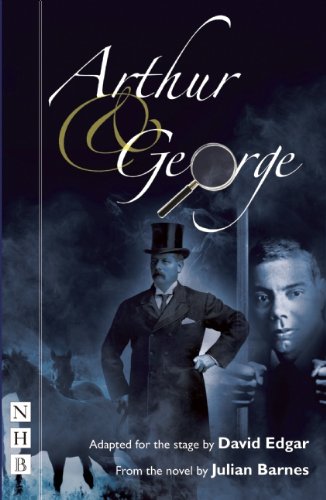
| 14. Arthur & George by Julian Barnes | |
 | Paperback: 112
Pages
(2011-04-01)
list price: US$18.95 -- used & new: US$12.89 (price subject to change: see help) Asin: 184842096X Average Customer Review:
Canada | United Kingdom | Germany | France | Japan |
|
Editorial Review Product Description The gripping story of the sensational, real-life case. In 1903, Birmingham solicitor George Edalji was found guilty of a crime and sentenced to seven years' imprisonment. Desperate to prove his innocence, he recruited Sir Arthur Conan Doyle, creator of Sherlock Holmes, to help solve his case and win him a pardon. Customer Reviews (7)
| |
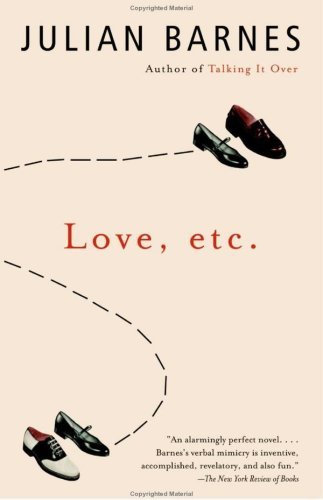
| 15. Love, etc. by Julian Barnes | |
 | Kindle Edition: 240
Pages
(2007-12-18)
list price: US$12.00 Asin: B000XUAEBW Average Customer Review:
Canada | United Kingdom | Germany | France | Japan |
|
Editorial Review Product Description In Love, Etc. Barnes adopts the same technique he used in theearlier installment, allowing his characters to speak their innermostthoughts and secrets directly to the reader--and just about everybody gets somegood lines. (Oliver: "Yes, everything went swimmingly, which is a verypeculiar adverb to apply to a social event, considering how most humanbeings swim.") But the book is also a bewitchingly intimate excursion intobetrayal and jealousy. With painstaking detail, Barnes creates a vibrantportrait of a modern love triangle--as funny as it is cruel, as absurd asit is deep. Few contemporary writers can portray Middle England, with allits temptations, so darkly. --Matthew Baylis Customer Reviews (12)
And it looks awful. Really awful. I identified myself with Oliver pretty much while reading the first book; after all, he's smart, quick-witted, and loves long words such as "crepuscular" (I've noticed that Barnes is personally extremely fond of this word himself; there's rarely a novel which goes without this word). But look what life has done to him. And how Stuart matured and vintaged, if this is a valid word. And worst of all, it is so bloody realistic. Can't any of us count several Olivers, bright and brilliant, with high hopes (both their own and imposed on them by others), and utterly devastated and reduced to near-nothingness by the age when one should be in one's creative prime? This does not spur me into going for ecological trade, or banking, or whatever it is what Stuart is or was doing. But this novel is an earnest warning to all us Olivers out there. ... Read more | |
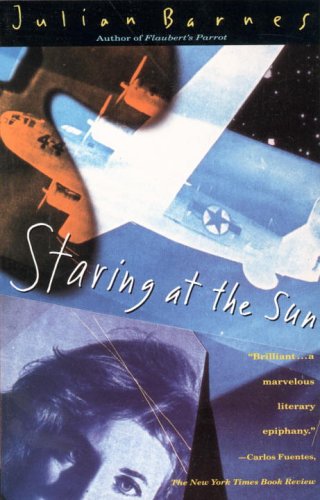
| 16. Staring at the Sun by Julian Barnes | |
 | Paperback: 208
Pages
(1993-09-28)
list price: US$15.00 -- used & new: US$2.50 (price subject to change: see help) Asin: 0679748202 Average Customer Review:
Canada | United Kingdom | Germany | France | Japan |
|
Editorial Review Product Description Customer Reviews (7)
| |
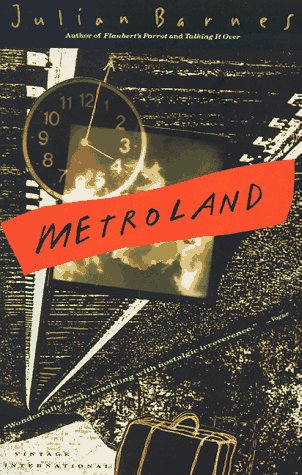
| 17. Metroland by Julian Barnes | |
 | Paperback: 176
Pages
(1992-10-27)
list price: US$11.95 -- used & new: US$3.86 (price subject to change: see help) Asin: 0679736085 Average Customer Review:
Canada | United Kingdom | Germany | France | Japan |
|
Editorial Review Product Description Julian Barnes could probably fill several books with these boys' clevermisadventures, but in his first novel he attempts something moredaring--the curve from youthful scorn to adult contentment. In 1968,when Chris goes off to Paris, he misses the May événementsbut manages, more importantly, to fall in love and learn the pleasuresof openness: "The key to Annick's candour was that there was no key. Itwas like the atom bomb: the secret is that there is no secret." Thefinal section finds Chris back in suburbia, married, with children and amortgage, and slowly accepting the surprise that happiness isn't boring."It's certainly ironic to be back in Metroland. As a boy, what would Ihave called it: le syphilis de l'âme, or something like that, Idare say. But isn't part of growing up being able to ride irony withoutbeing thrown?" Far from renouncing the joys of language, this novelwittily celebrates honest communication. --Kerry Fried Customer Reviews (13)
The secret shame of the book's main character is having been in Paris through May of 1968 and not even noticing the student revolution, much less participating in it. But then, he was in love. This book lays foundation for almost every recurring theme of Barnes's future writing: the anxiety of growing up, the middle-class identity, the French connection, sex, love, etc. It is less enthralling than "Talking It Over" or "Before She Met Me", but still an excellent novel. Oh, and yes! It must have been noted already, and probably many times, but for me it was a small personal revelation. In "Flaubert's Parrot" the narrator ridicules the author of some first novel or other, who mentiones in his book the first forbidden edition of "Madame Bovary". The narrator's sting points at the fact that there have never been such a thing, and the poor chap must have meant "Les fleurs du mal". The passage ridiculed in "Flaubert's Parrot" is taken from "Metroland". Postmodernism rules. Or does it?
| |
| 18. Conversations with Julian Barnes (Literary Conversations Series) | |
 | Paperback: 212
Pages
(2009-03-23)
list price: US$22.00 -- used & new: US$13.95 (price subject to change: see help) Asin: 1604732040 Canada | United Kingdom | Germany | France | Japan |
|
Editorial Review Product Description Conversations with Julian Barnes collects eighteen interviews, conducted over nearly three decades, by journalists and correspondents throughout the world with the author (b. 1946) of such highly praised novels as FlaubertÂ's Parrot and Arthur & George. The interviews collectively address the entirety of Julian BarnesÂ's varied works and provide readers the most vivid portrait yet of contexts and influences behind his ten novels, his short stories, and his essays. The interviews focus not only on the authorÂ's fiction but also on his essays, translations, and pseudonymous writings. BarnesÂ's evolving understanding of the themes developed in his works (history, truth, love, art, and death), his views on the art of the writing process, and the role of authors in contemporary society are also discussed at length. | |
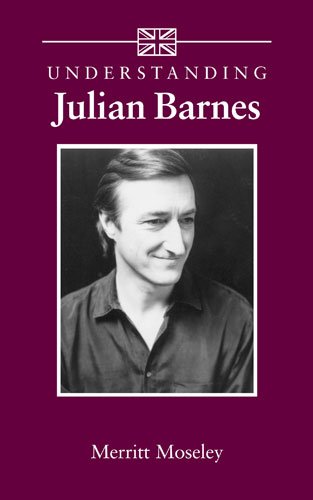
| 19. Understanding Julian Barnes (Understanding Contemporary British Literature) by Merritt Moseley | |
 | Paperback: 216
Pages
(2009-08-31)
list price: US$21.95 -- used & new: US$21.95 (price subject to change: see help) Asin: 1570038759 Canada | United Kingdom | Germany | France | Japan |
|
Editorial Review Product Description In evaluating Barnes’s fiction, Moseley discusses the novelist’s admiration for Gustave Flaubert, identifies his technical and thematic concerns, and explores the intrigue surrounding his divided career as a writer of serious novels, published under his own name, and of detective thrillers, published under the pseudonym Dan Kavanagh. Moseley provides close readings of Barnes’s book-length works, defending the writer against the charge that some of these volumes should not be considered novels at all and examining his commitment to writing books rich in the exploration of serious ideas. | |
| 20. Language, History, and Metanarrative in the Fiction of Julian Barnes (Studies in Twentieth-Century British Literature, Vol. 3) by Bruce Sesto | |
| Hardcover: 136
Pages
(2001-10)
list price: US$47.95 -- used & new: US$40.76 (price subject to change: see help) Asin: 0820444677 Canada | United Kingdom | Germany | France | Japan | |
| 1-20 of 100 | Next 20 |
 A free manthinks of nothing more than Death
 Could not even finish
 Barnes and Falubert