e99 Online Shopping Mall

Geometry.Net - the online learning center Help  
Home  - Artists - Munch Edvard (Books)

  1-20 of 100 | Next 20
A  B  C  D  E  F  G  H  I  J  K  L  M  N  O  P  Q  R  S  T  U  V  W  X  Y  Z  

click price to see details     click image to enlarge     click link to go to the store

$30.18
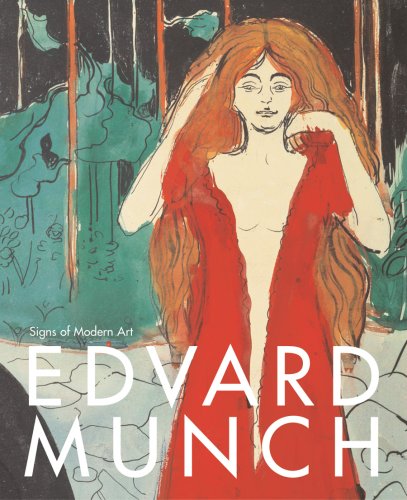
1. Edvard Munch: Signs of Modern
$10.98
2. Edvard Munch: Behind the Scream
$14.49
3. Munch: In His Own Words
$499.97
4. Edvard Munch: The Complete Graphic
$18.76
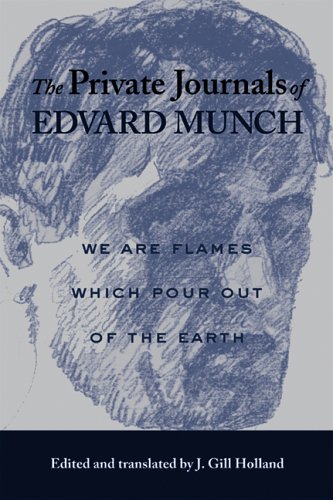
5. The Private Journals of Edvard
$6.30
6. Munch
$33.79
7. Munch by Himself
$37.70
8. Edvard Munch: The Modern Life
$34.13
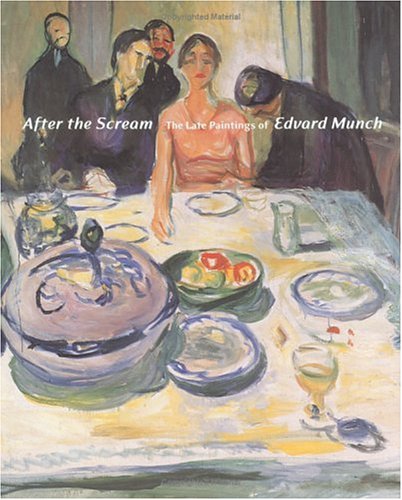
9. After the Scream: The Late Paintings
$8.46
10. Graphic Works of Edvard Munch
$213.33
11. Edvard Munch: Theme And Variation
$11.87
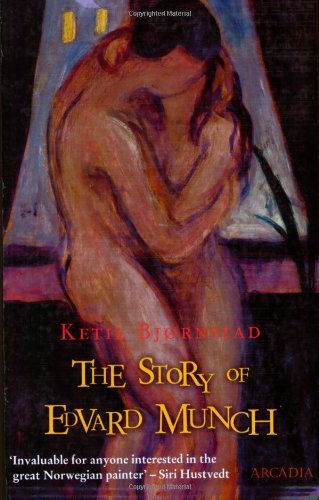
12. The Story of Edvard Munch
 
$297.18
13. Edvard Munch and Harald Sohlberg:
$50.00
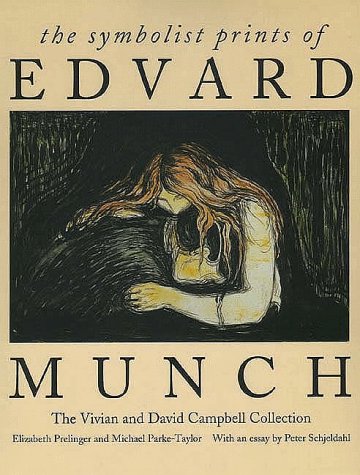
14. The Symbolist Prints of Edvard
$25.74
15. Edvard Munch: The Frieze of Life
$69.00
16. Edvard Munch: An Anthology
$15.93
17. Edvard Munch. 1863 - 1944.
 
18. Edvard Munch. Close-up of a genius
 
19. Edvard Munch (Masters of Art)
 
20. Edvard Munch:Lithographs, Etchings,

1. Edvard Munch: Signs of Modern Art
by Ulf Kuster, Philippe Buttner, Bjerke Oivind, Edvard Munch
Hardcover: 288 Pages (2007-07-01)
list price: US$65.00 -- used & new: US$30.18
(price subject to change: see help)
Asin: 377571913X
Canada | United Kingdom | Germany | France | Japan
Editorial Review

Book Description
Though he is more often viewed as a semi-lunatic Symbolist or proto-Expressionist, the great Norwegian artist Edvard Munch (1863-1944) was in fact a forerunner of much Modern art. His works concentrate on the human dramas of love and death, and on contemporary conditions of claustrophobia and alienation--or what he called "the modern life of the soul"--frequently deploying contemporary effects to depict this condition. He worked in paint, printmaking and photography (though he once wrote that "the camera cannot compete with a brush and canvas, as long as it can't be used in heaven and hell"). Edvard Munch: Signs of Modern Art assesses the significance of Munch's oeuvre as a highly independent contribution to Modern art, drawing on more than 100 paintings, as well as 60 drawings and prints. In flouting the boundaries between the genres of painting and printmaking, in his work with photography and film, and through his emphasis on process--for example exposing his paintings to outdoor weather--Munch opened up a turn-of-the-century view of the future. ... Read more


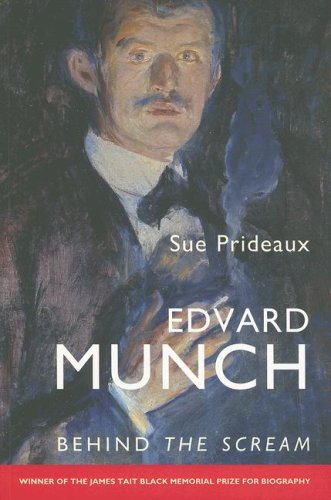
2. Edvard Munch: Behind the Scream
by Sue Prideaux
Paperback: 391 Pages (2007-06-14)
list price: US$25.00 -- used & new: US$10.98
(price subject to change: see help)
Asin: 0300124015
Average Customer Review: 4.5 out of 5 stars
Canada | United Kingdom | Germany | France | Japan
Editorial Review

Book Description
Although almost everyone recognizes Edvard Munch’s famous painting The Scream, hardly anyone knows much about the man. What kind of person could have created this universal image, one that so vividly expressed all the uncertainties of the twentieth century? What kind of experiences did he have? In this book, the first comprehensive biography of Edvard Munch in English, Sue Prideaux brings the artist fully to life. Combining a scholar’s precision with a novelist’s insight, she explores the events of his turbulent life and unerringly places his experiences in their intellectual, emotional, and spiritual contexts.
With unlimited access to tens of thousands of Munch’s papers, including his letters and diaries, Prideaux offers a portrait of the artist that is both intimate and moving. Munch sought to paint what he experienced rather than what he saw, and as his life often veered out of control, his experiences were painful. Yet he painted throughout his long life, creating strange and dramatic works in which hysteria and violence lie barely concealed beneath the surface. An extraordinary genius, Munch connects with an audience that reaches around the world and across more than a century.

... Read more

Customer Reviews (5)

5-0 out of 5 stars This Is The Best Profile of Munch
As a long time fan of Edvard Munch's art, this is the best of all the biographies I've read about the artist including his own private dairy. "The Private Journals of Edvard Munch: We Are Flames Which Pour Out of the Earth" by Munch and translated by J. Gill Holland (no relation to this reviewer) should also be checked out by Munch admirers. Sorry about that digression--back to this wonderful biography. Sue Prideaux's nearly four-hundred page history first caught my attention on the "New Releases" tables of at the Boston Antheaum. After leafing through the volume, I immediately ordered my own copy because I knew it was a book in which I'd want to dog-ear pages and scribble comments in the book's margins. The beginning of the book was difficult to read. Munch's father was a religious zealot who made his living as a physician. Unfortunately, even with his own family, he seemed more interested in saving a person's soul than sometimes saving their life or curing them of their ailments. His very fanaticism overwhelmed Young Edvard Munch and the rest of his family. Munch's mother and sister died of TB and he himself barely survived it in his youth. The author's description of life in the Munch household was so depressing that it almost made me stop reading. It was certainly not a good advertisement for practicing this brand of Christianity.It's little wonder that in adulthood Edvard Munch became addicted to acholol and drugs. He was afraid to give them up because he felt his inspiration was one of the results of the drunken fog that often enveloped him. Once he finally committed himself for treatment, he was forced to clean up his act and he discovered his inspiration wasn't coming from a bottle. This book is a wonderful portrait of Munch and the era in which he lived. Germany was the country that first recognized and rewarded his genius. Munch's many phobias make him a fascinating character to study. Considering his own personal demon's, his artworks are actually quite tame. Learn why when he begrudingly sold one of his paintings, he'd immediatley paint another version to replace that lost child at his dinner table. Even though the Nazi's ordered all his work to be destroyed, Hilter's chief aides praised and collected it for their personal collections. Throughout the book the reader can only be amazed that either Munch or his work actually managed to survive the chaos that surrounded him during his entire lifetime. He was certainly an eccentric by any definition of the term.

5-0 out of 5 stars to the right of the crows' beak in the harbor,is it the heart shaped bearded face of Hans Jaeger. who is Hans Jaeger?
I realize that a work of art such as the "Scream" should not be dissected but seen as a whole,but this work of Munch's invites it,especially after reading this book.There's a cornucopia of hidden events of Munch's life placed into this picture,only a few of which i've been able to find.This painting was made at a critical point in Munch's life when he was dabbling in the occult mixed with"alcoholic creativity" and the work reflects it,in an artistic, interesting way.I was fortunate enough to see the Munch exhibit when it was on tour around 1980 and i remember vividly the impact that his paintings had on myself as well as others particularly "The Sick Child". While "The Scream" seems like the showstealer really all of his paintings are as equally profound. This book gives the story and the struggle behind Munch's work in a thoughtful and readable way with alot of research.Now when i gaze at the scream i see a large black raven hovering over and dominating the picture,the bloody face of a suicide gazing from a surrealistic green,and a dark figure from Munch's past dreesed in black on the left border,one Munch would have wanted to forget if he could. Then there is the "red sky",is that a red sky in the morning,"sailor take warning,or a red sky at night,"sailor delight". Seeing as the 2 ships in the harbor appear to be beginning a swirl into a maelstrom,what do you think?Then there is the almost undistinguishable image of the bird,(a stork or crane?) encased in white yellow running through the red sky. The perfect nightmare graphically drawn.Also there is an unmistakeable image of a smalltooth sawfish that dominates the painting,an STS. Another type of STS is the Serological Test for Syphilus(STS),developed by the Jewish bacteriologist,Albert Neisser who resided in Norway during this period.Since many of Munch's nihilist "friends"contracted this disease,(including Jaeger),is Munch telling us something here or retelling himself? Really gives a person something to scream about!! I'm not even an art critic but after reading this book i've taken a new read on Munch's work.Soo enjoy and happy nightmares!!!or maybe the figure on the bridge is screaming in spiritual ecstasy as it appears to be a ghost bathed in light,maybe seeing its true nature despite the negativity.All of this bathed in numerous shades of greens,yellows,reds,blues,and dark shadows. The author said that Munch kept his paintings close to him because they were his children and would only sell a painting out of dire necessity and even then would try to retieve it later.Even the Nazis didn't know what to make of Munch banning his works as decadent art,yet Goebbels himself openly admiring and fascinated by much of Edwards art.Yet Munch was too much the true artist to get involved with politics and although Norway was sympathetic to the Nazis Munch kept his distance from them.It is amazing how when i gaze upon the "Scream" now i can see the motion of the colors,like a dream on Canvas.I never saw any of this until i read this book.

3-0 out of 5 stars Trajectory of the Soul
The power of the book is that it provides a map for the emotional trajectory of Munch's inner life; from hope and excitement to depression and mania.Throughout his life he painted only what was true for him, whether actual events or metaphorical motifs.Munch lived what we see in his paintings. However, Prideaux attempt to validate Munch's images leads to a simplification of details.

For instance quoting a letter to the head of the National Art Gallery in Norway, Jen Thiss, Munch writes:"The greatest color is black, the most essential color. It is the `tabala rasa' for pure expression. Nothing prostitutes it.' (Prideaux page 179). If Prideaux would have looked further she would have realized Munch was actually quoting Odilon Redon's from his book, To Myself.This particular quote was highlighted for the recent exhibition of works by Redon at the Oct. 2005-Jan. 2006 at the Museum of Modern Art; Seeing the Invisible (p.67 of MOMA catalogue).

More misrepresentation lies in chapter 13 concerning what most art historians feel was a turning point in his artistic achievement, The Scream.Prideaux first describes its pictorial development with a painting called Despair, she writes; "Despair was his first attempt at the scream. It is a side portrait of the himself set against the bay of Kristiania, the town that was the seat of all his misery. In her very next sentence however, she says, "The figure walking against the flow of the crowd in the middle of the street with is his back to us is Munch's".(Prideaux, p.134). Unless one was very familiar with Munch's paintings they would never know that she is no longer talking about Despair, but has jumped to Munch's painting of Evening on Karl Johan. This kind of careless description dims some of the brilliance we find elsewhere in the narrative.

Prideaux makes a bold attempt of trying to make sense of a life that did not make sense.Yet for Munch lovers her account of the specific fine points of his life is well worth the read.We are left feeling about the book the way Munch felt about his art: "the important thing was not the finished work or preserving it as such, but instead only that something assumed perfect artistic form...then it would become a part of the fabric of the world, which could never conceive without it again."
For a fuller appreciation of Munch's work check out the spectacular exhibition currently at the Museum of Modern Art in New York city-till May 19, 2006.

I welcome comments about this review at
newrealities@earthlink.net

5-0 out of 5 stars You don't have to like his art
You don't have to be a fan or "understand" Munch's work to enjoy this book.Edvard Munch was a very interesting and complex (not to mention screwed up) person.His art came from within and at many times, tormented him until he got it onto canvas.This book really gets you inside Munch's world and the influences (none of them good) that inspired him to paint the bizzare things that he did.If you should happen to read this, follow it with "The Rescue Artist" by Edward Dolnick.You won't regret it.

5-0 out of 5 stars A Book to Introduce the Canvas Biography
There is probably no more fiercely recognizable image in modern art than Edvard Munch's _The Scream_ (1893).The nightmarish picture seems so essential to our way of looking at modern life that many people do not know anything of Munch's other works, which is a shame; he lived eighty years and was productive through them all.His most famous work is even in the subtitle of his first full biography written in English, _Edvard Munch: Behind The Scream_ (Yale University Press) by Sue Prideaux.The author seems particularly well suited to her subject.She is part Norwegian and has lived a life shared between Norway and England.Her grandmother was painted by Munch, and her great-uncle was one of the artist's loyal patrons.She has produced a big biography that is well-illustrated with the subject's works.This is essential.Munch wrote, "Just as Leonardo studied the recesses of the human body and dissected cadavers, I try from self-scrutiny to dissect what is universal in the soul."Many and varying results of the dissections in paintings and in his profuse journals are included here, making a biography that is surprisingly gripping.

Munch wrote, "Illness, insanity and death were the black angels that hovered over my cradle."He was born in 1863, and tuberculosis took his beloved mother and sister when he was a boy.His father, Munch wrote, "temperamentally nervous and obsessively religious... From him I inherited the seeds of madness."His illness kept him from attending school regularly, but he early showed artistic talent, even though he got little training in art, and often rejected the training he got.Instructors, and the public, could not understand that he had no obsession with painting with physical accuracy, but was obsessed with documenting impressions and feelings.His early career was the classic one of the starving artist, a bohemian life with many lovers (sometimes shared with others in his circle), and plenty of absinthe and other alcohol intake.Many of his great works were made when he was impoverished, but eventually he found an unlikely niche, fashionable portrait painter to the rich (or as he called them, his "Mycenaeans").The portraits were untraditional, and often uncomplimentary, but they paid; he was to become a very rich man, although perhaps due to his years of penury, he always lived simply and fretted that the tax man was ruining him.It is perhaps not coincidental that with his increase in income came critical success, although in his own country, he suffered attacks in the press, and became reclusive and suspicious.He was able to sell his expensive portraits, but had trouble forcing himself to part with any of his personal work, insisting that his paintings were his children, and keeping them around him, even if this meant they were stacked badly, were exposed to weather, or became scratching posts for the cat.

He feared all his life that he would be touched with his family's insanity, and eventually he checked himself into a Copenhagen psychological clinic in 1908.His doctor diagnosed merely alcoholism, but he was put through a fresh air cure, heart massages, and mild charges of electricity."I have been rather short of electricity," he wrote, but thought he was getting an excellent effect from "Galvanisation, Faradisation, and Franklinisation."None of it did as much good as the steps he took for his own cure, a method he had taught himself when he was young and could not sleep because of conflict with his father: he turned his thoughts into a drawing or painting.It was resolving life's difficulties in the arena that really mattered, in his art.His paintings thus form a spiritual biography like no other artist's.This book biography is a fine introduction to the biography on canvas.
... Read more


3. Munch: In His Own Words
by Poul Erik Tojner, Edvard Munch
Paperback: 213 Pages (2003-03)
list price: US$39.95 -- used & new: US$14.49
(price subject to change: see help)
Asin: 3791328832
Average Customer Review: 5.0 out of 5 stars
Canada | United Kingdom | Germany | France | Japan
Editorial Review

Book Description
"Just as Leonardo da Vinci studied the recesses of the human body and dissected cadavers, I try to dissect souls." said Edvard Munch (1863-1944). Norway's greatest artist and tortured genius.In this groundbreaking new study, Munch's own soul is laid bare through the first English translation and analysis of diaries, literary sketches, and letters, presented together with his most artistic works. ... Read more

Customer Reviews (3)

5-0 out of 5 stars Munch more than a scream...


*Munch In His Own Words* is worth five stars just for the generous reproductions of the paintings, drawings, lithographs, and woodcuts that illustrate the text, as well as the selection of photographs taken by/and of Munch himself. These reproductions give one an idea of the stunning range and variety of Munch's complete life work, which goes well beyond his reputation primarily as the guy who painted `The Scream.' Nevertheless, in spite of this variety, one can still trace the red thread that runs through virtually everything he ever produced in his long career: a violently passionate and often antagonistic engagement with life and the world around him.

So it is that the actual text of *Munch In His Own Words* can only be a bonus--and in this book we get extracts from Munch's personal journals and letters that offer first-hand insights into his complex psyche from which his extraordinary art emerged. Some of these texts are brilliant evocations of the artist's role as rebel and savior, others repetitive and obsessive, still others read like the ravings of a paranoid schizophrenic. Not having access to the complete texts, one wonders if they might have been edited and selected with an eye to a little more variety and little less repetition, but it's hard to complain. Munch is almost as explosive and idiosyncratic a writer as he is a painter and, on the whole, the texts provide a rewarding counterpoint and context to the art.

Another bonus is the introduction and chapter openings by the book's editor Poul Erik Tojner. Sometimes elliptical to the point of incomprehensibility, studded with fancifully pretentious interpretations, Tojner does manage to provide some genuinely enlightening and provocative observations, perhaps none moreso than his suggestion that one can find striking parallels between the work of Munch and--of all people--Andy Warhol! Outrageous at first--and yet Tojner makes a wholly compelling and convincing argument for this unlikeliest of pairings.

A rich and compulsively readable--not to mention eye-catching--volume, *Munch In His Own Words* is a great overall look at an artist who painted, in his own words, the only way he knew how: with his heart's blood.

5-0 out of 5 stars Munch, the monastic
Edvard Munch painted "The Scream." (BTW, his name is said like "monk", not like "bunch.") That was just one work from a long and dedicated life in art, and arguably not his defining work. Look at his "Sick Child" (p.15), and at the mother. Does she really have anything more in her than the Screamer, except just that little more strength a woman has than a man does? Only quietly enough for others to bear?

I never thought much of Munch until I saw a display of his graphic work, largely woodcuts and some lithos. Then, I realized just how literal his painting style is. "As long as cameras can not be used in Hell or in Heaven, painters have no fear of competition." His paintings, and even more his prints, are about heaven and hell. Together, in the same picture, as his fevered mind saw them.

Many of his painted and graphic works center on two monopoles: light and dark. Become aware of this frequent pattern, and you'll have almost the visual experience of seeing a magnetic field. His visual field contains a North and South pole, a source and a sink, a plus and a minus. In those, composition consists of defining the two, filling the space between the two, and emptying the space around the two. I recommend his work most highly to any student, at any level, who wants to learn composition by being kicked in the gut with it. Much of Munch's work is about stark, polar power.

He also eliminates the placement of figure and ground, and creates the dichotomy of figure and ground. Half or more of his paintings show it: that aura emanating from the human being that sets it off from the material world around it. The background has no chance to interact with that force of person that emanates from each figure, so there must be a buffer zone between them. That, I think, explains the brushwork halo around so many of his human renderings: an attempt to define their visual limit, at the expense of any relationship to the world around them.

Munch is good, if emotional truth means more to you than optical literality. He's also hard to take, and becomes harder to take as you learn more. I really think he put it all out there for us to see, whether or not we can take it all in.

//wiredweird

5-0 out of 5 stars If you want to know Munch
I could not put this book down and when I finished, I felt as though I finally had some insight into Munch as a person as well as an artist.If you would like to have a better understanding of both the man and his paintings this book is for you. ... Read more


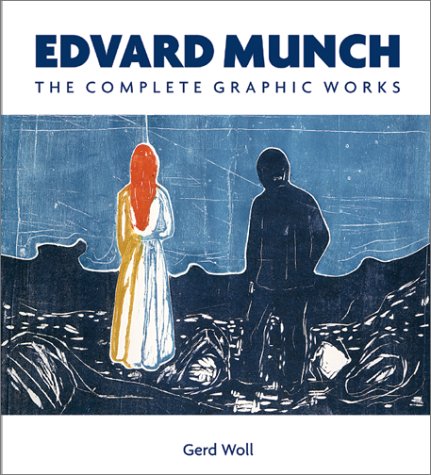
4. Edvard Munch: The Complete Graphic Works
by Gerd Woll
Hardcover: 493 Pages (2001-10-01)
list price: US$175.00 -- used & new: US$499.97
(price subject to change: see help)
Asin: 0810908743
Average Customer Review: 5.0 out of 5 stars
Canada | United Kingdom | Germany | France | Japan
Editorial Review

Book Description
Containing more than 1,100 breathtaking reproductions of the entire graphic œuvre of Edvard Munch (1863-1944), this unique and important book is a long-awaited and essential contribution to the literature on Munch and his accomplishments as a printmaker. Nothing this complete, beautiful, and authoritative has ever been published on this enormously popular artist; the only other book available on his graphic works focuses solely on his Symbolist prints.

The scholarly text displays the exhaustive research and enormous attention to detail that have earned author Gerd Woll renown as one of the world's most respected art historians. An indispensable tool for professionals, and a stunning art book as well, this will be the standard reference on Munch's graphic work for many years to come.
1,111 illustrations, 250 in full color, 512 pages, 111/2 x 101/2"AUTORBIO: Gerd Woll is senior curator of prints and drawings at the Munch Museum, Oslo, where this vast collection of the artist's prints is housed. She is one of the world's foremost Munch experts and has written extensively on his graphic work. ... Read more

Customer Reviews (2)

5-0 out of 5 stars Spectacular resource for the dedicated scholar
If you are passionate about Munch's art, you'll enjoy this immensely. If you deal professionally in fine prints, this will be a substantial addition to your working library. For all others, it's too much and not enough.

This remarkable book is a complete catalog of prints from a very prolific printmaker - over 700 of them, from a career spanning 50 years. Each one is reproduced, B&W or color, in readily recognizable form. When significantly different states or inkings are known, each variation is shown. Thorough notes accompany each, not just medium, size, and date, but information about where it was printed and displayed, and sometimes even about the plate, block, or stone from which it was printed. Indexing, notes, and supporting material are meticulous. This volume certainly meets its goal: to represent Munch's total output of prints, to the extent that very fine scholarship possibly can.

This is just a catalog, though. The author has intentionally witheld commentary, referring readers to the large literature that already analyzes Munch's work. Reproductions are always printed well, and large enough to be easily recognized. Very few are full sized or even page sized - despite its large format, this isn't a coffee table book of the usual kind. Anyone but a serious fan will find it repetitive and disappointing as a "picture book."

//wiredweird

5-0 out of 5 stars Outstanding, but expensive.
This is sure to become the definitive collection of Munch's graphic work. The plates are beautifully and accurately done (I've seen many of the original prints), and, as the title says, the collection is comprehensive - something which the non-enthusiast probably won't require (multiple prints from the same etching are included, along with all of Munch's later work, post nervous breakdown, that I personally find less appealing). Nevertheless, if you're serious about studying Munch, and money is not a concern, this is a tremendous resource. ... Read more


5. The Private Journals of Edvard Munch: We Are Flames Which Pour Out of the Earth
by Edvard Munch
Paperback: 206 Pages (2005-07-13)
list price: US$29.95 -- used & new: US$18.76
(price subject to change: see help)
Asin: 0299198146
Average Customer Review: 4.5 out of 5 stars
Canada | United Kingdom | Germany | France | Japan
Editorial Review

Book Description
Scandinavia's most famous painter, the Norwegian Edvard Munch (1863-1944), is probably best known for his painting The Scream, a universally recognized icon of terror and despair. (A version was stolen from the Munch Museum in Oslo, Norway, in August 2004, and has not yet been recovered.) But Munch considered himself a writer as well as a painter. Munch began painting as a teenager and, in his young adulthood, studied and worked in Paris and Berlin, where he evolved a highly personal style in paintings and works on paper. And in diaries that he kept for decades, he also experimented with reminiscence, fiction, prose portraits, philosophical speculations, and surrealism. Known as an artist who captured both the ecstasies and the hellish depths of the human condition, Munch conveys these emotions in his diaries but also reveals other facets of his personality in remarks and stories that are alternately droll, compassionate, romantic, and cerebral.
This English translation of Edvard Munch's private diaries, the most extensive edition to appear in any language, captures the eloquent lyricism of the original Norwegian text. The journal entries in this volume span the period from the 1880s, when Munch was in his twenties, until the 1930s, reflecting the changes in his life and his work. The book is illustrated with fifteen of Munch's drawings, many of them rarely seen before. While these diaries have been excerpted before, no translation has captured the real passion and poetry of Munch's voice. This is a translation that lets Munch speak for himself and evokes the primal passion of his diaries. J. Gill Holland's exceptional work adds a whole new level to our understanding of the artist and the depth of his scream. ... Read more

Customer Reviews (3)

3-0 out of 5 stars More Poems than a Journal
Munch Journal talks about his tormented relationship with Frou L and his unique view of the world through the eyes of a painter and a poet. It's not exactly very autobiographical.

5-0 out of 5 stars An absolute must-read for anyone fascinated by Edvard Munch's life and brilliant work
The Private Journals Of Edvard Munch: We Are Flames Which Pour Out Of The Earth is an anthology of writings by Scandinavia's most famous painter, Edvard Munch (1863-1944), perhaps best known for his classic capture of raw human terror in "The Scream". Excerpts taken from his diaries from the 1880s to the 1930s offer poetry that is bursting with the raw pathos of the human condition. Expertly translated by J. Gill Holland, these powerful verses are illustrated with Munch's original black-and-white sketches. Highly recommended for library collections, and an absolute must-read for anyone fascinated by Edvard Munch's life and brilliant work.

5-0 out of 5 stars journals reveal origins and sources of this famous artist's work
As the subtitle which is lines from one of Munch's poems indicates, the Norwegian painter could write poetry that was as vividly intense as many of his paintings, notably his signature painting "The Scream." "The sky was like/blood--sliced with strips of fire..." are lines from another poem of his. The format of all of the sections from Munch's journals edited by the poet and literary critic Holland are broken into lines as if the content was entirely poems. But it is not. Munch's varied entries are perceptive on local events and persons of the day, his relationships with others, self-examination and self-discovery, and psychological insights. "The nervous talk a lot. Craziness often expresses itself in incessant talking. Talking has become...a sort of defense against other people...When I am talking I tax anyone I am with, as if I've taken him prisoner," he writes in the entry titled "On Talking." A friend of the famous writers Ibsen and Knut Hamsen, Munch appreciated the power of words and the skill of writers. He obviously took care to write as precisely and truly as he could, even for his "private journals"; here published more extensively than ever with a faithful, empathetic translation and concise introduction. With these journals, one sees behind the revolutionary paintings to the mind of the extraordinary painter who could make them. ... Read more


6. Munch
by Edvard Munch, Federico Zeri, Marco Dolcetta
Hardcover: 48 Pages (2000-11)
list price: US$14.95 -- used & new: US$6.30
(price subject to change: see help)
Asin: 1553210158
Average Customer Review: 4.5 out of 5 stars
Canada | United Kingdom | Germany | France | Japan
Editorial Review

Book Description
These richly illustrated art books cover several centuries of great artists and their masterworks. From Rubens to Dali, each artist's life and times, influences, legacy, and style are explored in depth. Each book analyzes a particular painting with regard to the history surrounding it, the techniques used to create it, and the hidden details that make up the whole, providing a thorough look at each artist's career. Included is a bibliography, a chronological reading of principle works, a brief life history, and listings of public collections featuring each artist. ... Read more

Customer Reviews (4)

4-0 out of 5 stars An intensive exploration.
This book is short, only 48 pages, but is packed with an incredible amount of information and art. Zeri has done a phenomenal job of encapsulating Munch's life and work in a single, easily digestible package, one from which admirers of "The Scream" and art enthusiasts in general can learn a great deal. I would love to explore other books in Zeri's series.

5-0 out of 5 stars beautiful book
I fell in love with Munch when I saw one of his prints(the scream) at the Met museum in NYC, this is an amazing man with an amazing mind and an eye for color.the prints are beautiful in this book.

5-0 out of 5 stars Great book on tormented Norwegian
Here's the great aid for understanding the life and works ofone of most underestimated genius. Great story on great Norwegian. Plentiful of color reproductions, abundant in information, great source for studying tormentedpainter. Worth every minute spent on reading. Looking forward to see MunchMuseum in June. Nenad fromCroatia.

4-0 out of 5 stars The Best!
This is an excellent book.It explores the full spectrum of Munch's career through an interesting presentation of words and pictures. ... Read more


7. Munch by Himself
by Iris Muller-Westermann
Hardcover: 208 Pages (2005-04-20)
list price: US$65.00 -- used & new: US$33.79
(price subject to change: see help)
Asin: 1903973643
Canada | United Kingdom | Germany | France | Japan
Editorial Review

Book Description
Best known for his iconic painting The Scream, the celebrated Norwegian painter and printmaker Edvard Munch (1863-1944) had the greatest impact on Expressionism of any Scandinavian artist. His intense, evocative treatment of psychological and emotional themes exerted a major influence on the art of the entire 20th century. Often biographical, his work offers a fascinating insight into the psyche of an artist. No artist observed and painted himself throughout his life as frequently as Munch, and few have revealed their weaknesses and anxieties as frankly.

This handsome volume, which accompanies a major traveling exhibition, contains beautiful reproductions of 150 paintings, drawings, and rarely seen photographic self-portraits of startling originality. The texts set them in the context of the artist's life and career, and also examine how many of Munch's preoccupations remain relevant today. AUTHOR BIO: Iris Müller-Westermann is a curator of international art at the Moderna Museet, Stockholm, and a Munch specialist. ... Read more


8. Edvard Munch: The Modern Life of the Soul
by Patricia Berman, Reinhold Heller, Elizabeth Prelinger, Tina Yarborough, Kynaston McShine, Edvard Munch
Hardcover: 232 Pages (2006-02-01)
list price: US$60.00 -- used & new: US$37.70
(price subject to change: see help)
Asin: 0870704559
Average Customer Review: 5.0 out of 5 stars
Canada | United Kingdom | Germany | France | Japan
Editorial Review

Book Description
In an exploration of modern existential experience unparalleled in the history of art, Edvard Munch, the internationally renowned Norwegian painter, printmaker and draftsman, sought to translate personal trauma into universal terms and in the process to comprehend the fundamental components of human existence: birth, love and death. Inspired by personal experience, as well as by the literary and philosophical culture of his time, Munch radically reconceived the given world as the product of his imagination. This book explores Munch's unique artistic achievement in all its richness and diversity, surveying his career in its entire developmental range from 1880 to 1944. The comprehensive volume features a lavish selection of color plates, an introduction by Kynaston McShine, Chief Curator at Large at The Museum of Modern Art, and essays by Patricia Berman, Reinhold Heller, Elizabeth Prelinger, and Tina Yarborough, as well as in-depth documentation of Munch's art and career. It will accompany the most extensive exhibition of Munch's art in America in three decades. ... Read more

Customer Reviews (1)

5-0 out of 5 stars Must have!
This was one of the greatest art exhibits I have ever seen (and I have been around the world) and this book is a comprehensive look at the stages and series of the paintings of Munch that were featured.Engaging and engrossing! ... Read more


9. After the Scream: The Late Paintings of Edvard Munch
by Elizabeth Prelinger
Hardcover: 208 Pages (2002-02-01)
list price: US$48.00 -- used & new: US$34.13
(price subject to change: see help)
Asin: 0300093438
Average Customer Review: 5.0 out of 5 stars
Canada | United Kingdom | Germany | France | Japan
Editorial Review

Book Description
Expressing the anxieties of the late nineteenth century and the uncertainties of the modern world, Edvard Munch (1862-1944) often depicted in his works dangerously seductive fin de siècle women, sickly figures, and isolated characters in barren landscapes. These powerful, haunting paintings are widely recognized and revered, especially his iconic work The Scream (1893). Yet few admirers of Munch's early works realize that the artist lived well into the twentieth century and was enormously productive almost to the time of his death. This compelling book, focusing on more than sixty of Munch's later paintings, reveals the surprising, vibrant work of a fascinating man who never ceased to grow as an artist.Following decades of restless wandering among the capitals of Europe, Munch suffered a breakdown in Copenhagen in 1908 and retreated to his native Norway. In 1916 he purchased an estate near present-day Oslo where he lived and worked, mostly in his outdoor studio, for the next twenty years. Although Munch never abandoned a deeply introspective approach to image-making, in his later works he expressed a new attachment to the visible world, adopting a fresh range of subjects and a looser, brighter painting style. The pictures of this period-full of vivid color, evocative atmospheres, and visual drama-are a revelation, casting new light on one of the most complex artists of the modern era. : ... Read more

Customer Reviews (3)

5-0 out of 5 stars A new view of a modern master
Preliger writes swiftly and cleanly, though of course much of the book's heft is devoted to reproducing the paintings under question.She is very good at describing and clarifying how narrow our view of Munch has been; we treat him like some kind of haunted Poe or Klimt-like figure, even though the majority of his work has a golden glow like a fairy tale, and is not horror stricken as the early work we associate him with.His painting is smooth and delicate, reminding me of the clear tempera colors we used to paint Easter Eggs with when we were small children, and there is something of the innocence of a child about his mature work; it is as though having undergone the darkness early on, his spirit was allowed to soar later on.Or compare Shakespeare's late romances like The Winter's Tale or Cymbeline with the earlier and heavier problem plays (Measure for Measure) etc.In any case, brava to Elizabeth Preliger for her much needed corrective.

5-0 out of 5 stars The first major exhibition of his works since 1978
Elizabeth Prelinger's After The Scream celebrates the late paintings of Edvard Munich: haunting paintings which also reveal quite a different side of the artist. While his images of people remain striking, he painted a range of subjects and used a brighter approach later in life, and this accompanies the first major exhibition of his works since 1978 - and the first to focus on his later achievements.

5-0 out of 5 stars the unknown munch
munch is an artist who became so well known for an early work ("the scream") that his later work was eclipsed by it. the fact that nearly all of his later works hang in an oslo museum hasn't helped either. so it's a real surprise to browse this exhibition catalog and discover the many beautiful paintings munch created in the half century between "the scream" (1893) and his death (1944).

munch's technique is very interesting: using thinned oil paints, with direct application of single layers of color, his paintings approach watercolors in their spontaneity, light, and beautifully textured color harmonies. at the same time, his themes are very personal -- his illnesses, his large estate near oslo, his lonely life painting in the countryside, his struggle with alcoholism. technique and themes combine to give his work a uniquely poignant lyricism.

the accompanying text on munch's life and work is well written and comprehensive. this is a great gift for someone who loves painting -- even if they know art well, munch's late works will come as a happy revelation. ... Read more


10. Graphic Works of Edvard Munch
by Edvard Munch
Paperback: 90 Pages (1979-10-01)
list price: US$13.95 -- used & new: US$8.46
(price subject to change: see help)
Asin: 0486237656
Average Customer Review: 5.0 out of 5 stars
Canada | United Kingdom | Germany | France | Japan
Editorial Review

Book Description

90 haunting, evocative prints by first major Expressionist artist and one of the greatest graphic artists of his time: The Scream, Anxiety, Death Chamber, The Kiss, Madonna, On the Jetty, Picking Apples, Ibsen in the Cafe of the Grand Hotel, etc. Introduction by Alfred Werner.
... Read more

Customer Reviews (1)

5-0 out of 5 stars Far more than just "The Scream"
Munch is best known for his iconic work "The Scream," a work that has been reproduced & parodied countless times since its creation, but which still resonates with emotional power even after such popular saturation. Well, there's a lot more to this artist than just one famous work! This collection of his prints is an excellent introduction to a world of raw feeling laid bare, often swathed in blackness & palpable dread. Munch clearly felt & anticipated the alienation & fear of the 20th (and now 21st) century, depicting it with naked intensity. He delves deeply into the darkest places of the human psyche, making it tangible for all to see, whether they want to or not. This isn't always comforting art, but it's revelatory. A recommended volume! ... Read more


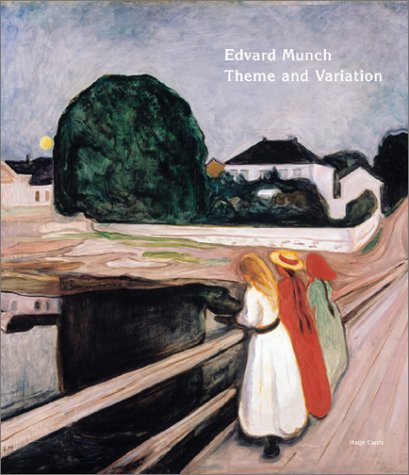
11. Edvard Munch: Theme And Variation
by Christoph Asendorf, Marian Bisanz-Prakken, Dieter Buchhart, Antonia Hoerschelmann, Frank Hoifodt, Iris Müller-Westermann, Gerd Woll
Hardcover: 416 Pages (2003-05-02)
list price: US$75.00 -- used & new: US$213.33
(price subject to change: see help)
Asin: 3775712704
Canada | United Kingdom | Germany | France | Japan
Editorial Review

Book Description
Loneliness, jealousy, love, and death. There is hardly another artist who explored the basic experiences of human life and his own personal angst so forcefully and in such unsettling images as the Norwegian painter and graphic artist Edvard Munch. Munch's depictions of the crisis of the individual positioned his work as representative of modern consciousness, and the form he used to express this inner drama set him as a precursor and founder of expressionism. Munch's entire creative period is characterized by a continuous return to his central, melancholic motif of the human condition. In essays by well-known authors in the field, this volume provides a unique, complex, and expansive analysis of the emergence, development, and inner fabric of theme and variation in Munch's oeuvre. Different versions and renditions of paintings like The Scream, Melancholy, and Jealousy are presented side by side for a renewed view of these icons of modernism. Additionally, the book examines the close relationship between the artist's graphic and painterly works, acknowledging that Munch's interest in motif was not limited to painting, but that it translated meaningfully into printed media such as lithographs, etchings, and woodcuts, all documented in this book. ... Read more


12. The Story of Edvard Munch
by Ketil Bjornstad, Torbjorn Stoverud
Paperback: 400 Pages (2005-09-28)
list price: US$19.95 -- used & new: US$11.87
(price subject to change: see help)
Asin: 190085094X
Average Customer Review: 5.0 out of 5 stars
Canada | United Kingdom | Germany | France | Japan
Editorial Review

Book Description

Using Edvard Munch's own letters and diaries, those of his contemporaries and friends, and newspapers and journals of the time, this literary biography presents a picture of the artist as unsparing and true as any of his self-portraits. Damaged in childhood by appalling family tragedies, the Norwegian painter was obsessed with sickness, insanity, and death. His tortured and shockingly personal art, while at first provoking outrage, eventually gained him fame, wealth, and the respect of the art establishment that had previously shunned him. In reconstructing Munch's life, the author has incorporated the artist's public work and private words to make a dark, revelatory biography that reads like a novel.
... Read more

Customer Reviews (1)

5-0 out of 5 stars Style that mirrors the painter
Bjrstad did a wonderful job portraying Munch with his style and prose. This dark book is a fabulous read, especially for fans of art history and Edvard Munch. The book does not read like the average novel, but the style is quickly and easily adapted too. I strongly recommend this book. ... Read more


13. Edvard Munch and Harald Sohlberg: Landscapes of the Mind
by Oivind Storm Bjerke
 Hardcover: 267 Pages (1996-01-01)
list price: US$65.00 -- used & new: US$297.18
(price subject to change: see help)
Asin: 1887149015
Canada | United Kingdom | Germany | France | Japan

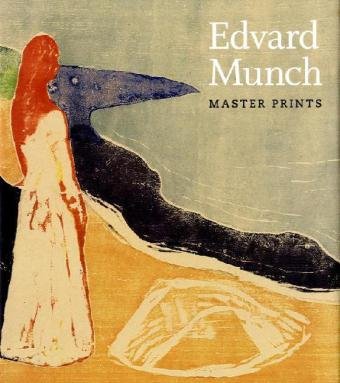
14. The Symbolist Prints of Edvard Munch: The Vivian and David Campbell Collection
by Elizabeth Prelinger, Michael Parke-Taylor
Hardcover: 246 Pages (1996-09-10)
list price: US$70.00 -- used & new: US$50.00
(price subject to change: see help)
Asin: 0300069529
Average Customer Review: 5.0 out of 5 stars
Canada | United Kingdom | Germany | France | Japan
Editorial Review

Amazon.com
The artwork in The Symbolist Prints of Edvard Munch is sobeautifully reproduced that one might be tempted to tear out pages, frame them and hangthem on the wall. Munch's work, which constitutes some of the 20th century's greatestprintmaking, is presented through the lens of an extraordinary private collection thatincludes almost every one of his prints along with alternate versions and early sketches.Elizabeth Prelinger's essays provide background on Munch's life, printmakingtechniques, and the development of his symbolist aesthetic. An exciting element of thebook is an evocative essay by renowned critic, Peter Schjeldahl, who, in inimitable style,likens Munch's effect on the viewer to that of listening to the early work of a favoriterock-star. Published on the occasion of an exhibit at the Art Gallery of Ontario in early1997, this book provides excellent documentation of an artist whose work remains vitalmore than fifty years after his death. ... Read more

Customer Reviews (2)

5-0 out of 5 stars La douleur, la couleur et le criard
Il montrait sa soeur Sophie qui mourait jeune, entouree de toute la famille. Mais il montrait chacun a l'age qu'il avait a l'epoque de la peinture, et non pas a la mort de la jeune fille. Car la douleur durait a jamais et unifiait toute la famille pour toujours. Puis avec des tetes d'une femme et d'un homme, gravees et multicolorees, il cessait de suivre le style repandu des japonais de faire une seule couleur d'un seul troncon de bois. Son prefere de tout son oeuvre etait Sick Child II, en tant que sa premiere lithographie en couleur. Mais son Scream est le plus reconnu, en tant que l'image la plus frappante du 20eme siecle.

5-0 out of 5 stars The Print and the Darkness
He was bound determined not to paint people reading and women knitting, but instead to show people who breathed emotions into his darkly suggestive prints. "Death in the sickroom" showed family members at the ages when they were painted, not when his sister Sophie died; it expressed unity in grief as one of death's longlasting effects by seemingly overlapping planes flowing together across bleakly empty areas, starkly B&W contrasts, and stiffly posed mourners frozen in misery. "The mirror" heads of a disembodied man and woman was his first woodcut to give up the Japanese method of printing each color with a separate woodblock; instead, he jigsawed blocks into pieces according to compositional design, linked each piece with a different color, and put everything back together into a multicolored print. He considered his "Sick child II" his most important print: his first color lithograph, it focused on the diseased upper chest and the head in profile facing right against a large pillow in order to gaze with tragically meditative resignation into the flatly patterned looming void on the far right. However, his "Scream" became the most compelling image for the late twentieth century: it expressed terror before the universe by powerfully decorative lines reverberating through the starkly opposed black lines and bleakly white voids of pulsing land and sky. Elizabeth Prelinger and Michael Parke-Taylor have applied reader-friendly illustrations and text to their catalog of the Vivian and David Campbell exhibition. Their SYMBOLIST PRINTS OF EDVARD MUNCH goes down good with PROGRESSIVE PRINTMAKERS by Warrington Colescott and Arthur Hove, PRINTS AND PRINTMAKING by Antony Griffiths, EDVARD MUNCH by Josef Paul Hodin, and THE PRINT IN THE WESTERN WORLD by Linda C Hults. ... Read more


15. Edvard Munch: The Frieze of Life
by Elizabeth Cross
Paperback: 184 Pages (2006-08-14)
list price: US$39.95 -- used & new: US$25.74
(price subject to change: see help)
Asin: 072410254X
Canada | United Kingdom | Germany | France | Japan
Editorial Review

Book Description
Accompanies a first-time Australian exhibit of major pieces that seldom leave Norway.Includes works from his primary museums: Munch Museet, Oslo, National Gallery, Oslo and the Kunst-museum Bergen, Norway. ... Read more


16. Edvard Munch: An Anthology
Hardcover: 225 Pages (2006-08)
list price: US$69.00 -- used & new: US$69.00
(price subject to change: see help)
Asin: 8274772318
Canada | United Kingdom | Germany | France | Japan

17. Edvard Munch. 1863 - 1944.
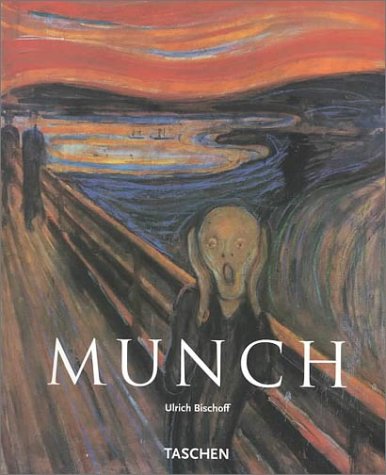
by Ulrich Bischoff
Paperback: 96 Pages (2001-01-01)
-- used & new: US$15.93
(price subject to change: see help)
Asin: 3822863696
Canada | United Kingdom | Germany | France | Japan

18. Edvard Munch. Close-up of a genius
by Rolf E. Stenersen, Reidar Dittmann
 Mass Market Paperback: 179 Pages (1969)

Asin: B00005VRA4
Canada | United Kingdom | Germany | France | Japan

19. Edvard Munch (Masters of Art)
by Thomas M. Messer
 Hardcover: 120 Pages (1986-09)
list price: US$24.95
Isbn: 0810914158
Average Customer Review: 4.0 out of 5 stars
Canada | United Kingdom | Germany | France | Japan

Customer Reviews (2)

4-0 out of 5 stars Colorful Writing for a Monochrome Book
Often times, in the art world, pedantry and an overwrought sense of aesthetics make anything written on the subject unbearable for all but the snobbiest.Fortunately for the rest of rest, Mr. Hodin wrote this book. He is an engaging, lucid writer who has studied his subject thoroughly andactually knew Edvard Munch in his later years which enables him to offer agood deal of important personal information that other authors are simplynot able to do. This additional insight is important, for Edvard Munch isone of the truly original geniuses of art and his work carries an urgentmessage for the dissociated psyche of modern man.My only complaint withthis volume is that the publisher elected to print only about one third ofthe prints in color which, while unfortunate, is by no means devastating.If youre interested in this greatest of expressionists and interested indelving into the spiritual crisis of modern man, I cannot recommend thisbook highly enough. On the other hand, if youre an elitist art criticlooking for stodgy literature, look elsewhere this is not your book.

4-0 out of 5 stars Discover the world of Edvard Munch
An excellent and scholarly work covering all of Munch's work. Over 160 plates are discussed in depth and there are cross references to the wherabouts of each of the plates at the end of the book. The major fault isthe lack of colour plates (30), and the relativly poor quality of thereproductions but all in all a valuable and comprehensive work. ... Read more


20. Edvard Munch:Lithographs, Etchings, Woodcuts
by L.A. County Museum of Art
 Paperback: Pages (1969)

Asin: B000H7LI3E
Canada | United Kingdom | Germany | France | Japan

  1-20 of 100 | Next 20
A  B  C  D  E  F  G  H  I  J  K  L  M  N  O  P  Q  R  S  T  U  V  W  X  Y  Z  

Prices listed on this site are subject to change without notice.
Questions on ordering or shipping? click here for help.

site stats